
 = Partner Site
The Witch of Blackbird Pond Reading Level: A Complete Guide
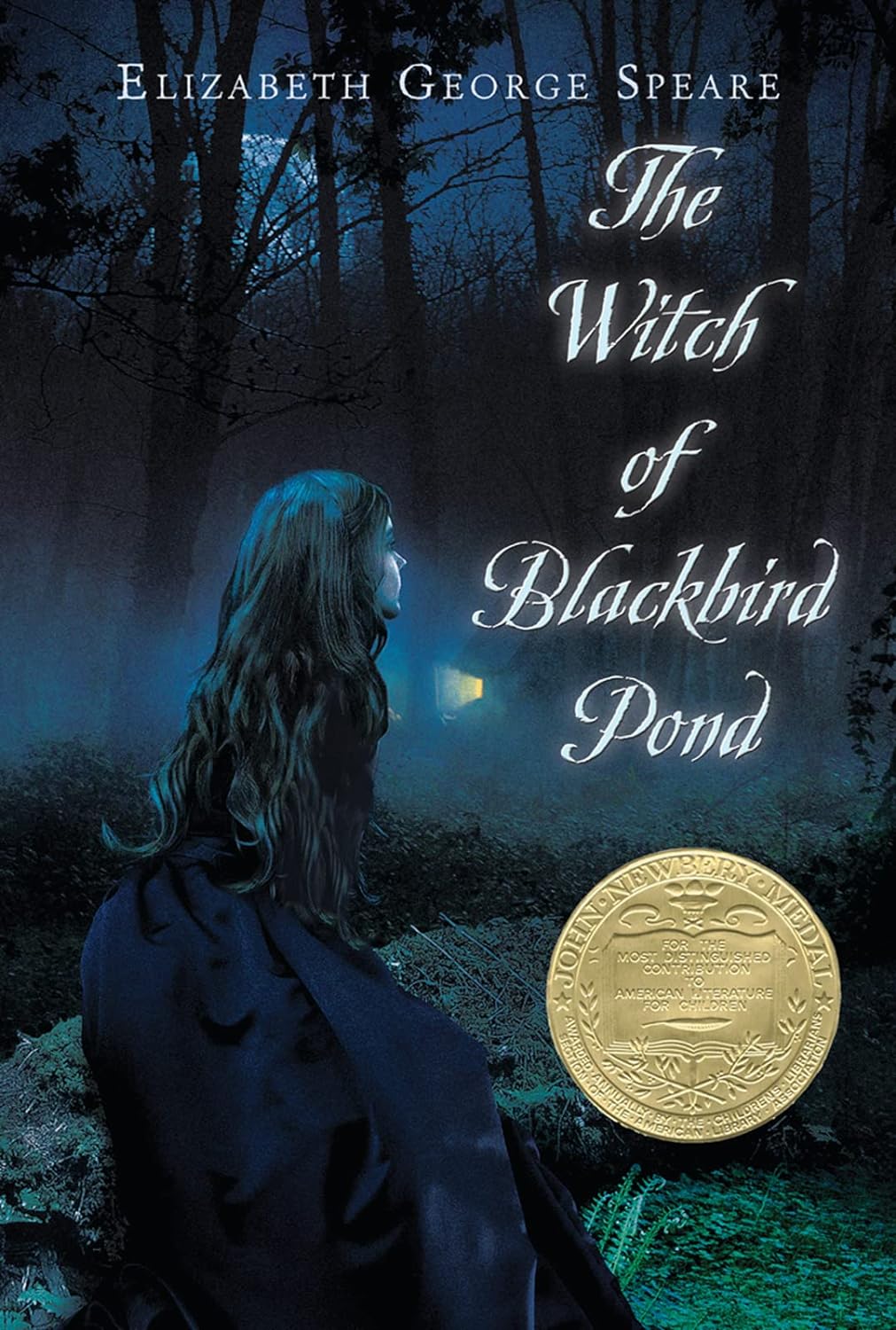
The Witch of Blackbird Pond by Elizabeth George Speare tells the compelling story of a spirited girl from Barbados adjusting to Puritan New England and befriending an accused witch. This guide provides parents and teachers with reading level information, age recommendations, content insights, and discussion questions for this Newbery Medal-winning historical novel about courage, prejudice, and standing up for what’s right.
For Parents
Find the right reading level for your child, understand the book’s historical context of witch trials and religious intolerance, and get conversation starters to help your child explore themes of conformity, standing up to injustice, and finding where you belong.
For Teachers
Access grade-level guidance, reading metrics, character analysis support, and thematic discussion questions perfect for classroom use. This Newbery Medal winner offers rich opportunities for exploring Colonial American history, religious intolerance, and character development.
The Witch of Blackbird Pond at a Glance
Find on Amazon →| Author | Elizabeth George Speare |
| Published | 1958 |
| Grade Level | 5–7 (our assessment) |
| Recommended Age | 10–13 |
| Flesch-Kincaid Grade | 5.4 |
| Word Count | ~60,000 |
| Pages | 249 (standard paperback) |
| Chapters | 21 |
| Genre | Historical fiction / young adult |
| Setting | Wethersfield, Connecticut, 1687 |
| Awards | Newbery Medal (1959) |
For official Lexile and AR levels, visit Lexile.com or AR BookFinder. ReadingVine provides independent editorial assessments.
What Reading Level Is The Witch of Blackbird Pond?
The Witch of Blackbird Pond is appropriate for grades 5–7, with a Flesch-Kincaid grade level of 5.4. The vocabulary includes historical terms and colonial-era language that may be unfamiliar to modern readers, and the sentence structure is moderately complex. Elizabeth George Speare’s prose is clear and engaging, but the historical setting and themes require some maturity to fully appreciate.
Speare’s writing brings 17th-century Connecticut to life through rich historical detail—Puritan customs, colonial politics, religious tensions—without overwhelming readers with exposition. The story moves at a measured pace, allowing characters to develop naturally and themes to unfold gradually. The language feels period-appropriate without being archaic or difficult to understand. Speare trusts readers to grasp the cultural context through story rather than lengthy explanations.
While strong fifth graders can handle the reading mechanics, the story resonates most deeply with readers ages 10–13 who can understand the historical context of Puritan intolerance, appreciate the moral complexity of standing up against community pressure, and relate to Kit’s struggle between fitting in and being true to herself. The book rewards readers who enjoy historical fiction that explores serious themes—prejudice, conformity, courage—through a compelling personal story.
What Age Is The Witch of Blackbird Pond Appropriate For?
The Witch of Blackbird Pond is most appropriate for readers ages 10–13. The story deals with witch trials, religious intolerance, mob violence, and rigid social expectations in historically accurate ways. Speare doesn’t sanitize the dangers and prejudices of Puritan society, but she also handles difficult topics thoughtfully without being graphic or traumatic.
Witch trial accusations and danger: Hannah Tupper is accused of witchcraft and threatened by a mob. Kit is also accused. While no one is executed, the danger is real and frightening. This requires understanding of historical witch trial hysteria.
Religious intolerance and rigid Puritanism: The community is judgmental, intolerant, and punishes those who don’t conform. The oppressive atmosphere and fear of being different may disturb some readers.
Mob violence: A mob attacks Hannah’s house, planning to burn her as a witch. While Hannah escapes, the scene is tense and frightening. The violence isn’t graphic but the intent is clear.
Harsh punishments and threats: The stocks, whipping, and other colonial punishments are mentioned. Kit faces trial and potential execution for witchcraft.
Death and illness: Kit’s grandfather dies before the story begins. A child becomes seriously ill with fever. Death is present but not dwelt upon graphically.
Arranged marriage pressure: Kit is expected to marry William, whom she doesn’t love. The social pressure to conform to marriage expectations is significant.
What’s NOT in the book: No one is executed, no graphic violence, no sexual content, no profanity. The witch trial threat is serious but resolved without deaths. The book ends hopefully with justice, love, and Kit finding her place. While it addresses serious historical injustices, it’s ultimately an uplifting story about courage and integrity.
What Is The Witch of Blackbird Pond About?
In 1687, sixteen-year-old Kit Tyler arrives in Wethersfield, Connecticut, from Barbados. Her grandfather has died, leaving her penniless, and she’s come to live with her only relatives: her mother’s sister Rachel and Rachel’s family. Kit has grown up in luxury and freedom in the Caribbean, swimming, reading, wearing colorful dresses, and doing as she pleases. Wethersfield is a shock—a small, austere Puritan town where everyone works constantly, dresses plainly, follows strict religious rules, and views outsiders with suspicion.
Kit’s uncle Matthew Wood is stern and religious, her aunt Rachel is kind but exhausted, and her cousins are Judith (beautiful and vain) and Mercy (sweet and disabled). The family struggles with Kit’s arrival—they barely have enough food and resources for themselves. Kit tries to help but knows nothing about colonial household work. Her frivolous, educated background makes her seem lazy and useless. She shocks everyone by jumping into the river to rescue a child’s doll, revealing she can swim—in Puritan New England, swimming is seen as unnatural and possibly demonic.
Kit finds the Puritan way of life suffocating. Everyone works constantly, fun is considered sinful, and questioning authority is dangerous. She’s expected to conform to strict gender roles, dress plainly, and focus on finding a suitable husband. William Ashby, a wealthy, respectable young man, begins courting her, and the family pressures Kit to accept him even though she finds him dull and conventional.
Kit’s one refuge is the Great Meadows, where she meets Hannah Tupper, a gentle elderly Quaker woman who lives alone in a small cottage by Blackbird Pond. Hannah is kind, wise, and accepts Kit without judgment. The townspeople call Hannah a witch and avoid her, but Kit recognizes a kindred spirit—someone who doesn’t fit the Puritan mold but remains true to herself. Kit begins visiting Hannah regularly, finding freedom and acceptance there.
Kit also helps teach at the dame school and meets Nat Eaton, the ship captain’s son who brought her to Connecticut. Nat is adventurous, unconventional, and treats Kit as an equal. Unlike William, who wants her to be a proper Puritan wife, Nat appreciates Kit’s spirit and independence. Kit is drawn to Nat but resists because he’s poor and wild, not the “suitable match” everyone expects.
Political tensions rise in Wethersfield. Massachusetts is sending a royal governor to enforce English rule, and the colonists are divided between those who support Connecticut’s independence and those who want to submit to royal authority. Matthew Wood and other men hide Connecticut’s charter—the colony’s founding document guaranteeing its independence—in a hollow oak tree to protect it from seizure.
When a fever epidemic strikes the town, killing several children, the community looks for someone to blame. Prudence Cruff, a child Kit has been secretly teaching to read, becomes ill. Prudence’s mother has forbidden her education, but Kit has been meeting Prudence secretly at Hannah’s cottage. When Prudence falls sick, her cruel mother Goodwife Cruff blames witchcraft. She accuses Hannah Tupper of bewitching the children.
A mob forms to burn Hannah as a witch. Nat warns Kit, and she races to warn Hannah. Together they help Hannah escape by boat, leaving Wethersfield to live with her son. Hannah’s cottage is burned. Kit is devastated by the loss of her friend and refuge.
Then Goodwife Cruff accuses Kit herself of witchcraft, citing Kit’s swimming ability, her friendship with Hannah, and her teaching Prudence to read (which Goodwife Cruff considers unnatural for girls). Kit is arrested and faces trial. The evidence seems obvious: she associates with a known “witch,” she can swim (unnatural), and she possesses books (including Shakespeare). The Puritan community is ready to convict her.
At the trial, things look bleak until Nat brings Prudence Cruff to testify. Prudence, now recovered from fever, demonstrates that Kit taught her to read using the Bible—not witchcraft but education. She reads beautifully, showing that Kit’s teaching was good and wholesome. The court dismisses the charges, and Kit is freed. Goodwife Cruff’s accusation is revealed as motivated by ignorance and spite rather than truth.
William Ashby proves himself during the crisis, supporting Kit publicly. But when he proposes marriage, Kit realizes she can never be the conventional wife he wants. She gently refuses him. Meanwhile, Nat returns from a voyage with a gift: a small carved wooden sign reading “Witch of Blackbird Pond”—his affectionate name for Kit, celebrating her independence and spirit rather than condemning it. Nat proposes, asking Kit to marry him and sail with him, accepting her exactly as she is.
Kit accepts Nat’s proposal, choosing love and freedom over security and conformity. She’s found her place: not as a proper Puritan wife fitting the community’s mold, but as herself—educated, spirited, independent—loved by someone who values those very qualities. The book ends with Kit having learned to live in Wethersfield while staying true to herself, standing up for what’s right even when the community opposes her, and finding a future that honors both her Caribbean freedom and her Connecticut home.
The Witch of Blackbird Pond Characters
The Witch of Blackbird Pond Themes and Lessons
At its heart, The Witch of Blackbird Pond explores the conflict between conforming to society’s expectations and remaining true to yourself. Kit must navigate a culture that demands conformity and punishes difference. She learns that fitting in sometimes requires adapting (learning to work, respecting others’ beliefs) but never requires betraying your core values (defending Hannah, teaching Prudence, refusing to marry someone she doesn’t love). The book teaches that you can respect a community while still standing up against its injustices.
The book also examines how fear and prejudice lead to scapegoating. The Puritans call Hannah a witch not because she does evil but because she’s different—a Quaker, living alone, kind to outcasts. When bad things happen (the fever epidemic), the community needs someone to blame, and they choose those already marginalized. Kit’s trial shows how accusations can be based on ignorance (swimming is “unnatural”), association (friendship with Hannah), and fear of education (teaching girls to read). The book teaches readers to question mob mentality and defend those who are unjustly accused.
Discussion questions for families:
- Why do the Puritans call Hannah Tupper a witch? What does this teach about how prejudice works and who gets scapegoated?
- How does Kit change throughout the book? What does she learn about fitting in while staying true to herself?
- Why does Kit choose Nat over William? What does this choice say about what matters in a relationship and in life?
- What would you have done in Kit’s situation when the mob threatened Hannah? Is it worth risking your own safety to help someone else?
How Many Pages and Chapters in The Witch of Blackbird Pond?
The Witch of Blackbird Pond has 249 pages in the standard paperback edition and is divided into 21 chapters. The word count is approximately 60,000 words, making it a substantial historical novel for middle-grade to young adult readers. The chapters average about 12 pages each and are structured around key events in Kit’s adjustment to colonial life and her growing friendship with Hannah.
For independent readers in the target age range (10–13), the book typically takes 6–8 hours to complete, or about two to three weeks of reading 30 minutes per day. The historical setting and unfamiliar colonial customs may slow some readers initially, but the compelling story and Kit’s relatable struggles keep readers engaged. The pacing accelerates as the witch trial plot develops, making the second half particularly gripping.
As a read-aloud, The Witch of Blackbird Pond takes approximately 5–6 hours total. The chapter structure works well for reading sessions, and the historical content provides excellent opportunities to discuss Puritan society, Colonial American history, and the Salem witch trials (which occurred in Massachusetts around the same time). Many families and classrooms enjoy it because it combines an engaging story with important lessons about prejudice, courage, and standing up for what’s right. Teachers often use it to teach both American colonial history and literary themes about conformity and individuality.
Books Similar to The Witch of Blackbird Pond
If your child enjoyed The Witch of Blackbird Pond, here are six similar books that explore themes of historical fiction, courage, and standing up to injustice:
About Elizabeth George Speare
Elizabeth George Speare (1908–1994) was an American author who became one of the most distinguished writers of historical fiction for young readers. The Witch of Blackbird Pond, published in 1958, won the Newbery Medal in 1959—the first of two Newbery Medals Speare would win (the second for The Bronze Bow in 1962). She is one of only a few authors to win the Newbery Medal twice. Speare grew up in Massachusetts and was deeply interested in New England history, particularly the colonial and Puritan periods. The Witch of Blackbird Pond was inspired by the real history of Connecticut in the 1680s, including the hiding of the Connecticut Charter in the Charter Oak and the religious tensions of the era. While the characters are fictional, Speare grounded the story in meticulous historical research. She wanted to write about the dangers of intolerance and mob mentality in a way that would resonate with young readers, showing how fear and prejudice can lead communities to turn against innocent people. The witch trial subplot reflects the broader context of the Salem witch trials that would occur in Massachusetts just a few years later. Speare was particularly interested in exploring how young people navigate pressure to conform while trying to stay true to their values—a timeless theme she set in a specific historical context. Kit’s character was inspired by Speare’s own sense of independence and her belief that girls should be encouraged to think for themselves and stand up for what’s right. The book was groundbreaking for its time in presenting a strong, educated, independent female protagonist who refuses to be diminished by social expectations. Speare wrote several other acclaimed historical novels, including The Sign of the Beaver and The Bronze Bow, but The Witch of Blackbird Pond remains her most beloved work. The book has never gone out of print and continues to be taught in schools across America, introducing generations of readers to Colonial American history while teaching powerful lessons about prejudice, courage, and the importance of standing up for those who are different or vulnerable. Speare’s careful research, vivid characterization, and ability to make history feel immediate and relevant have made The Witch of Blackbird Pond a lasting classic of children’s literature.
The Witch of Blackbird Pond: Frequently Asked Questions
Is Hannah Tupper actually a witch?
No, Hannah Tupper is not a witch. She’s a kind, elderly Quaker woman who lives alone by Blackbird Pond. The Puritan townspeople call her a witch because she’s different: she’s a Quaker (not a Puritan), she lives alone without a husband, she’s kind to outcasts and strangers, and she doesn’t conform to Puritan social expectations. In Puritan society, being different often led to accusations of witchcraft. Hannah has no supernatural powers—she’s simply a wise, gentle person who accepts others without judgment. The “witch” accusation reflects the community’s fear and intolerance of anyone who doesn’t fit their narrow definition of acceptable behavior. The book uses Hannah’s experience to show how scapegoating works: communities blame marginalized people for problems (like the fever epidemic) to avoid facing their own fears and limitations.
What happens to Kit at the end of The Witch of Blackbird Pond?
At the end, Kit is acquitted of witchcraft charges after Prudence Cruff testifies that Kit taught her to read using the Bible, not witchcraft. Kit refuses William Ashby’s marriage proposal, realizing she can never be the conventional wife he wants. Nat Eaton returns from a voyage and proposes to Kit, offering her love and acceptance without demanding she change. Kit accepts Nat’s proposal, choosing freedom and authenticity over security and conformity. She’s found her place in Wethersfield—not by becoming a proper Puritan but by staying true to herself while building genuine connections (teaching Prudence, defending Hannah, earning her uncle’s respect). The ending shows Kit having grown from a frivolous, pampered girl into a courageous young woman who stands up for what’s right. She’ll marry Nat and likely continue sailing with him, maintaining her independence and spirit.
Is The Witch of Blackbird Pond based on a true story?
The Witch of Blackbird Pond is fiction, not based on a specific true story, but Elizabeth George Speare grounded it in extensive historical research about 1687 Connecticut. The historical context is accurate: the Connecticut Charter was really hidden in the Charter Oak to protect it from British seizure; Puritans in New England were intolerant of Quakers and other religious minorities; and witch accusations were common in this era (the Salem witch trials occurred in Massachusetts in 1692, just a few years after this story). While Kit, Hannah, and other characters are fictional, their experiences reflect real historical patterns: independent women were often accused of witchcraft, swimming ability was sometimes cited as evidence of demonic power, and teaching girls to read was controversial in some communities. Speare created fictional characters to explore real historical themes about religious intolerance, conformity, and scapegoating in Colonial America.
What grade level is The Witch of Blackbird Pond?
The Witch of Blackbird Pond is appropriate for grades 5–7 (ages 10–13). The reading level (5.4 Flesch-Kincaid) is accessible to strong fifth graders, but the historical context, colonial vocabulary, and thematic complexity make it most suitable for sixth and seventh graders. The book requires understanding Puritan society, religious intolerance, and the historical context of witch trials. It also deals with mature themes like conformity pressure, standing up to injustice, and choosing between security and authenticity. Fifth graders can read it, especially in a classroom setting with teacher guidance to provide historical context and discuss themes. For independent reading, sixth grade and up is typically ideal. The book is often taught in seventh or eighth grade, where students have enough historical knowledge and emotional maturity to fully appreciate its depth.
Why does Kit choose Nat over William?
Kit chooses Nat over William because Nat loves and accepts her exactly as she is, while William wants her to conform to Puritan expectations. William is decent, wealthy, and respectable—the “suitable match” everyone expects Kit to make. But he wants a conventional Puritan wife who will suppress her education, spirit, and independence to fit the proper role. Nat, by contrast, appreciates Kit’s swimming ability, her education, her friendship with Hannah, and her refusal to conform. He celebrates her differences rather than trying to change them. He calls her “Witch of Blackbird Pond” affectionately, honoring her independent spirit. Kit realizes that marrying William would mean spending her life pretending to be someone she’s not, while marrying Nat means being loved for who she truly is. She chooses authenticity and love over security and social approval—a radical choice in Puritan society but the right one for Kit.
What is the main conflict in The Witch of Blackbird Pond?
The main external conflict is Kit’s struggle to adapt to rigid Puritan society after growing up with freedom in Barbados. She must learn to work, dress plainly, suppress her education and opinions, and conform to expectations she finds stifling. This escalates into the witch trial plot when Kit is accused of witchcraft for befriending Hannah and teaching Prudence. The deeper internal conflict is Kit’s struggle between fitting in (accepting William, conforming to Puritan norms) and staying true to herself (defending Hannah, teaching Prudence, choosing Nat). The resolution shows Kit learning that you can adapt to and respect a community while still standing up for your values and refusing to betray who you are. The book argues that true belonging comes from being authentic and finding people who accept you, not from suppressing yourself to meet others’ expectations.
Is The Witch of Blackbird Pond scary?
The Witch of Blackbird Pond has some tense and frightening moments but isn’t a scary book overall. The most intense scenes involve the mob attacking Hannah’s cottage (trying to burn her as a witch) and Kit’s trial for witchcraft, where she faces potential execution. These scenes are suspenseful and emotionally powerful but not graphic or horror-like. Speare handles the danger seriously but doesn’t dwell on violence or gore. The witch accusations are frightening because of the historical reality—people really were executed in witch trials—but in this story, both Hannah and Kit escape safely. Younger or more sensitive readers (under 10) might find the mob scene and trial upsetting, particularly the idea that communities could turn against innocent people so violently. However, for the target age group (10–13), the tension serves the story’s themes about injustice and courage without being traumatic. The ending is hopeful and just, which balances the earlier danger.
What is the message of The Witch of Blackbird Pond?
The main message is that standing up for what’s right—even when it means going against community pressure—requires courage but is ultimately worth it. Kit learns that you can respect a community’s values while still opposing its injustices. The book teaches that prejudice and scapegoating happen when people fear those who are different, and that defending marginalized people requires moral courage. It argues that true belonging comes from authenticity, not conformity—you should adapt to new circumstances when appropriate but never betray your core values or abandon those who need help. The book also teaches that education, independence, and thinking for yourself are valuable, even when society discourages these qualities (especially in girls). Finally, it shows that love and acceptance mean being valued for who you are, not for who you pretend to be. These messages about courage, integrity, prejudice, and authenticity remain relevant across time, making the book more than just a historical novel.