
 = Partner Site
The Egypt Game Reading Level: A Complete Guide
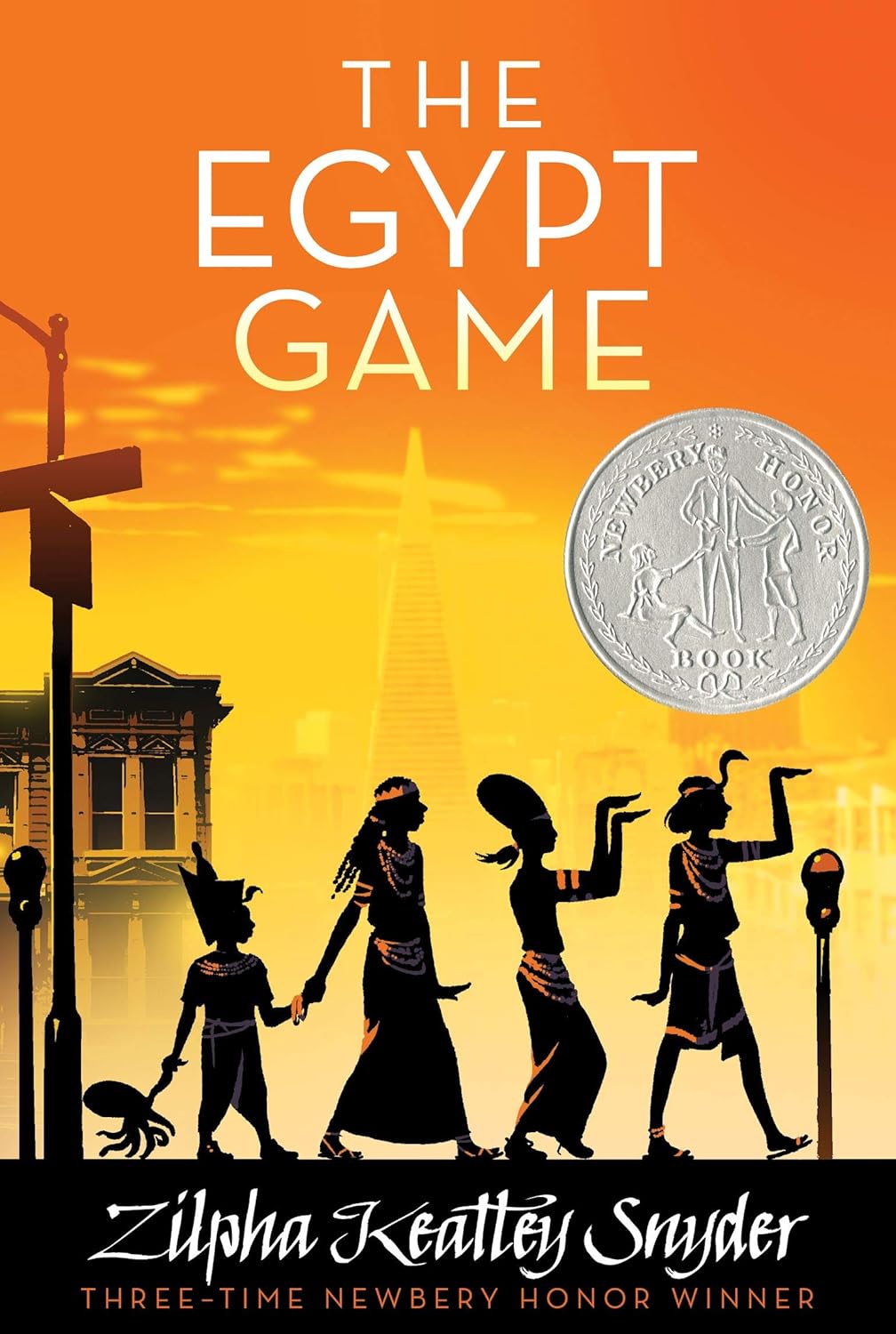
The Egypt Game by Zilpha Keatley Snyder is a witty, suspenseful, and thoroughly original novel about a group of children in a California university town who create an elaborate imaginary world based on ancient Egypt in an abandoned storage yard behind an antique shop — and who find, as their game deepens and darkens, that the boundary between imagination and reality is more permeable than they expected. Winner of a Newbery Honor, it is one of the most distinctive novels of its era: a book about the specific power and pleasure of children’s imaginative play, about friendship across difference, and about the way that serious make-believe can be both a refuge and a genuine encounter with the unknown. This complete guide covers the reading level, age appropriateness, themes, characters, and everything parents and teachers need to know about this enduring classic.
For Parents
The Egypt Game is a novel about children who build something extraordinary in the margins of their ordinary lives — an imaginary world so detailed and so serious that it becomes, for a while, more real than the world around it. Best suited for readers ages 9-12, it is funny and suspenseful and full of the specific pleasure of watching children who are genuinely good at pretending do it very well. Parents should be aware that the novel includes a subplot involving a neighborhood child murderer — handled with restraint but real in its tension — and that the Egypt Game itself takes some genuinely eerie turns. Both are handled with the care and craft of a Newbery Honor book.
For Teachers
A Newbery Honor book well suited to grades 4-6, The Egypt Game is an exceptional text for teaching character development through ensemble casts, the function of imaginative play in children’s social and emotional lives, and how authors build atmosphere and suspense in realistic fiction. The novel’s multiracial cast of characters — navigating friendship across racial lines in a California university neighborhood in the late 1960s — opens important discussions about how children form communities across difference. The Egypt Game itself is historically rich enough to connect to social studies units on ancient Egypt, and many teachers use it as a bridge between historical content and fiction.
The Egypt Game at a Glance
Find on Amazon →| Author | Zilpha Keatley Snyder |
| Published | 1967 |
| Grade Level | 4-6 (our assessment) |
| Recommended Age | 9-12 |
| Flesch-Kincaid Grade | 5.4 |
| Word Count | ~56,000 |
| Pages | 215 (standard paperback) |
| Chapters | 23 |
| Genre | Realistic fiction / mystery |
| Setting | A university neighborhood in California, late 1960s |
| Awards | Newbery Honor (1968) |
For official Lexile and AR levels, visit Lexile.com or AR BookFinder. ReadingVine provides independent editorial assessments.
What Reading Level Is The Egypt Game?
The Egypt Game reads at approximately a 4th-6th grade level by our editorial assessment, with a Flesch-Kincaid grade level of around 5.4. Snyder writes with a warm, observant humor that is one of the novel’s great pleasures — she sees her characters with affection and without condescension, and her prose has the specific quality of a narrator who finds children genuinely interesting rather than merely charming. The vocabulary is wide without being difficult, and the novel’s pacing — leisurely in its establishment of the Egypt Game itself, then tightening considerably as the mystery plot develops — gives readers time to settle into the world before the stakes rise.
What makes the novel particularly rewarding for strong readers at this level is its layering: the Egypt Game itself, with its elaborate invented rituals and its genuine historical detail about ancient Egyptian religion, rewards curiosity and research; the friendship dynamics among the six children are observed with social precision; and the suspense plot, when it arrives, is genuinely tense. Readers who engage with all three layers will find the novel considerably richer than its surface suggests.
The book is most commonly recommended for grades 4-6. For official Lexile and Accelerated Reader scores, visit Lexile.com or AR BookFinder.
What Age Is The Egypt Game Appropriate For?
We recommend The Egypt Game for readers ages 9-12. The novel is primarily a warm and funny story about children’s imaginative play and friendship, but it includes a genuine suspense subplot involving a child murderer in the neighborhood that parents should be aware of before assigning it to younger readers.
A teenage girl in the neighborhood was recently murdered early in the novel — the death is reported rather than depicted, but it is real and it is the event that triggers the fear that runs through the novel’s second half. The children are restricted from going outside alone or after dark as a result. Later, one of the Egypt Game players is attacked by the killer in a scene that is genuinely frightening and that is resolved quickly, but parents of younger or more sensitive readers should be aware it is there. The killer is eventually revealed and apprehended. Beyond this subplot, the novel’s content is entirely appropriate: the Egypt Game itself involves invented religious rituals including mock animal sacrifice (of a toy owl, played entirely for comedy) and oracle ceremonies that the children take very seriously. Some children may find the novel’s eerie atmosphere — the way the Egypt Game seems, at moments, to be answering back — unsettling in a pleasurable way. There is no sexual content and no graphic violence.
The novel has been in continuous print since 1967 and has been recommended for this age range by educators and librarians for nearly sixty years. Its suspense elements are those of classic children’s mystery fiction — real enough to be exciting, contained enough to be safe — and the warmth and humor of the Egypt Game itself more than balance the darker subplot. Most readers in the 9-12 range will find the combination exactly right.
What Is The Egypt Game About?
April Hall arrives in a California university town to live with her grandmother, whom she barely knows, while her actress mother is working. April is eleven, dramatic, fiercely intelligent, and deeply reluctant to be where she is — she arrives wearing a false eyelashes and an elaborate affected persona that she uses to keep the world at a manageable distance. Her grandmother’s neighbor is a girl named Melanie Ross, who is the same age and who has the specific social grace of someone who understands people quickly and does not need to perform for them. April and Melanie become friends almost immediately, which surprises April considerably.
Melanie has a younger brother named Marshall who carries a toy octopus named Security everywhere he goes. The three of them discover an abandoned storage yard behind an antique shop run by a solitary, slightly forbidding old man called the Professor. The yard contains a discarded stone head that bears a resemblance, in the children’s eyes, to the Egyptian pharaoh Nefertiti. This is where the Egypt Game begins.
Over weeks and then months, the children — eventually joined by two other neighborhood girls, Toby and Ken, and later by a younger girl named Elizabeth — build an elaborate imaginary world in the storage yard. They give themselves Egyptian names. They construct altars. They invent rituals based on their research into ancient Egyptian religion: ceremonies for the goddess Isis, oracles of Set, devotions to Thoth. The game is serious, detailed, and conducted with complete imaginative commitment — which is to say that it is exactly the kind of game that the best children’s games always are.
Then a teenage girl in the neighborhood is murdered, and the children are forbidden from going outside unsupervised. The Egypt Game continues in secret, and the storage yard, which has always had an atmosphere — something about the stone head and the enclosed space and the rituals they have been performing — takes on a quality that is harder to explain. When the oracle begins to answer back, the children must decide what they believe and what they are willing to do about it.
The mystery resolves in a scene that is frightening and then quickly relieved, and the novel’s final chapters settle into the warm, character-centered register of its first half — the Egypt Game continuing, friendship deepened by shared experience, and April beginning, quietly, to find that the place she arrived not wanting to be has become, without her quite noticing, home.
Zilpha Keatley Snyder drew on her own childhood experience of elaborate imaginative play and on her genuine interest in ancient Egyptian history and religion for the novel. It was her breakthrough book, and the game itself — the specific, serious, ritualistic quality of the children’s make-believe — is modeled on the kind of play Snyder has described as the most important thing about her own childhood.
The Egypt Game Characters
Is The Egypt Game Banned?
The Egypt Game has been challenged in some school districts, primarily due to its depiction of children performing religious rituals — the invented Egyptian ceremonies, the oracle, the altar — which some parents and community members have objected to on religious grounds. These challenges have not been widely sustained, and the novel has remained in print and in classrooms since 1967. The rituals depicted are entirely invented and clearly presented as imaginative play rather than as religious instruction; the novel’s treatment of the Egypt Game is affectionate and comic rather than reverential. Most librarians and educators who have reviewed challenges to the book have found these objections inconsistent with the novel’s actual content and intent.
The Egypt Game Themes and Lessons
The central theme of The Egypt Game is the value and power of serious imaginative play — the argument that make-believe, when it is pursued with real commitment and real creativity, is not a retreat from the world but a way of engaging with it more deeply. The Egypt Game is not escapism: it requires research, collaboration, negotiation, and the specific vulnerability of dropping your defenses and being genuinely present in a world you have made. For April, whose performed persona is her primary way of keeping the real world at a distance, the Egypt Game is the first thing she has encountered that demands she stop performing and start being.
Friendship across difference is the novel’s second great theme. The Egypt Game’s players are a multiracial group — Black, white, Asian American — in a California university neighborhood in the late 1960s, and the novel treats their friendship as natural and unremarkable while being quietly specific about the social landscape they inhabit. Snyder does not make a speech about race; she shows children forming genuine community across lines that the adult world around them polices more carefully, and she trusts readers to notice what this means.
Performance and authenticity are the novel’s third great theme, centered on April. Her false eyelashes and Hollywood affectations are the novel’s opening image and its most sustained character detail: a girl who has learned to perform a version of herself rather than be herself, because being herself has been, for various reasons connected to her mother’s absence, too risky. The Egypt Game — which requires genuine imaginative presence — gradually makes the performance unnecessary, and April’s growing willingness to be herself, without the armor, is the novel’s quietest and most moving transformation.
Discussion starters for classrooms: Why does April wear false eyelashes and pretend to be something she isn’t? What does the Egypt Game give each player that they don’t have anywhere else? Why do the children keep playing even after they’re not supposed to go outside? What do you think is actually happening when the oracle answers? What changes for April by the end of the novel?
How Many Pages and Chapters Are in The Egypt Game?
The standard paperback edition of The Egypt Game is 215 pages, divided into 23 chapters averaging around nine pages each. The word count is approximately 56,000 words. The chapters are substantial and the novel moves in two clear registers — the warm, comic, elaborately detailed world of the Egypt Game itself, and the tenser suspense register of the murder subplot — with the two registers woven together across the novel’s second half.
For readers in the target age range of 9-12, expect a reading time of roughly 5-7 hours, or about a week and a half of comfortable reading at 30 minutes per session. As a classroom text it works well in a two-to-three week unit, with the Egypt Game’s historical content connecting naturally to social studies units on ancient Egypt. Many teachers use the novel as a culminating text for an Egypt unit, assigning it after students have studied the historical material that the children in the novel are drawing on for their game — a sequence that allows students to recognize and appreciate the game’s historical accuracy in ways a first encounter with the material would not. A sequel, The Gypsy Game, was published in 1997 and follows the same characters.
Books Similar to The Egypt Game
About Zilpha Keatley Snyder
Zilpha Keatley Snyder (1927-2014) was an American author and former elementary school teacher whose thirty-plus novels for young readers consistently explored the interior lives of children — particularly the elaborate imaginative worlds that children build in the margins of their ordinary lives. Born in Lemoore, California, she taught school for several years before turning to writing full time, and her teaching experience is visible throughout her work in the specificity and affection with which she renders children’s social worlds. The Egypt Game, published in 1967, was her breakthrough novel and received a Newbery Honor in 1968 — the first of three Newbery Honors she would receive in her career, followed by The Headless Cupid (1972) and The Witches of Worm (1973). A sequel to The Egypt Game, titled The Gypsy Game, was published in 1997, reuniting the original players for a new adventure. Snyder has spoken about The Egypt Game as the most directly autobiographical of her novels — the elaborate, serious, ritual-based imaginative play that the children conduct in the storage yard reflects the kind of play that was the defining experience of her own childhood.
The Egypt Game: Frequently Asked Questions
What reading level is The Egypt Game?
The Egypt Game has a Flesch-Kincaid grade level of approximately 5.4. Our editorial assessment places it at grades 4-6 (ages 9-12). The prose is warm and accessible, with a layered quality — the Egypt Game’s historical detail, the friendship dynamics, and the suspense subplot — that rewards engaged readers. The novel moves from leisurely to tense as the mystery develops. For official Lexile and AR scores, visit Lexile.com or AR BookFinder.
Is the Egypt Game based on real Egyptian mythology?
Yes — the children research ancient Egyptian religion and incorporate real elements into their game. Isis, Set, Thoth, and Nefertiti are all historical figures from Egyptian mythology and history. The ceremonies the children invent are fictional, but they are built on an accurate foundation of real Egyptian religious practice. Many teachers use the novel as an occasion for students to research the historical material the children are drawing on, which reveals how carefully Snyder did her own research. The game’s blend of accurate historical material and invented ritual is one of its most distinctive and most educational features.
Does the oracle actually work?
The novel deliberately leaves this question open. When the children ask the oracle questions and find answers the next time they visit the yard, there are at least two possible explanations: the Professor has been watching and responding to their game, or something stranger is happening. Snyder never resolves the ambiguity, which is one of the novel’s most carefully maintained pleasures. Readers who want a rational explanation can find one; readers who want to believe in something more mysterious are not given reason to stop. Discussing this ambiguity — what the novel seems to suggest, what each reader believes, why Snyder might have chosen not to resolve it — is one of the most productive conversations the book generates.
Why does April wear false eyelashes?
April’s false eyelashes and her elaborate affected persona — her “Hollywood” manner, her pretense of not caring about anything — are armor she has developed in response to her mother’s absence and the instability of her life. If she performs not-caring, she cannot be hurt by the things she actually cares about. The false eyelashes are the novel’s most specific image of this performance: an eleven-year-old who has decided that looking like a certain kind of person is safer than being any particular person at all. Her gradual willingness to drop the performance — which the Egypt Game accelerates by requiring genuine imaginative presence — is one of the novel’s most moving arcs.
Is there a sequel to The Egypt Game?
Yes — The Gypsy Game, published in 1997, reunites the Egypt Game players for a new adventure. The thirty-year gap between the two books is notable; Snyder has said she returned to these characters because readers had been asking for a sequel for decades. The Gypsy Game follows a similar structure — children’s imaginative play intersecting with a real mystery — and features the same ensemble of characters, several years older. It is generally considered a solid companion to the original, though most readers and teachers regard The Egypt Game as the stronger book.
What grade is The Egypt Game typically assigned in?
The Egypt Game is most commonly assigned in grades 4, 5, and 6, both as independent reading and as a classroom text. It is particularly well suited to units on ancient Egypt, where the novel can serve as a culminating text after students have studied the historical material the children draw on for their game. Many teachers find that students who already know something about Egyptian mythology recognize and appreciate the game’s historical accuracy in ways that enrich the reading experience. It is also widely used in units on imaginative play, community, and friendship across difference.
Who is the Professor and why are the children afraid of him?
The Professor is the old man who owns the antique shop adjacent to the storage yard where the children play. He is solitary, rarely speaks, and watches the neighborhood from his shop window — qualities that the children, who have no information about him beyond his appearance and habits, interpret as threatening. Their fear of him is a portrait of how children (and adults) construct menace out of unfamiliarity and difference. The novel’s gradual revelation of who the Professor actually is — and what he has been doing while the children play in his yard — is one of its most carefully managed and most affecting surprises, and discussing the gap between the children’s perception of him and his actual character is one of the richest conversations the book opens.