
 = Partner Site
The Great Gilly Hopkins Reading Level: A Complete Guide
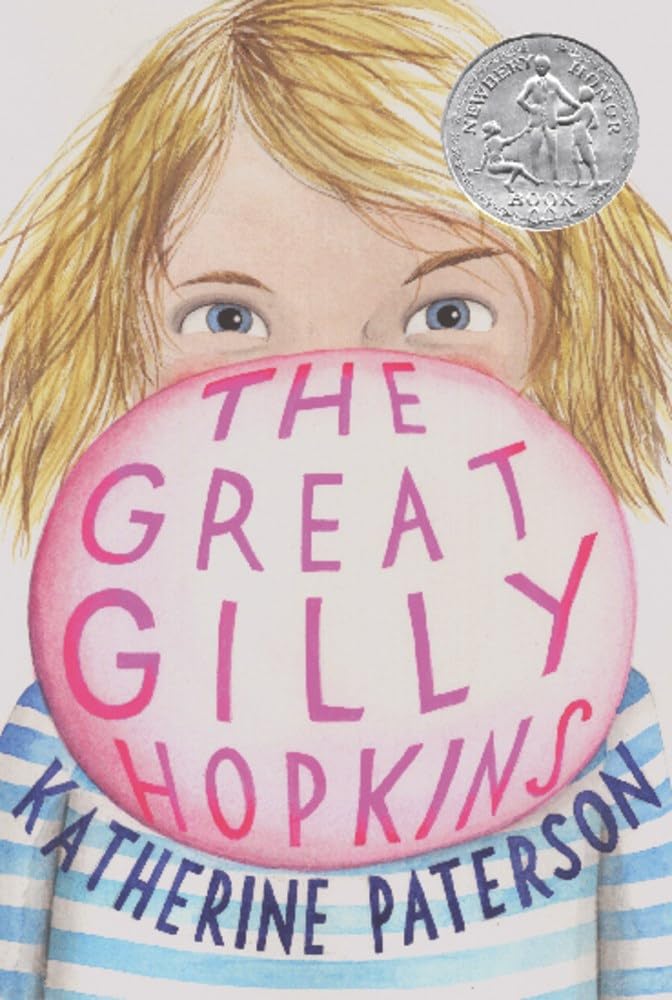
The Great Gilly Hopkins by Katherine Paterson is a Newbery Honor novel about an eleven-year-old girl in foster care who has spent years building walls around herself — manipulating, lying, and driving away anyone who gets too close — and what happens when she meets a foster mother who refuses to give up on her. First published in 1978, it is one of the most psychologically honest portrayals of a child in the child welfare system ever written for young readers, and one of the rare children’s novels that earns a genuinely difficult ending without softening or cheating it. This complete guide covers The Great Gilly Hopkins‘s reading level, recommended age, content considerations, characters, themes, and books similar to The Great Gilly Hopkins, designed for parents, teachers, and students.
For Parents
The Great Gilly Hopkins is a short, fast-moving novel that deals honestly with foster care, abandonment, and racism. Gilly is not an easy protagonist — she is angry, manipulative, and often cruel — but Paterson makes her completely understandable, and the book’s emotional payoff is substantial. Best for readers ages 9–13.
For Teachers
A perennial classroom favorite for grades 4–7, Gilly Hopkins is an outstanding text for teaching character development, unreliable self-perception, and the gap between what a character wants and what they need. Pairs well with Bud, Not Buddy for a unit on children navigating systems that were not built for them.
The Great Gilly Hopkins at a Glance
Find on Amazon →| Author | Katherine Paterson |
| Published | 1978 |
| Grade Level | 4–6 (our assessment) |
| Recommended Age | 9–13 |
| Flesch-Kincaid Grade | ~4.8 |
| Word Count | ~36,000 |
| Pages | 148 (HarperCollins paperback) |
| Chapters | 16 |
| Genre | Realistic fiction |
| Setting | Suburban Maryland, late 1970s |
| Awards | Newbery Honor (1979); National Book Award for Children’s Books (1979) |
For official Lexile and AR levels, visit Lexile.com or AR BookFinder. ReadingVine provides independent editorial assessments.
What Reading Level Is The Great Gilly Hopkins?
The Great Gilly Hopkins reads at approximately a 4th–6th grade level by our editorial assessment, with a Flesch-Kincaid grade level of around 4.8. Paterson writes in Gilly’s voice with precision and economy: the prose is colloquial, the chapters are short, and the story moves quickly. There are no long descriptive passages or complex narrative structures to slow a reader down.
The real challenge is emotional rather than linguistic. Gilly is a psychologically complex protagonist whose behavior requires the maturity to recognize that cruelty and self-protection can be the same thing. Younger readers at the lower end of the age range may find her confusing or simply unlikeable; readers 11 and up are more likely to understand what she is doing and why, and to feel the full weight of the ending. The novel does not explain Gilly to the reader — it trusts the reader to understand her, which is both its great strength and the reason it rewards maturity.
For official Lexile and Accelerated Reader scores, visit Lexile.com or AR BookFinder. ReadingVine’s assessments are independent editorial judgments.
What Age Is The Great Gilly Hopkins Appropriate For?
We recommend The Great Gilly Hopkins for readers ages 9–13. The novel contains no sexual content and no significant violence. Its challenges are emotional and thematic rather than content-based, and parents should be prepared primarily for a book that deals honestly with abandonment, racism, and a genuinely difficult ending.
The novel contains racial slurs and racist language, used by Gilly toward her Black neighbor Mr. Randolph and her foster mother Maime Trotter. This language is not presented approvingly — Gilly’s racism is depicted as part of her larger pattern of cruelty and self-protection, and the novel consistently frames it as wrong — but it is present and should be discussed rather than ignored. The book also deals frankly with the realities of foster care: Gilly has been in multiple placements, has learned to expect rejection, and acts accordingly. The ending involves a genuine loss that some readers, particularly younger ones, may find distressing or feel is unfair. This is worth discussing; the ending is one of the novel’s great strengths, but it is not a comfortable one.
For readers ages 9 and up, The Great Gilly Hopkins handles all of these elements with the craft and honesty that earned it the Newbery Honor. Paterson does not resolve Gilly’s situation into tidiness — she resolves it into something more valuable: a child who has learned, against every instinct she has, that being loved is survivable even when it doesn’t look the way you imagined.
What Is The Great Gilly Hopkins About?
Galadriel Hopkins — Gilly, she insists — is eleven years old and has been in foster care since she was three. In eight years she has been placed with five different families, and she has learned how to make sure none of them want to keep her. She is smart, tough, and deliberately unpleasant, and she has a plan: she is going to get to her real mother. Courtney — beautiful, free-spirited — has been absent since Gilly’s infancy, but Gilly carries a photograph and a handful of letters and is certain that if she can reach her, everything will be different.
Her new placement is with Maime Trotter — a large, warm, poorly educated woman who lives in a cluttered house with a frightened seven-year-old named William Ernest and an elderly blind Black neighbor named Mr. Randolph who comes for dinner most nights. Gilly sets to work immediately doing what she always does: stealing, lying, bullying William Ernest, writing a cruel letter to her caseworker. Trotter doesn’t budge. She is absolutely, immovably certain that Gilly is worth loving, and she acts on that certainty with a patience and consistency that Gilly has no framework for. Gilly keeps waiting for the catch. There isn’t one.
The novel’s second half tracks Gilly’s gradual, furious, half-conscious opening to the household alongside the consequences of the letter she wrote early in the book — a letter that sets in motion events she cannot control and that eventually takes her away from the one place she has, without quite meaning to, come to belong. The ending Paterson gives Gilly is not the ending Gilly wanted or the reader hoped for, and it is exactly right.
The Great Gilly Hopkins Characters
Is The Great Gilly Hopkins Banned?
The Great Gilly Hopkins has been challenged in schools and libraries, primarily due to the racial slurs Gilly uses early in the novel, as well as mild profanity. It has appeared on the American Library Association’s lists of frequently challenged books across multiple decades, with challenges typically citing offensive language and the novel’s depiction of Gilly’s racism.
Paterson has responded to these challenges directly, arguing that the language Gilly uses is inseparable from the portrait of a damaged child lashing out — that to sanitize it would be to falsify the character and to falsify the experience of the children the novel is meant to reach. The book remains widely taught and shelved, and the challenges have not resulted in its removal from most school curricula.
The Great Gilly Hopkins Themes and Lessons
The novel’s central argument is about the difference between the love we imagine and the love that is actually available to us. Gilly has spent eight years holding herself together around the idea of Courtney — a fantasy that is not foolish but necessary, the entirely reasonable coping mechanism of a three-year-old who needed something to hold onto. As long as she is saving herself for Courtney, she cannot accept anything from anyone else.
Trotter’s love is the novel’s answer to Courtney’s fantasy, and it works precisely because it doesn’t look like love as Gilly has imagined it. It is not beautiful or transformative in any visible way. It is just utterly, reliably present — a woman who keeps showing up, keeps setting a place at the table, keeps meaning what she says. Gilly doesn’t trust it because she doesn’t recognize it. The reader sees it from the first page. This gap between what Gilly perceives and what the reader perceives is one of Paterson’s finest technical achievements and the source of much of the novel’s emotional power.
The ending — which Paterson has discussed extensively in interviews — is the novel’s most important teaching moment. Without spoiling it entirely: Gilly gets what she thought she wanted, and it is not what she wanted. The lesson is not that hope is foolish but that love is sometimes found in the last place we are looking, and that the ability to receive it is a form of courage.
Discussion questions for classrooms and families: Why does Gilly act the way she does at the beginning of the novel? What is it about Trotter that Gilly can’t understand at first? How does Gilly’s treatment of Mr. Randolph change over the course of the novel, and what does that change tell us about her? Was the ending fair? What does Trotter’s final message to Gilly mean?
How Many Pages and Chapters in The Great Gilly Hopkins?
The standard HarperCollins paperback edition of The Great Gilly Hopkins is 148 pages, divided into 16 chapters. At roughly 36,000 words, it is among the shorter Newbery Honor novels — comparable in length to A Single Shard — and can be read comfortably in two or three sittings by a fluent reader in the target age range. The short chapters and propulsive voice make it easy to read quickly; the emotional density rewards slowing down and taking time between sessions.
For classroom use, the novel works well in a two-week unit. Its brevity makes it practical for whole-class reading, and Gilly’s voice is strong enough to sustain read-aloud sessions effectively. The ending in particular benefits from being processed in community — it is the kind of ending that students need to argue about before they understand what they feel about it.
Books Similar to The Great Gilly Hopkins
About Katherine Paterson
Katherine Paterson was born in 1932 in Qing Jiang, China, the daughter of American missionary parents, and grew up between China, the American South, and Virginia. She spent four years in Japan as a missionary before turning to fiction writing in her thirties, and the moral seriousness and cultural breadth of those experiences shape every novel she has written.
Paterson is one of the most decorated authors in the history of American children’s literature. She has won the Newbery Medal twice — for Bridge to Terabithia in 1978 and Jacob Have I Loved in 1981 — and the Newbery Honor for The Great Gilly Hopkins in 1979. She received the Hans Christian Andersen Award in 1998 and served as the National Ambassador for Young People’s Literature from 2010 to 2011. Her novels are characterized by emotional honesty, an absence of false comfort, and a consistent interest in children who are not easy to love and in the adults who love them anyway. She has spoken and written extensively about The Great Gilly Hopkins and her conviction that children in difficult circumstances deserve fiction that tells them the truth. She lives in Vermont.
The Great Gilly Hopkins: Frequently Asked Questions
What reading level is The Great Gilly Hopkins?
The Great Gilly Hopkins has a Flesch-Kincaid grade level of approximately 4.8. Our editorial assessment places it at grades 4–6 (ages 9–13). The prose is accessible and fast-moving, but the emotional complexity of the protagonist and the difficulty of the ending make it most rewarding for readers 10 and up. For official Lexile and AR scores, visit Lexile.com or AR BookFinder.
What grade is The Great Gilly Hopkins appropriate for?
We recommend grades 4–6 as the primary range, most commonly assigned in 5th and 6th grade. Strong 4th-grade readers can access the text, but the psychological complexity of Gilly’s situation and the weight of the ending are better suited to readers ages 10 and up.
How many pages are in The Great Gilly Hopkins?
The standard HarperCollins paperback edition is 148 pages across 16 chapters. Word count is approximately 36,000 words — short by middle-grade standards and readable in a few comfortable sittings.
What is The Great Gilly Hopkins about?
An eleven-year-old girl in foster care — sharp, angry, and determined not to let anyone in — arrives at her latest placement and meets a foster mother who refuses to be driven away. The novel follows Gilly’s gradual, reluctant opening to the people around her and the consequences of a letter she writes early in the book, building to an ending that is honest rather than comfortable and more powerful for it.
Is The Great Gilly Hopkins a good book for a 10-year-old?
Yes, for most 10-year-olds — with the awareness that the novel deals frankly with foster care, abandonment, and racism, and that the ending is genuinely difficult. A confident reader who is prepared for a story that doesn’t resolve into easy comfort will find it one of the most memorable books they’ve read. It is especially valuable for children with their own experience of family instability.
What happens at the end of The Great Gilly Hopkins?
Without giving away all of the specifics: Gilly gets what she thought she wanted, and it is not what she wanted. Trotter helps her understand how to survive that disappointment. Paterson has said in interviews that she received more letters about this ending than about anything else she has written — readers who feel it is unfair are responding to exactly what she intended.
Is The Great Gilly Hopkins based on a true story?
No, it is a work of fiction. Paterson has said that Gilly was inspired in part by a foster child who came to live with her family, and by her thinking about what it means to write honestly for children in the child welfare system. The emotional truth is grounded in real experience, even if the specific events are invented.
Is there a movie version of The Great Gilly Hopkins?
Yes. A film adaptation was released in 2015, starring Sophie Nélisse as Gilly, Kathy Bates as Maime Trotter, and Glenn Close as Gilly’s grandmother. It is rated PG. The film makes changes from the novel, particularly in its handling of the ending — readers who love the book should approach it with measured expectations.