
 = Partner Site
Ella Enchanted Reading Level: A Complete Guide
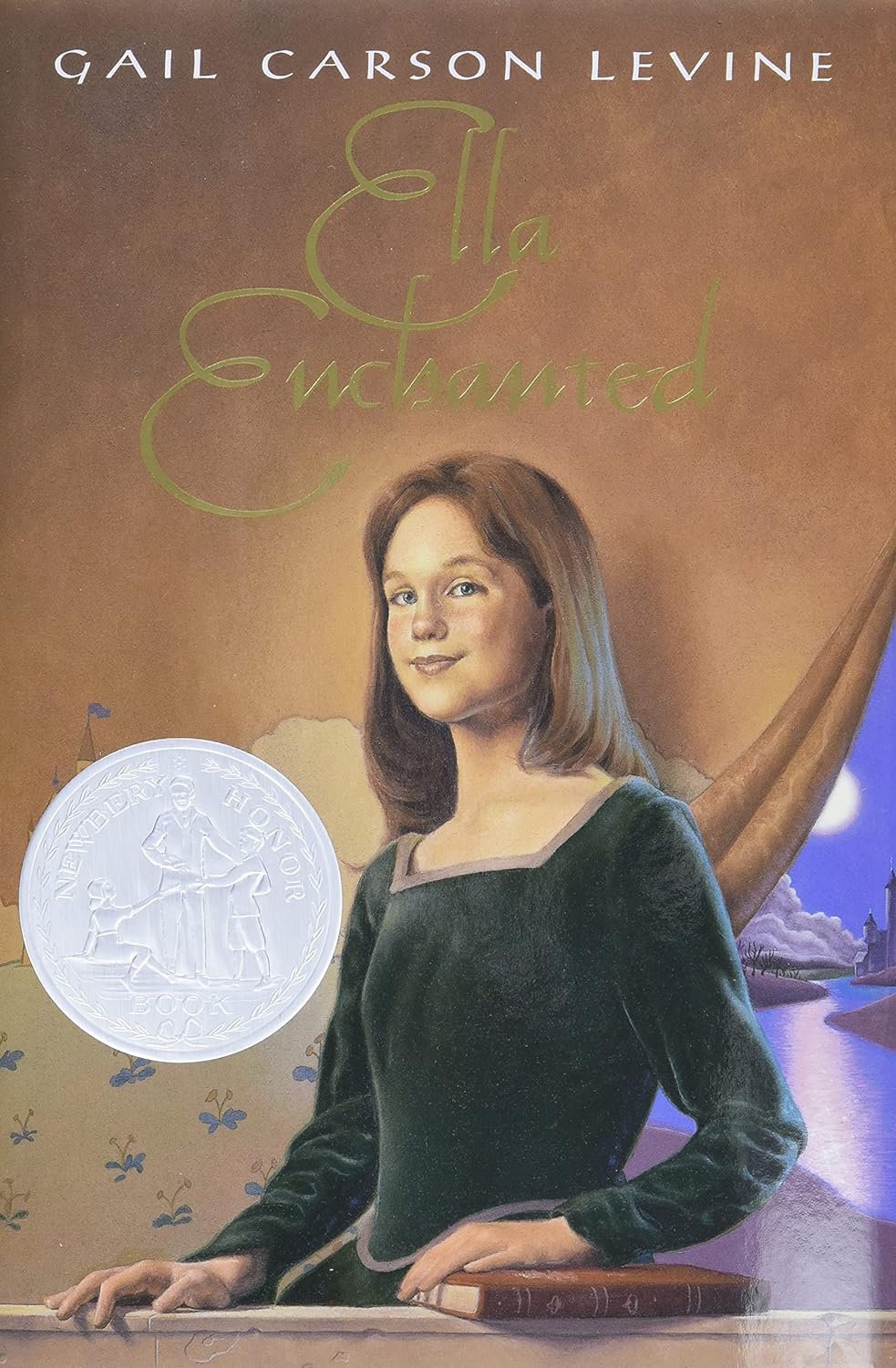
Ella Enchanted by Gail Carson Levine tells the captivating story of a girl cursed with obedience who must find the strength to break free and choose her own path. This guide provides parents and teachers with reading level information, age recommendations, content insights, and discussion questions for this Newbery Honor fairy tale retelling about agency, courage, and the power of choice.
For Parents
Find the right reading level for your child, understand the book’s themes about free will and autonomy, and get conversation starters to help your child explore questions about obedience, standing up for yourself, and making your own choices.
For Teachers
Access grade-level guidance, reading metrics, character analysis support, and thematic discussion questions perfect for classroom use. This Newbery Honor book offers rich opportunities for exploring fairy tale retellings, feminism, and character agency.
Ella Enchanted at a Glance
Find on Amazon →| Author | Gail Carson Levine |
| Published | 1997 |
| Grade Level | 4–6 (our assessment) |
| Recommended Age | 9–12 |
| Flesch-Kincaid Grade | 5.2 |
| Word Count | ~60,000 |
| Pages | 232 (standard paperback) |
| Chapters | 29 |
| Genre | Fantasy / fairy tale retelling / middle grade |
| Setting | The fantasy kingdom of Kyrria |
| Awards | Newbery Honor (1998) |
For official Lexile and AR levels, visit Lexile.com or AR BookFinder. ReadingVine provides independent editorial assessments.
What Reading Level Is Ella Enchanted?
Ella Enchanted is appropriate for grades 4–6, with a Flesch-Kincaid grade level of 5.2. The vocabulary is accessible with some fantasy terms and the sentence structure is straightforward. Gail Carson Levine’s writing is clear and engaging, making the fantasy world easy to visualize. The first-person narration from Ella’s perspective makes the story feel immediate and personal.
Levine’s style combines fairy tale elements with realistic character development and psychological depth. While the book is a retelling of Cinderella, it’s far more complex than the traditional fairy tale—Ella is active rather than passive, the romance develops gradually with real chemistry, and the “curse” becomes a metaphor for exploring themes of autonomy and consent. The pacing is steady, with both adventure sequences and quieter character moments.
While strong fourth graders can handle the reading mechanics, the story resonates most deeply with readers ages 9–12 who can appreciate the deeper themes about bodily autonomy, the importance of consent, and what it means to have control over your own life. The book rewards readers who enjoy fairy tale retellings that subvert traditional tropes, heroines who save themselves, and stories that explore the psychological impact of being forced to obey.
What Age Is Ella Enchanted Appropriate For?
Ella Enchanted is most appropriate for readers ages 9–12. The story deals with the curse of obedience, which raises questions about consent, autonomy, and what happens when you can’t say no. Levine handles these themes thoughtfully, making them accessible to middle-grade readers without being graphic or inappropriate. The book includes some peril and minor violence but nothing gratuitous.
Curse of obedience and consent issues: Ella must obey any direct command, which means she has no bodily autonomy. People can and do take advantage of this, though nothing sexual occurs. The curse is a metaphor for lack of agency.
Mother’s death: Ella’s mother dies early in the story from illness. While not graphic, this loss shapes Ella’s journey and may be sad for some readers.
Abusive stepfamily: Ella’s stepmother and stepsisters are cruel and manipulative. They use her curse to control and exploit her, creating an emotionally abusive household situation.
Violence and danger: Ella faces ogres, giants, and other dangers. There are brief fight scenes and moments of peril, but violence is not graphic.
Class and servitude: Ella is forced into servitude by her stepfamily. The book addresses inequality and exploitation, though Ella ultimately escapes.
What’s NOT in the book: No sexual content or romance beyond innocent kissing. The obedience curse could be used for terrible things, but it never is—Levine keeps the story appropriate for middle-grade readers while still exploring serious themes. The ending is happy—Ella breaks the curse through her own strength, marries for love, and gains her freedom. The book’s ultimate message is empowering: you have the right to control your own body and choices.
What Is Ella Enchanted About?
Ella of Frell is cursed. When she was a baby, a foolish fairy named Lucinda gave her the “gift” of obedience—Ella must obey any direct command given to her, no matter what. If someone tells her to hop on one foot, she must. If ordered to give away her treasured possessions, she has to comply. If commanded to hurt someone or herself, she cannot refuse. This curse makes Ella vulnerable to manipulation and takes away her free will.
Ella’s mother understands the danger of the curse and tries to protect Ella by never commanding her and teaching her to be resourceful. But when Ella is fifteen, her mother dies from illness. Ella’s father, Sir Peter, is a merchant who cares more about money than his daughter. He remarries quickly to Dame Olga, a social-climbing woman with two daughters: Hattie and Olive. The stepsisters are vain and cruel, and when Hattie discovers Ella’s curse, she gleefully uses it to torment and control Ella.
Desperate to escape, Ella runs away to finishing school, but Hattie and Olive are sent there too. At school, Hattie’s abuse intensifies—she commands Ella to steal, to humiliate herself, and to end her friendship with Areida, Ella’s loyal friend. Ella realizes she can never be safe as long as she’s cursed. She decides to find Lucinda and force the fairy to remove the curse.
Ella leaves finishing school on a quest to find Lucinda. During her journey, she encounters Prince Char (short for Charmont), whom she met briefly at her mother’s funeral. Char is kind, intelligent, and genuinely interested in Ella. They become friends, and gradually, Ella falls in love with him. But she knows she can never marry anyone while cursed—a husband could command her to do anything, and she would have no choice but to obey.
Ella’s journey takes her through encounters with ogres, giants, and elves. She demonstrates courage, intelligence, and resourcefulness, saving herself repeatedly rather than waiting for rescue. She also becomes entangled in royal and magical conflicts that add complexity to her quest.
Eventually, Ella finds Lucinda at a wedding, where the fairy is about to bestow a “gift” on a baby. Ella knows from experience that Lucinda’s gifts are often actually curses, bringing harm instead of help. She confronts Lucinda and begs her to undo the obedience spell, but Lucinda does not fully understand the damage it has caused and is unable to reverse it. Realizing that no one else can free her, Ella understands that she must find the strength within herself to break the curse.
After many adventures, Ella returns home only to find that her stepfamily is planning to exploit her curse. They command her to marry a wealthy old man to secure their own position. Ella is trapped—until she realizes that Prince Char, now king, is holding a ball to find a bride. Dame Olga decides the family should attend, hoping one of her daughters will catch the king’s eye.
At the ball, Ella sees Char again. They dance and talk, and it’s clear they love each other. But Char doesn’t know about Ella’s curse. When he proposes marriage, Ella is torn between her love for him and her fear of what could happen if she marries while cursed. What if someone discovers the curse and commands her to hurt Char or betray the kingdom?
When Char proposes to her, Ella faces the ultimate test. Because of her curse, she feels a powerful compulsion to accept, even though Char does not know about the enchantment. Ella realizes that agreeing without revealing the truth would be a betrayal and could put him in danger. For the first time, she resists the curse with all her strength. The effort causes intense physical pain, but she refuses to give in. By choosing her own will over the curse’s control, Ella finally breaks the spell and frees herself.
Free at last, Ella can tell Char the truth. She explains the curse and why she couldn’t marry him while under its power. Char understands and still wants to marry her—this time, Ella can say yes because she truly chooses it. The book ends with Ella and Char’s wedding, with Ella finally free to make her own choices, control her own life, and live happily ever after on her own terms.
Ella Enchanted Characters
Ella Enchanted Themes and Lessons
At its heart, Ella Enchanted is about the fundamental human right to control your own body and choices. The curse of obedience is a metaphor for any situation where someone is forced to comply—whether through manipulation, coercion, or powerlessness. Ella’s journey is about reclaiming her agency and the right to say no. The book teaches that obedience is not a virtue when it means giving up your will, and that true goodness comes from making choices, not from being forced to comply. When Ella finally breaks the curse by refusing to obey, she’s choosing what’s right over what she’s commanded to do—proving that free will is essential to morality.
The book also explores what true love means in the context of consent and choice. Ella loves Char, but she knows she cannot marry him while cursed because she wouldn’t truly be choosing marriage—she could be commanded to say yes. The book argues that love and commitment are only meaningful when they’re freely chosen. Char’s proposal becomes a test: can Ella refuse even when it means refusing what she wants? By saying no, Ella proves that she can make her own choices, which is what allows her to eventually say yes on her own terms. This teaches that relationships built on genuine choice and mutual respect are the only kind worth having.
Discussion questions for families:
- How does Ella’s curse affect her ability to make friends, trust people, and live her life? What does this teach about the importance of being able to say no?
- Why is it important that Ella breaks the curse herself rather than having someone else (Mandy, Char, or Lucinda) break it for her?
- How is this version of Cinderella different from the traditional fairy tale? What makes Ella a different kind of heroine?
- What does the book teach about obedience? When is it right to disobey, and when is obedience appropriate?
How Many Pages and Chapters in Ella Enchanted?
Ella Enchanted has 232 pages in the standard paperback edition and is divided into 29 chapters. The word count is approximately 60,000 words, making it a substantial middle-grade novel. The chapters average about 8 pages each and follow Ella’s journey chronologically from childhood through the curse’s breaking.
For independent readers in the target age range (9–12), the book typically takes 6–7 hours to complete, or about two weeks of reading 30 minutes per day. Ella’s engaging voice and the adventure of her quest keep readers interested. The romance develops gradually and feels earned, which appeals to readers who want more than just instant attraction. The Cinderella framework is familiar, but Levine’s twists keep the story fresh.
As a read-aloud, Ella Enchanted takes approximately 5–6 hours total. The chapter structure works well for reading sessions. The book provides excellent opportunities to discuss themes about consent, autonomy, and what makes someone a hero. Many families and classrooms enjoy it because it combines fairy tale magic with serious themes about agency and choice. Teachers often use it to teach fairy tale retellings, strong female protagonists, and discussions about consent and bodily autonomy in age-appropriate ways.
Books Similar to Ella Enchanted
If your child enjoyed Ella Enchanted, here are six similar books that explore themes of strong heroines, fantasy, and finding your own path:
About Gail Carson Levine
Gail Carson Levine (born 1947) is an American author best known for Ella Enchanted, published in 1997 as her first novel. The book won a Newbery Honor in 1998 and became a beloved classic of children’s literature. Levine was inspired to write Ella Enchanted after taking a writing class that challenged her to retell a fairy tale. She chose Cinderella because she’d always been frustrated by the traditional version, where Cinderella is passive and waits to be rescued. Levine wanted to write a Cinderella who was active, intelligent, and saved herself. The curse of obedience came from Levine’s desire to give Ella a real obstacle to overcome—something internal that she had to fight against rather than just external villains. The curse also allowed Levine to explore themes about consent, autonomy, and what it means to truly choose your own path, themes she felt were important for young readers, especially girls, to think about. Levine did extensive research into medieval life and fairy tale conventions to create the fantasy kingdom of Kyrria and its various magical creatures (ogres, giants, elves, fairies). She wanted the world to feel rich and lived-in while still maintaining the fairy tale atmosphere. The romance between Ella and Char was carefully developed to show genuine connection based on mutual respect and shared interests—not just instant attraction or physical appearance. Levine wanted readers to see a relationship where both people see each other as equals and where choice and consent are central to love. The book’s feminist themes—a heroine who saves herself, the importance of bodily autonomy, the right to say no—made Ella Enchanted groundbreaking in children’s literature of the late 1990s. While feminist retellings are more common now, Ella Enchanted was one of the first to reach a wide middle-grade audience with these messages. The book was adapted into a film in 2004, though Levine has stated the movie strays significantly from her book. Levine went on to write many other books, including The Princess Tales (fairy tale retellings), Fairest (another Newbery Honor book), and Writing Magic (a guide for young writers). However, Ella Enchanted remains her most beloved work, teaching generations of readers that true heroism comes from within, that consent matters, and that the most important freedom is the freedom to make your own choices.
Ella Enchanted: Frequently Asked Questions
How does Ella break the curse in Ella Enchanted?
Ella breaks the curse through her own strength and willpower by refusing to obey a direct command for the first time in her life. When Prince Char proposes marriage—a normal proposal, without knowledge of her curse—Ella experiences it as something she must obey because of the curse’s hold over her. However, she knows that marrying while cursed would be wrong—it would mean she’s not truly choosing marriage, and it would put Char in danger if anyone discovered the curse and commanded her to harm him. Despite the excruciating physical pain caused by resisting the curse, Ella refuses. She says no to the proposal, choosing what she knows is right over what she’s compelled to do. This act of true free will—making a choice based on her own judgment despite the curse’s compulsion—breaks the curse. The key is that Ella saves herself; no one else can break the curse for her. It requires her own strength, determination, and willingness to endure pain to assert her right to make her own choices.
What is Ella’s curse in Ella Enchanted?
Ella’s curse is the “gift” of obedience given to her as a baby by a thoughtless fairy named Lucinda. The curse forces Ella to obey any direct command given to her, no matter what. If someone tells her to do something, she physically cannot refuse—her body compels her to comply even if she desperately doesn’t want to. This means Ella has no bodily autonomy or free will. People can command her to give away her possessions, hurt herself or others, betray secrets, end friendships, or do anything else, and she must obey. The curse makes Ella extremely vulnerable to manipulation and abuse, particularly from her stepsister Hattie, who discovers the curse and uses it to torment Ella. The curse is a metaphor for any situation where someone lacks agency and control over their own body and choices. Ella cannot marry or have normal relationships because anyone could discover the curse and command her to do terrible things.
Is Ella Enchanted appropriate for 4th grade?
Yes, Ella Enchanted is appropriate for fourth graders. The reading level (5.2 Flesch-Kincaid) is accessible to strong fourth-grade readers, and the fairy tale framework makes the fantasy world easy to understand. The themes about consent and autonomy are important for fourth graders to think about and are handled in age-appropriate ways—the book never includes anything sexual or graphic, but it does explore what it means to have control over your own body and choices. Fourth graders can understand Ella’s frustration with being forced to obey and can appreciate her courage in breaking the curse. Teachers and parents should be prepared to discuss the themes if questions arise, but the book presents these ideas thoughtfully and appropriately for middle-grade readers. Fifth and sixth graders may appreciate the deeper themes more fully, but fourth graders will enjoy the adventure, magic, and fairy tale elements while still benefiting from the book’s messages about agency and self-determination.
Does Ella marry the prince in Ella Enchanted?
Yes, Ella marries Prince Char at the end of Ella Enchanted, but only after she breaks the curse. This is crucial to the story’s message about choice and consent. When Char first proposes (while Ella is still cursed), Ella refuses because she knows marrying while cursed would mean she’s not truly choosing marriage—she could be commanded to say yes, which would make the marriage meaningless and potentially dangerous for both of them. By refusing Char’s proposal and breaking the curse through that refusal, Ella proves she can make her own choices. Only then, when she’s free to genuinely choose for herself, does she accept Char’s proposal and marry him. The marriage is meaningful because Ella freely chooses it, not because she’s forced or commanded to accept. Char also knows the truth about the curse by then and understands why Ella had to refuse him initially. Their marriage is based on mutual love, respect, and genuine choice—making it a true partnership rather than a fairy tale rescue.
What is the main message of Ella Enchanted?
The main message is that free will and the ability to make your own choices are fundamental human rights, and that true love and morality require genuine consent and agency. Ella’s curse of obedience takes away her autonomy, showing how being forced to comply—even to seemingly reasonable commands—is a form of control and abuse. The book teaches that obedience is not inherently virtuous if it means giving up your will; true goodness comes from choosing to do right, not from being forced to obey. Ella must break the curse herself—no one can rescue her—which emphasizes that reclaiming your agency requires your own strength and determination. The book also teaches that relationships (romantic or otherwise) are only meaningful when based on genuine choice and mutual respect. Ella cannot marry Char while cursed because she needs to truly choose marriage, not be commanded into it. Finally, the book argues that saying no is sometimes the bravest and most important thing you can do, even when it’s difficult or painful. These messages about consent, autonomy, and self-determination are presented through adventure and fantasy, making them accessible and empowering for young readers.
How is Ella Enchanted different from Cinderella?
Ella Enchanted retells Cinderella but transforms it into a story about agency and self-rescue rather than passive waiting for rescue. Key differences include: Ella is cursed with obedience, giving her a real internal obstacle to overcome beyond just a mean stepfamily. She actively seeks solutions—running away, going on quests, confronting the fairy who cursed her—rather than waiting for rescue. Ella breaks her own curse through willpower and choice; no fairy godmother or prince saves her. The romance develops over time through genuine friendship, shared interests, and mutual respect—Ella and Char write letters, have conversations, and become friends before falling in love. Ella initially refuses the prince’s proposal because she knows she can’t truly choose marriage while cursed, showing that consent and free choice matter more than a happy ending. The stepfamily’s cruelty is connected to the curse—they exploit Ella’s forced obedience rather than just being generally mean. Ella is intelligent, brave, and resourceful throughout, making decisions and taking action. The book includes adventure, political intrigue, and encounters with magical creatures beyond the traditional ball-and-slipper story. Most importantly, the message shifts from “good things come to those who wait and are obedient” to “you have the right to control your own life and choices.”
Is there a sequel to Ella Enchanted?
No, there is no direct sequel to Ella Enchanted. The book stands alone with a complete, satisfying ending—Ella breaks the curse, marries Char, and lives happily ever after on her own terms. However, Gail Carson Levine wrote several other fairy tale retellings that readers who enjoyed Ella Enchanted might like, including The Princess Tales series (short retellings of various fairy tales), Fairest (a retelling of Snow White set in the same world as Ella Enchanted but with different characters), and The Two Princesses of Bamarre (an original fantasy about two sisters). While these books share Levine’s style of strong, active heroines and thoughtful exploration of agency and choice, they’re separate stories, not sequels. Ella Enchanted was also adapted into a 2004 film, though Levine has stated the movie differs significantly from her book in both plot and themes. Many readers prefer the book for its more sophisticated treatment of consent and autonomy.
What age is Ella in Ella Enchanted?
Ella is fifteen years old for most of Ella Enchanted. The book begins with a brief prologue describing her birth and curse, then jumps ahead to when Ella is fifteen and her mother has just died. The main action of the story—her time with her stepfamily, finishing school, her quest to find Lucinda, her adventures, and her romance with Prince Char—all happens while she’s fifteen and sixteen. By the end of the book, when she breaks the curse and marries Char, Ella is around sixteen or seventeen. This age makes Ella relatable to middle-grade and young adult readers who are themselves beginning to think about autonomy, identity, and making their own choices. Fifteen is old enough for Ella to understand the full implications of her curse and to be frustrated by her lack of agency, but young enough that readers in the target age group (9–12) can still identify with her experiences and emotions.