
 = Partner Site
Divergent Reading Level: A Complete Guide
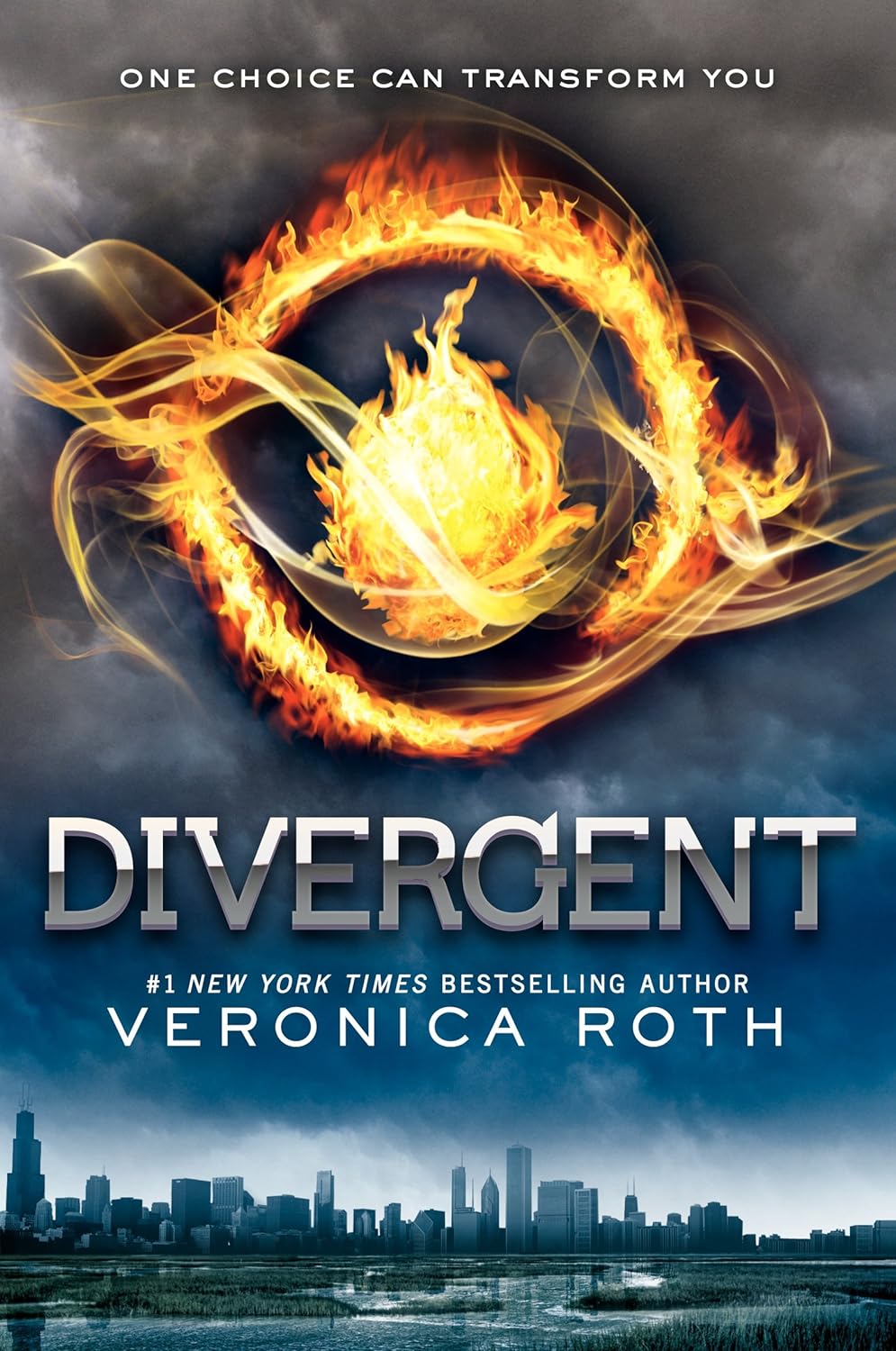
Divergent by Veronica Roth is a dystopian young adult novel set in a future Chicago where society is divided into five factions — each dedicated to a single virtue — and every sixteen-year-old must choose the faction they will belong to for the rest of their life. When Tris Prior discovers at her choosing ceremony that she doesn’t fit neatly into any faction, she is told she is Divergent — and that this makes her dangerous. First published in 2011, it is one of the best-selling YA dystopian novels of the decade, combining a propulsive action plot with a coming-of-age story about identity, belonging, and the cost of believing in something absolutely. This complete guide covers Divergent‘s reading level, recommended age, content considerations, characters, themes, and books similar to Divergent, designed for parents, teachers, and students.
For Parents
Divergent is a fast-paced, immersive YA novel with a strong female protagonist, a romance that develops with restraint, and violence that escalates sharply in the final act. The first book is the most accessible of the trilogy in terms of content; the sequels are considerably darker. Best for readers ages 13 and up, it is one of the more engaging entry points into YA dystopian fiction for readers who have outgrown middle-grade adventure.
For Teachers
A popular independent reading choice for grades 8–10, Divergent is most useful in the classroom as a vehicle for discussing identity, social categorization, and the dangers of ideological absolutism. Roth’s faction system is a usefully simplified model for discussing how societies sort people and what is lost in that sorting. Pairs naturally with The Hunger Games for a YA dystopian unit, or with Brave New World for a unit on the political implications of social engineering.
Divergent at a Glance
Find on Amazon →| Author | Veronica Roth |
| Published | 2011 |
| Grade Level | 7–10 (our assessment) |
| Recommended Age | 13–17 |
| Flesch-Kincaid Grade | ~5.8 |
| Word Count | ~105,000 |
| Pages | ~487 (Katherine Tegen paperback) |
| Chapters | 39 |
| Genre | Dystopian science fiction / young adult |
| Setting | Future Chicago |
| Series | Divergent, Book 1 |
For official Lexile and AR levels, visit Lexile.com or AR BookFinder. ReadingVine provides independent editorial assessments.
What Reading Level Is Divergent?
By our editorial assessment, Divergent reads at a grade 7–10 level. The Flesch-Kincaid formula places it at approximately grade 5.8 — a score that, as with many high-intensity YA novels, undersells the appropriate age range. Roth’s prose is clean and immediate, written in close first-person present tense that creates urgency and intimacy without demanding much at the sentence level. The vocabulary is accessible, the chapters move quickly, and the action sequences are viscerally clear.
The gap between reading level and appropriate age is a matter of content and thematic complexity. The novel’s violence escalates significantly in its final third, the romance between Tris and Four involves a physical dimension that is restrained but present, and the psychological manipulation sequences during Dauntless initiation — in which characters are forced to confront their deepest fears in realistic simulations — are intense in ways that can be genuinely distressing for younger readers. The novel also asks questions about identity, loyalty, and ideological extremism that reward maturity rather than mere reading fluency. We recommend it for readers 13 and up rather than the younger readers its FK score alone might suggest.
For official Lexile and Accelerated Reader scores, visit Lexile.com or AR BookFinder. ReadingVine’s assessments are independent editorial judgments.
What Age Is Divergent Appropriate For?
We recommend Divergent for readers ages 13 and up. The novel’s content is solidly in young adult territory, with violence, a developing romance, and psychological intensity that distinguish it clearly from middle-grade fiction.
Divergent contains significant violence, particularly in the novel’s final third. Dauntless initiation involves fighting between initiates that results in serious injury, and the climactic sequence involves characters being shot, killed, and coerced into killing others under simulation. A character Tris cares about dies, and she is directly responsible for a death that she carries with considerable guilt. The violence in the final act is more intense than the action-adventure sequences earlier in the novel, and parents should be aware that the tone shifts sharply. The romance between Tris and Four develops slowly and is handled with more restraint than many YA novels — there is kissing and physical closeness but no explicit sexual content in the first book. The fear simulation sequences, in which characters experience their worst fears as fully realistic scenarios, include claustrophobia, drowning, violence, and a sequence involving sexual coercion that Tris must fight her way through — this last element is not graphic but is present and worth being aware of. The sequels are significantly darker in all of these areas.
For readers 13 and up, Divergent is a well-crafted, fast-moving YA novel with a protagonist whose development across the book is genuinely interesting. The violence serves the story’s argument about what Dauntless represents; the fear simulations are one of the novel’s most inventive elements; and the romance is one of the more thoughtfully handled in popular YA fiction of its era.
What Is Divergent About?
In a future Chicago, society is organized into five factions, each built around a virtue its founders believed was the root of all human conflict. Abnegation values selflessness; Dauntless values bravery; Erudite values intelligence; Candor values honesty; Amity values peace. Every year, sixteen-year-olds take an aptitude test that suggests which faction they belong to, then choose at a public ceremony — a choice that is permanent. Faction before blood is the society’s governing motto. You can leave your family for your faction, but you cannot undo the choice.
Beatrice Prior has grown up in Abnegation, raised to put others before herself so completely that she is not supposed to look in mirrors. The aptitude test is supposed to clarify her path. Instead, her results are inconclusive — she shows equal aptitude for Abnegation, Dauntless, and Erudite, which should be impossible. The test administrator tells her quietly that she is Divergent and that she must tell no one. At the choosing ceremony, Tris — the name she takes for herself — chooses Dauntless.
The novel’s first half follows Tris through Dauntless initiation: a brutal competition among transfer and born-Dauntless initiates in which only a limited number will be admitted to full faction membership, and the rest will become factionless — homeless, stateless, without identity in a world organized entirely around faction membership. Initiation involves physical combat training, weapons handling, and increasingly elaborate fear simulations in which initiates must demonstrate courage by confronting their deepest fears in realistic virtual scenarios. Tris is not naturally suited to Dauntless, but she is determined, and she begins to understand that her Divergence — her ability to think clearly within simulations that other initiates experience as indistinguishable from reality — gives her an advantage she must conceal.
The novel’s second half accelerates sharply into political thriller territory: Tris discovers that Erudite is planning a coup using Dauntless as its instrument, that the simulations being used to condition Dauntless members will be turned to devastating effect, and that her own family and everything she left behind in Abnegation are in immediate danger. The final act is one of the more intense in popular YA fiction, requiring Tris to make choices — and to absorb losses — that mark the transition from the first book’s coming-of-age story to the darker, more political story the sequels pursue.
Divergent Characters
Is Divergent Banned?
Divergent has been challenged in some schools and libraries, primarily due to its violence, its romantic content, and its perceived anti-religious or anti-family themes — the faction system’s motto, “faction before blood,” and the novel’s portrait of Abnegation as an extreme self-denial that is both admirable and damaging have drawn some objections. It has appeared on lists of challenged books but has not been widely banned and does not appear on the American Library Association’s most frequently challenged titles. Most challenges have not resulted in removal from curricula or shelves, and the novel remains widely available in school and public libraries.
Divergent Themes and Lessons
The faction system is Roth’s central conceit and her most interesting idea: a society organized entirely around the belief that each human virtue can be cultivated in isolation, that selflessness and bravery and intelligence and honesty and peace are separable rather than interwoven. The Divergent — those who cannot be sorted into a single faction — are dangerous not because they are more powerful but because they are more complete, because they resist the reductive logic the system depends on. Tris’s divergence is a metaphor for the messiness of actual human identity, the way that real people are never only brave or only selfless or only honest, and that a society demanding they choose is a society demanding they amputate parts of themselves.
The novel is also, specifically, a story about fear and what courage actually means. Dauntless defines bravery as the absence of fear, or the performance of fearlessness — a definition that produces recklessness, cruelty, and a culture of bullying among the initiates. Four’s definition, which he offers to Tris quietly, is different: courage is not the absence of fear but the judgment that something else is more important than fear. This distinction is the novel’s moral center, and it is the thing that most separates Tris’s Dauntless from the institution she has joined.
Roth, who has spoken about the Christian influences on the trilogy, embeds in the novel a sustained interest in self-sacrifice and what it costs and what it means — an interest that becomes more explicit in the sequels but is already present in the tension between Tris’s Abnegation upbringing and her Dauntless choice. The question of whether selflessness and bravery are in conflict, or whether the most courageous acts are ultimately selfless ones, runs through all three books.
Discussion questions for classrooms and families: What is wrong with the faction system — what does it get wrong about human nature? What is the difference between Dauntless courage and recklessness, and where does Tris fall on that spectrum? What does Tris lose by leaving Abnegation, and what does she gain? Why are the Divergent considered dangerous by those in power? What does the novel suggest about what happens to societies that demand ideological purity?
How Many Pages and Chapters in Divergent?
The Katherine Tegen paperback edition of Divergent is approximately 487 pages across 39 chapters. At roughly 105,000 words, it is a substantial novel — longer than The Maze Runner and considerably longer than The Hunger Games — but Roth’s brisk, present-tense prose and the momentum of the initiation plot mean it reads faster than its page count suggests. Most readers in the target age range finish it in one to two weeks; many report the final third being essentially impossible to put down.
For classroom use, the novel works in a three-to-four week unit. The faction system and its implications make for productive early discussion; the midpoint shift from physical initiation to fear simulation is a natural break for exploring the novel’s psychological turn; and the final act raises the ethical questions — about loyalty, sacrifice, and what we owe to people we love versus causes we believe in — that are the novel’s richest classroom material. The sequels are considerably darker and are generally treated as separate texts rather than extensions of the first book’s classroom unit.
Books Similar to Divergent
About Veronica Roth
Veronica Roth was born in 1988 in New York City and grew up in the Chicago suburbs — the setting she would later use for the Divergent trilogy. She studied creative writing at Northwestern University, where she wrote the first draft of Divergent during her senior year, in part as a way of managing anxiety about what came after graduation. The novel was acquired by HarperCollins before she graduated and published in 2011, when she was twenty-two years old.
The Divergent trilogy — Divergent (2011), Insurgent (2012), and Allegiant (2013) — sold more than thirty-five million copies worldwide. A film series starring Shailene Woodley as Tris and Theo James as Four was released between 2014 and 2016; the fourth film was never completed after the third performed below expectations. The ending of Allegiant, which killed the protagonist, drew a polarized response from readers — many felt it was a brave and consistent conclusion; many others felt it was a betrayal of the series. Roth has discussed the ending extensively in interviews, noting that it grew from the novel’s themes of selflessness and sacrifice. Her subsequent novels, including the Carve the Mark duology and Chosen Ones, are aimed at older readers. She lives in Chicago.
Divergent: Frequently Asked Questions
What reading level is Divergent?
Divergent has a Flesch-Kincaid grade level of approximately 5.8 — but this undersells the appropriate age range. Our editorial assessment places it at grades 7–10 (ages 13–17). The prose is clean and immediate, but the violence, psychological intensity, and thematic complexity make it best suited to readers 13 and up. For official Lexile and AR scores, visit Lexile.com or AR BookFinder.
What grade is Divergent appropriate for?
We recommend grades 7–10 as the primary range, most commonly read independently in 8th and 9th grade. The violence escalates sharply in the final act and the fear simulation sequences are psychologically intense; parents of readers under 13 should review the content note above.
How many pages are in Divergent?
The Katherine Tegen paperback is approximately 487 pages across 39 chapters. Word count is roughly 105,000 words. Roth’s brisk present-tense prose means most readers in the target age range finish it in one to two weeks, with the final third difficult to set down.
What is Divergent about?
In a future Chicago divided into five virtue-based factions, sixteen-year-old Tris Prior chooses to leave her selfless Abnegation upbringing for Dauntless — the brave — and discovers she is Divergent: someone who doesn’t fit neatly into any faction, which makes her a target. The novel follows her through brutal initiation and into the discovery of a political conspiracy that threatens everyone she loves.
What are the five factions in Divergent?
The five factions are Abnegation (selflessness), Dauntless (bravery), Erudite (intelligence), Candor (honesty), and Amity (peace). Each faction was founded on the belief that a single human failing caused all of society’s problems, and that cultivating its opposite virtue would fix them. The Divergent — those who show aptitude for multiple factions — represent the flaw in this premise: that human identity cannot be reduced to a single virtue.
Is Divergent appropriate for a 12-year-old?
It is on the edge. Most 12-year-olds who are mature readers will handle it without difficulty; the violence in the final third and the fear simulation sequences — particularly the one involving sexual coercion — make us recommend waiting until 13 for most readers. Parents who know their child’s specific sensitivities are best placed to make the call.
Is Divergent part of a series?
Yes. Divergent is the first book in a trilogy, followed by Insurgent (2012) and Allegiant (2013), plus a companion novel, Four, told from Four’s perspective. The sequels are significantly darker and more violent than the first book. Allegiant‘s ending — which kills the protagonist — is one of the most debated conclusions in popular YA fiction.
Is there a Divergent movie?
Yes. A film series starring Shailene Woodley as Tris and Theo James as Four was released between 2014 and 2016: Divergent (2014), Insurgent (2015), and Allegiant (2016). All three are rated PG-13. A planned fourth film was cancelled after Allegiant underperformed at the box office. The films are generally faithful to the first novel’s major plot points while compressing and adjusting details.