
 = Partner Site
The Hunger Games Reading Level: A Complete Guide
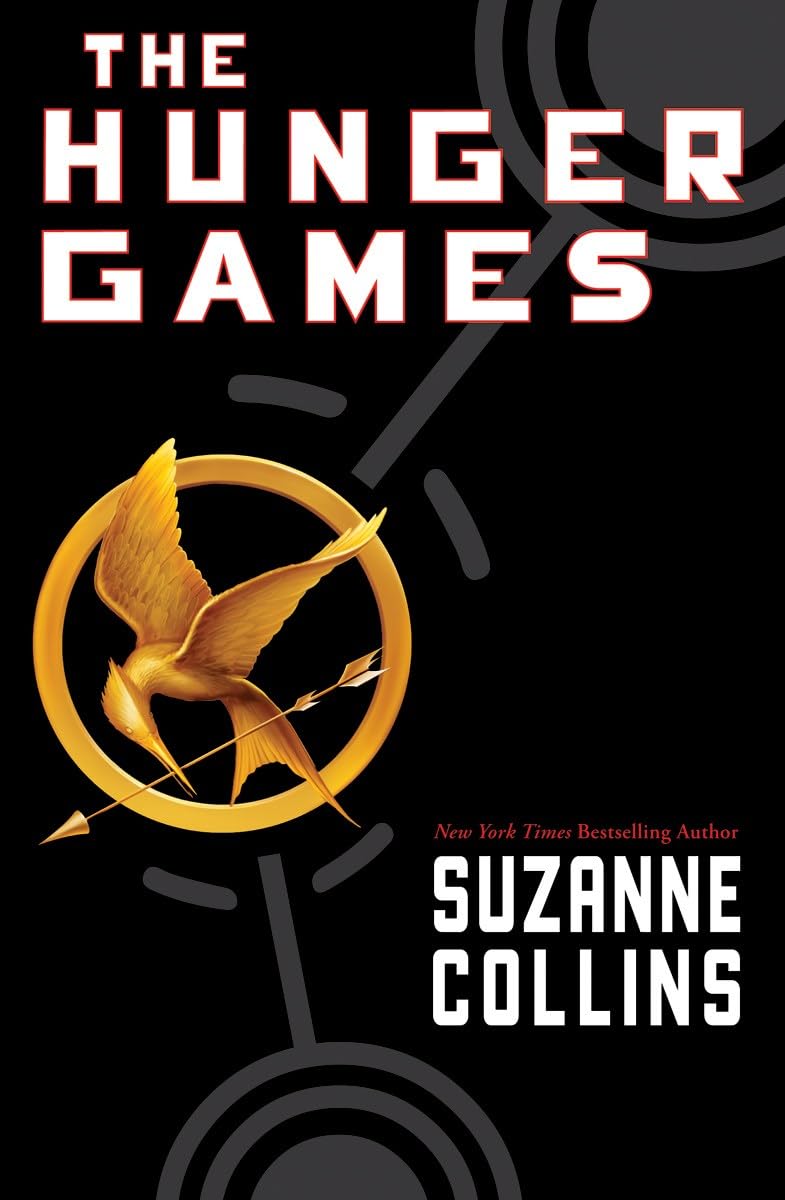
This complete guide to The Hunger Games by Suzanne Collins covers everything parents, teachers, and students need to know — from reading level and recommended age to a full character list, key themes, and similar books. One of the most widely read and widely challenged young adult novels of the twenty-first century, this fast-paced dystopian story has sold over 100 million copies worldwide and sparked genuine classroom conversations about power, survival, and the ethics of entertainment. Whether you’re a parent deciding if it’s right for your child’s age and temperament, or a teacher building a unit around it, you’ll find honest, practical guidance here.
For Parents
The Hunger Games is a propulsive, first-person survival story narrated by a fierce and deeply sympathetic teenage girl. Its central premise — children selected by lottery to fight to the death on live television — is genuinely dark, and the violence, while rarely gratuitous, is real and purposeful. The book’s emotional core, however, is about love, family loyalty, and resistance to injustice. Katniss volunteers for the Games solely to protect her younger sister. Most parents who have read it describe the violence as intense but meaningful rather than exploitative, and Common Sense Media recommends it for ages 13 and up. Children who are sensitive to violence or to themes of death and oppression may find it disturbing; confident, adventure-loving readers in the 11–14 range typically find it riveting and impossible to put down.
For Teachers
The Hunger Games is one of the most teachable novels in the upper middle grade and YA canon. Its themes — authoritarian power, media manipulation, class inequality, the ethics of violence as spectacle, and individual conscience against collective compliance — reward serious analysis at the middle and high school level. Suzanne Collins drew explicitly on Greek mythology (the Theseus and the Minotaur myth), Roman gladiatorial games, and contemporary reality television, making it an ideal text for units on literary allusion, dystopian fiction, and propaganda. The novel’s tight first-person present-tense narration also provides strong material for studying narrative voice and unreliable perspective. It appears on the SpringBoard Grade 8 curriculum list and is widely taught in grades 7–10.
The Hunger Games at a Glance
Find on Amazon →| Author | Suzanne Collins |
| Published | 2008 |
| Grade Level | 5–9 (our assessment) |
| Recommended Age | 11–15 |
| Flesch-Kincaid Grade | 5.3 |
| Word Count | ~99,000 |
| Pages | 374 (standard paperback) |
| Chapters | 27 chapters in 3 parts |
| Genre | Dystopian fiction / YA / Science fiction |
| Setting | Future North America (the nation of Panem); primarily District 12 and the Capitol arena |
| Awards | California Young Reader Medal; Publishers Weekly Best Book of 2008; New York Times Notable Children’s Book |
For official Lexile and AR levels, visit Lexile.com or AR BookFinder. ReadingVine provides independent editorial assessments.
What Reading Level Is The Hunger Games?
The Hunger Games carries a Lexile score of 810L and an ATOS (Accelerated Reader) level of 5.3, worth 15 AR points. Our Flesch-Kincaid calculation is consistent with the ATOS at approximately grade 5.3. On paper, these numbers suggest a book accessible to strong readers in grades 4 or 5 — and at the word and sentence level, that’s not wrong. Collins writes in short, punchy sentences and a tight present-tense first-person voice that moves very quickly and rarely asks readers to slow down for complex syntax. The vocabulary is not particularly demanding; the prose is built for pace, not for literary complexity in the traditional sense.
Where the reading level metrics significantly understate the book’s demands is in emotional and thematic maturity. The premise involves children killing children, and while Collins handles the arena violence with deliberate restraint — the camera, so to speak, often cuts away — the emotional reality of what is happening is never sanitized. Katniss witnesses deaths, commits violence herself, and carries real psychological weight throughout. The novel also asks readers to engage with complex political ideas: what it means to perform for a ruling class, how oppression is sustained through spectacle, and the moral ambiguity of survival under unjust conditions. A fifth grader can read every word of this book; whether they are ready to sit with what those words mean is a different question.
Our editorial assessment is grades 5–9, with grades 7–8 being the practical sweet spot for most readers — old enough to engage with the political and ethical dimensions, young enough to still experience the plot’s survival tension as genuinely suspenseful. Strong, emotionally mature readers in grade 5 or 6 who enjoy darker YA fiction can handle it, and high school students studying dystopian literature will find it equally rewarding. For official Lexile and AR scores, visit Lexile.com or AR BookFinder. ReadingVine’s assessments are independent editorial evaluations.
What Age Is The Hunger Games Appropriate For?
We recommend The Hunger Games for readers ages 11–15, with 13 being the age Common Sense Media identifies as appropriate. Collins intended it as a young adult novel, and the emotional and thematic content is calibrated accordingly. Readers in this range who enjoy action, strong female protagonists, and dystopian world-building typically find it one of the most gripping books they’ve ever read. The story is almost impossible to put down once the Games begin, and many readers report finishing it in one or two sittings.
The central premise of the novel is a government-mandated death match among children ages 12–18, televised as entertainment. Violence is a sustained presence throughout the book, particularly in the second and third parts set inside the arena. Deaths occur with regularity, including deaths of young characters the reader has come to care about. Katniss herself kills other tributes. The violence is purposeful and rarely described in graphic detail, but it is direct and emotionally real — Collins does not shield the reader from the weight of what is happening. There is also sustained psychological trauma, including scenes of fear, despair, and grief. Mild romantic tension between Katniss, Peeta, and Gale is present but not explicit. Language is mild. There is no sexual content. Parents of readers under 11, or of children who are sensitive to violence, death, or themes of oppression and injustice, should preview the book before sharing it.
It’s worth noting that the violence in The Hunger Games is explicitly designed as a critique of violence-as-entertainment — the Capitol’s citizens who watch the Games for pleasure are the moral villains of the novel. Katniss’s discomfort with her own role as a spectacle for the Capitol’s audience is one of the book’s central tensions. Many parents and educators describe the book as an unusually productive way to discuss the ethics of media, violence, and power with older middle schoolers and teens. The most important factor for younger readers is emotional readiness: can your child engage with a story about children dying without being overwhelmed by it?
What Is The Hunger Games About?
In the ruins of what was once North America lies Panem — a nation consisting of a gleaming, powerful Capitol surrounded by twelve impoverished districts. As punishment for a long-ago rebellion, the Capitol forces each district to send one boy and one girl between the ages of twelve and eighteen to compete in the annual Hunger Games: a televised fight to the death from which only one tribute can emerge alive. The Games serve as both entertainment for the Capitol’s citizens and a brutal reminder to the districts of who holds power.
Katniss Everdeen is sixteen years old, lives in District 12 — the poorest district, a coal-mining region — and has been quietly keeping her family alive since her father died in a mine explosion five years earlier, hunting illegally in the woods beyond the district fence with her best friend Gale. When the annual reaping arrives and Katniss’s twelve-year-old sister Prim is selected as District 12’s female tribute, Katniss does something almost unheard of: she volunteers to take her sister’s place. The male tribute selected alongside her is Peeta Mellark, the baker’s son, who once showed Katniss an unexpected act of kindness she has never forgotten.
Katniss and Peeta are transported to the Capitol, groomed by a team of stylists, trained alongside tributes from other districts, and paraded before the nation as entertainment before being deposited into the arena. The novel’s first act is a tightly constructed portrait of District 12 and the reaping; its second covers the Capitol spectacle; its third is a sustained, nerve-shredding survival narrative inside the arena itself. The Games are designed so that only one person walks out alive — and Katniss intends to be that person. But Peeta complicates everything, and the decisions Katniss makes inside the arena set in motion consequences far larger than either of them could have anticipated.
The Hunger Games Characters
Is The Hunger Games Banned?
The Hunger Games has a substantial documented history of challenges and is one of the most frequently challenged books of the 2010s. The first book ranked No. 5 on the ALA’s list of most frequently challenged books, and the series as a whole ranked No. 3 in 2011. It has appeared repeatedly on the ALA’s annual lists of challenged and banned books throughout the decade. It is not, however, banned in any sweeping or systemic way — it remains widely available in schools and public libraries across the United States and is actively taught in many curricula.
According to the American Library Association, The Hunger Games has been challenged for violence, insensitivity, offensive language, anti-family themes, anti-ethnic content, and occult or satanic content. A 2014 challenge added “inserted religious views” to that list. Many literary critics and librarians have noted that several of these objections are difficult to substantiate from the text: the novel’s most prominent value is fierce family loyalty (Katniss volunteers to replace her sister), and there is no religious or occult content in any conventional sense. The most substantive criticism — violence — is accurate in the sense that the book is genuinely violent, though most reviewers describe that violence as purposeful and critical rather than exploitative. A specific 2011 challenge in New Hampshire cited a parent’s concern that the book gave their child nightmares.
A recurring argument from critics and educators is that the challenges may reflect discomfort with the novel’s political themes — its depiction of a government that uses spectacle and fear to suppress its population — as much as its content. The book itself is an extended critique of exactly the kind of power that suppresses uncomfortable speech. In most documented cases, schools and libraries have chosen to retain the book.
The Hunger Games Themes and Lessons
The novel’s most urgent theme is the relationship between power and spectacle — specifically, how a ruling class uses entertainment to control and distract a population that would otherwise recognize its own oppression. The Hunger Games are not merely sadistic; they are a calculated political tool, requiring the districts to offer up their own children and watch them die, which both demonstrates the Capitol’s total power and forces complicity on the powerless. Collins was explicit about drawing on the Roman gladiatorial tradition, the myth of Theseus and the Athenian tributes sent to the Minotaur, and contemporary reality television — all contexts in which human suffering is repackaged as entertainment for an audience that prefers not to examine the cost.
Running alongside this is a sharply observed theme about identity and performance. From the moment Katniss enters the Capitol, she is coached to manage her image — to be likable, sympathetic, memorable. The tension between the authentic Katniss (private, prickly, uncomfortable with performance) and the public Katniss (the girl on fire, a brand, a symbol) is one of the novel’s most psychologically interesting threads, and it deepens significantly across the trilogy. Discussion questions worth exploring: What does Katniss owe the other tributes? At what point does survival become complicity? How does the novel use the Capitol audience as a mirror for the reader’s own relationship to violent entertainment? What would it take for the districts to resist — and what stops them?
How Many Pages and Chapters in The Hunger Games?
The Hunger Games is 374 pages in the standard paperback edition and contains 27 chapters organized into three parts: “The Tributes,” “The Games,” and “The Victor.” The chapter lengths are short to medium — Collins writes in a propulsive, present-tense style that keeps chapters moving quickly, rarely lingering — which contributes significantly to the novel’s reputation as unputdownable. Many readers describe losing track of time completely once the story enters the arena.
At approximately 99,750 words, an average middle-grade reader (around 200 words per minute) would complete the book in roughly 8–9 hours of reading time. A reader in the 11–14 target range, reading at a comfortable pace without rushing, would likely finish it in 3–5 days of independent reading. If used as a classroom read-aloud, allow 15–18 sessions of 30 minutes each. The three-part structure also makes it a natural choice for dividing into reading units or discussion checkpoints.
Books Similar to The Hunger Games
About Suzanne Collins
Suzanne Collins was born in 1962 in Hartford, Connecticut, the daughter of a U.S. Air Force officer whose military career took the family to bases across the country and, eventually, to postings in Europe. Her father, a decorated Vietnam veteran with a doctorate in political science, made a deliberate practice of educating his children about war, history, and the human cost of conflict — an influence Collins has cited directly in interviews about the origins of The Hunger Games. She earned a dual degree in theater and telecommunications from Indiana University and an MFA in dramatic writing from New York University, and she spent the early part of her career writing for children’s television, including Nickelodeon productions. Her first major book series, the Underland Chronicles (beginning with Gregor the Overlander), established her as a writer with a gift for fast-paced adventure and dark political themes in middle-grade packaging. The Hunger Games came to her, she has said, one evening when she was flipping between reality television and news coverage of the Iraq War and was struck by how easily the two blurred — entertainment and actual combat, suffering as spectacle. She completed the trilogy with Catching Fire (2009) and Mockingjay (2010), and returned to the world of Panem in 2020 with the prequel The Ballad of Songbirds and Snakes. Together, the Hunger Games books have sold over 100 million copies and been published in more than fifty languages.
The Hunger Games: Frequently Asked Questions
What reading level is The Hunger Games?
The Hunger Games has a Lexile score of 810L and an ATOS (AR) level of 5.3. Our editorial assessment places it at grades 5–9, with grades 7–8 being the practical sweet spot for most readers. The prose is fast-paced and accessible — Collins writes in short, present-tense sentences that move at a thriller’s pace — but the thematic and emotional content is significantly more demanding than those numbers suggest. The book is best suited to readers who are emotionally ready to engage with a story about children killing children in a context of authoritarian oppression.
Is The Hunger Games appropriate for 5th graders?
Cautiously, for the right reader. The reading level (Lexile 810L, ATOS 5.3) is within reach for many fifth graders, and the novel’s pace makes it one of the easiest long books to get through. The real question is emotional and thematic readiness. The premise involves children being selected by lottery to fight each other to the death, and several of those deaths are described in ways that are intended to be affecting. Most educators and the publisher recommend it for grade 7 and up. Parents of strong, mature fifth-grade readers who already enjoy darker YA fiction may find it appropriate with conversation; for most fifth graders, it’s worth waiting a year or two.
Is The Hunger Games appropriate for 6th graders?
For many sixth graders, yes — particularly those who are mature readers and already comfortable with darker themes. Sixth grade is around the lower edge of the novel’s sweet spot. Common Sense Media recommends age 13 as their threshold, which typically aligns with grades 7–8. Parents who read it alongside their sixth grader and are available to discuss the more challenging scenes will find it a productive shared read. Schools that include it in sixth-grade curriculum typically treat it as a discussion-rich text rather than independent reading.
How many books are in the Hunger Games series?
The original trilogy consists of The Hunger Games (2008), Catching Fire (2009), and Mockingjay (2010). In 2020, Suzanne Collins published The Ballad of Songbirds and Snakes, a prequel set approximately 64 years before the original trilogy and following a young Coriolanus Snow — the future President Snow — as a teenager during the 10th Hunger Games. The series must be read in order; each book builds directly on the events of the previous one. The prequel can be read independently by readers who are familiar with the original trilogy, but it functions best with that context.
Is The Hunger Games banned?
It has been frequently challenged but is not banned in any widespread or systemic sense. The Hunger Games ranked among the ALA’s most challenged books multiple times during the 2010s, with objections including its violence and various political and thematic concerns. It has been successfully retained in every documented challenge where the outcome was recorded and remains widely available in schools and libraries nationwide. It is actively taught in many middle school and high school curricula.
What movies were made from The Hunger Games?
Four films have been released based on the series: The Hunger Games (2012), Catching Fire (2013), Mockingjay — Part 1 (2014), and Mockingjay — Part 2 (2015), all starring Jennifer Lawrence as Katniss. A prequel film, The Ballad of Songbirds and Snakes, was released in 2023. All five films are rated PG-13. The films are widely considered faithful adaptations that preserve the novels’ tone, though readers typically describe the books as more emotionally intense given the tight first-person narration.
What Greek mythology inspired The Hunger Games?
Suzanne Collins has cited the myth of Theseus and the Minotaur as a direct inspiration. In that myth, the city of Athens was forced as tribute to send seven young men and seven young women to Crete each year to be sacrificed to the Minotaur in the Labyrinth — a punishment for losing a war. Theseus volunteers to go as one of the tributes and ultimately kills the Minotaur. The parallels to the Hunger Games — the tribute system, the arena, the volunteer hero — are intentional and direct. Collins also drew on the Roman gladiatorial tradition, in which combat to the death was staged as mass entertainment for a citizenry that was simultaneously distracted and desensitized by the spectacle.
Does The Hunger Games have a happy ending?
The first book ends on a note of qualified victory — Katniss and Peeta both survive the arena through a dramatic act of defiance, but the ending is deliberately unsettled rather than triumphant. They are alive, but the Capitol is not pleased, and Katniss knows, in the final lines, that consequences are coming. It is not a cliffhanger in the traditional sense, but it is an opening rather than a resolution, and readers who find themselves wanting to know what happens next are well-positioned to continue directly into Catching Fire.