
 = Partner Site
The Maze Runner Reading Level: A Complete Guide
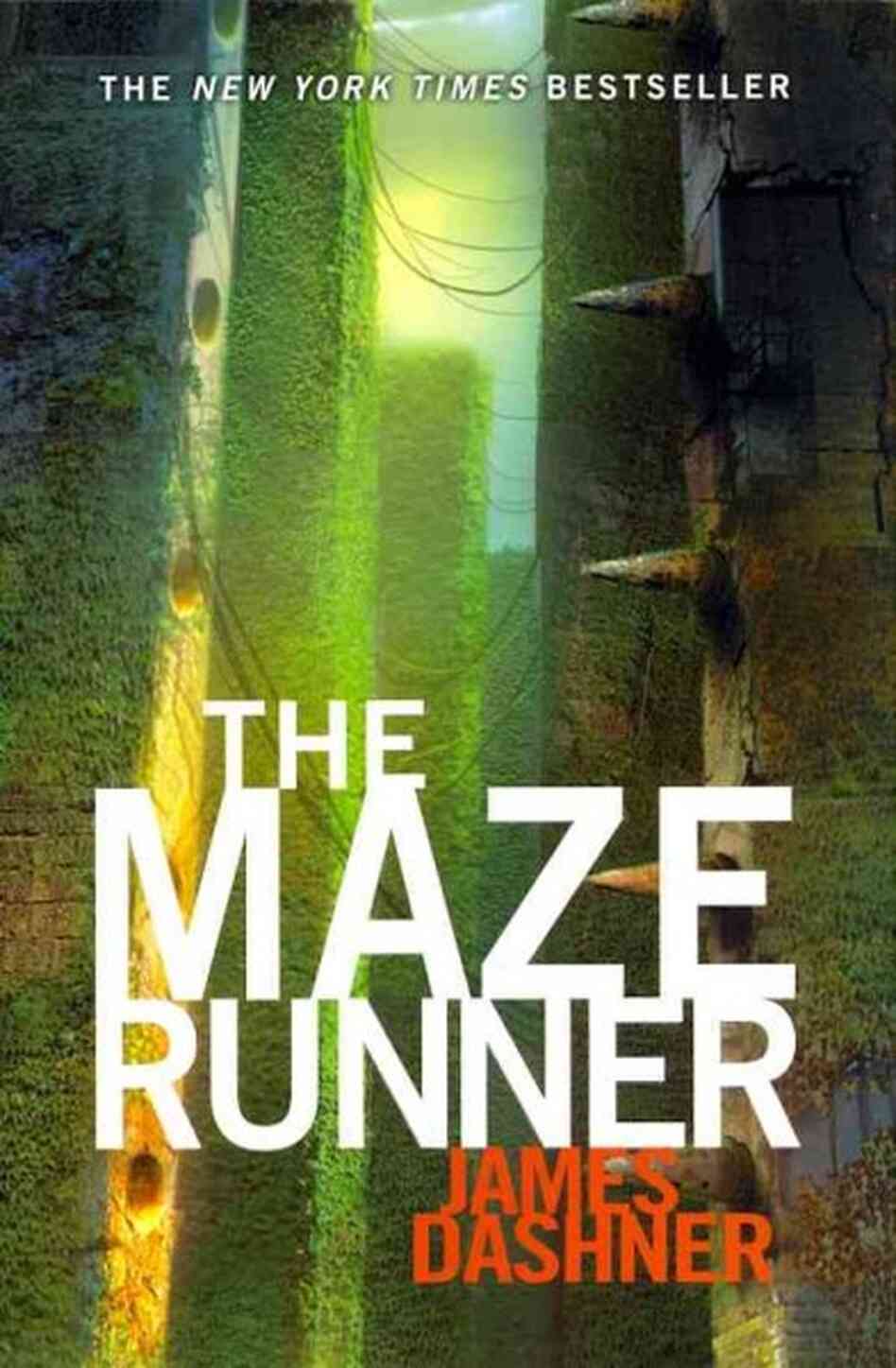
The Maze Runner by James Dashner is a dystopian science fiction novel about a boy who wakes up in a lift with no memory of who he is, arriving in a community of teenage boys trapped inside a massive maze they have been trying to solve for years. First published in 2009, it is a propulsive, mystery-driven adventure that became one of the defining young adult dystopian novels of its era and the launching point for a five-book series and a successful film franchise. This complete guide covers The Maze Runner‘s reading level, recommended age, content considerations, characters, themes, and books similar to The Maze Runner, designed for parents, teachers, and students.
For Parents
The Maze Runner is a fast-paced, intense thriller that keeps readers turning pages through sustained suspense, genuine danger, and a mystery structure that withholds answers for the full length of the book. It contains significant violence — monsters, deaths, and scenes of physical suffering — and a pervasive atmosphere of threat. Best for readers ages 12 and up, it is most engaging for the kind of reader who loves puzzles, action, and the particular pleasure of a protagonist who knows nothing and must figure out everything.
For Teachers
A popular independent reading choice for grades 7–9, The Maze Runner is most useful in the classroom as a vehicle for discussing dystopian fiction conventions, the ethics of human experimentation, and the narrative technique of radical narrative amnesia — what a story can do when its protagonist has no past to draw on. Pairs naturally with The Hunger Games for a unit on YA dystopian fiction, or with Lord of the Flies for a unit on what happens when young people are cut off from adult society.
The Maze Runner at a Glance
Find on Amazon →| Author | James Dashner |
| Published | 2009 |
| Grade Level | 6–9 (our assessment) |
| Recommended Age | 12–16 |
| Flesch-Kincaid Grade | ~5.3 |
| Word Count | ~101,000 |
| Pages | ~374 (Delacorte paperback) |
| Chapters | 62 |
| Genre | Dystopian science fiction / thriller |
| Setting | The Glade and the Maze — a contained, post-apocalyptic experimental environment |
| Series | The Maze Runner, Book 1 |
For official Lexile and AR levels, visit Lexile.com or AR BookFinder. ReadingVine provides independent editorial assessments.
What Reading Level Is The Maze Runner?
By our editorial assessment, The Maze Runner reads at a grade 6–9 level. The Flesch-Kincaid formula places it at approximately grade 5.3 — a score that meaningfully undersells the appropriate age range. The prose is deliberately accessible: Dashner writes in short sentences, short chapters, and a breathless present-tense-adjacent style that prioritizes momentum over complexity. A fluent fifth-grade reader can decode the text without difficulty.
The gap between reading level and appropriate age comes down to content and emotional maturity. The novel contains sustained, intense violence; its atmosphere of threat is unrelenting; and the ethical weight of its premise — children as unwitting subjects of a scientific experiment — is dark in ways that are not resolved by the novel’s end and that deepen considerably across the series. The short-chapter, high-momentum structure that makes it so readable for reluctant readers also makes it difficult to put down for younger readers who may not yet have the emotional toolkit for what the book contains. We recommend it for readers 12 and up rather than the age the reading level alone might suggest.
For official Lexile and Accelerated Reader scores, visit Lexile.com or AR BookFinder. ReadingVine’s assessments are independent editorial judgments.
What Age Is The Maze Runner Appropriate For?
We recommend The Maze Runner for readers ages 12 and up. The novel’s content is more intense than its reading level suggests, and parents should be aware of the specifics before placing it with a younger or more sensitive reader.
The Maze Runner contains significant and sustained violence. The Grievers — mechanical-organic creatures that patrol the maze at night — attack and kill characters throughout the novel, and these sequences are described with enough physical specificity to be genuinely frightening. Characters are stung by Grievers and undergo an agonizing process called the Changing, depicted in detail. Several named characters die over the course of the novel, and at least one death is particularly sudden and affecting. The novel also features a hanging, depicted briefly, and a sustained atmosphere of physical and psychological threat that does not relent for much of the book. There is no sexual content and no profanity beyond a mild made-up slang system the Gladers use — a deliberate Dashner choice that functions as a sort of in-world censorship. The violence and threat level are comparable to The Hunger Games, though The Maze Runner is somewhat more horror-inflected in its creature design and atmosphere. Parents of readers under 12 or of sensitive readers at any age should be aware that the intensity is sustained rather than episodic.
For readers 12 and up who enjoy action-driven dystopian fiction and are not particularly sensitive to violence, The Maze Runner is a thoroughly engaging read. Its mystery structure and relentless pacing make it one of the more compulsive page-turners in the YA dystopian canon, and the ethical questions it raises about consent and experimentation give it more substance than its thriller surface suggests.
What Is The Maze Runner About?
Thomas arrives in the Glade with no memory of who he is, where he came from, or how he got there — only his first name, surfacing as the lift doors open. The Glade is a roughly two-mile square of farmland, forest, and buildings, surrounded on all sides by enormous stone walls. Every morning, doors in the walls open onto the Maze. Every night, they close. The boys who arrived before Thomas — they call themselves Gladers, they have been here for up to three years, a new boy arrives in the monthly supply lift — have organized themselves into a functioning community with roles, rules, and a dedicated group of runners who map the Maze every day in the hope of finding a way out. No one has.
Thomas is immediately certain, in a way he cannot explain, that he was meant to be a Runner. The Gladers’ leader Alby and his second-in-command Newt are cautious about him; a boy named Gally is openly hostile. The day after Thomas arrives, something unprecedented happens: a girl comes up in the lift, the first girl ever, with a note that says everything is about to change. She is in a coma. Her name, Thomas somehow already knows, is Teresa.
The novel follows Thomas’s integration into the Glade, his growing obsession with the Maze, and his gradual recovery of fragments of memory that suggest he knows more about where they are and why they are there than he is supposed to. The mystery of the Maze — what it is, who built it, what it wants — drives the plot forward through a series of escalating crises: a Griever attack that leaves Alby stung and undergoing the Changing, Thomas’s rule-breaking entry into the Maze after dark, and a final sequence that resolves the immediate question of escape while opening onto a larger and darker picture of what lies outside.
Dashner holds his answers carefully. The novel ends with its characters free of the Maze but not free — delivered into the hands of an organization called WICKED whose purposes are, at best, ambiguous. The larger questions about why the Maze exists, what WICKED wants, and what the trials are actually testing are left for the sequels, and this deliberate incompleteness is both the novel’s greatest hook and, for some readers, its most frustrating quality.
The Maze Runner Characters
Is The Maze Runner Banned?
The Maze Runner has been challenged in some school districts, primarily due to its violence and its dark themes. It has appeared on lists of books that have drawn parental complaints but has not been widely removed from school libraries or curricula and does not appear on the American Library Association’s most frequently challenged titles. The challenges that have occurred have generally cited the violence and the horror-adjacent creature design as inappropriate for the grade levels at which some schools were assigning it — a concern that is consistent with our own recommendation to reserve it for readers 12 and up rather than the younger readers its reading level might suggest.
The Maze Runner Themes and Lessons
The novel’s most interesting theme is also its most unsettling: the question of what you owe people who are being used for a purpose they did not consent to, even if that purpose is, supposedly, the salvation of humanity. WICKED’s justification for what it has done to the Gladers — and what the novels gradually reveal it intends to do — is a version of the trolley problem writ large: terrible things are being done to a small number of people to try to save a much larger number. Dashner does not resolve this question in the first novel, and his refusal to do so is its most thematically serious quality.
The Glade itself is a study in what a self-organized community looks like when cut off from external authority and forced to develop its own rules and social structures from scratch. The Gladers have, over three years, built something genuinely functional — roles, rituals, a justice system, an economy of sorts — and the novel is interested in both the achievement this represents and its fragility. Thomas’s arrival, and everything that follows from it, is a test of whether the community can absorb disruption and change without collapsing.
Identity and memory are at the center of Thomas’s individual arc. He arrives as a blank — no past, no context, no relationships — and must build a self from the ground up in an environment that provides no stable foundation. The gradual return of his memories, and what they reveal about who he was before the Maze, complicates rather than resolves his sense of himself. The novel suggests that identity built from action and relationship in the present may be more genuine than identity derived from a past that was, itself, constructed by others.
Discussion questions for classrooms and families: Is WICKED’s justification for what it does to the Gladers ever convincing? What makes the Gladers’ self-organized community impressive — and what makes it fragile? How does Thomas’s lack of memory change the way he relates to the other Gladers? What does Gally understand about Thomas that the others don’t? Does the end of the novel feel like a resolution or the beginning of something worse?
How Many Pages and Chapters in The Maze Runner?
The Delacorte paperback edition of The Maze Runner is approximately 374 pages across 62 short chapters. At roughly 101,000 words it is a substantial novel, but Dashner’s short chapters — averaging around six pages each — and his relentless pacing make it read considerably faster than its word count suggests. Most readers in the target age range finish it in one to two weeks; many report finishing it in a single extended weekend once the plot gains momentum in the novel’s second quarter. It is one of the more compulsive reads in the YA dystopian canon.
For classroom use, the novel works in a three-to-four week unit. The most productive discussion points cluster around the Glade’s social structure in the early chapters, the ethics of what WICKED is doing in the middle, and the ambiguous resolution at the end — which leaves enough unresolved to generate genuine disagreement about whether the escape was a victory or a trap. The novel’s deliberate withholding of information is worth discussing as a narrative technique: Dashner’s choice to keep the reader exactly as uninformed as Thomas is a structural decision that creates immersion at the cost of satisfaction, and students tend to have strong opinions about whether this trade-off works.
Books Similar to The Maze Runner
About James Dashner
James Dashner was born in 1972 in Austell, Georgia, and grew up in a small town in the Blue Ridge Mountains. He studied accounting at Brigham Young University and worked as a financial analyst before turning to writing full-time. He published several fantasy novels in a smaller regional market before The Maze Runner was picked up by Delacorte Press and became, unexpectedly, one of the defining young adult novels of the early 2010s.
The Maze Runner series — comprising the original trilogy (The Maze Runner, The Scorch Trials, The Death Cure) and two prequel novels (The Kill Order and The Fever Code) — sold tens of millions of copies worldwide and was adapted into a film trilogy starring Dylan O’Brien, with films released in 2014, 2015, and 2018. The films were commercially successful and are generally considered faithful to the action and atmosphere of the books, though they compress and alter the plot considerably. Dashner has acknowledged that The Maze Runner‘s origins lie partly in his interest in classic survival and puzzle narratives and partly in the broader cultural moment of the early 2000s, when the conventions of young adult dystopian fiction were being established in real time.
The Maze Runner: Frequently Asked Questions
What reading level is The Maze Runner?
The Maze Runner has a Flesch-Kincaid grade level of approximately 5.3 — but this score significantly undersells the appropriate age range. Our editorial assessment places it at grades 6–9 (ages 12+). The prose is deliberately accessible; the violence, sustained threat, and dark ethical premise make it better suited to readers 12 and up. For official Lexile and AR scores, visit Lexile.com or AR BookFinder.
What grade is The Maze Runner appropriate for?
We recommend grades 6–9 as the primary range, most commonly read independently in 7th and 8th grade. The violence and horror-inflected creature design make it better suited to readers 12 and up, regardless of the reading level score. Parents of younger readers who are drawn to it should review the content note above.
How many pages are in The Maze Runner?
The Delacorte paperback is approximately 374 pages across 62 short chapters. Word count is roughly 101,000 words. The short chapters and relentless pacing mean most readers in the target age range finish it in one to two weeks — often faster.
What is The Maze Runner about?
A boy named Thomas wakes up in a lift with no memory of who he is and arrives in the Glade — a community of teenage boys trapped inside a massive maze they have been trying to solve for years. As Thomas fights to become a Runner and find a way out, he begins to recover fragments of memory suggesting he knows more about the Maze than he should — and that what lies outside may be worse than what is in.
Is The Maze Runner appropriate for a 10 or 11-year-old?
We recommend waiting until 12 for most readers. The reading level is accessible to younger children, but the Grievers are genuinely frightening in the horror-creature tradition, several named characters die in ways that are sudden and affecting, and the novel’s atmosphere of sustained threat does not relent. A sensitive 11-year-old who is easily frightened by violence or monster imagery would be better served starting with The Hunger Games, which has comparable intensity but less horror-inflected creature design.
Is The Maze Runner part of a series?
Yes. The Maze Runner is the first book in a five-book series: the main trilogy (The Maze Runner, The Scorch Trials, The Death Cure) and two prequels (The Kill Order and The Fever Code). The first novel ends on a partial resolution that clearly invites continuation. The sequels are darker and more intense than the first book and are generally recommended for readers 13 and up.
What does WICKED stand for in The Maze Runner?
WICKED stands for World In Catastrophe: Killzone Experiment Department. The organization is responsible for creating the Maze and putting the Gladers through their trials, ostensibly to find a cure for a deadly disease called the Flare that has devastated humanity. The acronym is one of Dashner’s more deliberate choices — the name is designed to signal to the reader, before the characters understand it, that the organization’s self-justifications should be viewed with skepticism.
Is there a Maze Runner movie?
Yes. A film trilogy was released between 2014 and 2018: The Maze Runner (2014), Maze Runner: The Scorch Trials (2015), and Maze Runner: The Death Cure (2018), all starring Dylan O’Brien as Thomas. The films are rated PG-13 and are generally considered faithful to the action and atmosphere of the books, though they compress and alter the plot. All three performed well at the box office.