
 = Partner Site
Lord of the Flies Reading Level: A Complete Guide
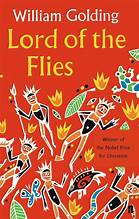
Lord of the Flies is a 1954 novel by British author William Golding, widely considered one of the most important works of twentieth-century English literature. It follows a group of British schoolboys stranded on an uninhabited island after their plane is shot down during a wartime evacuation, and traces their increasingly violent descent from order into savagery as they attempt—and fail—to govern themselves without adults. This guide covers the book’s reading level, age appropriateness, themes, characters, and teaching resources for high school students, parents, and educators.
For Parents
Lord of the Flies is one of the most frequently assigned novels in American and British high schools, and one of the most frequently challenged. The story contains sustained violence among children, including two deaths, scenes of mob frenzy, and an ending of terrifying intensity. Its themes—that civilization is a fragile veneer over innate human savagery—are deliberately disturbing. It is best suited for readers ages 13–14 and older, with the richest engagement coming in grades 9–11.
For Teachers
Few novels offer richer classroom territory than Lord of the Flies. Golding’s dense allegorical structure, layered symbolism, and cold-eyed view of human nature give students extensive material for literary analysis. It pairs productively with historical context on World War II, the Cold War, and post-war disillusionment; with philosophy on social contract theory (Hobbes, Rousseau, Locke); and with nonfiction on group psychology and real-world survival situations. The book’s challenged status invites productive discussion of censorship and literary value.
Lord of the Flies at a Glance
Find on Amazon →| Author | William Golding |
| Published | 1954 |
| Grade Level | 8–10 (our assessment) |
| Recommended Age | 13–16 |
| Flesch-Kincaid Grade | 5.0 |
| Word Count | ~60,000 |
| Pages | 224 (standard paperback) |
| Chapters | 12 |
| Genre | Literary fiction / allegorical novel |
| Setting | Uninhabited tropical island, wartime (early 1950s) |
For official Lexile and AR levels, visit Lexile.com or AR BookFinder. ReadingVine provides independent editorial assessments.
What Reading Level Is Lord of the Flies?
ReadingVine places Lord of the Flies at a grade 8–10 reading level. Its Flesch-Kincaid score of approximately 5.0 reflects Golding’s prose style—clear and direct at the sentence level, with relatively accessible vocabulary in the dialogue and action sequences. A strong middle school reader could navigate the words without significant difficulty. But like Of Mice and Men and The Great Gatsby, this novel’s challenge is almost entirely thematic rather than linguistic.
Golding wrote the book as a deliberate allegory, and its full meaning operates on multiple levels simultaneously: the literal survival story, the social and political allegory about civilization and savagery, and the theological dimension centered on Simon. Students who engage the story only at the surface level—boys on an island, things go wrong—will miss most of what makes it a canonical text. For this reason, it rewards careful, guided reading more than independent reading, and is best taught in grades 8–10 with strong classroom discussion support. Many teachers find it works particularly well in grade 9 as a first major allegorical novel.
For official Lexile and AR scores, visit Lexile.com or AR BookFinder.
What Age Is Lord of the Flies Appropriate For?
ReadingVine recommends Lord of the Flies for readers ages 13–16. The novel’s violence is not gratuitous in the way of contemporary thriller or horror fiction, but it is sustained, escalating, and deeply disturbing in the way that serious literary violence is meant to be. The deaths of Simon and Piggy in particular are scenes of considerable intensity. The book’s entire thesis—that children are as capable of cruelty and murder as adults, given the right circumstances—is designed to be unsettling, and younger or more sensitive readers may find it genuinely upsetting without the classroom context to process it.
Lord of the Flies contains significant violence among children, including two deaths: Simon is beaten to death by the other boys in a frenzied ritual dance in which they mistake him for the beast, and Piggy is killed when Roger deliberately dislodges a boulder that crushes him and sends him falling to the rocks below. A hunted pig is killed and beheaded early in the novel. There are scenes of mob psychology, bullying, and escalating cruelty throughout. There is no sexual content and no profanity. The novel also contains themes of religious symbolism that some families may wish to discuss in context. The content is disturbing by design—Golding intends the reader to be shaken—and is handled with literary seriousness rather than sensationalism.
What Is Lord of the Flies About?
During an unnamed wartime evacuation, a plane carrying a group of British schoolboys is shot down over a remote tropical island. There are no adult survivors. The boys—ranging in age from roughly six to twelve—find themselves entirely alone and must organize themselves to survive and seek rescue. Ralph, fair-haired and natural in his authority, is elected leader with the help of the conch shell, a symbol of democratic order. His friend Piggy, overweight, asthmatic, and intellectual, becomes Ralph’s most important advisor. Jack, head of the choirboys, becomes leader of the hunters and almost immediately chafes against Ralph’s authority.
For a time the boys maintain a semblance of civilization—they build shelters, keep a signal fire burning, and establish rules of assembly. But the temptations of hunting and the growing terror of an imaginary “beast” on the island begin to erode the social order. Jack’s hunters paint their faces, perform ritualistic chants, and tap into something primal that Ralph’s rational governance cannot compete with. Boys drift from Ralph’s camp to Jack’s. Simon, the quiet and mystical boy who alone understands that the beast is not external but within the boys themselves, is killed before he can share what he has learned. Piggy, the voice of reason and civilization, is killed next. By the novel’s end, the island is on fire and Ralph is hunted like an animal—and is rescued only by the arrival of a naval officer, whose own warship reminds us that the adults’ world is also at war.
Golding wrote the novel while teaching school in Salisbury after returning from World War II. He had witnessed firsthand what human beings were capable of and was deeply skeptical of the optimistic view of human nature in earlier children’s adventure stories. He conceived Lord of the Flies as a direct response to R.M. Ballantyne’s The Coral Island (1857), in which a similar group of boys on a tropical island behave nobly and wisely—and asked himself what would actually happen. The novel was rejected by more than twenty publishers before Faber & Faber accepted it in 1954.
Lord of the Flies Characters
Is Lord of the Flies Banned?
Lord of the Flies has a significant history of challenges and bans. It appeared on the American Library Association’s list of the 100 most frequently challenged books of 1990–1999, and has been challenged repeatedly since its publication. Objections have typically centered on its violence, its deeply pessimistic view of human nature, its use of profanity in some editions, and its perceived cynicism toward both children and civilization. In one frequently cited challenge, a parent described the book as “demoralizing inasmuch as it implies that man is little more than an animal.” Some challenges have also raised concerns about the novel’s colonial undertones—all the boys are British, and the novel’s framing has been read by some critics as reflecting a particular imperial worldview about whose civilization matters.
Despite these challenges, the novel remains one of the most widely assigned texts in English-speaking high schools worldwide. In 2003, the BBC’s The Big Read poll ranked it 70th among the nation’s favorite books, and in 2005 Time magazine named it one of the 100 best English-language novels published between 1923 and 2005. Its place in the curriculum is secure, and its challenged status is itself a frequent subject of classroom discussion.
Lord of the Flies Themes and Lessons
The novel’s central argument is that civilization is not humanity’s natural state but a fragile construction that requires constant maintenance—and that beneath it, in all of us, lives something older and more violent. Golding wrote the book in the shadow of World War II and the Holocaust, having witnessed what educated, civilized European societies were capable of when the social contract broke down. The island is a controlled experiment: strip away adult supervision, add fear and scarcity and the tribalism of group identity, and watch what happens. Golding’s answer is deeply pessimistic. The boys are not corrupted by the island—they bring the corruption with them.
The novel operates on a rich symbolic level that rewards careful attention. The conch represents democratic order and the right to speak; its destruction marks the end of any pretense of civilization. Piggy’s glasses represent science and rational thought; their theft and eventual shattering track the systematic dismantling of reason by the mob. Simon’s encounter with the pig’s head—the Lord of the Flies, or Beelzebub—is the novel’s theological core: the beast tells Simon that evil is not a thing that can be hunted or killed, because it lives within the hunters themselves. The naval officer who rescues the boys at the novel’s end arrives in a warship, reminding us that the adults’ version of civilization is also organized around violence. Discussion questions: Is Golding’s view of human nature fair, or too cynical? What does the novel suggest about what holds civilization together? Which character do you identify with most, and why?
How Many Pages and Chapters Are in Lord of the Flies?
Lord of the Flies is approximately 224 pages in standard paperback editions, divided into 12 chapters. Its word count of approximately 60,000 places it in a comfortable range for high school readers—longer than Of Mice and Men or The Great Gatsby but shorter than most adult literary novels. An average high school reader will complete it in 5–7 hours of reading time. Most teachers assign it over two to three weeks, pairing the reading with close analysis of its symbolic architecture. The relatively short chapters make it well-suited to daily reading assignments of one chapter at a time, with in-class discussion following each session.
Books Similar to Lord of the Flies
About William Golding
Sir William Gerald Golding (1911–1993) was born in Newquay, Cornwall, England, and educated at Oxford University. After working briefly in theater, he became a schoolteacher at Bishop Wordsworth’s School in Salisbury—an experience teaching unruly adolescent boys that would directly inform Lord of the Flies. He served in the Royal Navy during World War II, taking part in the sinking of the German battleship Bismarck and commanding a rocket-launching craft on D-Day. The war’s revelations about human capacity for organized violence shaped his entire literary worldview. Lord of the Flies was his debut novel, published in 1954 after more than twenty rejections; it went on to sell over 50 million copies and become one of the most widely read novels of the twentieth century. Golding won the Booker Prize in 1980 for Rites of Passage, the first novel in his sea trilogy, and was awarded the Nobel Prize in Literature in 1983 for his body of work. He was knighted in 1988 and died in Cornwall in 1993.
Lord of the Flies: Frequently Asked Questions
What is the reading level of Lord of the Flies?
ReadingVine places Lord of the Flies at a grade 8–10 reading level, with a Flesch-Kincaid score of approximately 5.0. The prose is accessible at the sentence level, but the novel’s dense allegorical structure and disturbing themes of violence and human nature make it most appropriate for high school students ages 13 and older with guided classroom support.
Did Lord of the Flies win any awards?
Lord of the Flies did not win a standalone literary prize upon publication, but it has received significant critical recognition over the decades. It is ranked No. 41 on the Modern Library’s editors’ list of the 100 Best Novels of the twentieth century, and was named one of Time magazine’s 100 Best English-Language Novels published between 1923 and 2005. William Golding was awarded the Nobel Prize in Literature in 1983 for his body of work, which the Nobel committee explicitly rooted in Lord of the Flies as his most celebrated novel. He also won the Booker Prize in 1980 for Rites of Passage.
What does the Lord of the Flies symbolize?
The “Lord of the Flies” is the pig’s head that Jack’s hunters mount on a sharpened stick as an offering to the beast. The title is a literal translation of Beelzebub, a biblical demon. When Simon has his hallucinatory dialogue with the pig’s head in the forest, it tells him that the beast cannot be hunted or killed—because it is not an external creature but the darkness within the boys themselves. The Lord of the Flies thus symbolizes the innate capacity for evil that Golding argues exists within all human beings, waiting for the right conditions to emerge.
What does the conch symbolize in Lord of the Flies?
The conch shell is the novel’s central symbol of democratic order and civilization. Whoever holds the conch has the right to speak at assemblies, and the rules around the conch are the closest thing the boys have to a constitution. As the boys’ society deteriorates, respect for the conch fades. When Piggy is killed, the conch shatters simultaneously—Golding’s signal that civilization and rational order have been completely destroyed.
Why is Lord of the Flies frequently banned or challenged?
Lord of the Flies appeared on the American Library Association’s list of the 100 most challenged books of the 1990s and has faced repeated challenges since publication. Objections center on its sustained violence among children, its profoundly pessimistic view of human nature, and what some have characterized as its cynicism toward children and civilization. Some more recent challenges have also raised concerns about its colonial framing. The novel remains one of the most widely assigned texts in English-speaking high schools despite its challenge history.
What is the significance of the ending of Lord of the Flies?
When the naval officer arrives to rescue the boys, he finds Ralph being hunted like an animal while the island burns. He is bemused and mildly disapproving—he expected British boys to have done better. Ralph weeps for “the end of innocence, the darkness of man’s heart, and the fall through the air of the true, wise friend called Piggy.” The officer’s warship is visible offshore, fighting its own war—Golding’s deliberate reminder that the adult world the boys are being rescued into is also engaged in organized mass violence. The ending provides rescue without redemption: the boys are saved, but nothing has been learned, and nothing has changed.
Is Lord of the Flies based on a true story?
Lord of the Flies is fiction, but Golding drew directly on his experiences teaching adolescent boys and his firsthand observations of war. Golding has said the novel grew from his conviction that The Coral Island—an 1857 adventure story in which stranded British boys behave nobly—was dangerously unrealistic, and that he wanted to write a version that showed what boys would actually do. Interestingly, a real-life incident in 1965—in which a group of Tongan schoolboys were stranded on a Pacific island for fifteen months—resulted in the boys cooperating, building shelters, and caring for one another, which some have held up as a counter-argument to Golding’s thesis.
How many pages and words is Lord of the Flies?
Lord of the Flies is approximately 224 pages in standard paperback editions, with 12 chapters and a word count of approximately 60,000 words. An average high school reader will complete it in 5–7 hours of reading time, though most teachers spread it over two to three weeks for close reading and discussion.