
 = Partner Site
To Kill a Mockingbird Reading Level: A Complete Guide
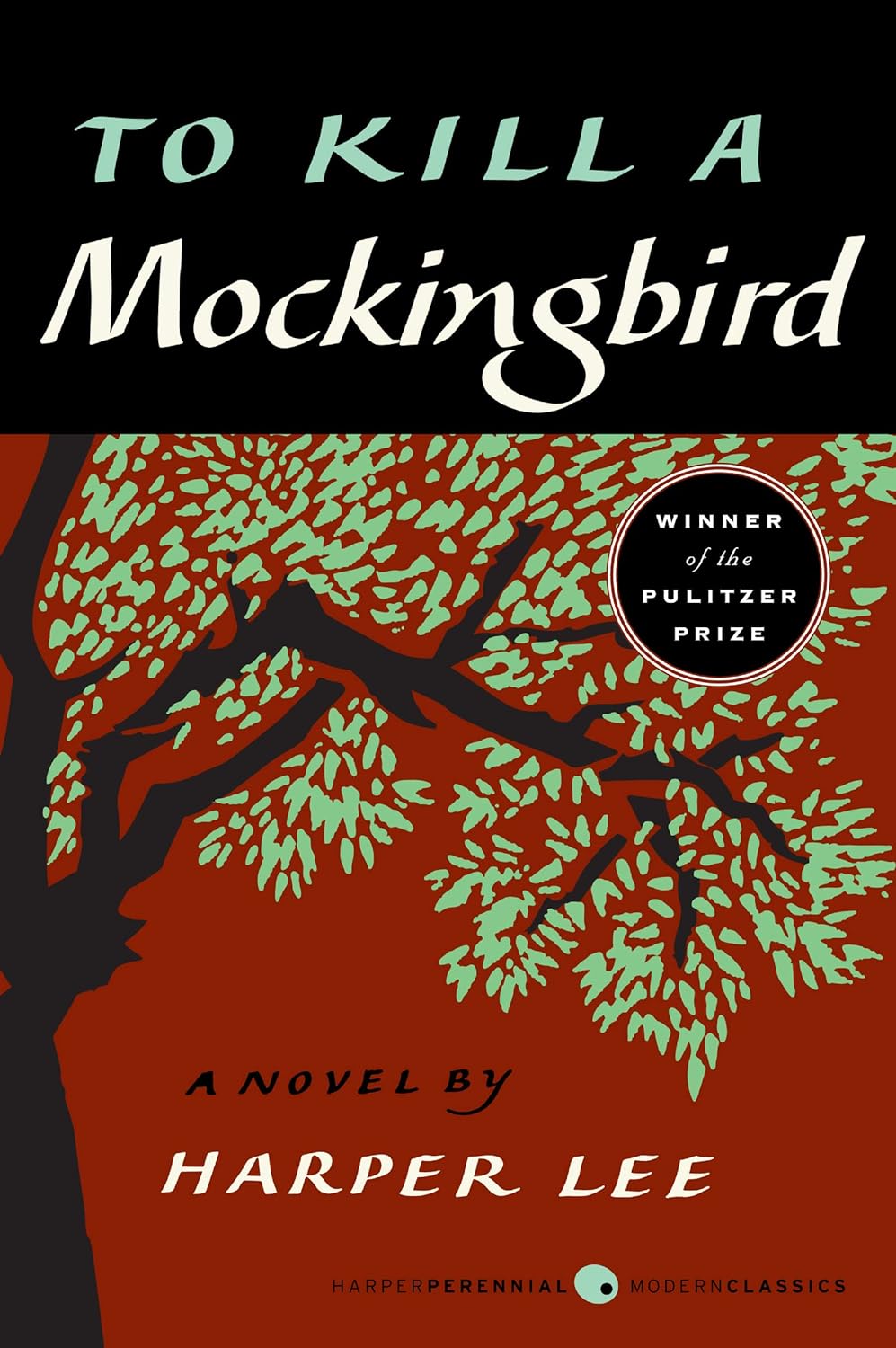
This complete guide to To Kill a Mockingbird by Harper Lee covers everything parents, teachers, and students need to know — from reading level and recommended age to a full character list, key themes, and similar books. Winner of the Pulitzer Prize in 1961 and one of the most widely read novels in American schools for more than six decades, this story of a white lawyer defending a Black man falsely accused of rape in Depression-era Alabama — seen through the eyes of his six-year-old daughter Scout — has shaped how generations of Americans think about justice, empathy, and moral courage. It has also been one of the most frequently challenged books in American schools, for reasons that have evolved and grown more complex over time. Whether you’re a parent, teacher, or student approaching it for the first time, you’ll find honest, practical guidance here.
For Parents
To Kill a Mockingbird is a coming-of-age novel narrated by a child but written for adults — and that tension is central to both its power and its challenges as a school text. Scout is six at the novel’s opening and nine by its end, and her narration is the vehicle through which the novel’s moral landscape is revealed: racism, rape, poverty, class, and the capacity of good and evil to coexist in people you love. The book is frank about its subject matter without being explicit. The content most likely to require conversation with younger readers is its sustained engagement with racial violence and injustice, its central plot involving a false rape accusation, and its repeated use of racial slurs — including the n-word — as historically authentic dialogue. Most schools assign it in grades 8–10, and Common Sense Media recommends it for ages 13 and up.
For Teachers
To Kill a Mockingbird is among the most commonly assigned novels in American middle and high school English curricula, listed as an ELA Text Exemplar for grades 9–10 in the Common Core standards and appearing on SpringBoard High School and grades 9–12 reading lists. It offers rich material for studying narrative voice and dramatic irony (Scout’s childlike narration against the adult realities she cannot fully comprehend), character development, historical context (Jim Crow Alabama, the Great Depression, the Scottsboro Boys trials), and moral philosophy. In recent years its classroom use has become more complex, with legitimate debate about how to teach a novel that centers the experience of white characters in a story about anti-Black racism. Many educators now pair it with texts by Black authors and approach it as a document of white liberal attitudes rather than a straightforward morality tale.
To Kill a Mockingbird at a Glance
Find on Amazon →| Author | Harper Lee |
| Published | 1960 |
| Grade Level | 8–10 (our assessment) |
| Recommended Age | 13–16 |
| Flesch-Kincaid Grade | 5.6 |
| Word Count | 99,121 |
| Pages | ~281 (standard paperback) |
| Chapters | 31 chapters in 2 parts |
| Genre | Southern Gothic / Historical fiction / Coming-of-age |
| Setting | Maycomb, Alabama; mid-1930s |
| Awards | Pulitzer Prize for Fiction (1961); Brotherhood Award, National Conference of Christians and Jews (1961); Presidential Medal of Freedom for Harper Lee (2007) |
For official Lexile and AR levels, visit Lexile.com or AR BookFinder. ReadingVine provides independent editorial assessments.
What Reading Level Is To Kill a Mockingbird?
To Kill a Mockingbird has a Lexile score of 870L (as reported by TeachingBooks and LightSail) and an ATOS level of 5.6, worth 15 AR points. Note that Lexile’s own chapter-by-chapter guide lists the novel at 790L — the difference likely reflects different calculation methodologies, and both figures are in wide circulation. Our Flesch-Kincaid calculation is consistent with the ATOS at approximately grade 5.6. At the sentence and word level, the prose is accessible: Lee writes in Scout’s voice, which is vivid and colloquial, and while the vocabulary includes some period-specific terms and Southern idiom, it is not technically demanding in the way that many canonical novels are.
Those metrics dramatically understate the book’s actual demands, and this is one of the most significant reading-level gaps in the entire school canon. The novel carries an ATOS of 5.6 but is assigned in grades 8–10 — not grades 5 and 6 — because the content and the interpretive work it requires are calibrated for early high school, not late elementary school. The central plot involves a false rape accusation, a trial, and a racially biased verdict in which an innocent man is convicted and subsequently killed. The novel uses the n-word repeatedly as historically authentic dialogue, and it engages with racial violence, poverty, and class prejudice in ways that require both historical context and emotional maturity to process productively. Scout’s childlike narration is also a source of sophisticated dramatic irony: she observes and reports things she does not fully understand, and the reader’s work is to see what she cannot yet see. That gap between narrator understanding and reader understanding is a hallmark of adult literary fiction, not middle grade fiction.
Our editorial assessment is grades 8–10, with grade 9 being the most common assignment level and the sweet spot for most readers. The Lexile and ATOS scores reflect only word and sentence complexity, not thematic maturity — and for this book more than almost any other, thematic maturity is the decisive factor. For official Lexile and AR scores, visit Lexile.com or AR BookFinder. ReadingVine’s assessments are independent editorial evaluations.
What Age Is To Kill a Mockingbird Appropriate For?
We recommend To Kill a Mockingbird for readers ages 13–16, consistent with Common Sense Media’s recommendation of age 13 and up and the publisher’s grade 7–12 interest level. The novel was published in 1960 and written for an adult audience — it won the Pulitzer Prize for Fiction, not a children’s or young adult award — but it has been assigned to high school students for so long that it is now broadly understood as a school text. At its best, it rewards readers who have enough historical knowledge to contextualize the Jim Crow South, enough emotional maturity to sit with injustice that does not resolve, and enough literary sophistication to recognize what Scout’s narration reveals and conceals simultaneously.
The central plot involves the false accusation of rape of a white woman by a Black man, and the trial occupies a substantial portion of the novel. Racial slurs, including the n-word, appear repeatedly as historically authentic dialogue from white characters in a 1930s Alabama setting. The novel depicts racial violence and injustice directly, including the conviction and subsequent death of an innocent man. A supporting character attempts to murder two children, one of whom is seriously injured. There is a character who is the victim of domestic violence. The broader social world of the novel is one of poverty, class stratification, and casual institutional racism. There is no sexual content beyond the context of the false accusation, which is not described graphically. Language is period-authentic and includes mild profanity by contemporary standards. Parents or teachers working with younger or more sensitive readers, or with readers who may find the novel’s racial content distressing in a classroom setting without adequate support and context, should consider the guidance provided by the school or seek educator resources for contextualizing the text.
The question of whether and how to teach this novel has become genuinely complex in recent years, and it is worth acknowledging this honestly. Some educators and scholars have raised substantive concerns — not about the novel’s quality, but about the dynamics of assigning a story about anti-Black racism that centers the perspective of white characters, requires Black students to process the n-word in a classroom setting, and presents Atticus Finch as a moral hero in ways that some critics find historically incomplete. These are legitimate pedagogical questions, not calls for censorship, and many schools now approach the novel with additional context, paired texts, and deliberate attention to whose experience is centered in classroom discussion. Parents who have questions about how the novel is being taught in their child’s school are encouraged to ask their child’s teacher directly.
What Is To Kill a Mockingbird About?
Jean Louise “Scout” Finch is six years old when the novel begins, growing up in the 1930s in Maycomb, Alabama — a small, slow, deeply stratified town where everyone knows their place and the social order is maintained with the unthinking certainty of people who have never been required to question it. Scout lives with her father Atticus, a widowed lawyer and state legislator, and her older brother Jem. Their summer neighbor, a boy their own age named Dill, arrives one June and the three children become obsessed with the mystery of Boo Radley, the reclusive man who has not been seen leaving his house in years and who has become, in the neighborhood’s telling, a figure of gothic menace and local legend.
The novel’s first part moves episodically through Scout’s early school years, tracing the rhythms of Maycomb life and introducing its social geography: the white professional class, the white rural poor, the Black community across the tracks, and the place that children occupy as accidental witnesses to a world they are not yet equipped to fully understand. The tone is warm and often comic. Then Atticus agrees to defend Tom Robinson — a Black man charged with raping Mayella Ewell, the daughter of the town’s most disreputable white family — and the novel changes register. The second part follows the trial, which the children watch from the Black community’s gallery. Atticus presents a clear and compelling defense. It is not enough. Tom Robinson is convicted by an all-white jury. The injustice is rendered quietly and completely, without melodrama, and it is one of the most devastating moments in American fiction precisely because it is so unsurprising to everyone except the children watching.
The novel ends with a late-night attack on Scout and Jem by Bob Ewell, a man with cause for grievance and no good instincts, and the sudden, startling arrival of someone they have been looking for all along — Boo Radley, stepping into the story at last as a real person rather than a neighborhood legend. Scout walks Boo home at the end, stands on his porch, and sees her street for the first time from his point of view. The novel has been building to this moment since its opening pages: the world looks different when you step outside yourself to stand in someone else’s shoes.
To Kill a Mockingbird Characters
Is To Kill a Mockingbird Banned?
To Kill a Mockingbird is one of the most frequently challenged books in American schools and has been challenged continuously since shortly after its publication in 1960. It ranked as one of the top challenged books in the country across multiple decades. In 2020, it was the 7th most challenged book of the year. It has been removed from required reading lists or school libraries — temporarily or permanently — in numerous districts across the United States and Canada, though it remains widely available and is actively taught in the majority of American high schools.
The history of challenges to the novel is instructive because the reasons have shifted significantly over time. Early challenges, from the 1960s through the 1980s, typically cited its “filthy” or “trashy” content and racial slurs, often coming from white parents objecting to the subject matter. Later challenges increasingly came from a different direction: Black parents and community members objecting to the harm caused by requiring Black students to encounter the n-word repeatedly in a classroom setting, often without adequate context or support. A 2017 removal from 8th-grade classrooms in Biloxi, Mississippi, was prompted by a Black parent’s concern about her daughter’s experience when classmates laughed at the slur as it was read aloud. A 2018 removal in Duluth, Minnesota, resulted from accumulated complaints rather than a single challenge, with the district citing the need to protect students’ dignity. In Burbank, California, the district removed it in 2020 alongside other titles after Black parents raised concerns about the n-word being used in class in ways that caused harm to their children.
More recent challenges have also cited the novel’s “white savior” narrative — the framing of Atticus Finch as the heroic white man whose moral clarity is the center of a story about anti-Black racism — as a legitimate pedagogical concern. The ALA lists the novel’s current documented challenge reasons as: racial slurs and their negative effect on students, featuring a “white savior” character, and its perception of the Black experience. These are substantively different objections from those of earlier decades, and they reflect a genuine evolution in how educators and communities think about which voices a novel centers and whose experience it most fully honors. The book has been retained in the majority of documented challenges but is increasingly taught with supplementary materials, paired texts, and careful attention to classroom dynamics.
To Kill a Mockingbird Themes and Lessons
The novel’s most explicit theme is moral courage — specifically, the question of what it means to do the right thing when the right thing will not prevail. Atticus Finch takes Tom Robinson’s case knowing he will lose. He argues it with full commitment anyway, because the alternative is to participate in Tom’s destruction by indifference. His instruction to his children — “You never really understand a person until you consider things from his point of view… until you climb into his skin and walk around in it” — is the ethical spine of the novel, and it finds its embodiment in Scout’s final act: walking Boo Radley home and understanding, from his porch, what he has seen from there.
The mockingbird of the title is introduced as a symbol by Atticus and Miss Maudie: mockingbirds do nothing but make music for us, and it is a sin to kill one. The symbol extends to both Tom Robinson and Boo Radley — innocents destroyed or threatened by a community’s cruelty, prejudice, or need to project its anxieties onto the vulnerable. The novel also has a great deal to say about the relationship between law and justice, which are not the same thing: the trial sequence demonstrates that a legal system can function correctly, by its own procedural rules, and still produce a profoundly unjust outcome. Discussion questions worth exploring: What does the novel suggest about the difference between legality and justice? Who are the mockingbirds in the story, and what does each of them represent? What can Scout see from Boo’s porch that she could not see before — and what has the whole novel been preparing her (and us) to understand?
How Many Pages and Chapters in To Kill a Mockingbird?
To Kill a Mockingbird is approximately 281 pages in the standard paperback edition, though page counts vary by edition — the hardcover 40th Anniversary edition runs to 336 pages. The novel contains 31 chapters organized into two parts: Part One (chapters 1–11) covers Scout’s first two years of school and establishes Maycomb, its characters, and the children’s Boo Radley obsession; Part Two (chapters 12–31) covers the trial and its aftermath. The two-part structure is deliberately asymmetric — Part One is largely episodic and often comic, Part Two is more sustained and more grave — and the shift in register between them is itself one of the novel’s effects.
At approximately 99,121 words, the novel requires roughly 8–10 hours of total reading time for a reader in the 13–16 target range. Most classrooms assign it over three to four weeks with discussion in between. The novel’s episodic first section is well-suited to chapter-by-chapter reading and discussion; the trial sequence in the second half rewards longer reading sessions that preserve its sustained tension. The novel is commonly taught alongside historical context on the Jim Crow South, the Scottsboro Boys trials, and the Civil Rights movement, all of which enrich a student reader’s understanding of the world the novel inhabits.
Books Similar to To Kill a Mockingbird
About Harper Lee
Nelle Harper Lee was born on April 28, 1926, in Monroeville, Alabama, the youngest of four children of a lawyer, newspaper editor, and state legislator who would serve as the primary model for Atticus Finch. She grew up in a small Southern town during the Depression, attended local schools, and as a child developed a close and lifelong friendship with her neighbor Truman Capote — who would become one of the most celebrated writers of the twentieth century and who provided the model for the character of Dill. Lee attended Huntingdon College, transferred to the University of Alabama where she studied law, and eventually moved to New York City, where she worked as an airline reservations clerk while writing in her spare time. In the late 1950s, friends gave her a year’s living expenses as a gift, freeing her to write full-time. Under the guidance of her editor Tay Hohoff at J.B. Lippincott, she spent two years revising the manuscript that became To Kill a Mockingbird, which was published on July 11, 1960. It was an immediate bestseller. The following year it won the Pulitzer Prize for Fiction. In 1962 it was adapted as a film directed by Robert Mulligan and starring Gregory Peck as Atticus Finch — a performance that won Peck the Academy Award for Best Actor and that fixed Atticus’s image in American culture as definitively as the novel itself had. Lee assisted Capote with research for his nonfiction masterpiece In Cold Blood in 1959, traveling with him to Kansas to interview witnesses to the Clutter family murders. She lived largely in private for the remaining decades of her life, giving almost no interviews and publishing no new fiction. In 2007 she was awarded the Presidential Medal of Freedom, the nation’s highest civilian honor. In 2015, Go Set a Watchman — an earlier draft of To Kill a Mockingbird, featuring an adult Scout returning to Maycomb — was published under circumstances that generated significant controversy about whether Lee had truly sanctioned its release. Harper Lee died in her sleep in Monroeville on February 19, 2016, at the age of eighty-nine.
To Kill a Mockingbird: Frequently Asked Questions
What reading level is To Kill a Mockingbird?
To Kill a Mockingbird has a Lexile score of 870L and an ATOS level of 5.6. Our editorial assessment places it at grades 8–10, with grade 9 being the most common assignment level. The word-level metrics significantly understate the book’s demands: the prose is written in a child’s voice and reads accessibly, but the content — a false rape accusation, a racially biased conviction, racial slurs used throughout as period dialogue, and the death of an innocent man — requires historical context and emotional maturity that is calibrated for early high school, not middle school.
What grade do you typically read To Kill a Mockingbird?
Most commonly grade 8 or grade 9, though it is also widely taught in grades 10–12. It is listed as a Common Core ELA Text Exemplar for grades 9–10 and appears on SpringBoard reading lists for grades 9–12. Some middle schools assign it in grade 7 or 8 with careful scaffolding and contextual support; many educators and scholars now recommend it as a high school text rather than a middle school text, given the maturity of its content and the complexity of the conversation it requires.
Is To Kill a Mockingbird based on a true story?
Not directly, though it draws substantially on Harper Lee’s childhood and on real events. Lee grew up in Monroeville, Alabama, the daughter of a lawyer who once defended two Black men accused of murder — both were convicted and executed, and Lee’s father never took another criminal case. The Scottsboro Boys trials of 1931 — in which nine young Black men were falsely accused of raping two white women and convicted by all-white juries — are widely understood to have shaped the novel’s courtroom narrative. Dill is modeled on Lee’s childhood friend Truman Capote; the fictional town of Maycomb is modeled on Monroeville; and Scout bears significant autobiographical resemblance to Lee herself.
Why is the book called To Kill a Mockingbird?
Atticus tells Scout and Jem that they may shoot tin cans with their air rifles, but they must never shoot a mockingbird — because mockingbirds do nothing but make music and harm no one. Miss Maudie reinforces the point: it is a sin to kill a mockingbird. The symbol extends to the novel’s two most innocent characters: Tom Robinson, a man of evident goodness who is destroyed by a false accusation and a biased system, and Boo Radley, a gentle recluse who is the subject of neighborhood cruelty and childhood fear before being revealed as a protector. Both are mockingbirds — beings who harm no one and who are harmed anyway.
Is there a movie version of To Kill a Mockingbird?
Yes. The 1962 film adaptation, directed by Robert Mulligan with a screenplay by Horton Foote, stars Gregory Peck as Atticus Finch in a performance that won him the Academy Award for Best Actor and that is widely considered one of the great performances in American cinema. The film was nominated for eight Academy Awards and won three, including Best Adapted Screenplay for Foote. Mary Badham, who played Scout, received an Oscar nomination for Best Supporting Actress. A Broadway stage adaptation by Aaron Sorkin opened in 2018, featuring Jeff Daniels as Atticus, and was a significant commercial and critical success.
What is Go Set a Watchman, and how does it relate to To Kill a Mockingbird?
Go Set a Watchman, published in 2015, is generally understood to be an earlier draft of To Kill a Mockingbird rather than a true sequel, though it was marketed as a sequel featuring an adult Scout returning to Maycomb. In it, Atticus Finch holds views that many readers found deeply at odds with his portrayal in Mockingbird. The book was published under circumstances that generated substantial controversy — Lee’s health was fragile, her longtime lawyer and protector had recently died, and many who knew her questioned whether she had truly wished to publish it. Its release reanimated critical discussions about who Atticus Finch really is, and whether To Kill a Mockingbird‘s portrait of him is complete.
Why is To Kill a Mockingbird banned or challenged?
The novel has been challenged continuously since its publication, for reasons that have evolved significantly over time. Early challenges cited its racial content and language as inappropriate for schools. More recent challenges have come from a different direction: Black families and communities objecting to the harm caused by requiring Black students to encounter the n-word in classroom reading, and educators questioning the novel’s centering of a white narrator in a story about anti-Black racism. The ALA currently lists its challenge reasons as: racial slurs and their negative effect on students, featuring a “white savior” character, and its perception of the Black experience. The book has been retained in the majority of documented challenges but is increasingly taught with supplementary context and paired texts.
Is To Kill a Mockingbird appropriate for 8th grade?
Yes, for most eighth graders with adequate preparation and classroom support. Grade 8 is one of the most common assignment levels, and the novel’s themes of justice, empathy, and moral courage are genuinely resonant at that age. The content requiring the most care is the novel’s repeated use of the n-word as period dialogue, the central plot involving a false rape accusation, and the emotionally devastating trial outcome. Schools that assign it in grade 8 typically provide historical context for the Jim Crow South and Scottsboro Boys trials, and teachers approach the racial language directly rather than eliding it.