
 = Partner Site
The Great Gatsby Reading Level: A Complete Guide
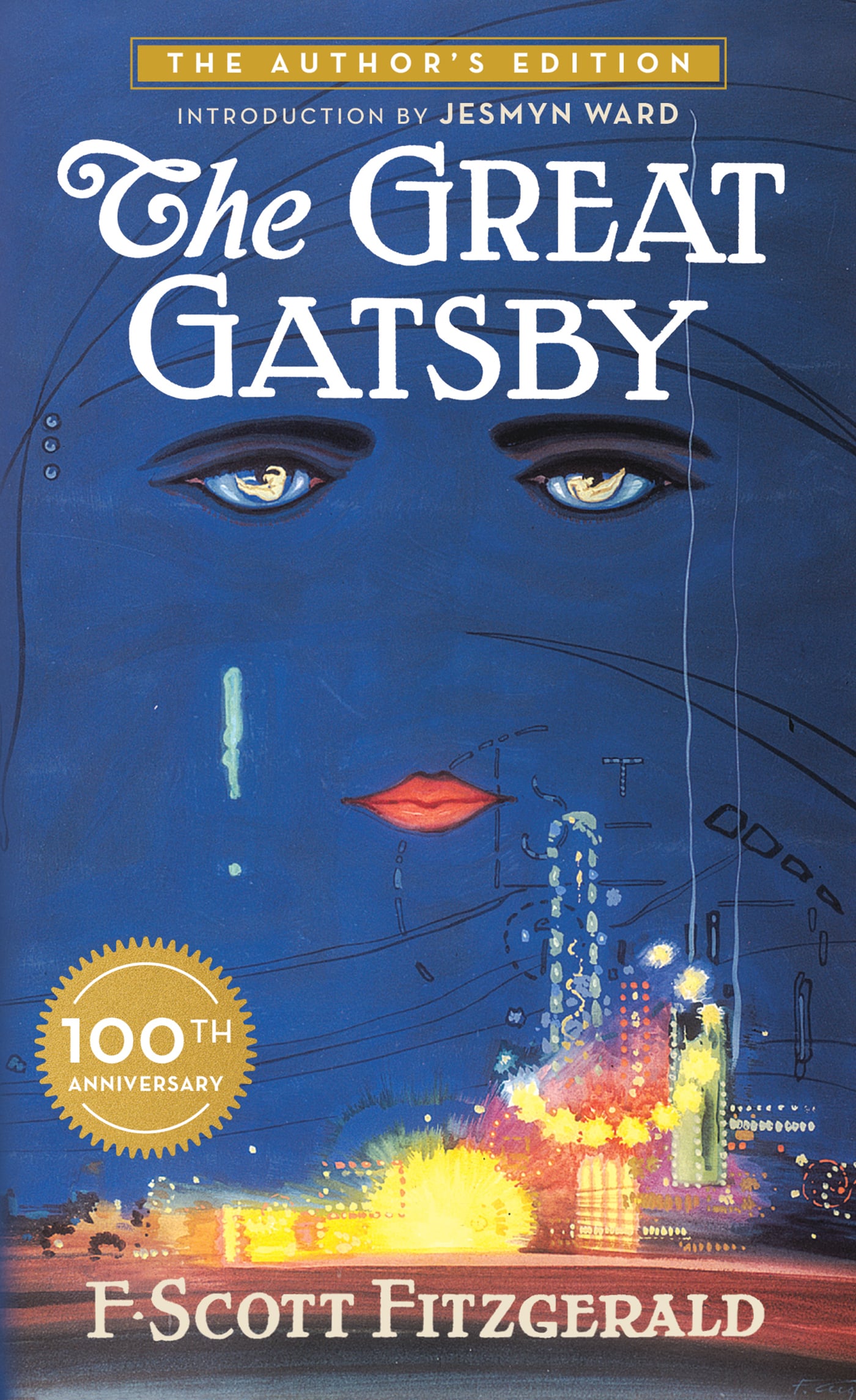
The Great Gatsby is a 1925 novel by F. Scott Fitzgerald, widely regarded as one of the greatest works of American literature. Narrated by the observant Nick Carraway, it follows the mysterious millionaire Jay Gatsby and his obsessive pursuit of the beautiful Daisy Buchanan against the glittering backdrop of Long Island’s Jazz Age excess. This guide covers the book’s reading level, age appropriateness, themes, characters, and teaching resources for high school students, parents, and educators.
For Parents
The Great Gatsby is a staple of American high school curricula and one of the most assigned novels in grades 9–11. The story contains mature themes including infidelity, alcoholism, reckless wealth, and a fatal car accident, all of which are handled with literary restraint rather than graphic detail. The novel’s sophistication makes it best suited for readers 14 and older, though younger advanced readers with parental guidance can engage with it meaningfully.
For Teachers
Few novels offer richer classroom territory than The Great Gatsby. Fitzgerald’s prose style rewards close reading, and the novel’s layered symbolism—the green light, the Valley of Ashes, the eyes of Doctor T.J. Eckleburg—gives students extensive material for literary analysis. It pairs productively with nonfiction on the Jazz Age, the Prohibition era, and the history of the American Dream, and is an excellent anchor text for units on social class, gender, and the mythology of reinvention.
The Great Gatsby at a Glance
Find on Amazon →| Author | F. Scott Fitzgerald |
| Published | 1925 |
| Grade Level | 9–11 (our assessment) |
| Recommended Age | 14–17 |
| Flesch-Kincaid Grade | 7.3 |
| Word Count | ~47,000 |
| Pages | 180 (standard paperback) |
| Chapters | 9 |
| Genre | Literary fiction / tragedy |
| Setting | Long Island and New York City, summer 1922 |
For official Lexile and AR levels, visit Lexile.com or AR BookFinder. ReadingVine provides independent editorial assessments.
What Reading Level Is The Great Gatsby?
ReadingVine places The Great Gatsby at a grade 9–11 reading level. Its Flesch-Kincaid score of approximately 7.3 reflects Fitzgerald’s lyrical, allusion-rich prose—sentences are often long and syntactically complex, the vocabulary is elevated, and the novel’s meaning frequently operates beneath the surface of what characters say and do. A student who can decode the words without difficulty may still miss the irony, symbolism, and social critique that make the book worth teaching.
The novel is relatively short at ~47,000 words—considerably briefer than most high school assigned novels—but its density rewards and sometimes demands rereading. Many teachers find it works best when read slowly, with close attention to individual passages, rather than at the pace a shorter book might suggest. The combination of accessible length and demanding depth makes it an ideal fit for grades 9–11, with the richest discussions typically emerging in grades 10 and 11.
For official Lexile and AR scores, visit Lexile.com or AR BookFinder.
What Age Is The Great Gatsby Appropriate For?
ReadingVine recommends The Great Gatsby for readers ages 14–17. The novel is free of explicit sexual content and graphic violence, but it deals substantively with adult themes that require some emotional maturity to engage with productively. It is most commonly assigned in 10th and 11th grade, and that placement reflects the age range where students are best equipped to appreciate both the story and its critique of American society.
The novel contains ongoing depictions of heavy drinking and parties fueled by alcohol during the Prohibition era. Infidelity is central to the plot—Tom Buchanan has an open affair, and Gatsby pursues a married woman throughout the story. A character is struck and killed by a car in a scene that is described but not graphically detailed. The novel also contains period-accurate racist language and views expressed by the character Tom Buchanan, which teachers typically use as a point of historical and literary discussion. There is no explicit sexual content.
What Is The Great Gatsby About?
In the summer of 1922, Nick Carraway—a Yale graduate from the Midwest—rents a modest house on West Egg, Long Island, next door to the sprawling mansion of the mysterious Jay Gatsby. Across the bay on the more fashionable East Egg lives Nick’s cousin Daisy Buchanan and her brutish, wealthy husband Tom. Nick is drawn into both worlds simultaneously: the old-money world of the Buchanans and the nouveau-riche spectacle of Gatsby’s legendary parties, which draw hundreds of guests each weekend though almost no one actually knows their host.
Nick soon discovers that Gatsby’s entire life has been constructed around a single obsession: reuniting with Daisy, whom he loved five years before she married Tom while Gatsby was overseas fighting in World War I. Gatsby has reinvented himself—from poor James Gatz of North Dakota to the fabulously wealthy Jay Gatsby—and bought his mansion specifically because it sits across the water from Daisy’s home. Through Nick, Gatsby and Daisy are reunited, and for a brief moment it seems Gatsby’s impossible dream might come true. But the collision of Gatsby’s fantasy with the reality of Daisy’s world—and with Tom’s possessiveness, Jordan Baker’s cynicism, and the grinding poverty of the Valley of Ashes just outside their gilded bubble—sets in motion a chain of events that ends in tragedy.
Fitzgerald completed the novel in 1924 after a period of intense revision, drawing on his own experiences among the wealthy on Long Island’s North Shore. When it was published in April 1925, it sold fewer than 20,000 copies and was considered a commercial disappointment. Fitzgerald died in 1940 believing himself a failure. It was only after World War II—when the Council on Books in Wartime distributed free copies to American soldiers overseas—that the novel found its massive audience and began its ascent to the top of the American literary canon.
The Great Gatsby Characters
Is The Great Gatsby Banned?
The Great Gatsby has been challenged in a small number of school districts over the decades, though it has never been widely banned and does not rank among the American Library Association’s most frequently challenged books. Objections have typically centered on its depictions of drinking, references to sexuality, and Tom Buchanan’s racist language. In 1987, it was challenged in the Baptist College of Charleston, South Carolina, on the grounds that it contained language that was offensive to Christians. The book remains one of the most widely assigned novels in American high schools and is universally available in school and public libraries.
The Great Gatsby Themes and Lessons
The novel’s dominant theme is the corruption of the American Dream—the idea that in America, anyone can reinvent themselves and achieve greatness through will and ambition. Gatsby is the ultimate embodiment of this myth: he has built himself from nothing, acquired staggering wealth, and surrounded himself with the trappings of success. But Fitzgerald makes clear that Gatsby’s dream is not really about wealth or status—it’s about Daisy, who has come to represent an idealized past that cannot be recovered. Nick famously tells Gatsby he can’t repeat the past; Gatsby genuinely cannot understand why not. The tragedy is not that the dream is unachievable, but that Gatsby has confused the dream with a fantasy, and the fantasy with a person.
Running beneath this is Fitzgerald’s sharper critique: that the world of old money is not merely indifferent to people like Gatsby but actively hostile to them. Tom and Daisy are, as Nick puts it, careless people—they smash up things and creatures and then retreat back into their money, leaving others to clean up the mess. The Valley of Ashes, presided over by the faded billboard eyes of Doctor T.J. Eckleburg, represents the moral wasteland that lies just out of sight of the parties and the glamour. Discussion questions for students and families: What does the green light at the end of Daisy’s dock represent? Can you think of modern examples of the American Dream mythology Fitzgerald critiques? How does where a character lives—East Egg, West Egg, the Valley of Ashes—reflect who they are?
How Many Pages and Chapters Are in The Great Gatsby?
The Great Gatsby is approximately 180 pages in standard paperback editions, divided into 9 chapters. Its word count of ~47,000 makes it one of the shorter novels commonly assigned in high school—shorter, for instance, than To Kill a Mockingbird or The Catcher in the Rye. An average high school reader will complete it in 4–6 hours of reading time. However, because the novel rewards slow, attentive reading, most teachers spread it across two to three weeks of classroom instruction rather than assigning it as a rapid independent read. A careful read-aloud of selected passages is also a popular classroom approach, given the exceptional quality of Fitzgerald’s prose.
Books Similar to The Great Gatsby
About F. Scott Fitzgerald
Francis Scott Key Fitzgerald (1896–1940) was an American novelist and short story writer whose work is synonymous with the Jazz Age, a term he is widely credited with popularizing. Born in St. Paul, Minnesota, he attended Princeton University before dropping out to join the Army during World War I, where he began work on his first novel. This Side of Paradise (1920) made him famous overnight, and his marriage to the glamorous Zelda Sayre cemented his status as the defining literary couple of their generation. Fitzgerald lived large—in New York, on the French Riviera, in Hollywood—and his spending constantly outpaced even his substantial earnings. The Great Gatsby (1925) was a commercial disappointment during his lifetime, and Fitzgerald spent his final years writing screenplays in Hollywood to pay off debts, working on his unfinished novel The Last Tycoon when he died of a heart attack in 1940 at age 44. The posthumous reassessment of his work, driven in part by wartime distribution of The Great Gatsby, transformed him into one of the most celebrated American writers of the twentieth century.
The Great Gatsby: Frequently Asked Questions
What is the reading level of The Great Gatsby?
ReadingVine places The Great Gatsby at a grade 9–11 reading level, with a Flesch-Kincaid score of approximately 7.3. While the word-level difficulty is manageable for strong middle school readers, the novel’s literary density—its irony, symbolism, and social critique—makes it most appropriate for high school students ages 14 and older.
Did The Great Gatsby win any awards?
No. The Great Gatsby did not win any literary awards and was a commercial disappointment when it was published in 1925, selling fewer than 20,000 copies in its first year. Fitzgerald died in 1940 believing himself forgotten. The novel’s reputation was largely posthumous, built through critical reassessment after World War II. Today it is widely considered one of the greatest American novels ever written, but it holds no formal prize.
What is the main message of The Great Gatsby?
Fitzgerald’s novel is fundamentally a critique of the American Dream—specifically, the myth that reinvention and ambition can overcome the rigid class structures that define American society. Gatsby has done everything the myth promises: he has worked, he has accumulated, he has transformed himself. But the world of old money represented by the Buchanans remains closed to him, and his dream turns out to be not a future he can build but a past he cannot recover. The novel asks whether the American Dream is a promise or a trap—and Fitzgerald’s answer is deeply pessimistic.
What does the green light symbolize in The Great Gatsby?
The green light at the end of Daisy’s dock is one of American literature’s most analyzed symbols. For Gatsby, it represents his desire for Daisy and the future he believes he can still claim. More broadly, Fitzgerald uses it to represent the nature of desire itself—the way hope and longing lose their power the moment they are fulfilled. In the novel’s final paragraphs, Nick expands the symbol further: the green light becomes a metaphor for the American Dream itself, always receding, always beckoning, forever just out of reach.
Why is The Great Gatsby so widely taught in schools?
The Great Gatsby is a near-universal fixture in American high school curricula for several reasons: it is short enough to teach thoroughly in two to three weeks, its prose rewards close reading, its symbolism is rich and classroom-discussable, and its themes—the American Dream, class mobility, the corrupting power of wealth—remain urgently relevant. It also serves as an excellent introduction to literary modernism and to the social history of the 1920s.
How does The Great Gatsby end?
After Daisy, driving Gatsby’s car, strikes and kills Myrtle Wilson in the Valley of Ashes, Gatsby takes responsibility and waits outside the Buchanan house to protect Daisy. Tom, unwilling to accept blame, tells Myrtle’s grief-maddened husband George that the car belongs to Gatsby. George shoots Gatsby in his pool and then kills himself. At Gatsby’s funeral, virtually none of the hundreds of people who attended his parties show up. Only Nick, a few servants, and Gatsby’s estranged father appear. Disillusioned with the East, Nick breaks off his relationship with Jordan and returns to the Midwest. The ending is devastating precisely because it is so quiet: the world that destroyed Gatsby simply moves on.
How many pages and words is The Great Gatsby?
The Great Gatsby is approximately 180 pages in standard paperback editions and contains ~47,000 words, making it one of the shorter major novels in the high school canon. Despite its brief length, it is commonly taught over two to three weeks due to the density of its prose and the richness of its literary material.
Is The Great Gatsby based on a true story?
The Great Gatsby is a work of fiction, but it draws heavily on Fitzgerald’s real life. The Long Island setting is based on the North Shore communities of Great Neck and Sands Point, where Fitzgerald lived in 1922 and attended lavish parties. Gatsby’s romantic obsession reflects Fitzgerald’s own youthful infatuation with socialite Ginevra King, who married a wealthy man while Fitzgerald was still a struggling writer. Nick Carraway’s perspective as an observer from outside the world of old money mirrors Fitzgerald’s own ambivalent relationship to the wealthy class he both courted and despised.