
 = Partner Site
Of Mice and Men Reading Level: A Complete Guide
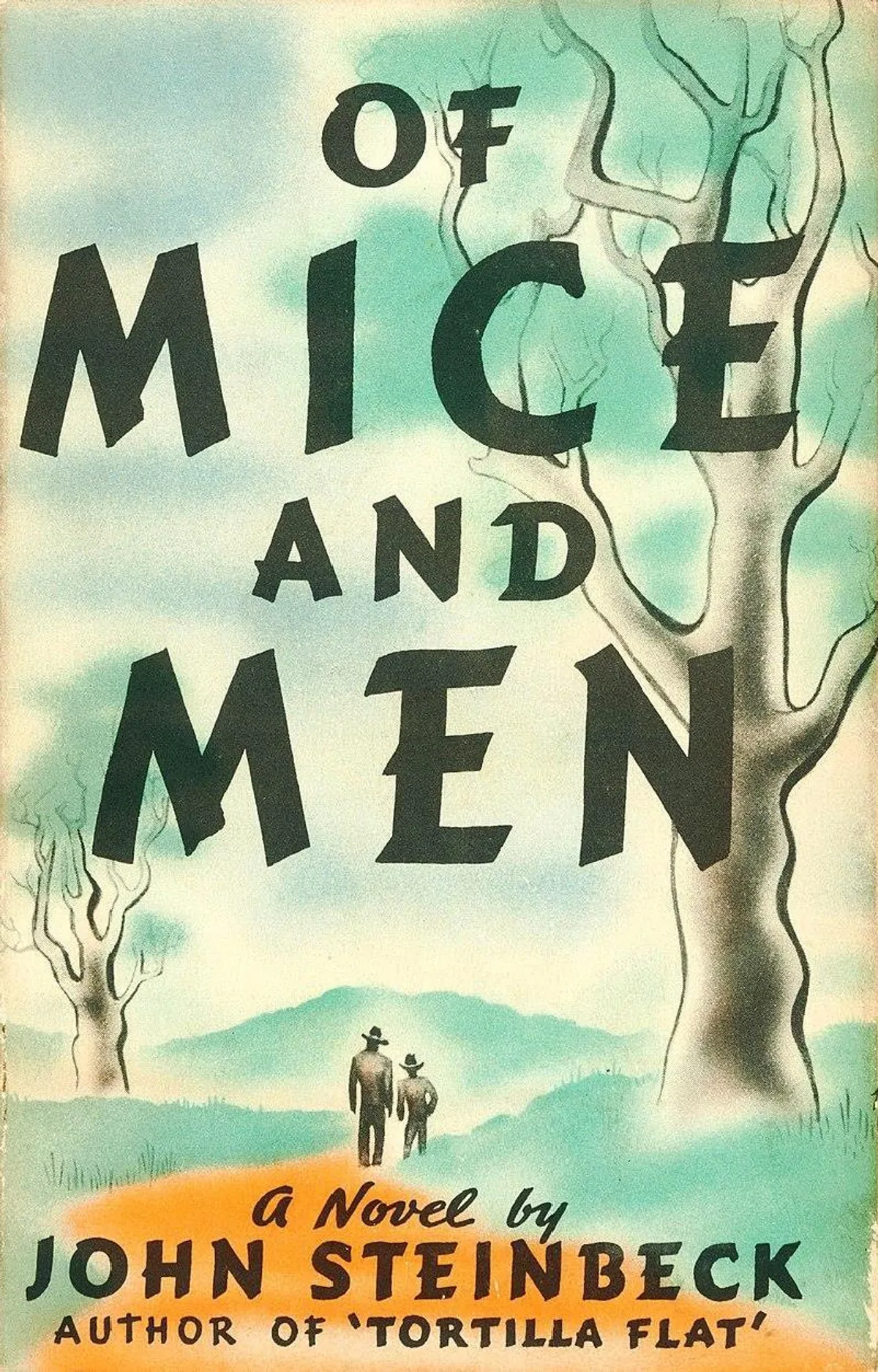
Of Mice and Men is a 1937 novella by John Steinbeck set during the Great Depression in California’s Salinas Valley. It follows two displaced migrant ranch workers—the sharp and protective George Milton and his large, gentle companion Lennie Small—as they chase a shared dream of one day owning a piece of land to call their own. This guide covers the book’s reading level, age appropriateness, themes, characters, and teaching resources for high school students, parents, and educators.
For Parents
Of Mice and Men is one of the most frequently assigned and most frequently challenged books in American high schools. Its themes of friendship, broken dreams, disability, and mercy make it a genuinely moving read, but the novella also contains racial slurs, profanity, and a deeply tragic ending that requires emotional maturity to process. It is best suited for readers ages 14 and older, with parental awareness of the content.
For Teachers
Steinbeck’s tightly constructed novella is an ideal classroom text: short enough to read and discuss thoroughly in one to two weeks, yet rich enough to sustain analysis of character, symbolism, social history, and moral philosophy. Its depiction of economic vulnerability, racial exclusion, and the gap between dreams and reality makes it a powerful anchor for units on the Great Depression, disability and society, and the ethics of mercy. The book’s challenged status also provides an opportunity for discussions about censorship and literary value.
Of Mice and Men at a Glance
Find on Amazon →| Author | John Steinbeck |
| Published | 1937 |
| Grade Level | 8–10 (our assessment) |
| Recommended Age | 14–16 |
| Flesch-Kincaid Grade | 4.5 |
| Word Count | ~30,000 (novella) |
| Pages | 112 (standard paperback) |
| Chapters | 6 |
| Genre | Novella / tragic realism |
| Setting | Salinas Valley, California, 1930s |
For official Lexile and AR levels, visit Lexile.com or AR BookFinder. ReadingVine provides independent editorial assessments.
What Reading Level Is Of Mice and Men?
ReadingVine places Of Mice and Men at a grade 8–10 reading level. Its Flesch-Kincaid score of approximately 4.5 reflects Steinbeck’s deliberately plain, spoken prose—much of the text is dialogue rendered in the vernacular of Depression-era California ranch hands, with short sentences and accessible vocabulary. A strong middle school reader could decode the words without difficulty. The challenge, and the reason it belongs in high school, lies entirely elsewhere.
Steinbeck designed the novella to function simultaneously as prose fiction and as a stage play, which means the emotional and moral weight of the story is concentrated in what characters say and do, with very little authorial commentary to guide the reader’s interpretation. The ending in particular demands the kind of ethical reasoning that develops in adolescence. Students who can read the sentences easily may still need significant classroom support to reckon with what Steinbeck is actually asking of them. Most teachers find it works best in grades 8–10, with the deepest discussions in grades 9 and 10.
For official Lexile and AR scores, visit Lexile.com or AR BookFinder.
What Age Is Of Mice and Men Appropriate For?
ReadingVine recommends Of Mice and Men for readers ages 14–16. The novella’s emotional content—a deeply tragic ending involving the mercy killing of a beloved character, the brutal murder of a woman, and pervasive themes of loneliness and crushed hope—requires emotional maturity. It is most commonly assigned in grades 8–10, and that placement is appropriate. Parents of younger or more sensitive readers should be aware of the specific content described below before assigning it for home reading.
Of Mice and Men is one of the most frequently challenged books in American schools, and the reasons are significant. The novella contains racial slurs used by characters in period-accurate dialogue, including repeated use of a highly offensive anti-Black slur directed at the character Crooks. It contains moderate profanity throughout. A woman is killed by Lennie—the scene is not graphically described but is emotionally intense. The novella ends with George shooting Lennie in the back of the head to spare him a worse death—a scene of devastating emotional weight that is handled with great care by Steinbeck but is nonetheless one of the most difficult endings in high school literature. There is no sexual content, though Curley’s wife uses flirtation as a means of seeking attention and connection.
What Is Of Mice and Men About?
George Milton and Lennie Small are migrant workers traveling together through Depression-era California in search of ranch work. They are an unlikely pair: George is small, quick-witted, and perpetually burdened by his responsibility for Lennie, who is physically enormous but has a developmental disability that makes him childlike, easily confused, and dangerously unaware of his own strength. Their shared dream—to save enough money to buy a small farm, raise rabbits, and “live off the fatta the lan'”—is Lennie’s most cherished comfort and George’s most private hope.
They find work on a ranch in the Salinas Valley, where they meet a cast of other lonely men: Candy, an aging ranch hand who has lost his hand and fears being cast aside; Crooks, the Black stable hand who lives in deliberate isolation because he is excluded from the bunkhouse; Slim, the quietly authoritative mule skinner who becomes their ally; and Curley, the boss’s aggressive son, whose antagonism toward Lennie sets the story’s tragedy in motion. Curley’s wife—she is never given a name—drifts through the ranch seeking company, bored and trapped in a marriage she didn’t choose, her dreams of being a movie star long since faded.
The novella moves swiftly and inevitably toward its ending. Lennie, incapable of controlling his strength when he is frightened or excited, kills Curley’s wife accidentally. Knowing what will follow—that Curley will organize a lynch mob—George finds Lennie before the others do. In a final act that Steinbeck presents as an act of love rather than cruelty, George shoots Lennie while he is still dreaming of their farm. Steinbeck drew on his own experiences working alongside migrant laborers as a young man, and the novella’s authenticity of setting and character is a direct product of that history.
Of Mice and Men Characters
Is Of Mice and Men Banned?
Of Mice and Men is one of the most challenged books in American literary history. It appears on the American Library Association’s list of the Top 100 Banned/Challenged Books for both 2000–2009 (ranked fifth) and 2010–2019, and has been formally challenged more than 54 times since its publication. Objections consistently center on three issues: the repeated use of racial slurs in period-accurate dialogue, profanity throughout the text, and the mercy killing at the end of the novella, which some communities have objected to on moral or religious grounds.
Scholars and educators have consistently defended the book on the grounds of its literary and historical significance. The racial language, in particular, is understood by most teachers as a historically accurate depiction of the dehumanizing treatment of Black Americans in 1930s California—and the character of Crooks is widely taught as one of Steinbeck’s most powerful indictments of that racism. The book remains among the most widely assigned texts in American high schools and is available in virtually all school and public library systems.
Of Mice and Men Themes and Lessons
The central theme of Of Mice and Men is the fragility of dreams in a world that is indifferent to the aspirations of the powerless. George and Lennie’s dream of owning land is explicitly modest—a few acres, a garden, some rabbits—but it functions as a sustaining myth, a story they tell themselves to make the grinding uncertainty of migrant labor bearable. Steinbeck draws the title from Robert Burns’s poem “To a Mouse”—the best-laid schemes of mice and men often go awry—and the inevitability signaled by that title hangs over every chapter. The dream is not destroyed by malice but by the accumulated weight of circumstances that none of the characters have the power to control.
Loneliness is the novella’s other great theme, threaded through every character. Candy fears irrelevance. Crooks has been so thoroughly isolated that he has grown to prefer it. Curley’s wife is entirely alone in a house full of men who resent her presence. Even George, for all his relationship with Lennie, admits that a man traveling alone in this world has no one to turn to. Steinbeck’s novella is partly an argument that the need for companionship—for someone to share the dream—is as fundamental as food or shelter, and that a society which systematically destroys the conditions for human connection is doing something deeply wrong. Discussion questions: Was George’s final decision an act of love or a betrayal? What does the novella suggest about who is responsible for Lennie’s death? How does Steinbeck use the different characters’ loneliness to make a broader argument about Depression-era America?
How Many Pages and Chapters Are in Of Mice and Men?
Of Mice and Men is approximately 112 pages in standard paperback editions and is divided into 6 chapters (structured, as Steinbeck intended, as three acts of two chapters each). Its word count of approximately 30,000 firmly classifies it as a novella rather than a full novel—it is one of the shortest major texts assigned in American high schools. An average high school reader will complete it in 2–3 hours of reading time. In the classroom, most teachers spread it across one to two weeks to allow time for the discussion its moral complexity demands. It also works very well as a class read-aloud, and the play-novelette format means selected scenes can be performed by students with minimal adaptation.
Books Similar to Of Mice and Men
About John Steinbeck
John Ernst Steinbeck (1902–1968) was born and raised in Salinas, California, in the same fertile valley where Of Mice and Men is set. He attended Stanford University but left without graduating, working a series of manual labor jobs—including stints on ranches alongside migrant workers—that would provide the raw material for his fiction. His breakthrough came with Tortilla Flat (1935), but it was the trio of California labor novels—In Dubious Battle (1936), Of Mice and Men (1937), and The Grapes of Wrath (1939)—that established him as one of the defining voices of American social realism. The Grapes of Wrath won both the Pulitzer Prize and the National Book Award. Steinbeck was awarded the Nobel Prize in Literature in 1962 for his body of work; the Nobel citation singled out Of Mice and Men as a “little masterpiece.” He died in New York City in 1968 and remains one of the most widely read American authors in the world.
Of Mice and Men: Frequently Asked Questions
What is the reading level of Of Mice and Men?
ReadingVine places Of Mice and Men at a grade 8–10 reading level. Its Flesch-Kincaid score of approximately 4.5 reflects Steinbeck’s plain, dialogue-driven prose, but the novella’s moral complexity and emotionally devastating ending make it most appropriate for high school students ages 14 and older.
Did Of Mice and Men win any awards?
The stage adaptation of Of Mice and Men won the New York Drama Critics’ Circle Award in 1938, the year after the novella was published. The novella itself did not win a standalone literary prize, but it was cited by the Nobel committee in 1962 as a “little masterpiece” when Steinbeck was awarded the Nobel Prize in Literature for his body of work. Steinbeck’s novel The Grapes of Wrath, written shortly after Of Mice and Men, won both the Pulitzer Prize and the National Book Award.
Why does George kill Lennie at the end of Of Mice and Men?
After Lennie accidentally kills Curley’s wife, George knows that Curley will organize a lynch mob and that Lennie will be killed violently and in terror. George finds Lennie first and shoots him in the back of the head while Lennie is calm and happy, imagining their farm. Steinbeck presents this as an act of profound love and mercy—George choosing to spare his friend a horrific death at the cost of bearing that burden himself. Slim’s quiet affirmation of George afterward is Steinbeck’s signal that the act, however terrible, was the most humane choice available. The ending is deliberately ambiguous enough for classroom debate, but the weight of the text supports reading it as mercy rather than murder.
Why is Of Mice and Men so frequently challenged and banned?
Of Mice and Men has been formally challenged more than 54 times since publication and appears on the ALA’s most frequently challenged books lists. The primary objections are its use of racial slurs (including a highly offensive anti-Black slur used repeatedly in period-accurate dialogue), profanity throughout, and the mercy killing that ends the novella. Educators and scholars have consistently defended the book, arguing that its language is historically accurate and essential to understanding the racism Steinbeck is critiquing, and that its moral difficulty is precisely what makes it valuable as a classroom text.
What does the title Of Mice and Men mean?
The title comes from a line in Robert Burns’s 1785 poem “To a Mouse”: “The best-laid schemes o’ mice an’ men / Gang aft agley”—meaning the best-laid plans of mice and men often go awry. Steinbeck uses it to signal that George and Lennie’s dream of owning a farm is doomed from the start—not because of any single failure or villain, but because the forces working against people in their position are simply too large to overcome. The original working title of the novella was Something That Happened, which reflects the same fatalistic worldview.
Is Of Mice and Men based on a true story?
Of Mice and Men is fiction, but it is grounded in Steinbeck’s direct experience. He worked alongside migrant laborers as a young man in the Salinas Valley, and the details of ranch life, the bunkhouse culture, and the particular vulnerability of workers during the Depression are drawn from observation. Steinbeck has said that he knew a man like Lennie—someone who was physically powerful but mentally limited and unaware of the harm he could cause. The setting and social conditions are historically accurate, even if the specific characters and events are invented.
How long does it take to read Of Mice and Men?
At approximately 30,000 words and 112 pages, Of Mice and Men is one of the shortest texts commonly assigned in high school. An average reader will complete it in 2–3 hours. In the classroom, most teachers spread it over one to two weeks to allow time for the close reading and discussion that the novella’s moral complexity requires.
What is the significance of Candy’s dog in Of Mice and Men?
Candy’s dog is one of the novella’s most important pieces of foreshadowing. The dog is old, arthritic, and no longer useful on the ranch. Carlson pressures Candy to let him shoot the dog, arguing it is a kindness—the dog is suffering and Candy is only prolonging things out of sentimental attachment. Candy reluctantly agrees and spends the rest of the novella regretting that he let a stranger do it. The parallel to George and Lennie’s ending is unmistakable: when George faces the same choice, he makes the opposite decision—he does not let a stranger take Lennie from him. It is the one thing George can do for Lennie that Candy could not do for his dog.