
 = Partner Site
Ender’s Game Reading Level: A Complete Guide
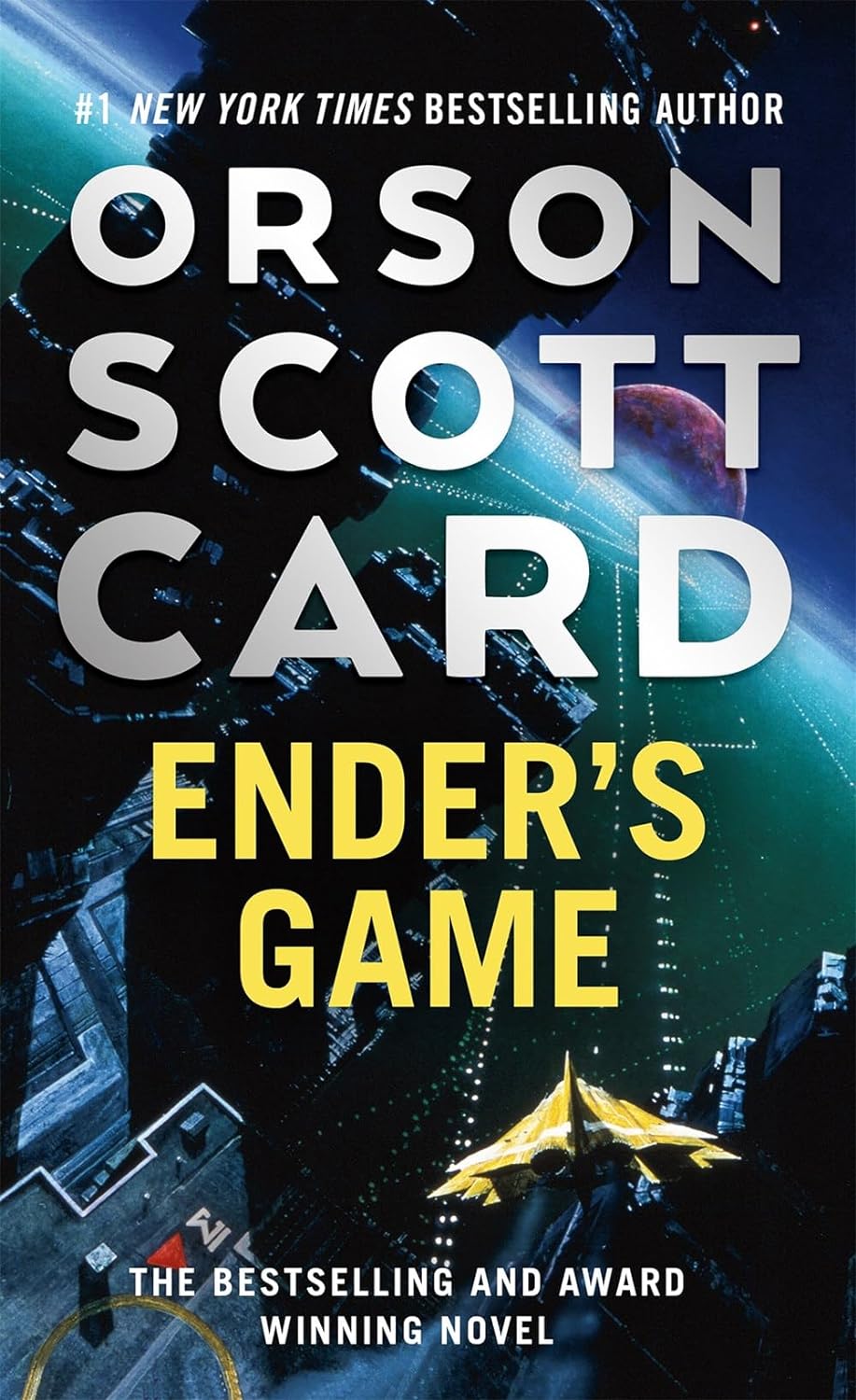
Ender’s Game by Orson Scott Card is a military science fiction novel about a child genius named Andrew “Ender” Wiggin, recruited at age six into an orbital Battle School where Earth’s most gifted children are trained to become the military commanders who will defend humanity against a third invasion by an alien species known as the Formics. Winner of both the Hugo and Nebula Awards, it is a widely assigned novel in American middle and high schools — beloved for its psychological depth, its exploration of leadership and manipulation, and its shattering final revelation — and one of the most discussed for reasons that extend beyond the text. This complete guide covers Ender’s Game‘s reading level, recommended age, content considerations, characters, themes, and books similar to Ender’s Game, designed for parents, teachers, and students.
For Parents
A psychologically intense novel about a child who is isolated, manipulated, and pushed to the edge of what he can bear — all by adults who claim to be protecting humanity. The violence is significant, particularly in the early chapters, and the moral questions the book raises are real rather than decorative. Best for readers ages 12–16. Parents should also be aware of the author controversy addressed below.
For Teachers
A widely taught science fiction novels at the secondary level, with rich material on leadership, ethics, manipulation, and the moral responsibility of those who deploy children as weapons. The final revelation raises questions about deception, consent, and ends-justify-means reasoning that sustain extended classroom discussion. Grades 7–12.
Ender’s Game at a Glance
Find on Amazon →| Author | Orson Scott Card |
| Published | 1985 (Tor Books) |
| Grade Level | 7–12 (our assessment) |
| Recommended Age | 12–16 |
| Flesch-Kincaid Grade | ~5.5 |
| Word Count | 100,609 |
| Pages | 352 (Tor paperback) |
| Chapters | 15 |
| Genre | Science fiction / military fiction |
| Setting | Earth; Battle School (orbital station); Command School; future unspecified |
| Awards | Hugo Award (1986); Nebula Award (1985) |
| Series | Ender’s Game, Book 1 |
For official Lexile and AR levels, visit Lexile.com or AR BookFinder. ReadingVine provides independent editorial assessments.
What Reading Level Is Ender’s Game?
Ender’s Game reads at approximately a 7th–12th grade level by our editorial assessment, with a Flesch-Kincaid grade level of around 5.5. The formula score significantly undersells the book’s actual demands — Card writes in clear, direct prose, and the sentence-level complexity is modest, but the psychological and moral depth of the narrative requires the kind of maturity and life experience that the score cannot capture. A seventh-grader can read the words; the questions the book is really asking are better grasped by readers in 8th grade and up.
At 100,609 words and 352 pages, Ender’s Game is a mid-length novel that most readers in the target range finish in one to two weeks. The fifteen chapters are long by contemporary standards — this is not a book of short, punchy chapters but of sustained narrative sequences — and the Battle School training sequences in the middle, while the novel’s most technically inventive sections, require patience from readers who are less interested in the tactical details of zero-gravity combat. The novel’s final chapters, in which the full significance of everything that has happened is revealed, are among the most carefully constructed in science fiction. For official Lexile and AR scores, visit Lexile.com or AR BookFinder. ReadingVine’s assessments are independent editorial judgments.
What Age Is Ender’s Game Appropriate For?
We recommend Ender’s Game for readers ages 12–16. The novel contains no sexual content and no profanity beyond what the military setting makes credible. The content concerns are primarily around violence and psychological intensity.
The novel opens with Ender, age six, seriously injuring a bully in a fight — a scene that establishes his capacity for ruthless efficiency and sets the moral tone for everything that follows. A second violent confrontation later in the book results in a character’s death, though Ender does not know this at the time. The psychological violence done to Ender by the adults responsible for his training — deliberately isolating him, manipulating his emotions, manufacturing crises to push him toward the responses they want — is the novel’s most sustained and disturbing content, presented seriously and without the endorsement of the narrative. The final act involves a genocide: Ender unknowingly destroys the Formic home world, killing billions, while believing he is running a simulation. The revelation of this — that he was manipulated into committing an atrocity without his knowledge or consent — it is one of the most morally serious moments in science fiction, and it is handled with full acknowledgment of its weight. The novel does not present the genocide as simply the price of victory; it treats it as a moral catastrophe that Ender must carry. Parents of younger or more sensitive readers should be aware that the psychological manipulation and the final revelation are genuinely disturbing rather than merely exciting.
For readers 12 and up, the moral seriousness with which Card treats his subject matter is what makes the book worth reading. The violence is never gratuitous; it is always in service of the questions the novel is asking about what we are willing to do to children in the name of survival, and what the cost is.
What Is Ender’s Game About?
In the novel’s future, humanity has survived two devastating wars with an alien insect species called the Formics — “the buggers” in the slang of the military — and lives in constant preparation for a third invasion. The International Fleet’s response has been to breed and train military geniuses from childhood, monitoring promising children through a device implanted at the base of the skull and recruiting the best of them to Battle School at orbital altitude, where they will be shaped into commanders before they are teenagers.
Ender Wiggin is the third child in a family allowed to have a third child specifically because the military wanted one more attempt at the combination of brilliance and moral stability his older siblings represented. His brother Peter is a sociopath who terrifies him. His sister Valentine loves him completely, and he loves her. Ender himself is gentle by nature and lethal by training — a combination the military finds ideal and that he finds increasingly difficult to live inside. Taken to Battle School at six, he progresses through its competitive hierarchy at impossible speed, trained by the school’s commander Graff through a series of escalating challenges designed to push him toward the responses that will make him the commander humanity needs.
The Battle School sections follow Ender through years of zero-gravity combat training, political maneuvering among the children, and the isolation deliberately engineered by the adults around him to keep him from forming attachments that might compromise his usefulness. Interspersed are chapters following his siblings: Valentine, who is recruited to write propaganda, and Peter, who uses the early internet to build political influence under the name Locke. Both threads converge in the novel’s final act, which takes Ender to Command School on Eros, where he learns to command fleets rather than squads and begins the “simulations” that are the novel’s final revelation.
The revelation — that the final “simulation” was not a simulation at all but the actual Third Invasion, and that Ender has just commanded the obliteration of the Formic home world in real time — is the moment the entire novel has been building toward. Everything Card has established about Ender’s character, his capacity for ruthless efficiency, his awareness that his commanders are manipulating him, and his genuine moral horror at what the military has made him into — all of it converges in a scene that is simultaneously a military victory, a war crime, and a psychological catastrophe for a child who believed, as they had told him, that none of it was real.
Ender’s Game Characters
Is Ender’s Game Banned?
Ender’s Game has been challenged and removed from some school curricula and libraries, appearing on the ALA’s lists of challenged books. Objections have included the violence (particularly the two fights in which Ender seriously injures or kills opponents), the military themes, and language. It has also been challenged on grounds related to the author’s publicly stated views on LGBTQ+ issues — Orson Scott Card has been an outspoken opponent of same-sex marriage, and some school districts have removed the book in response to advocacy around separating the work from its author.
The question of how to approach Ender’s Game in light of Card’s public statements is a commonly discussed author-separation question in contemporary education. The novel itself contains no anti-LGBTQ+ content and was written before Card became a prominent public figure on these issues. Many educators and readers distinguish between the work, which they consider significant literature, and Card’s public advocacy, which they find objectionable. Others decline to engage with the text for reasons of authorial stance. We note this here because parents, teachers, and students frequently search for this context, and it is relevant to decisions about assigning or reading the book.
Ender’s Game Themes and Lessons
The novel’s central moral argument is about what it means to use a child as a weapon without their full knowledge and consent. The International Fleet’s justification — that Ender had to believe the simulations were simulations, because if he knew they were real he would not have been able to make the decisions he needed to make — is coherent as a military argument and monstrous as a moral one. Card does not resolve this tension; he presents it. The adults who did this to Ender are not presented as villains. They are presented as people who loved him, believed in the necessity of what they were doing, and did it anyway — which is both more disturbing and more honest than a simple villain would be.
The novel also makes a sustained argument about the relationship between empathy and destruction. Ender’s defining characteristic — the thing that makes him both the ideal commander and the most tortured person in the novel — is that he understands his enemies completely. He defeats Peter by understanding Peter. He defeats the bully Stilson by understanding Stilson. He defeats the Formics by understanding the Formics well enough to find the one approach that will destroy them. And understanding the Formics, when he comes to it, is also the beginning of his grief for what he has done to them. Card is arguing that true empathy and true destruction are not opposites but the same process applied in different directions.
The novel’s ending — and the beginning of Speaker for the Dead, the next book in the series — is Card’s most serious moral statement: that Ender spends the rest of his life trying to atone for the genocide he committed without knowing it, and that the work of atoning is not the work of a conqueror but of someone who loved what he destroyed. The xenocide is not presented as justified. It is presented as the cost of a species’ survival, and as a debt that cannot be repaid but must be carried.
Discussion questions for classrooms and families: Did the adults do the right thing in deceiving Ender about the final battle — does the outcome justify the method? What is the difference between understanding an enemy enough to defeat them and understanding them enough to mourn them? Is Ender a hero, a victim, or both? What does the novel suggest we owe to children we train as soldiers? How does Ender’s relationship with Peter shape his understanding of himself?
How Many Pages and Chapters in Ender’s Game?
The Tor paperback is 352 pages across 15 chapters. Word count is 100,609 words. The chapters are long — averaging over twenty pages each — making this a book of sustained narrative sequences rather than short, propulsive chapter hooks. Most readers in the target age range finish it in one to two weeks. The middle section covering Battle School is the longest and most technically detailed; readers who find the zero-gravity combat less interesting than the psychological and moral dimensions of the story may find this stretch demanding. The novel ends with an epilogue that sets up the themes of Speaker for the Dead, widely considered the superior novel by adult readers of science fiction.
Books Similar to Ender’s Game
About Orson Scott Card
Orson Scott Card was born in 1951 in Richland, Washington, and grew up in a Mormon family. He has said that the ideas behind Ender’s Game began developing when he was reading Asimov’s Foundation series as a teenager and found himself thinking about what a military commander’s training might actually look like — what it would do to a child. The original short story was published in Analog Science Fiction and Fact in 1977; Card expanded it into the novel published by Tor in 1985. Both the novel and its immediate sequel Speaker for the Dead won both the Hugo and Nebula Awards — the only time this has been achieved in consecutive years.
Card has been a prolific author across multiple genres. He has also been a prominent and outspoken opponent of same-sex marriage, serving on the board of the National Organization for Marriage and writing essays and fiction that many readers consider homophobic. This has led to calls to boycott his work and to campaigns to remove Ender’s Game from school curricula. These controversies intensified around the 2013 film adaptation. The novel itself predates Card’s public prominence on these issues and contains no anti-LGBTQ+ content. How readers and educators navigate the relationship between Card’s work and his public positions is a question each must resolve for themselves. He lives in Greensboro, North Carolina.
Ender’s Game: Frequently Asked Questions
What reading level is Ender’s Game?
Ender’s Game has a Flesch-Kincaid grade level of approximately 5.5 and a Lexile of 780L. Our editorial assessment places it at grades 7–12 (ages 12–16). The formula score significantly undersells the book’s psychological and moral demands — a 7th grader can read the prose comfortably, but the questions the book is really asking are best appreciated by readers in 8th grade and up. For official Lexile and AR scores, visit Lexile.com or AR BookFinder.
What grade is Ender’s Game appropriate for?
We recommend grades 7–12, ages 12 and up. The violence in the early chapters, the sustained psychological manipulation of a child, and the moral weight of the final revelation make it more suitable for readers in their early teens and up. It is widely assigned in 8th and 9th grade.
How many pages are in Ender’s Game?
The Tor paperback is 352 pages across 15 chapters. Word count is 100,609 words. Most readers in the target age range finish it in one to two weeks. The long chapters make it a book of sustained narrative sequences rather than short chapter hooks.
What is Ender’s Game about?
Ender Wiggin, a child genius, is recruited at age six into an orbital military academy where Earth’s brightest children are trained to become commanders in the war against an alien species called the Formics. The novel follows Ender’s training through Battle School and Command School — and to the final “simulation” that turns out not to be a simulation at all.
What is the twist ending of Ender’s Game?
The final battle that Ender believes is a training simulation — his most desperate and most brilliant engagement, in which he uses a planet-destroying weapon to win at any cost — is actually the real Third Invasion. Ender has been commanding actual fleets in real time, and he has just destroyed the Formic home world, killing billions, while believing he was playing a game. The revelation that the adults deliberately deceived him about this is the novel’s central moral crisis.
Is Ender’s Game a banned book?
It has been challenged and removed from some school libraries and curricula — for violence, military themes, and language, and more recently in response to Orson Scott Card’s public opposition to LGBTQ+ rights. It appears on the ALA’s challenged books lists. Despite these challenges, it remains one of the most widely assigned science fiction novels in American secondary education.
Is Ender’s Game part of a series?
Yes. The direct sequel is Speaker for the Dead (1986), set thousands of years later, in which an adult Ender travels the galaxy speaking the true stories of the dead. Many adult readers consider it the superior novel. The series branches into parallel storylines — the Ender Quintet follows Ender forward in time; the Shadow Series follows Bean and the other Battle School students on Earth. The two direct sequels, Ender’s Game and Speaker for the Dead, each won both the Hugo and Nebula Awards.
Is there an Ender’s Game movie?
Yes. A film adaptation was released in 2013, starring Asa Butterfield as Ender, Harrison Ford as Graff, and Ben Kingsley as Mazer Rackham. It is rated PG-13. The film is a reasonable adaptation of the plot but inevitably compresses the psychological depth and the internal experience of isolation and manipulation that the novel builds across years of Ender’s life. Most readers find the novel’s rendering of the final revelation more devastating than the film’s.