
 = Partner Site
The Hitchhiker’s Guide to the Galaxy Reading Level: A Complete Guide
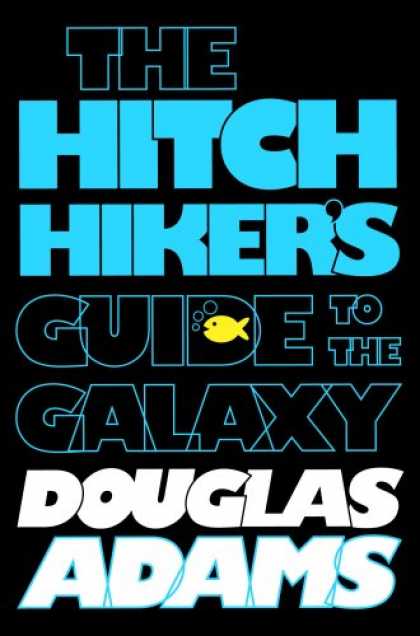
The Hitchhiker’s Guide to the Galaxy by Douglas Adams is a comedy science fiction novel about the last human being alive — Arthur Dent, who was rescued from Earth’s destruction by his friend Ford Prefect moments before the planet was demolished to make way for a hyperspace bypass — and his subsequent adventures hitchhiking across the universe. First published in 1979 and adapted from Adams’s BBC radio series of the same name, it is one of the most beloved and most frequently quoted comic novels in the English language: a book about the absurdity of existence that is, itself, gloriously absurd. This complete guide covers The Hitchhiker’s Guide to the Galaxy‘s reading level, recommended age, content considerations, characters, themes, and books similar to The Hitchhiker’s Guide to the Galaxy, designed for parents, teachers, and students.
For Parents
One of the funniest books ever written in English — genuinely accessible to strong middle-grade readers but most fully appreciated by readers 12 and up who can catch Adams’s comic timing and philosophical jokes. There is no sex, minimal violence, and no profanity beyond mild British expletives. Best for ages 12–adult, though enthusiastic younger readers enjoy it too.
For Teachers
A rich grades 7–12 text for teaching satire, absurdism, and the philosophical tradition of finding comedy in existential questions. Adams’s jokes about bureaucracy, the search for meaning, and the indifference of the universe all have serious intellectual roots that reward classroom excavation. Pairs naturally with Brave New World for a unit on dystopia and the human condition, or with Catch-22 for a unit on absurdist fiction.
The Hitchhiker’s Guide to the Galaxy at a Glance
Find on Amazon →| Author | Douglas Adams |
| Published | 1979 (Pan Books, UK); 1980 (Harmony Books, US) |
| Grade Level | 7–12 (our assessment) |
| Recommended Age | 12+ |
| Flesch-Kincaid Grade | ~7.5 |
| Word Count | ~46,000 |
| Pages | 224 (Del Rey paperback) |
| Chapters | 35 |
| Genre | Science fiction / comedy |
| Setting | Outer space; the planet Magrathea; various; 1978 and beyond |
| Series | Hitchhiker’s Guide to the Galaxy, Book 1 (of 5) |
For official Lexile and AR levels, visit Lexile.com or AR BookFinder. ReadingVine provides independent editorial assessments.
What Reading Level Is The Hitchhiker’s Guide to the Galaxy?
The Hitchhiker’s Guide to the Galaxy reads at approximately a 7th–12th grade level by our editorial assessment, with a Flesch-Kincaid grade level of around 7.5. Adams writes with a wit that operates on multiple levels simultaneously — the surface comedy is accessible to younger readers, but the satirical targets (bureaucratic indifference, the philosophical futility of seeking meaning, the absurdity of interstellar politics) and the specific comic techniques (the mock-encyclopedic Guide entries, the deadpan narrator’s increasingly ludicrous comparisons) are best appreciated by readers with some exposure to what Adams is mocking.
At approximately 46,000 words and 224 pages, the book is notably short — comparable in length to a novella — and most readers finish it in a day or two of comfortable reading. The brevity is part of the point: Adams writes with the economy of a comedy writer trained in radio, where every word must earn its place, and the novel moves fast. Strong readers as young as 10 or 11 regularly enjoy it, but parents should note that the humor is pitched at adult sensibilities and that younger readers will miss a significant proportion of the jokes. For official Lexile and AR scores, visit Lexile.com or AR BookFinder. ReadingVine’s assessments are independent editorial judgments.
What Age Is The Hitchhiker’s Guide to the Galaxy Appropriate For?
We recommend The Hitchhiker’s Guide to the Galaxy for readers ages 12 and up. The book contains no sexual content, no significant violence, and only mild British profanity. There is nothing in it that requires a content warning. The age recommendation is based entirely on what readers will actually get out of it rather than what might harm them: the philosophical comedy, the satirical targets, and the specific absurdism of Adams’s humor are most fully rewarding to readers who have enough life experience to understand what is being satirized.
Strong readers ages 10–12 who are already reading adult science fiction will enjoy it and find plenty to laugh at. The experience deepens considerably in adolescence and adulthood, and many readers report finding new things in it each time they reread it. It is one of the few books that is genuinely funnier at 40 than at 14, while still being funny at 14.
What Is The Hitchhiker’s Guide to the Galaxy About?
One Thursday morning, Arthur Dent discovers two things simultaneously: that his house is about to be demolished to make way for a bypass, and that his friend Ford Prefect — who Arthur has always assumed was an out-of-work actor from Guildford — is actually an alien researcher for a publication called The Hitchhiker’s Guide to the Galaxy, and that the Earth is about to be demolished to make way for a hyperspace bypass. The demolition notice has been on display in the planning department on Alpha Centauri for fifty years. Ford rescues Arthur by hitching a ride on one of the Vogon constructor ships, and they are ejected into space thirty seconds later by Vogons who object to them on principle, read them poetry as a prelude to killing them, and then eject them into the void.
They are rescued — against odds of two to the power of two hundred and seventy-six thousand seven hundred and nine to one against — by the Heart of Gold, a ship powered by the Infinite Improbability Drive, captained by the two-headed, three-armed former President of the Galaxy Zaphod Beeblebrox, accompanied by a human woman named Trillian (whom Arthur once failed to impress at a party in Islington) and Marvin, a robot with a brain the size of a planet and a chronic depression that would put anyone else’s unhappiness to shame.
The group ends up at Magrathea, a legendary planet whose inhabitants built custom planets for wealthy clients before going to sleep to wait out a recession. There they encounter Slartibartfast, a Magrathean planet-builder, and learn the truth behind Deep Thought’s answer to the ultimate question of life, the universe, and everything — which is forty-two — and the reason no one knows what the question was. The revelation, and the implications that follow from it, are Adams’s central joke: that the universe is so vast, so indifferent, and so much stranger than anyone imagined that any definitive answer to the meaning of existence is by definition going to be inadequate.
The Hitchhiker’s Guide to the Galaxy Characters
Is The Hitchhiker’s Guide to the Galaxy Banned?
The Hitchhiker’s Guide to the Galaxy has not been banned or formally challenged in American schools or libraries in any documented or significant way. It is widely considered a classic of comic science fiction and is commonly assigned in secondary school and university courses. Some religious objectors have noted that the book depicts the Earth as created by an alien corporation for experimental purposes rather than by a divine being, though this has not generated formal challenge activity at any documented scale.
The Hitchhiker’s Guide to the Galaxy Themes and Lessons
Adams’s central joke — that the answer to life, the universe, and everything is forty-two, and that nobody knows what the question is — is also a serious philosophical argument. The joke works because it captures something true about the nature of meaning: that an answer without context is not an answer, that the question matters more than any possible response, and that anyone who claims to have a complete and satisfying explanation for existence is probably selling something. The Vogons’ demolition of the Earth for a hyperspace bypass — justified by a planning notice that has technically been on display for fifty years — makes the same point from the other direction: that bureaucracy creates the appearance of process while eliminating the possibility of accountability, and that this is itself a form of absurdity.
Marvin is the novel’s most philosophically serious character, which is the deepest of Adams’s jokes. His depression is not played purely for laughs — it is the response of a genuinely intelligent being to a universe that is, on reflection, genuinely depressing. The Sirius Cybernetics Corporation’s mission statement (“Share and Enjoy”) is satirizing every corporate optimism campaign ever written, but Marvin’s misery underneath it is real. Adams is making a sustained argument that intelligence, applied to the facts of existence, tends toward discomfort — and that the only sensible response to this is the combination of awareness and cheerful pragmatism captured in “Don’t Panic.”
The Guide itself — the fictional electronic travel guide within the novel — is one of Adams’s most prescient inventions, written fifteen years before the internet existed in recognizable form: a democratized, collaboratively assembled, frequently inaccurate but comprehensively confident source of information, used by everyone and authoritative about nothing. Its entry on Earth (“Mostly Harmless”) is the joke that contains Adams’s whole world-view in two words.
Discussion questions for classrooms and families: Why is 42 funny as an answer to the ultimate question — what is Adams saying about meaning and context? What is the relationship between the Vogon’s bureaucratic demolition of Earth and the House of Life’s institutional conservatism in the Kane Chronicles? What does Marvin’s depression say about the relationship between intelligence and happiness? What does it mean that the Guide’s most important instruction is “Don’t Panic”?
How Many Pages and Chapters in The Hitchhiker’s Guide to the Galaxy?
The Del Rey paperback edition is 224 pages across 35 chapters. Word count is approximately 46,000 words — considerably shorter than most novels, reflecting the book’s origins as a radio script and Adams’s economy as a comedy writer. Most readers finish it in a single day or a couple of evenings of comfortable reading. The brevity is entirely appropriate to the content: Adams is not building a world in the same sense as Tolkien or Rowling but sketching one, and the gaps in the sketch are as funny as what’s filled in. The series continues with four further novels — The Restaurant at the End of the Universe, Life, the Universe and Everything, So Long, and Thanks for All the Fish, and Mostly Harmless — collectively described by Adams as “a trilogy in five parts.”
Books Similar to The Hitchhiker’s Guide to the Galaxy
About Douglas Adams
Douglas Adams was born in 1952 in Cambridge, England, and studied English literature at St John’s College, Cambridge. He worked as a writer and script editor for the BBC before The Hitchhiker’s Guide to the Galaxy — originally a BBC radio series, broadcast in 1978 — became the basis for the first novel. The radio series had been conceived when Adams, hitchhiking across Europe with a copy of the Hitch-hiker’s Guide to Europe, looked up at the stars and thought that someone should write a hitchhiker’s guide to the galaxy. The novel was published in 1979, reached number one on the Sunday Times bestseller list in its second week, and sold 250,000 copies in its first three months.
Adams was notoriously reluctant to meet deadlines — his editor once famously locked him in a hotel room to extract the fourth book — and his output was relatively small: five Hitchhiker’s novels, two Dirk Gently novels, and various non-fiction. He became a passionate environmentalist in his later years, co-writing Last Chance to See with zoologist Mark Carwardine, a book about endangered species that he considered his finest work. He died suddenly of a heart attack in 2001, at fifty, while working out at a gym in Santa Barbara. He had been in the middle of revising the script for the Hitchhiker’s movie, which was eventually released in 2005. The world lost one of its finest comic minds, and the novels he didn’t write are among its great literary absences.
The Hitchhiker’s Guide to the Galaxy: Frequently Asked Questions
What reading level is The Hitchhiker’s Guide to the Galaxy?
The Hitchhiker’s Guide to the Galaxy has a Flesch-Kincaid grade level of approximately 7.5. Our editorial assessment places it at grades 7–12 (ages 12+). The prose is accessible but the comedy operates on multiple levels, and the philosophical humor is most fully appreciated by readers with some life experience to understand what Adams is satirizing. For official Lexile and AR scores, visit Lexile.com or AR BookFinder.
What grade is The Hitchhiker’s Guide to the Galaxy appropriate for?
We recommend grades 7–12, with ages 12 and up for most independent readers. Strong readers ages 10–11 who already read adult science fiction will enjoy it; the humor deepens with age and rereading. There are no content concerns — the recommendation is purely about what readers will get out of it.
How many pages are in The Hitchhiker’s Guide to the Galaxy?
The Del Rey paperback is 224 pages across 35 chapters. Word count is approximately 46,000 words — considerably shorter than most novels. Most readers finish it in a day or two of comfortable reading.
What is The Hitchhiker’s Guide to the Galaxy about?
Arthur Dent, an ordinary Englishman, is rescued from Earth’s destruction by his alien friend Ford Prefect moments before the planet is demolished for a hyperspace bypass. Together they hitchhike across the galaxy, joining the two-headed former President of the Galaxy Zaphod Beeblebrox, a woman named Trillian, and Marvin the deeply depressed robot aboard the Heart of Gold — eventually arriving at the legendary planet Magrathea, where they learn the answer to the ultimate question of life, the universe, and everything. It is forty-two.
Why is the answer to everything 42?
In the novel, a vast computer called Deep Thought spends 7.5 million years calculating the answer to the Ultimate Question of Life, the Universe, and Everything and arrives at 42. The joke is that this answer is useless without knowing what the question was — and nobody can remember it. Adams has said in interviews that 42 was chosen specifically because it was a completely ordinary, undramatic number with no cosmic significance, which is exactly the point: the universe doesn’t care about our questions enough to give them a meaningful answer.
Is The Hitchhiker’s Guide to the Galaxy a series?
Yes — the first of five novels, which Adams described as “a trilogy in five parts.” The sequels are The Restaurant at the End of the Universe (1980), Life, the Universe and Everything (1982), So Long, and Thanks for All the Fish (1984), and Mostly Harmless (1992). Each book is somewhat self-contained, but the series develops character arcs and cosmological plot threads that reward reading in order. A sixth book, And Another Thing…, was written by Eoin Colfer and published in 2009.
What is a Vogon in Hitchhiker’s Guide?
Vogons are one of the most unpleasant races in the galaxy — bureaucratic, officious, and entirely indifferent to other creatures’ feelings. They demolished the Earth for the hyperspace bypass project without any particular malice; it was simply a job that needed doing and the paperwork had been filed correctly. Their poetry is the third worst in the universe, and being forced to listen to it is a recognized form of torture. They are Adams’s most sustained satirical creation: the embodiment of bureaucracy as a moral position.
Is there a Hitchhiker’s Guide to the Galaxy movie?
Yes. A film adaptation was released in 2005, starring Martin Freeman as Arthur Dent, Mos Def as Ford Prefect, Sam Rockwell as Zaphod Beeblebrox, Zooey Deschanel as Trillian, and Alan Rickman voicing Marvin. It is rated PG and is generally considered a warm but imperfect adaptation — faithful to the spirit if not always the letter of Adams’s humor. Adams was working on the script at the time of his death in 2001.