
 = Partner Site
Sideways Stories from Wayside School Reading Level: A Complete Guide
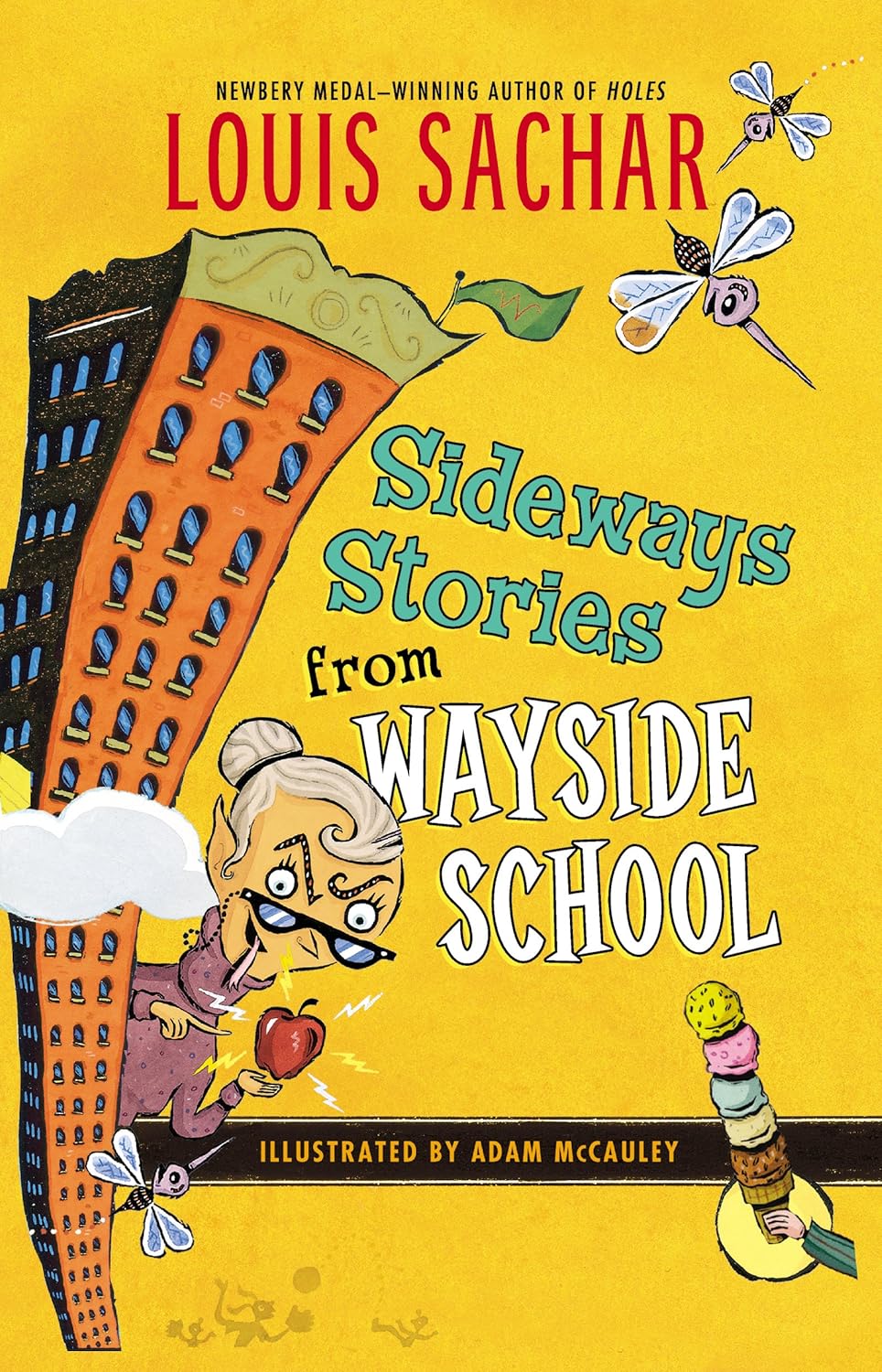
Sideways Stories from Wayside School by Louis Sachar is a beloved comic novel made up of thirty short chapters — one for each floor of Wayside School, a building that was accidentally constructed thirty stories tall instead of one story wide — each centered on a different student or teacher. First published in 1978, it is absurdist, warm, and quietly subversive, a book that treats the logic of childhood with complete seriousness while finding enormous comedy in doing so. This complete guide covers Sideways Stories from Wayside School‘s reading level, recommended age, content considerations, characters, themes, and books similar to Sideways Stories from Wayside School, designed for parents, teachers, and students.
For Parents
Funny, harmless, and genuinely beloved by children who encounter it — Sideways Stories has been making kids laugh for nearly fifty years. The absurdist humor rewards rereading, and the chapter-per-character structure makes it a natural read-aloud as well as a strong independent read. Best for ages 7–11.
For Teachers
An excellent grades 2–5 independent read or classroom read-aloud, particularly strong for reluctant readers and for introducing absurdist humor as a literary mode. The episodic structure makes it easy to dip in and out of, and individual chapters work well as standalone read-alouds for the first ten minutes of class.
Sideways Stories from Wayside School at a Glance
Find on Amazon →| Author | Louis Sachar |
| Published | 1978 |
| Grade Level | 2–5 (our assessment) |
| Recommended Age | 7–11 |
| Flesch-Kincaid Grade | ~3.4 |
| Word Count | ~22,000 |
| Pages | 124 (HarperCollins paperback) |
| Chapters | 30 |
| Genre | Realistic fiction / absurdist humor |
| Setting | Wayside School — a thirty-story elementary school, contemporary |
| Series | Wayside School, Book 1 |
For official Lexile and AR levels, visit Lexile.com or AR BookFinder. ReadingVine provides independent editorial assessments.
What Reading Level Is Sideways Stories from Wayside School?
Sideways Stories from Wayside School reads at approximately a 2nd–5th grade level by our editorial assessment, with a Flesch-Kincaid grade level of around 3.4. Sachar writes in a clear, playful voice — sentences are short and punchy, vocabulary is accessible, and each chapter is self-contained and brief enough to finish in a single sitting. A strong 2nd-grade reader can handle the text comfortably, and the humor is sharp enough to hold 5th graders and beyond.
The book’s real distinction is not its linguistic difficulty but its comic sensibility. Sachar’s absurdism is more sophisticated than it looks — jokes are set up across multiple paragraphs, cause-and-effect logic is applied to increasingly ridiculous premises, and some of the humor requires the reader to catch irony that younger readers will miss. The book is as funny on a second read as a first, often more so, which is one reason it has remained in print for nearly fifty years. For official Lexile and AR scores, visit Lexile.com or AR BookFinder. ReadingVine’s assessments are independent editorial judgments.
What Age Is Sideways Stories from Wayside School Appropriate For?
We recommend Sideways Stories from Wayside School for readers ages 7–11. There is nothing in the book that requires a content note. A few chapters have mild spooky elements — one teacher is said to have turned three students into apples, and there is a chapter involving a somewhat unsettling substitute teacher — but these are played entirely for comedy and are not frightening for children in the recommended age range. The book is one of the most content-safe recommendations in the elementary catalog.
What Is Sideways Stories from Wayside School About?
Wayside School was supposed to be one story tall with thirty classrooms side by side. Due to a construction mistake, it was built thirty stories tall with one classroom on each floor. The thirtieth floor — the top of the school — is where Mrs. Jewls teaches her class, and each of the book’s thirty chapters follows one student or teacher from that class through an episode that applies the school’s particular surreal logic with cheerful thoroughness.
There is no overarching plot. Instead, Sachar gives each chapter to a different character — Todd, who gets sent home every day for reasons he doesn’t fully understand; Maurecia, who is obsessed with ice cream; Joe, who can count but not the way his teacher wants; Dana, who is troubled by mosquitoes at the most inconvenient times; and twenty-six others — and finds the specific comic or emotional truth of each one. The chapters are short, usually three to five pages, and each ends with a punchline or a small revelation that makes the world of Wayside feel simultaneously ridiculous and completely coherent.
Running through the whole book is a gentle affection for the strangeness of school life — the arbitrary rules, the social hierarchies, the teachers who are sometimes fair and sometimes baffling — and a consistent warmth toward children who are trying to make sense of a world that doesn’t always make sense. Sachar’s Wayside School is a place where being odd is entirely normal and where the most unusual children are usually the most interesting ones.
Sideways Stories from Wayside School Characters
Is Sideways Stories from Wayside School Banned?
Sideways Stories from Wayside School has not been banned or formally challenged in American schools or libraries and does not appear on any lists of frequently challenged books. It has been continuously in print since 1978 and is widely considered a classic of American children’s humor writing.
Sideways Stories from Wayside School Themes and Lessons
Sachar’s humor works by applying completely rigorous logic to completely absurd premises — and in doing so, quietly pointing out that many of the things we accept as normal are not, on inspection, especially less absurd. A teacher who turns students into apples is obviously ridiculous. A school that sends children home for the day over minor infractions, a grading system that rewards convention over correctness, social hierarchies built on arbitrary criteria — these are also absurd, just familiar enough that we stop noticing. Wayside School makes the familiar strange again, and that is the source of most of its comedy.
The book is also, beneath its silliness, genuinely warm. Every chapter treats its central character with respect — even the strange ones, especially the strange ones — and the cumulative effect of thirty small portraits of thirty different children is a picture of a community where difference is not a problem to be solved but a fact to be celebrated. Children who feel out of step with normal school life tend to find Wayside comforting in a way that goes beyond the comedy.
Discussion questions for families and classrooms: Why is Wayside School funny — what makes it different from a regular school? Is Mrs. Jewls a good teacher? Joe always gets the right answer but not the right method — does the method matter? Which student do you think you would be most like, and why?
How Many Pages and Chapters in Sideways Stories from Wayside School?
The HarperCollins paperback is 124 pages across 30 short chapters. At roughly 22,000 words, it is a very quick read — most fluent readers in the target age range finish it in one to three sittings. Each chapter averages three to five pages, making the book exceptionally well suited to reading in short bursts: one chapter before bed, one chapter as a classroom read-aloud, one chapter in a spare few minutes. The episodic structure means there is no wrong place to stop, and no wrong place to start — individual chapters stand completely on their own.
Two sequels followed: Wayside School is Falling Down (1989) and Wayside School Gets a Little Stranger (1995), both of similar length and format. A fourth book, Wayside School Beneath the Cloud of Doom, was published in 2020. Readers who love the first book will find all three sequels equally satisfying.
Books Similar to Sideways Stories from Wayside School
About Louis Sachar
Louis Sachar was born in 1954 in East Meadow, New York, and grew up in California. He began writing Sideways Stories from Wayside School as a college student at UC Berkeley, where he was earning college credit by working as a teacher’s aide at an elementary school — an experience that gave him direct access to the comic material of classroom life and to children’s actual logic and language. He named the yard teacher Louis after himself. The book was published in 1978, when Sachar was in law school, and became the foundation of a career in children’s literature that would eventually produce his most celebrated work.
Holes, published in 1998, won both the Newbery Medal and the National Book Award — one of only a handful of books to receive both honors. The film adaptation, released in 2003, starred Sigourney Weaver and Shia LaBeouf. Sachar has said in interviews that Holes and the Wayside School books share the same fundamental instinct: a belief that the best children’s fiction treats its readers as intelligent people and trusts them to follow wherever the story leads. He lives in Austin, Texas.
Sideways Stories from Wayside School: Frequently Asked Questions
What reading level is Sideways Stories from Wayside School?
Sideways Stories from Wayside School has a Flesch-Kincaid grade level of approximately 3.4. Our editorial assessment places it at grades 2–5 (ages 7–11). The prose is clear and accessible to strong 2nd-grade readers, while the absurdist humor is sharp enough to hold 5th graders and beyond. For official Lexile and AR scores, visit Lexile.com or AR BookFinder.
What grade is Sideways Stories from Wayside School appropriate for?
We recommend grades 2–5 as the primary range, with the book working well as a classroom read-aloud for grades 2–3 and as an independent read from grades 3–5. It is one of the more accessible recommendations for newly independent readers who are ready for a full chapter book.
How many pages are in Sideways Stories from Wayside School?
The HarperCollins paperback is 124 pages across 30 short chapters. Word count is approximately 22,000 words. Most fluent readers in the target age range finish it in one to three sittings — individual chapters are three to five pages and stand completely on their own.
What is Sideways Stories from Wayside School about?
Wayside School was accidentally built thirty stories tall instead of one story wide, and each of its thirty chapters follows a different student or teacher from the thirtieth-floor classroom through an episode that applies the school’s surreal logic with cheerful thoroughness. There is no overarching plot — each chapter is a self-contained comic portrait of a different child.
Is Sideways Stories from Wayside School good for a reluctant reader?
Yes — one of the strongest recommendations in the catalog for reluctant readers in grades 2–4. The chapters are very short, each one is its own complete story, and Sachar’s humor pays off quickly. Children who don’t like committing to a long book find the episodic format much less daunting, and most reluctant readers who start it finish it.
Is Sideways Stories from Wayside School part of a series?
Yes — the first of four Wayside School books. The sequels are Wayside School is Falling Down (1989), Wayside School Gets a Little Stranger (1995), and Wayside School Beneath the Cloud of Doom (2020). All four share the same format and characters; each is self-contained and can be read in any order.
Who is Louis the Yard Teacher?
Louis the yard teacher is a recurring character in the Wayside School books named after Louis Sachar himself, who worked as a yard teacher at an elementary school while writing the first book. Including himself as a character in the story was Sachar’s playful acknowledgment that the book grew directly out of his own experience with real children — and his way of staying connected to the world he was describing.
Is there a Sideways Stories from Wayside School TV show?
Yes. An animated series based on the Wayside School books aired on Nickelodeon and Nicktoons from 2007 to 2008. It is generally considered appropriate for the same age range as the books. The show takes some liberties with the source material but captures the spirit of Sachar’s humor reasonably well.