
 = Partner Site
The Miraculous Journey of Edward Tulane Reading Level: A Complete Guide
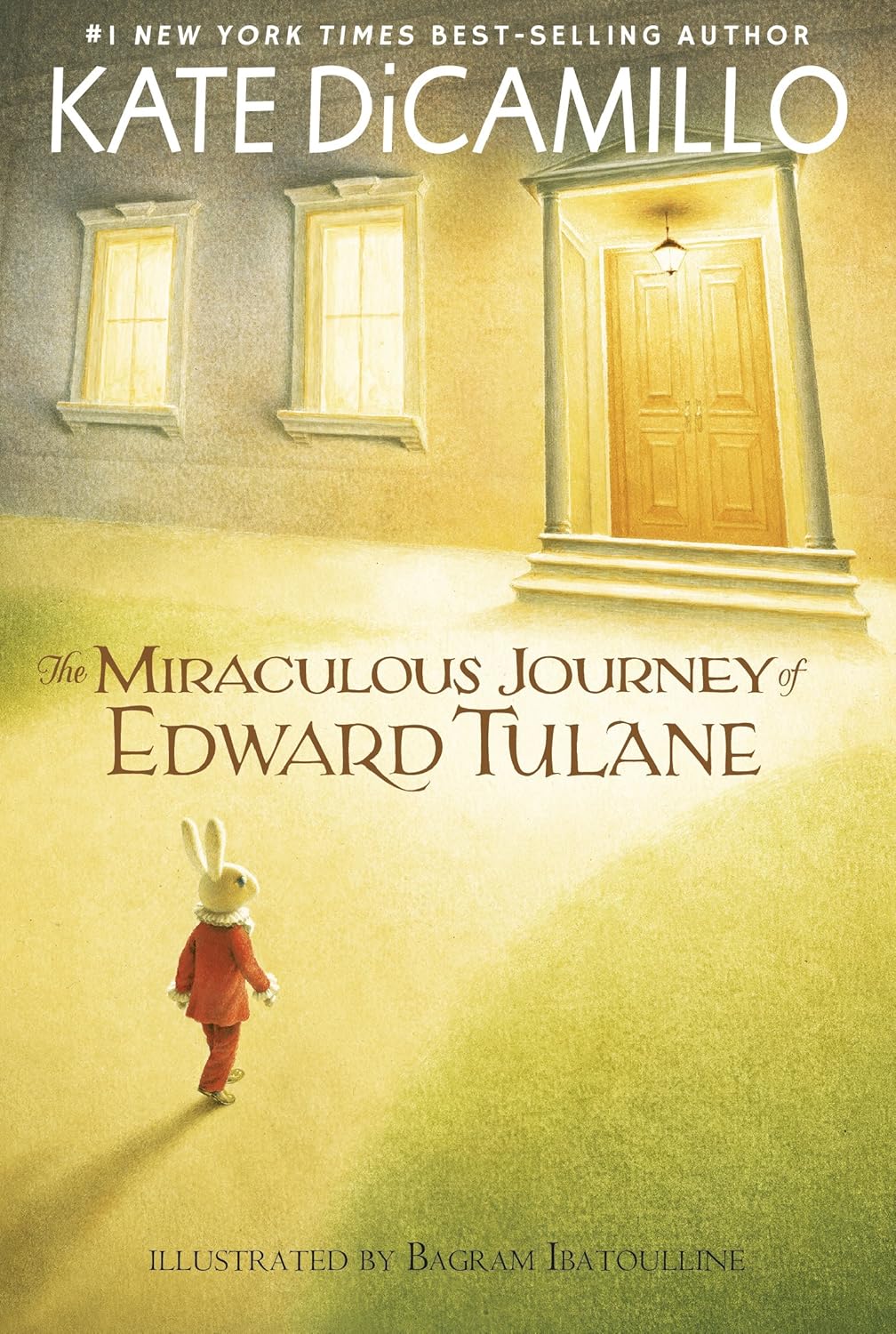
The Miraculous Journey of Edward Tulane by Kate DiCamillo is a short, luminous novel about a cold-hearted china rabbit who travels from owner to owner — each of whom loves him completely — and slowly, painfully, learns to love in return. First published in 2006, it is a fable about loss, grief, and the particular courage required to open yourself to love when you know it will cost you something. This complete guide covers The Miraculous Journey of Edward Tulane‘s reading level, recommended age, content considerations, characters, themes, and books similar to The Miraculous Journey of Edward Tulane, designed for parents, teachers, and students.
For Parents
The Miraculous Journey of Edward Tulane is a beautiful, sad book that does not shy away from loss — characters die, Edward is repeatedly separated from people who love him, and the novel earns its hopeful ending through genuine grief rather than around it. Best for readers ages 7–11, it reads aloud exceptionally well and is one of the most reliably moving family read-alouds in recent children’s fiction.
For Teachers
An outstanding grades 3–5 text for teaching the use of an object as a narrative lens, the arc of character transformation, and the way a simple fable structure can carry complex emotional argument. DiCamillo’s prose is precise and beautiful and rewards close reading at any level. Pairs naturally with The Velveteen Rabbit for a unit on beloved toys and what love costs, or with Charlotte’s Web for a unit on grief and loss in children’s literature.
The Miraculous Journey of Edward Tulane at a Glance
Find on Amazon →| Author | Kate DiCamillo |
| Illustrator | Bagram Ibatoulline |
| Published | 2006 |
| Grade Level | 3–5 (our assessment) |
| Recommended Age | 7–11 |
| Flesch-Kincaid Grade | ~4.6 |
| Word Count | ~22,000 |
| Pages | 198 (Candlewick paperback) |
| Chapters | 25 |
| Genre | Fantasy / fable |
| Setting | Various — Memphis, the ocean, a fishing village, a hobo camp, Chicago; 1930s–1940s |
| Awards | Boston Globe–Horn Book Award (2006) |
For official Lexile and AR levels, visit Lexile.com or AR BookFinder. ReadingVine provides independent editorial assessments.
What Reading Level Is The Miraculous Journey of Edward Tulane?
By our editorial assessment, The Miraculous Journey of Edward Tulane reads at a grade 3–5 level. The Flesch-Kincaid formula places it at approximately grade 4.6 — accessible to a confident third-grade reader, and within reach as an independent read for strong second-graders. DiCamillo’s prose is clear, unhurried, and precise, written in the elegant, slightly formal register that suits both the period setting and Edward’s own haughty personality at the novel’s opening. Sentences are complete and unambiguous; the vocabulary is rich without being difficult.
The emotional complexity of the novel sits above its reading level in the way that the best children’s literature always does. A seven-year-old reading it independently will follow the story and feel its sadness; a ten-year-old will begin to understand what DiCamillo is saying about the relationship between love and loss; an adult reading it aloud will likely need to pause. The novel is short enough that it can be read in a single sitting, and its compression — the way each of Edward’s owners is rendered fully in a small number of pages — is one of DiCamillo’s finest technical achievements.
For official Lexile and Accelerated Reader scores, visit Lexile.com or AR BookFinder. ReadingVine’s assessments are independent editorial judgments.
What Age Is The Miraculous Journey of Edward Tulane Appropriate For?
We recommend The Miraculous Journey of Edward Tulane for readers ages 7–11. The novel contains no violence beyond what the story requires, no profanity, and no mature content. Its challenge is entirely emotional: this is a book about loss, and it depicts loss honestly and repeatedly. Characters die. Edward is separated from people who love him in ways that are not always explained or resolved. One particularly affecting sequence involves a terminally ill child, handled with great tenderness but without false comfort.
Parents of children who are navigating grief, illness in the family, or anxiety about loss should be aware that the novel engages these themes directly and does not offer easy reassurance. For most children in the recommended age range, this honesty is precisely what makes the book valuable — it gives language and form to feelings that are otherwise hard to hold. The novel’s ending is genuinely hopeful, but it is hope that has been earned through loss rather than offered in place of it. It reads aloud beautifully, and for younger readers at the lower end of the age range, reading it together rather than independently gives natural opportunities to pause and talk.
What Is The Miraculous Journey of Edward Tulane About?
Edward Tulane is a china rabbit — hand-crafted, exquisitely dressed, twenty-one inches tall — who belongs to a girl named Abilene Tulane in Memphis, Tennessee, in the 1930s. Edward is beautiful and he knows it. He is also entirely self-absorbed: he accepts Abilene’s love as his due, feels nothing in return, and considers the whole arrangement perfectly satisfactory. An old woman named Pellegrina, Abilene’s grandmother, tells Edward a story about a princess who refused to love and was punished for it. Edward does not understand the warning.
When Abilene’s family travels by ocean liner to London, Edward is thrown overboard by a pair of rough boys and sinks to the bottom of the sea. He lies there for a long time — patient in the way that a creature with no feelings can be patient — until a fisherman named Lawrence pulls him up in his net. Lawrence’s wife Nellie dresses him in overalls and names him Susanna, and their daughter Lucy loves him, and Edward, in spite of himself, begins to feel something. Then he loses them. He is found by a hobo named Bull, who carries him on his travels and names him Malone and tells him about the people he has loved and lost. He is found by a sick child named Bryce and his sister Lolly, who is dying. He is broken. He is repaired. He loses faith entirely. And then, at the very end of a long chain of loss and arrival, he is found again.
The novel’s genius is its constraint: Edward cannot speak, cannot act, cannot do anything but be carried and loved and lost. Everything he experiences, he experiences passively, from the inside. DiCamillo uses this limitation to make an argument about what it means to be open — to allow yourself to be known and loved by another person when you understand, having been lost before, exactly what that openness will cost you when it ends.
The Miraculous Journey of Edward Tulane Characters
The Miraculous Journey of Edward Tulane Themes and Lessons
DiCamillo’s central argument is that love requires courage — specifically the courage to remain open to another person when you know, from experience, that love ends in loss. Edward begins the novel without this courage because he begins without love: he has never risked anything, never felt anything, and his cold beauty is a kind of armor. Each loss he suffers cracks the armor further, and each new love he allows himself is more costly than the last because he has more to lose each time.
The novel’s most important exchange comes when Edward, after Lolly’s death, tells the old doll in the antique shop that he cannot bear to love again — that the pain is too great. The old doll’s answer is the moral center of the book: that a heart that refuses to love in order to avoid grief has already lost everything worth protecting. This is the same argument DiCamillo makes in Because of Winn-Dixie and in different registers across her work: that grief is the price of love, and the price is always worth paying.
The novel also belongs to the tradition of the beloved toy — the Velveteen Rabbit, the Skin Horse, the toys of Andersen and Collodi — that asks what it means to become real. For Edward, becoming real means becoming capable of feeling; the journey is not from toy to living creature but from closed to open, from self-sufficient to genuinely present for another.
Discussion questions for families and classrooms: Why does Edward not love Abilene at the beginning of the novel — what is missing in him? What does each of Edward’s owners give him that the previous ones didn’t? What does the old doll in the antique shop mean when she says what she says? Does Edward’s journey have to involve so much loss, or could he have learned to love another way? How is this novel similar to and different from The Velveteen Rabbit?
How Many Pages and Chapters in The Miraculous Journey of Edward Tulane?
The Candlewick paperback edition of The Miraculous Journey of Edward Tulane is 198 pages across 25 short chapters, illustrated throughout by Bagram Ibatoulline in a gorgeous, painterly style that suits both the period setting and the novel’s fairy-tale register. The word count is approximately 22,000 words — short enough to read in a single sitting for a fluent reader, and structured so that each chapter represents a distinct episode in Edward’s journey, creating natural stopping points for younger readers or for read-aloud sessions.
For independent readers in the target age range, expect a reading time of two to four hours. As a read-aloud, the novel is exceptional — DiCamillo’s prose has a measured, musical quality that rewards being heard, and the chapter structure makes it easy to read one episode per sitting. Most families who read it aloud report finishing it in three to five sessions. It is one of the finest family read-alouds in recent children’s literature, and the conversations it tends to prompt — about love, about loss, about what we owe to the people who love us — are among the most valuable a book can generate.
Books Similar to The Miraculous Journey of Edward Tulane
About Kate DiCamillo
Kate DiCamillo was born in 1964 in Philadelphia and grew up in Clermont, Florida, after her family relocated for her health as a child. She worked for years in a book warehouse before her first novel, Because of Winn-Dixie, was published in 2000 to immediate acclaim — it was a Newbery Honor book and established her as one of the most distinctive voices in American children’s literature. Her second novel, The Tiger Rising, was also a National Book Award finalist. The Tale of Despereaux won the Newbery Medal in 2004.
The Miraculous Journey of Edward Tulane was published in 2006 and illustrated by Bagram Ibatoulline, whose painterly, light-filled illustrations are an integral part of the book’s beauty and emotional effect. DiCamillo has said in interviews that the novel grew from her own experience of longing and loss — that Edward began as a figure for a particular kind of emotional unavailability she recognized in herself — and this personal investment is visible in every page. She served as the National Ambassador for Young People’s Literature from 2014 to 2015. Her other beloved works include the Mercy Watson series and Flora and Ulysses, which won the Newbery Medal in 2014. She lives in Minneapolis.
The Miraculous Journey of Edward Tulane: Frequently Asked Questions
What reading level is The Miraculous Journey of Edward Tulane?
The Miraculous Journey of Edward Tulane has a Flesch-Kincaid grade level of approximately 4.6. Our editorial assessment places it at grades 3–5 (ages 7–11). The prose is clear and beautiful, but the emotional depth of the novel sits well above its sentence-level difficulty. For official Lexile and AR scores, visit Lexile.com or AR BookFinder.
What grade is The Miraculous Journey of Edward Tulane appropriate for?
We recommend grades 3–5 as the primary independent reading range, with the novel also working beautifully as a read-aloud for younger children ages 6–8. The content is gentle; the emotional weight is real but handled with great care. It is one of the most rewarding family read-alouds in children’s literature.
How many pages are in The Miraculous Journey of Edward Tulane?
The Candlewick paperback is 198 pages across 25 short chapters. Word count is approximately 22,000 words. A fluent reader in the target age range can finish it in two to four hours; as a read-aloud it typically takes three to five sessions.
What is The Miraculous Journey of Edward Tulane about?
A self-absorbed china rabbit named Edward Tulane is thrown overboard from an ocean liner and passes through the hands of a series of owners — each of whom loves him completely — as he slowly and painfully learns to love in return. It is a fable about grief, loss, and the particular courage required to remain open to love when you know what it will cost you.
Is The Miraculous Journey of Edward Tulane sad?
Yes — it is a genuinely sad book that deals honestly with loss, including the death of a child. Parents should be prepared for a novel that earns its hopeful ending through grief rather than around it. For most children in the target age range, the sadness is part of what makes the book meaningful and memorable rather than a reason to avoid it. Reading it aloud together gives natural opportunities to pause and talk.
What is the message of The Miraculous Journey of Edward Tulane?
The novel’s central argument is that love requires courage — specifically the courage to remain open to another person when you know, from experience, that love ends in loss. Edward’s journey is from a creature incapable of love to one who chooses it despite knowing the price. The old doll in the antique shop states it most directly: a heart that refuses to love in order to avoid grief has already lost everything worth protecting.
How is The Miraculous Journey of Edward Tulane similar to The Velveteen Rabbit?
Both are fables about a toy becoming real through love, told with a fairy-tale simplicity that carries serious emotional weight. The Velveteen Rabbit asks what it means to become real through being loved; Edward Tulane asks what it means to learn to love in return. They share a structure, a register, and a willingness to pass through genuine sadness, and are natural companions for a classroom or family discussion.
Who is the illustrator of The Miraculous Journey of Edward Tulane?
The novel is illustrated by Bagram Ibatoulline, a Russian-born illustrator known for his painterly, light-filled style. His illustrations appear throughout the book and are considered an integral part of its beauty and emotional effect — the visual tone he brings to Edward’s journey deepens the fairy-tale quality of DiCamillo’s prose rather than simply accompanying it.