
 = Partner Site
The Tale of Despereaux Reading Level: A Complete Guide
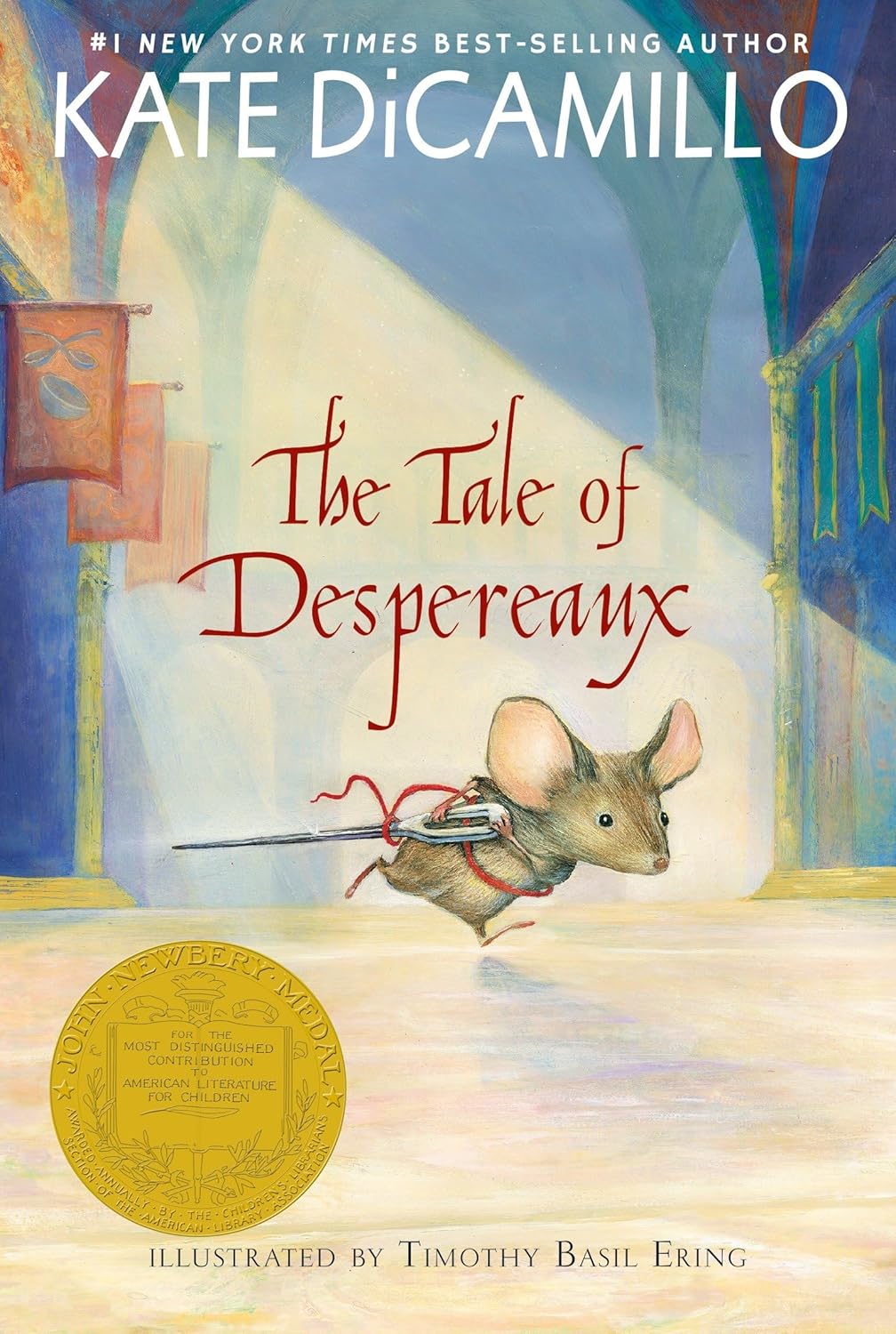
The Tale of Despereaux by Kate DiCamillo tells the enchanting story of an unusually brave mouse, a servant girl who longs for better things, and a rat who chooses between darkness and light. This guide provides parents and teachers with reading level information, age recommendations, content insights, and discussion questions for this Newbery Medal-winning fairy tale about courage, forgiveness, and the power of love and stories.
For Parents
Find the right reading level for your child, understand the book’s intertwined storylines and darker fairy tale elements, and get conversation starters to help your child explore themes of bravery, redemption, and choosing good over evil.
For Teachers
Access grade-level guidance, reading metrics, character analysis support, and thematic discussion questions perfect for classroom use. This Newbery Medal winner offers rich opportunities for exploring narrative structure, character development, and classic fairy tale themes.
The Tale of Despereaux at a Glance
Find on Amazon →| Author | Kate DiCamillo |
| Published | 2003 |
| Grade Level | 3–5 (our assessment) |
| Recommended Age | 8–11 |
| Flesch-Kincaid Grade | 4.7 |
| Word Count | ~32,000 |
| Pages | 267 (standard paperback) |
| Chapters | 52 short chapters in 4 books |
| Genre | Fantasy / fairy tale / middle grade |
| Setting | A medieval castle kingdom |
| Awards | Newbery Medal (2004) |
For official Lexile and AR levels, visit Lexile.com or AR BookFinder. ReadingVine provides independent editorial assessments.
What Reading Level Is The Tale of Despereaux?
The Tale of Despereaux is appropriate for grades 3–5, with a Flesch-Kincaid grade level of 4.7. The vocabulary is sophisticated with some challenging words, but the context and storytelling make meanings clear. Kate DiCamillo’s prose is literary and elegant, using rich language and sentence structures that challenge readers while remaining accessible. The narrative voice frequently addresses the reader directly, creating an intimate, storybook feel.
DiCamillo’s writing style is distinctive—she uses a classic fairy tale narrator who speaks directly to readers with phrases like “Reader, do you believe…” and “Dear reader, you must know…” This creates a feeling of being told a story rather than just reading one. The book is divided into four sections (Books), each focusing on a different character: Despereaux, Roscuro, Miggery Sow, and then bringing all characters together. The structure is complex but well-signaled, helping readers follow multiple storylines that eventually converge.
While strong third graders can handle the reading mechanics, the story resonates most deeply with readers ages 8–11 who can appreciate the darker fairy tale elements (death, betrayal, revenge), understand the interconnected storylines, and grasp themes about choosing light over darkness, forgiveness over revenge, and love over fear. The book rewards readers who enjoy classic fairy tales with depth, stories about unlikely heroes, and narratives that explore both darkness and redemption.
What Age Is The Tale of Despereaux Appropriate For?
The Tale of Despereaux is most appropriate for readers ages 8–11. The story includes darker elements typical of traditional fairy tales—death, dungeons, rats, revenge—but handles them in ways appropriate for middle-grade readers. DiCamillo doesn’t shy away from sadness or scary moments, but the story’s ultimate message is hopeful and redemptive.
Death and execution: Despereaux is sentenced to death for breaking mouse rules. A queen dies from shock. The threat of death is real throughout, though the violence is not graphic.
Dungeons and darkness: Much of the story takes place in dark dungeons with rats and prisoners. The atmosphere can be scary for younger or more sensitive readers.
Revenge and cruelty: Roscuro the rat seeks revenge for being rejected. Migg has been abused and treated cruelly. Characters face real suffering and mistreatment.
Betrayal and abandonment: Despereaux is betrayed by his own family. Migg is sold by her father. These emotional betrayals are difficult but lead to growth and redemption.
Complex moral themes: Characters struggle with choosing between darkness and light, revenge and forgiveness. The book explores why people (and animals) make bad choices.
What’s NOT in the book: No graphic violence or gore. The darkness is atmospheric rather than explicit. The ending is happy—love triumphs, forgiveness wins, and the brave are rewarded. The book teaches that even those who’ve made terrible choices can find redemption, and that courage, love, and forgiveness are more powerful than darkness and revenge.
What Is The Tale of Despereaux About?
The story is told in four books, each focusing on a different character, all of whose lives eventually intertwine.
Book the First: A Mouse Is Born
Despereaux Tilling is born the smallest mouse in his family, with ridiculously large ears. Unlike other mice, Despereaux doesn’t cower or scurry. He reads books instead of eating them, listens to music instead of fearing it, and refuses to be afraid of things mice should fear. His family finds him deeply disappointing and strange.
One day, Despereaux hears beautiful music coming from the castle’s great hall. Following the sound, he sees Princess Pea and falls in love with her. He reveals himself to the princess, speaks to her (mice never speak to humans!), and even lets her touch him. When the Mouse Council discovers this, they declare Despereaux has broken the most sacred mouse rules. He’s sentenced to death in the dungeon, where rats live and no mouse survives. His own family—even his beloved brother Furlough—participates in condemning him. His father leads him to the dungeon entrance and sends him to what should be certain death.
Book the Second: Chiaroscuro (Light and Dark)
Years earlier, a rat named Chiaroscuro (called Roscuro) fell into the queen’s soup during a royal banquet. The queen, shocked and disgusted, declared “Rats!” and died on the spot. Overcome with grief and guilt, the king banned soup, banned rats, and sent the kingdom into perpetual gloom. Rats were forced deeper into darkness.
Roscuro, unlike other rats who love darkness, is fascinated by light. He longs for the beauty and warmth of the upstairs world. After causing the queen’s death (accidentally), he’s rejected and shamed. The princess, seeing him at her mother’s funeral, looks at him with disgust and says he should go back to the dungeon where he belongs. This rejection fills Roscuro with rage and a desire for revenge. He decides to hurt Princess Pea the way she hurt him—by dragging her into the darkness.
Book the Third: Gor! The Tale of Miggery Sow
Miggery Sow is a slow, simple servant girl who works in the castle. Her mother died when she was young, and her father sold her for some cigarettes, a hen, and a red tablecloth. Migg was treated terribly by the man who bought her—he hit her repeatedly on her ears until she became partially deaf. Eventually she ended up as a castle servant.
Migg has one dream: to be a princess. She sees Princess Pea and decides she wants to be just like her. When Roscuro encounters Migg in the dungeon (where she’s sent on errands), he realizes he can use her. He convinces Migg that she can become a princess if she helps him kidnap Princess Pea. Migg, desperate and simple, agrees.
Book the Fourth: Recalled to the Light
In the dungeon, Despereaux meets Gregory, the jailer, who is kind to him. Gregory doesn’t kill Despereaux but instead gives him a chance to live. Despereaux survives in the dungeon, though he’s surrounded by rats. He learns about courage from his own heart and from thinking of the princess he loves.
Meanwhile, Roscuro and Migg execute their plan. They kidnap Princess Pea and drag her to the dungeon. The king is devastated. No one knows where the princess has gone. But Despereaux, small and brave, decides to rescue her. He finds a sewing needle to use as a sword and makes his way through the dungeon to find and save Princess Pea.
Despereaux confronts Roscuro in the dungeon. He’s armed only with his tiny needle-sword and his courage. He tells Roscuro that the princess must be freed. Roscuro, seeing Despereaux’s bravery and love, begins to question his own choices. Has revenge truly made him happy? Does he really want to hurt the princess, or does he just want to be allowed into the light?
Princess Pea, imprisoned and afraid, shows compassion even in her darkest moment. She tells Roscuro that she’s sorry for what she said, that she was wrong to speak to him with such cruelty and disgust. This apology—this small act of kindness and acknowledgment—breaks through Roscuro’s desire for revenge. He realizes that what he truly wants isn’t to hurt others but to be forgiven and accepted.
Roscuro releases Princess Pea. Despereaux, the tiny mouse with the huge heart, leads the princess back to the light. Migg, who wanted to be a princess, realizes she was tricked and helps in the rescue. The king is reunited with his daughter. Soup is allowed back in the kingdom (and into the castle), bringing warmth and light back to the people.
The ending is redemptive for all. Despereaux becomes the princess’s beloved companion, honored for his bravery. Roscuro is forgiven and allowed to come to the upstairs world to enjoy the light he always craved, though he must live with the consequences of his choices. Migg discovers she can never truly be a princess, but she finds safety and belonging in the castle, given a position of respect. Everyone finds their place—not perfect, but better than before. The story ends with the message that love, forgiveness, and courage can overcome darkness, and that even those who’ve made terrible mistakes can find redemption.
The Tale of Despereaux Characters
The Tale of Despereaux Themes and Lessons
At its heart, The Tale of Despereaux is about the power of love and courage to overcome darkness and fear. Despereaux is ridiculously small and different from other mice, but his love for Princess Pea gives him courage far beyond his size. The book teaches that true bravery isn’t the absence of fear but acting despite fear because of love. Despereaux trembles and is afraid, but he goes into the dungeon anyway because saving the princess matters more than his own safety. This shows children that being brave doesn’t mean never being scared—it means doing what’s right even when you’re terrified.
The book also explores the theme of redemption and the power of forgiveness to break cycles of revenge and cruelty. Roscuro chooses revenge after being rejected, but Princess Pea’s apology and acknowledgment of her cruelty give him a chance to change. The story argues that people (and rats) who’ve done terrible things can still choose differently if shown compassion. Migg, who was abused and used, is given another chance. Even the kingdom, which banned joy after loss, is restored when soup (representing warmth and community) returns. The message is hopeful: forgiveness and second chances can heal even deep wounds.
Discussion questions for families:
- How is Despereaux different from other mice? Why is being different actually his strength rather than his weakness?
- Why does Roscuro want revenge? What makes him change his mind? What does this teach about forgiveness?
- The narrator keeps talking to “dear reader” throughout the story. How does this change the way the story feels?
- What does soup represent in the story? Why is bringing it back important for the kingdom?
How Many Pages and Chapters in The Tale of Despereaux?
The Tale of Despereaux has 267 pages in the standard paperback edition and is divided into 52 short chapters organized into 4 books. The word count is approximately 32,000 words. The chapters average about 5 pages each, making them quick to read and providing natural stopping points. The four-book structure helps readers follow the different character stories before they converge.
For independent readers in the target age range (8–11), the book typically takes 4–5 hours to complete, or about ten days to two weeks of reading 30 minutes per day. The short chapters and engaging narrator make the book feel accessible despite its length. The literary language and complex structure may slow some readers initially, but DiCamillo’s storytelling pulls readers through. The multiple storylines require attention, but the narrator’s guidance helps readers keep track.
As a read-aloud, The Tale of Despereaux takes approximately 3–4 hours total. The narrator’s voice is wonderful for reading aloud, and the direct addresses to “dear reader” create an intimate, storytelling atmosphere. The short chapters work perfectly for bedtime reading or classroom sessions. The book provides excellent opportunities to discuss character choices, moral complexity (why good people make bad choices and vice versa), and classic fairy tale themes. Many families and classrooms enjoy it because it combines accessible storytelling with deeper themes about courage, redemption, and the triumph of love over fear.
Books Similar to The Tale of Despereaux
If your child enjoyed The Tale of Despereaux, here are six similar books that explore themes of bravery, fairy tale elements, and unlikely heroes:
About Kate DiCamillo
Kate DiCamillo (born 1964) is one of the most celebrated contemporary children’s authors. The Tale of Despereaux, published in 2003, won the Newbery Medal in 2004 and became an international bestseller, later adapted into an animated film in 2008. DiCamillo was inspired to write Despereaux’s story after a friend asked her to write about an unlikely hero. She chose a mouse because mice are small and often overlooked, making Despereaux’s bravery all the more remarkable. The name “Despereaux” suggests both “desperate” and “hope,” reflecting the character’s journey from despair to redemption. DiCamillo has said that the book is ultimately about the power of love and forgiveness to transform darkness into light. She was particularly interested in exploring why good people make bad choices (like Roscuro’s turn to revenge) and how compassion can offer redemption even to those who’ve done terrible things. The four-book structure was intentional—DiCamillo wanted to show how different characters’ stories intertwine and affect each other, demonstrating that we’re all connected in unexpected ways. She also wanted to write in a classic fairy tale style with a narrator who speaks directly to readers, creating the feeling of being told a story around a fire. This intimate, conversational narrative voice is one of the book’s most distinctive features. The themes of light versus darkness, both literal and metaphorical, run throughout the book—from Roscuro’s love of light to the dungeons’ darkness to the kingdom’s return to joy when soup is allowed again. DiCamillo believes that children’s books shouldn’t shy away from darkness or sadness but should ultimately offer hope. The Tale of Despereaux deals with death, betrayal, revenge, and cruelty, but it ends with forgiveness, love, and redemption—showing that even the darkest stories can have hopeful endings. DiCamillo has written many other acclaimed books, including Because of Winn-Dixie (a Newbery Honor book), The Tiger Rising, Flora & Ulysses (which won the Newbery Medal), and The Miraculous Journey of Edward Tulane. She served as the National Ambassador for Young People’s Literature from 2014 to 2015. However, The Tale of Despereaux remains one of her most beloved works, teaching generations of readers that courage comes in all sizes, that love is stronger than fear, and that forgiveness can transform even the darkest hearts. The book’s message—that being different is okay, that small beings can do brave things, and that choosing light over darkness is always worthwhile—continues to resonate with children and adults alike.
The Tale of Despereaux: Frequently Asked Questions
What happens to Despereaux at the end of The Tale of Despereaux?
At the end of The Tale of Despereaux, Despereaux successfully rescues Princess Pea from the dungeon and becomes her honored companion. After confronting Roscuro with his needle-sword and his courage, Despereaux helps bring about a peaceful resolution. Roscuro releases Princess Pea after she apologizes for her earlier cruelty, choosing forgiveness over revenge. Despereaux leads the princess back to the light and to her father the king. The tiny mouse who was once sentenced to death for breaking mouse rules is celebrated as a hero. He lives in the castle with Princess Pea, honored and loved. The kingdom returns to joy—soup is allowed again, bringing warmth and community back to the people. Despereaux’s story ends happily, proving that even the smallest and strangest among us can be the bravest heroes. His love for Princess Pea and his courage to act despite his fear save not just the princess but help heal the entire kingdom.
Is The Tale of Despereaux scary for kids?
The Tale of Despereaux has some scary and dark elements, but most children ages 8–11 handle it well. The scary parts include dungeons filled with rats, death sentences, kidnapping, and characters seeking revenge. The atmosphere can be dark and foreboding, especially in the dungeon scenes. However, DiCamillo handles these elements in the style of traditional fairy tales—there’s real danger and sadness, but the violence is not graphic or gratuitous. Younger or more sensitive readers (under 8) might find the dungeon scenes, the threat of death, or the betrayal by Despereaux’s family upsetting. The book is best for children who can handle classic fairy tale darkness (like Hansel and Gretel or Snow White) and understand that scary moments lead to hopeful endings. Parents can help by reading together and discussing the darker elements, emphasizing the book’s ultimate messages about courage, love, and redemption. The ending is happy and redemptive, which helps balance the earlier darkness.
What is the main message of The Tale of Despereaux?
The main message is that love and courage can overcome fear and darkness, and that even the smallest and most unlikely hero can make a difference. Despereaux is tiny, different, and sentenced to death, but his love for Princess Pea gives him courage to face the dungeon, confront rats, and rescue the princess. The book teaches that true bravery isn’t fearlessness—it’s acting despite fear because of love and what’s right. The story also explores redemption and forgiveness: Roscuro has done terrible things but is given a chance to change when shown compassion. Princess Pea’s apology breaks the cycle of revenge, showing that acknowledging harm and offering forgiveness can heal even deep wounds. Additionally, the book celebrates being different—Despereaux’s large ears and love of reading make him strange to other mice, but these very differences enable his heroism. The book argues that conformity isn’t virtue and that being true to yourself, even when others don’t understand, is brave. Finally, it teaches that stories matter—Despereaux learns about courage from the stories he reads, showing that books and tales can teach us how to be brave and good.
How does Despereaux save Princess Pea?
Despereaux saves Princess Pea through courage, love, and his willingness to face enormous danger despite his tiny size. After surviving in the dungeon where he was sent to die, Despereaux learns that Princess Pea has been kidnapped by Roscuro the rat and Migg the servant girl and dragged to the dark dungeon. Despite being small and afraid, Despereaux arms himself with a sewing needle (his sword) and makes his way through the dungeon to find her. He confronts Roscuro, who is holding Princess Pea prisoner. Despereaux doesn’t defeat Roscuro through violence but through bravery and by inspiring the princess to show compassion. Princess Pea apologizes to Roscuro for her earlier cruelty, and this act of forgiveness breaks Roscuro’s desire for revenge. Roscuro releases the princess, and Despereaux leads her back through the dark dungeons to the light of the castle above. His small size doesn’t prevent his heroism—his huge heart and his refusal to give up on love make him the perfect hero for this fairy tale.
What grade level is The Tale of Despereaux?
The Tale of Despereaux is appropriate for grades 3–5 (ages 8–11). The reading level (4.7 Flesch-Kincaid) is accessible to third graders, though the sophisticated vocabulary and complex sentence structures make it most suitable for strong third graders and comfortable for fourth and fifth graders. The literary prose and multiple interconnected storylines require some reading maturity. The book’s darker fairy tale elements—death, dungeons, betrayal, revenge—require emotional maturity to process, making it best for readers 8 and older who can understand that scary moments in stories lead to hopeful resolutions. Third graders can read it successfully, especially with some support or as a read-aloud where adults can discuss the darker themes. Fourth and fifth graders typically appreciate the complexity and depth more fully. The short chapters (52 chapters in 267 pages) make it manageable, and the engaging narrator helps guide readers through the story. It works well both for independent reading and as a classroom or family read-aloud.
Why was Despereaux sent to the dungeon?
Despereaux was sent to the dungeon because he broke the sacred rules of mouse society. Mice are supposed to be afraid, to scurry and hide, to nibble on books rather than read them, and never, ever to reveal themselves to humans. Despereaux did the opposite of all these things: he wasn’t afraid, he read books and loved stories, he listened to music, and most seriously, he fell in love with Princess Pea, a human. He spoke to the princess, let her see him, and allowed her to touch him—all terrible violations of mouse law. When the Mouse Council discovered his relationship with the princess, they declared him a danger to all mice. By mouse law, anyone who breaks the rules so flagrantly must be sent to the dungeon to be killed by rats. Even Despereaux’s own family participated in his sentencing—his father led him to the dungeon entrance. This betrayal by his family makes the sentencing even more painful. Despereaux’s “crime” was essentially being different, brave, and loving—qualities that mouse society rejects but that ultimately make him a hero.
Who are the four main characters in The Tale of Despereaux?
The four main characters are Despereaux, Princess Pea, Roscuro, and Miggery Sow. Despereaux Tilling is the tiny, brave mouse with huge ears who falls in love with Princess Pea and becomes an unlikely hero. Princess Pea is the kind, beautiful princess who befriends Despereaux and later demonstrates that true nobility comes from showing mercy and forgiveness. Chiaroscuro (called Roscuro) is the rat who loves light but turns to revenge after being rejected; he kidnaps Princess Pea but ultimately finds redemption through her compassion. Miggery Sow (called Migg) is the simple servant girl who dreams of being a princess and helps Roscuro kidnap Pea; she’s been abused and sold, and her poor choices come from desperation and pain. The book is structured in four parts, with each of the first three focusing on one character (Despereaux, Roscuro, Migg), and the fourth part bringing all their stories together. This structure shows how their lives are interconnected and how each character’s choices affect the others, ultimately teaching that everyone has a role in both creating darkness and bringing light.
Is there a sequel to The Tale of Despereaux?
No, there is no sequel to The Tale of Despereaux. The book stands alone with a complete, satisfying ending where all the main characters find their resolution—Despereaux becomes a hero and companion to Princess Pea, Roscuro is forgiven and allowed into the light, Migg finds a place of respect in the castle, and the kingdom returns to joy. Kate DiCamillo did not write a continuation of Despereaux’s story. However, readers who enjoyed The Tale of Despereaux might like DiCamillo’s other books, which share similar themes of unlikely heroes, love, and redemption. These include Because of Winn-Dixie (about a girl and her dog building community), The Miraculous Journey of Edward Tulane (about a china rabbit learning to love), Flora & Ulysses (about a girl and a squirrel with superpowers), and The Tiger Rising (about a boy processing grief). While these books aren’t sequels, they share DiCamillo’s beautiful prose, emotional depth, and themes about love, courage, and the power of connection. The Tale of Despereaux was adapted into an animated film in 2008, though the movie differs significantly from the book in both plot and tone.