
 = Partner Site
How to Catch a Leprechaun Reading Level: A Complete Guide
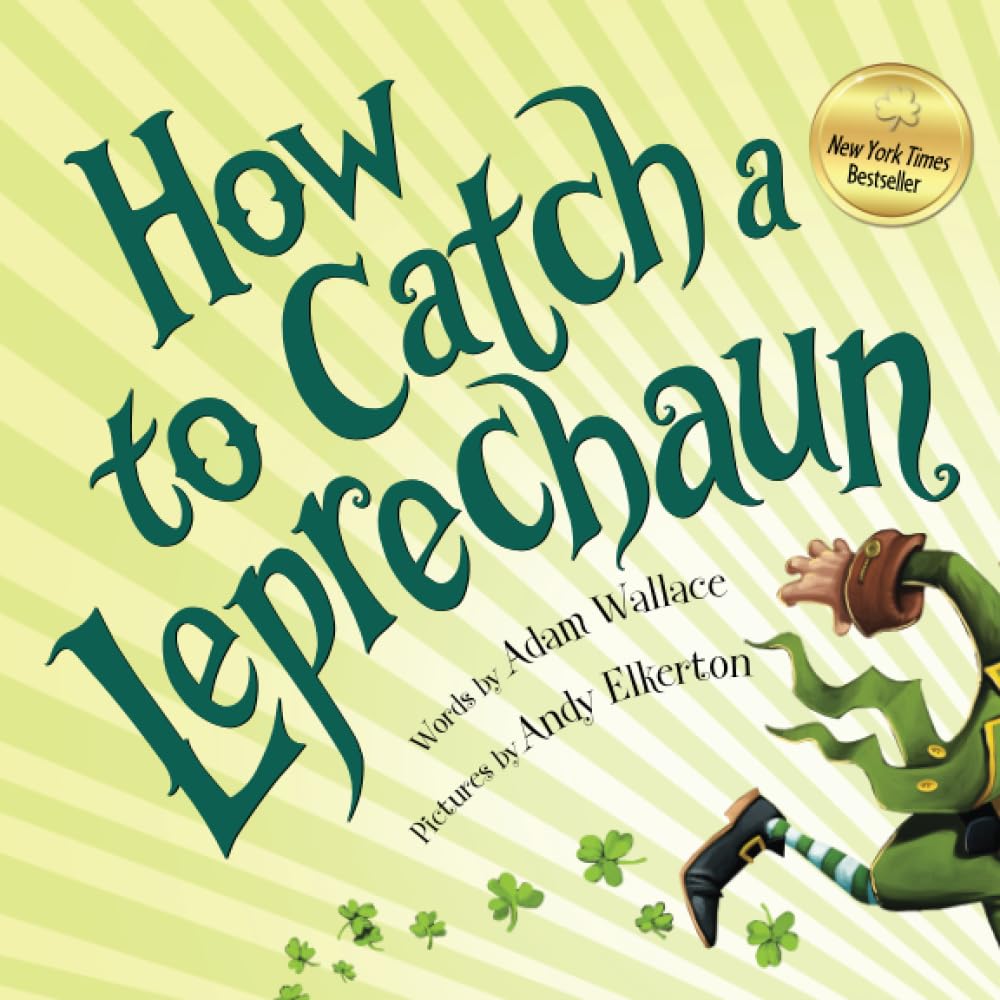
How to Catch a Leprechaun, written by Adam Wallace and illustrated by Andy Elkerton, is a 32-page rhyming picture book about children who have spent days planning the perfect leprechaun trap — and about the leprechaun who dances through every one of them. Published in 2016 by Sourcebooks Jabberwocky as the first title in what became one of the most successful holiday picture book series in American publishing, it reached #1 on the New York Times and USA Today bestseller lists and launched a franchise of more than thirty “How to Catch” books covering every holiday and seasonal creature imaginable. The book alternates between the children’s hopeful, rhyming planning (“You’ve been planning night and day, and finally you’ve created the perfect trap!”) and the leprechaun’s taunting, mischievous commentary as he escapes each attempt, turns the toilet green, fixes someone’s smelly shoes, and makes off with the gold. A St. Patrick’s Day classroom staple, a read-aloud built for participation and laughter, and the book that reliably inspires children to build their own leprechaun traps. This guide covers How to Catch a Leprechaun‘s reading level, whether it’s a read-aloud or independent read, what it’s about, its themes, how long it takes to read, and similar books — designed for parents and teachers of K–2 readers.
For Parents
A funny, energetic St. Patrick’s Day picture book in rhyming verse about children who build increasingly elaborate traps to catch a leprechaun — and a leprechaun who is always one step ahead. Best for ages 3–8. No content concerns. The book that makes children want to build their own traps, which is entirely the point.
For Teachers
A St. Patrick’s Day classroom staple for K–2 — best used as a read-aloud in the week before March 17, followed by a trap-building activity that connects to STEAM concepts the book explicitly references. The series has companion titles for every major holiday. High participation energy; children who know the book will cheer for the leprechaun.
How to Catch a Leprechaun at a Glance
Find on Amazon →| Author | Adam Wallace |
| Illustrator | Andy Elkerton |
| Published | 2016 (Sourcebooks Jabberwocky) |
| Grade Level | PreK–2 (our assessment) |
| Recommended Age | 3–8 |
| Lexile | AD320L |
| ACR Level | 1.9 |
| Guided Reading Level | L |
| Pages | 32 |
| Genre | Picture book / holiday / humor / rhyming verse |
| Series | How to Catch (30+ titles) |
For official Lexile and AR levels, visit Lexile.com or AR BookFinder. ReadingVine provides independent editorial assessments.
What Reading Level Is How to Catch a Leprechaun?
How to Catch a Leprechaun has a Lexile of AD320L and an ACR (Accelerated Comprehension Reader) level of 1.9, with a Guided Reading Level of L. The AD designation — Adult Directed — indicates it is designed as a read-aloud, though the 1.9 ACR and GRL L suggest it is also accessible for K–1 independent reading. At AD320L it is one of the more accessible texts in this catalog, sitting below Wemberly Worried (AD480L) and above Leo the Late Bloomer (120L).
The rhyming verse and second-person address (“You’ve been planning night and day”) give the text a participatory energy that makes it more accessible than its score suggests: children who cannot yet decode independently can follow the plot through the illustrations and the rhythm of the verse. The STEAM angle — trap design, cause and effect, engineering concepts embedded in the children’s trap-building — gives teachers an educational framework for the book that extends its usefulness beyond pure entertainment. For official Lexile and AR scores, visit Lexile.com or AR BookFinder. ReadingVine’s assessments are independent editorial judgments.
Is How to Catch a Leprechaun a Read-Aloud or Independent Read?
This is primarily a read-aloud for ages 3–8 — one of the most immediately participatory in the catalog. The alternating voices (the children’s hopeful planning, the leprechaun’s taunting escape commentary) are designed to be performed distinctly, and the escalating comic failures generate the kind of room-wide laughter that makes a classroom read-aloud memorable. Children who know the book will want to read the leprechaun’s lines themselves.
For independent reading, a confident K–1 reader can work through the verse. The rhyme scheme provides strong decoding support, and the pictures carry the full slapstick comedy even for children who miss some of the text.
Split the reading: you read the children’s planning voice, let your child read or repeat the leprechaun’s taunting lines. After the book, ask: “Do you think you could build a trap that would actually catch him?” Then build one. The book explicitly invites this — it is one of the few picture books that comes with a built-in hands-on activity that children will initiate themselves.
What Is How to Catch a Leprechaun About?
St. Patrick’s Day is coming. You have been planning the perfect leprechaun trap for days — shamrocks, pots of gold, rainbows, springs and levers and every clever contraption you could devise. You set it and wait. The leprechaun arrives, takes one look at your trap, and escapes it instantly. He turns the toilet green. He fixes someone’s very smelly shoes (whether you wanted them fixed or not). He leaves dandelion tea. He dances through every barrier, outwits every mechanism, and taunts the would-be trappers with cheerful, rhyming glee. Each house he visits, each trap he encounters, he defeats with practiced ease. At the end, the children have not caught their leprechaun. They make their plans for next year.
The book is told in two alternating registers: the children’s earnest, hopeful planning voice in second person (“You’ve been planning night and day”) and the leprechaun’s own taunting first-person commentary as he escapes each trap. This dual voice structure gives the book its comic energy — the reader is simultaneously the child who wants to catch him and the audience watching the leprechaun run rings around every attempt.
How to Catch a Leprechaun Characters
The leprechaun is the book’s star — fast, clever, cheerful, and entirely uninterested in being caught. He is not malicious; he is mischievous in the tradition of folk tricksters everywhere, and his pranks (green toilets, fixed shoes, dandelion tea) are the kind of chaos that is funny rather than harmful. The children — “you,” in the book’s second-person address — are the audience surrogate: hopeful, inventive, increasingly baffled, and already planning next year’s trap before the last page. The second-person voice means the reader is always the child, which is the book’s most effective participation technique: you are not watching someone fail to catch a leprechaun; you are failing to catch a leprechaun.
How to Catch a Leprechaun Themes and Lessons
The book’s publisher explicitly markets the STEAM angle — trap design involves engineering concepts (mechanisms, levers, cause and effect) that can be connected to early STEM education, and the book has become a classroom staple for engineering challenge activities in the week before St. Patrick’s Day. Teachers who use it as a STEAM prompt ask children to design their own traps, explain why they think their design would work, and discuss what went wrong with the children’s traps in the book. This extends the read-aloud into a design-thinking exercise without requiring any heavy pedagogical apparatus — the book itself plants the seed.
The leprechaun belongs to a long tradition of trickster figures in folklore — characters who are smarter than the humans pursuing them and who use that advantage to stay free. The tradition runs from Brer Rabbit to Anansi to the coyote of Indigenous American tales, and the leprechaun in this book fits comfortably within it: he is not cruel, he is not malicious, he simply cannot be caught by anyone less quick than himself. This gives the book a folk tale quality despite its contemporary packaging.
Talking with your child: What was wrong with each trap the children built — why did the leprechaun get away? If you were going to build a leprechaun trap, what would it look like? Why do you think leprechauns are so hard to catch? What did the leprechaun do in each house he visited — was he being mean, or just mischievous?
How Long Is How to Catch a Leprechaun?
How to Catch a Leprechaun is 32 pages. Most adults can read it aloud in about five to seven minutes — the rhyming verse moves quickly and the slapstick pacing keeps the energy high. It is the first title in the How to Catch series, which now includes more than thirty books: How to Catch Santa, How to Catch the Easter Bunny, How to Catch a Unicorn, How to Catch the Tooth Fairy, and many more. Each follows the same format — a holiday or seasonal creature, children who build increasingly elaborate traps, a creature who evades every one — and each features the same dual-voice structure and STEAM framing. The series is the most extensive holiday picture book franchise in recent American publishing.
Books Similar to How to Catch a Leprechaun
About Adam Wallace and Andy Elkerton
Adam Wallace is a children’s writer and cartoonist based in Australia. He began writing the How to Catch series after developing the leprechaun concept as a classroom activity, and the first book’s immediate commercial success launched one of the most prolific holiday picture book series in recent American publishing history. He has written more than thirty titles in the How to Catch series as well as other children’s books. He is known for his energetic, participatory approach to children’s writing — his books are designed to be performed as much as read, and to inspire activities beyond the page.
Andy Elkerton is a children’s book illustrator based in the United Kingdom. His bright, cartoon-style digital illustrations give the How to Catch series its visual identity — vibrant colors, expressive characters, and the kind of slapstick visual comedy that makes each trap failure funny from across the room. He has illustrated the full How to Catch series alongside Wallace and is known specifically for his ability to make impossible-to-catch creatures both charming and convincingly quick. He has said he loves creating creatures that nobody can catch — which describes his professional life quite accurately.
How to Catch a Leprechaun: Frequently Asked Questions
What reading level is How to Catch a Leprechaun?
How to Catch a Leprechaun has a Lexile of AD320L, ACR level 1.9, and Guided Reading Level L. Our assessment: PreK–2, ages 3–8. The rhyming verse and participatory second-person voice make it accessible well below these scores as a read-aloud. For official Lexile and AR scores, visit Lexile.com or AR BookFinder.
What is How to Catch a Leprechaun about?
Children build increasingly elaborate traps to catch a leprechaun on St. Patrick’s Day. The leprechaun escapes every one, turns the toilet green, fixes someone’s smelly shoes, and generally causes cheerful mischief. The children fail to catch him and begin planning next year’s trap. The book alternates between the children’s hopeful planning voice and the leprechaun’s taunting commentary.
Is there a series of How to Catch books?
Yes — more than thirty titles, all by Adam Wallace and Andy Elkerton, covering every major holiday and seasonal creature: How to Catch Santa, How to Catch the Easter Bunny, How to Catch a Unicorn, How to Catch the Tooth Fairy, and many more. Each follows the same format — elaborate traps, a creature who evades every one — with the same STEAM framing and dual-voice structure.
What STEAM concepts are in How to Catch a Leprechaun?
The children’s trap-building involves engineering thinking — designing mechanisms, predicting cause and effect, and iterating when designs fail. The publisher explicitly markets the book for STEAM classroom use. Teachers commonly follow the read-aloud with a trap-building activity in which children design and build their own leprechaun traps using available materials, then explain their design choices — a natural engineering design challenge for K–2.
What does a leprechaun do in How to Catch a Leprechaun?
The leprechaun escapes each trap with cheerful ease, then leaves behind St. Patrick’s Day-themed mischief in each house: turning the toilet green, fixing smelly shoes (whether asked or not), leaving dandelion tea, and general holiday chaos. His pranks are funny rather than harmful — he is a trickster figure in the folk tradition, not a villain.
How long does it take to read How to Catch a Leprechaun aloud?
About five to seven minutes. The rhyming verse moves quickly and the slapstick pacing keeps energy high throughout. Budget additional time for the trap-building conversation that typically follows — children who finish this book want to start designing immediately.