
 = Partner Site
I Survived the Shark Attacks of 1916 Reading Level: A Complete Guide
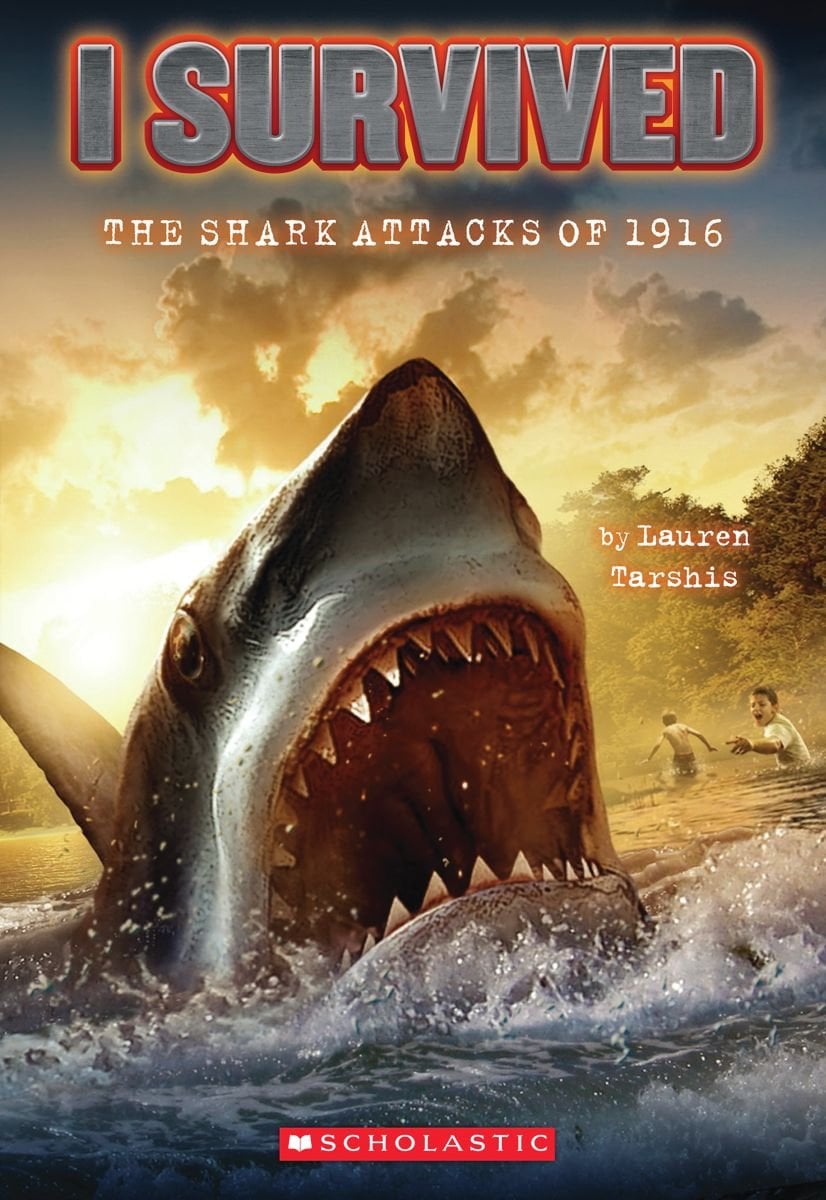
I Survived the Shark Attacks of 1916, written by Lauren Tarshis and illustrated by Scott Dawson, is a 112-page historical fiction novel about ten-year-old Chet Roscow, who is spending the summer with his uncle in a small New Jersey town in 1916 — the summer a great white shark begins attacking swimmers along the Jersey Shore. When Chet and his friends go swimming in the local creek, he spots a gray fin in the water. It is not his imagination. The 1916 New Jersey shark attacks are real history: five people were attacked over twelve days in July, four of them fatally, in the series of incidents that would inspire Peter Benchley’s novel Jaws fifty years later. Book 2 in the I Survived series, published the same year as the Titanic book (2010), it is the most popular volume in the series for children who love animals and ocean adventures. Like all I Survived books it includes back-matter history about the real events. This guide covers reading level, age appropriateness, the real historical events, and similar books.
For Parents
A fast-paced survival story about a boy swimming in a creek in 1916 when the summer’s most feared predator arrives — based on the real shark attacks that inspired Jaws. Ages 7–12, grades 2–5. Content: shark attacks on people, including fatalities referenced in back matter. The fictional story handles violence with age-appropriate restraint. One of the series’ most popular volumes.
For Teachers
A grades 2–5 classroom staple for the I Survived series — pairs naturally with ocean science units, animal behavior discussions, and the real history of the 1916 attacks. The connection to Jaws (and to how a real event becomes popular culture) is a productive media literacy discussion for older students in the interest range.
I Survived the Shark Attacks of 1916 at a Glance
Find on Amazon →| Author | Lauren Tarshis |
| Illustrator | Scott Dawson |
| Published | 2010 (Scholastic Press) |
| Grade Level | 2–5 (our assessment) |
| Recommended Age | 7–12 |
| Lexile | 610L |
| ATOS Level | 3.9 |
| Word Count | 10,272 |
| Pages | 112 |
| Series | I Survived, Book 2 |
| Genre | Historical fiction / survival |
| Setting | New Jersey; summer 1916 |
| Also Available As | Graphic novel (Haus Studio) |
For official Lexile and AR levels, visit Lexile.com or AR BookFinder. ReadingVine provides independent editorial assessments.
What Reading Level Is I Survived the Shark Attacks of 1916?
Lexile 610L, ATOS 3.9, word count 10,272 — nearly identical scores to the Titanic book (Book 1: 590L, ATOS 3.9, 10,437 words), consistent with the series’ intentional format uniformity. All I Survived books are calibrated to the same approximate reading level, which makes the series ideal for building reading momentum: children who can read one can read all of them. Our assessment: grades 2–5, ages 7–12. For official scores, visit Lexile.com or AR BookFinder.
What Age Is I Survived the Shark Attacks of 1916 Appropriate For?
Ages 7–12, grades 2–5. Shark attacks occur — Chet witnesses a friend being attacked, and the back matter describes the real attacks in which four people died. The fictional survival sequences are intense but not graphically violent. Children who are afraid of sharks or who are anxious about open water should know the subject matter before starting. Common Sense Media rates the I Survived series 7+.
The Real 1916 Jersey Shore Shark Attacks
The 1916 New Jersey shark attacks are one of the most remarkable and consequential events in the history of American ocean safety. Over twelve days in July 1916, a shark attacked five swimmers along the New Jersey coast and in the Matawan Creek — four of those five attacks were fatal. The attacks were extraordinary for several reasons: shark attacks on humans were considered so rare in 1916 that many experts initially refused to believe a shark was responsible; the attack in Matawan Creek (an inland waterway, not the ocean) was completely unexpected; and the incident took place during a summer heat wave that had driven unprecedented numbers of people to the water.
The attacks generated massive national press coverage and changed American attitudes toward sharks permanently. They are the direct inspiration for Peter Benchley’s 1974 novel Jaws and the 1975 Steven Spielberg film — both of which, in turn, significantly shaped (and distorted) public perception of great white sharks for the following half-century. Tarshis’s back matter in the book addresses both the real events and the scientific understanding of shark behavior that has developed since 1916.
What Is I Survived the Shark Attacks of 1916 About?
Chet Roscow is spending the summer with his uncle in the small New Jersey town of Springfield. He’s made new friends and loves swimming in Matawan Creek on hot days. The news is full of shocking reports: a great white shark has been attacking swimmers along the Jersey Shore, killing people. Frightening, but far away — or so Chet thinks. When he spots a gray fin in the creek, he almost convinces himself it’s his imagination. It isn’t. What follows is a survival story grounded in the real Matawan Creek attack of July 12, 1916 — the most unexpected and devastating of the summer’s incidents. The back matter covers the real events, the investigation, and what science now understands about the shark behavior behind the attacks.
I Survived the Shark Attacks of 1916 Themes and Lessons
The book’s most interesting educational thread — addressed in the back matter and worth discussing with older students in the interest range — is how the 1916 attacks shaped human attitudes toward sharks in ways that were both understandable and scientifically inaccurate. The fear generated by 1916 contributed to the cultural climate that made Jaws a phenomenon in 1975, and the film’s portrayal of great white sharks as mindless killing machines contributed to widespread shark hunting that significantly depleted populations. What we now understand about shark behavior — including why the 1916 attacks happened — is considerably more nuanced than either 1916 public reaction or the Jaws mythology suggests. This is a productive conversation for children who love animals and the ocean.
Talking with your child: Why did people in 1916 have trouble believing a shark could attack someone in a creek? What does the back matter tell us about why the attacks happened? How did these real events eventually become the movie Jaws?
Books Similar to I Survived the Shark Attacks of 1916
About Lauren Tarshis
See our I Survived the Sinking of the Titanic guide for a full biography of Lauren Tarshis. The Shark Attacks book was published the same month as the Titanic book (September 2010) as the second entry in the series. Tarshis has noted that the 1916 attacks are among the most compelling real-event stories she has encountered — a genuine historical mystery with a cast of real characters, real consequences, and a real cultural afterlife in Jaws.
I Survived the Shark Attacks of 1916: Frequently Asked Questions
What reading level is I Survived the Shark Attacks of 1916?
Lexile 610L, ATOS 3.9. Our assessment: grades 2–5, ages 7–12 — nearly identical to Book 1 in the series. For official scores, visit Lexile.com or AR BookFinder.
What is I Survived the Shark Attacks of 1916 about?
Ten-year-old Chet Roscow is swimming with friends in Matawan Creek, New Jersey, in the summer of 1916 — the summer a great white shark has been attacking swimmers along the Jersey Shore. When he spots a fin in the creek, it is not his imagination. Based on the real 1916 attacks that inspired Jaws.
Were the 1916 shark attacks real?
Yes — five people were attacked over twelve days in July 1916, four fatally. The attacks along the Jersey Shore and in Matawan Creek generated massive national press coverage, changed American attitudes toward sharks, and directly inspired Peter Benchley’s 1974 novel Jaws and Steven Spielberg’s 1975 film. Tarshis’s back matter addresses the real events and current scientific understanding of why the attacks occurred.
Should I read Book 1 before Book 2?
No — each I Survived book is standalone with different characters and a different historical event. Reading order doesn’t matter. Many children start with whichever book’s subject interests them most and then work outward through the series from there.