
 = Partner Site
Shipwreck at the Bottom of the World Reading Level: A Complete Guide
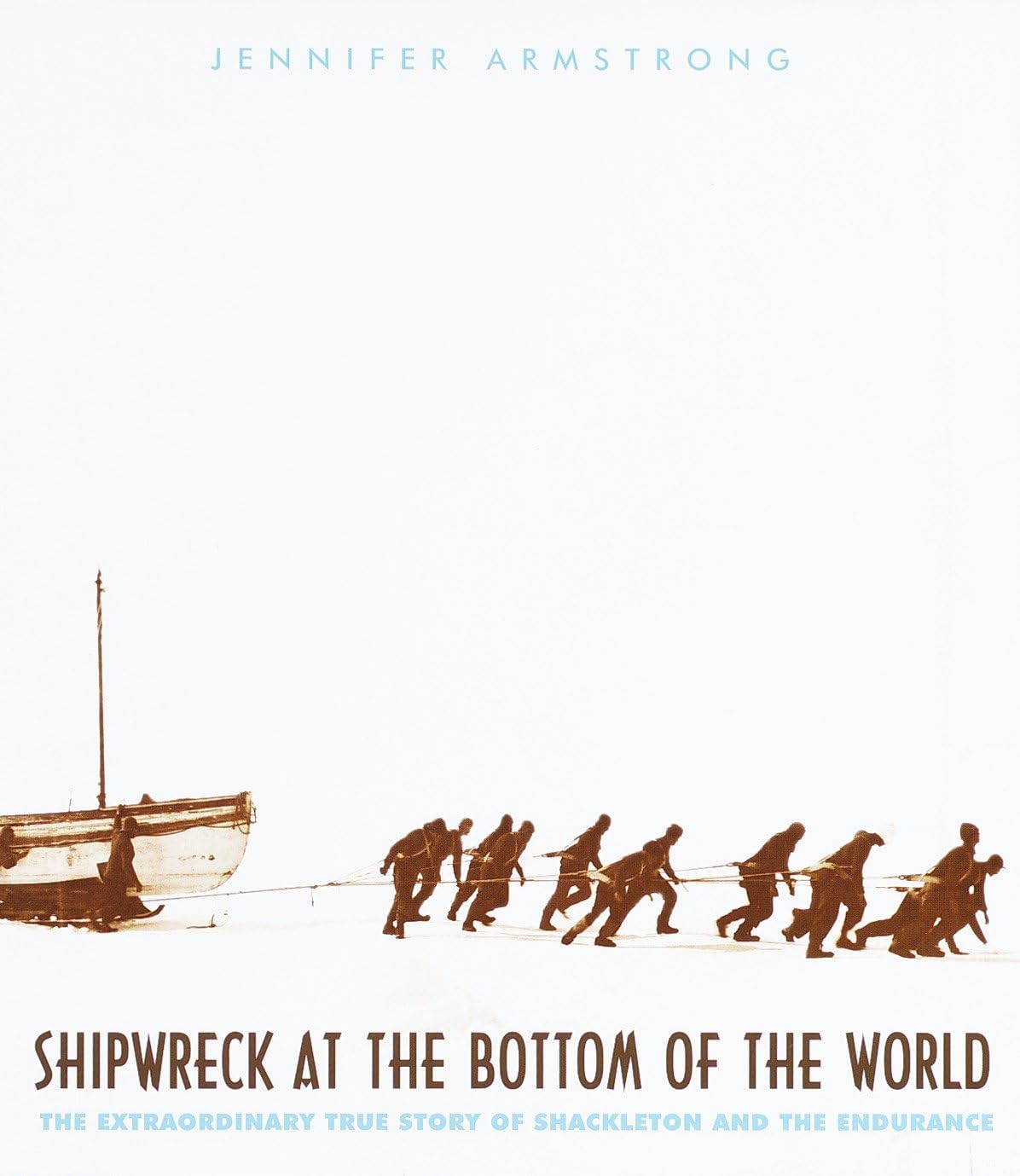
Shipwreck at the Bottom of the World: The Extraordinary True Story of Shackleton and the Endurance, written by Jennifer Armstrong, is a 134-page work of narrative nonfiction about the 1914–1916 Imperial Trans-Antarctic Expedition — the most catastrophic failure and most extraordinary survival story in the history of polar exploration. Ernest Shackleton set out from London in August 1914 with twenty-seven men aboard the ship Endurance to attempt the first land crossing of Antarctica. The ship never reached land. It was trapped in pack ice in January 1915, drifted for nine months, was crushed by the ice in October 1915, and sank. Shackleton and his men spent the next twenty months on ice floes, in three small lifeboats across some of the most dangerous seas on earth, and in an overturned boat on the beach of Elephant Island — until Shackleton and five others crossed 800 miles of open ocean in a 22-foot lifeboat and then crossed the unmapped mountains of South Georgia Island to reach a whaling station and rescue. Every one of the twenty-seven men was brought home alive. Published in 1998, winner of the Orbis Pictus Award for Outstanding Nonfiction, and named an ALA Notable Book and Boston Globe–Horn Book Honor Book, Armstrong’s account is the most widely assigned narrative nonfiction introduction to the Shackleton story in American classrooms. This complete guide covers the book’s reading level, recommended age, content considerations, key figures, themes, and similar books — designed for parents, teachers, and students.
For Parents
A gripping narrative nonfiction account of one of the greatest survival stories in history — accessible, propulsive, and richly illustrated with photographs from the expedition itself. Appropriate for ages 10–14, grades 4–8. Content includes frank descriptions of extreme cold, physical suffering, and desperate conditions; nothing gratuitous. The crew’s survival gives the book its sustaining tension rather than dread.
For Teachers
The standard classroom introduction to the Shackleton story for grades 4–8 — short enough to complete in three to four weeks, narrative enough to read like adventure fiction, and rigorously sourced with original expedition photographs and maps. The “Just Imagine” opening structure — which reveals the crew survives before the story begins — is one of the most teachable narrative nonfiction techniques available. Pairs productively with Into Thin Air for a unit on extreme environment survival and narrative nonfiction.
Shipwreck at the Bottom of the World at a Glance
Find on Amazon →| Author | Jennifer Armstrong |
| Published | 1998 (Crown Publishers / Random House) |
| Grade Level | 4–8 (our assessment) |
| Recommended Age | 10–14 |
| Lexile | 1090L |
| ATOS Level | 7.3 |
| Word Count | 34,562 |
| Pages | 134 |
| Chapters | 20 |
| Genre | Narrative nonfiction / historical nonfiction |
| Setting | Antarctica, Weddell Sea, South Atlantic; 1914–1916 |
| Awards | Orbis Pictus Award (1999); ALA Notable Book; ALA Best Book for Young Adults; Boston Globe–Horn Book Honor; Publishers Weekly Best Books of the Year |
For official Lexile and AR levels, visit Lexile.com or AR BookFinder. ReadingVine provides independent editorial assessments.
What Reading Level Is Shipwreck at the Bottom of the World?
Shipwreck at the Bottom of the World has a Lexile of 1090L and an ATOS level of 7.3 — among the highest reading level scores of any text in this catalog, comparable to the Frederick Douglass Narrative (1040–1120L, ATOS 7.9). These scores reflect Armstrong’s sophisticated narrative nonfiction prose: she writes with the pacing and detail of a thriller, includes technical information about ice, navigation, and survival that requires careful reading, and maintains a narrative complexity across twenty chapters that places genuine demands on the reader.
Despite the high scores, the book’s TeachingBooks grade range is 1–8 (reflecting its wide classroom use) and the publisher recommends ages 10 and up. Our editorial assessment places it at grades 4–8, ages 10–14. The “Just Imagine” opening — which tells the reader from the first page that all the men survived — shifts the reading experience from suspense about survival to suspense about how: the narrative demands engagement with process and problem-solving rather than anxiety about outcome, which makes the high reading level demands more manageable for motivated readers who know the stakes. At 34,562 words and 134 pages across twenty short chapters, most assigned readers complete it in two to four weeks. For official Lexile and AR scores, visit Lexile.com or AR BookFinder. ReadingVine’s assessments are independent editorial judgments.
What Age Is Shipwreck at the Bottom of the World Appropriate For?
We recommend Shipwreck at the Bottom of the World for readers ages 10–14, grades 4–8. The content is the story itself: extreme cold, physical suffering, months of uncertainty and desperation, and the very real possibility of death that the crew faces across nearly two years of survival conditions. Armstrong depicts these conditions with directness and respect — she does not minimize the suffering or manufacture false comfort — but the book’s sustained knowledge that everyone survived gives the reader a different relationship to the hardship than they would have if the outcome were unknown. This is narrative nonfiction rather than horror; the suffering is real but contextualized within a story of ultimate survival and extraordinary leadership.
Parents should note that the book includes photographs from the expedition — Frank Hurley’s extraordinary documentary photographs of the Endurance in the ice and of the men’s conditions — which make the account more visceral than words alone would. These photographs are among the most striking documents in the history of polar exploration and are entirely appropriate for the recommended age range.
What Is Shipwreck at the Bottom of the World About?
In August 1914, Ernest Shackleton sailed from London with twenty-seven men aboard the Endurance with the goal of making the first land crossing of the Antarctic continent — 1,800 miles from the Weddell Sea coast to the Ross Sea. It was the last great overland exploration prize remaining on earth. The Endurance never reached the continent. In January 1915, 100 miles from its destination, the ship was beset by pack ice — surrounded, immobilized, and held by the freezing Weddell Sea. The crew settled in to wait for the spring thaw that would free them.
The spring thaw never freed them. The ice shifted and tightened through the Antarctic winter of 1915. By October, the pressure had become irresistible: the Endurance was being crushed. Shackleton gave the order to abandon ship. The men dragged their three lifeboats and their supplies onto the ice and watched the ship sink. They were 346 miles from the nearest land. They had no means of communication with the outside world. The world did not know where they were.
What followed was twenty months of survival: five months drifting on ice floes, watching their food supply dwindle and their lifeboats deteriorate in the cold; a desperate open-boat journey across ice-choked seas to the remote and desolate Elephant Island — the first land any of them had stood on in 497 days; and then the most audacious decision of the entire ordeal: Shackleton and five of his men would take the best lifeboat, the James Caird, and attempt to sail 800 miles across the Drake Passage — the most dangerous stretch of ocean on earth — to the whaling station on South Georgia Island, where rescue could be organized.
They made it. Then, on South Georgia Island, Shackleton, Frank Worsley, and Tom Crean crossed the island’s unmapped, glacier-covered mountains on foot — a crossing that had never been attempted and that later mountaineers have called one of the most remarkable feats of navigation in polar history. They reached the whaling station. Shackleton organized a rescue. On August 30, 1916, he brought the last of his men off Elephant Island. Every one of the twenty-seven was alive.
The “Just Imagine” Opening — A Narrative Nonfiction Technique
Armstrong opens the book with a section called “Just Imagine” — a brief, second-person passage that places the reader inside the experience of being stranded on the ice before naming who survived or how. This section ends by revealing that all the men survived, before the narrative begins. The choice to disclose the survival outcome at the start rather than building to it as a resolution is a deliberate and sophisticated narrative technique worth discussing in any classroom that uses this book.
By telling readers that the crew survived before the story begins, Armstrong shifts the reading experience from “will they make it?” to “how did they make it?” — from survival suspense to process suspense. This makes the book more rereadable (the outcome doesn’t change the engagement), and it arguably makes the suffering more bearable rather than less: readers know there is an end to what they are reading, even when the crew does not know there is an end to what they are living. The technique is available for discussion with students who are ready to think about what narrative choices an author makes and why: why tell us the ending first? What does it change about how we read?
Key Figures
Shipwreck at the Bottom of the World Themes and Lessons
The book’s central argument is about leadership — specifically the kind of leadership that is most visible not in success but in how a person manages failure. Shackleton’s goal was to cross Antarctica. He failed. His response to that failure — the immediate, complete pivot from exploration to survival, the refusal to sacrifice any man’s life to save the mission — is what made him historically significant. Armstrong makes this argument carefully and specifically: she shows Shackleton’s decisions, explains his reasoning where the historical record supports it, and lets the reader evaluate the results. This is the most productive use of the Shackleton story for classroom purposes: not “Shackleton was a great man” but “here are the specific decisions he made and here are the specific outcomes — what do they tell us about leadership?”
The ship’s name — Endurance, taken from Shackleton’s family motto “By Endurance We Conquer” — gives the book its deepest irony and its most useful classroom discussion point. The ship did not endure; it was crushed and sank. What endured was the crew, and the quality that allowed the crew to endure was exactly what the ship’s name described. The irony is not accidental; it is the book’s argument compressed into a proper noun.
Discussion questions for classrooms and families: What does Armstrong mean by revealing the crew’s survival at the start — and how does this change how you read the book? What was Shackleton’s most important leadership decision, and why? What did the name Endurance mean to Shackleton — and what does it mean now, given what happened? How did Frank Hurley’s photographs change what we know about this story? What would you have done differently if you had been Shackleton?
Frank Hurley’s Photographs
Frank Hurley was the expedition’s official photographer, an Australian who had already documented Douglas Mawson’s 1911–1914 Antarctic expedition before joining Shackleton’s crew. He brought glass-plate negatives and motion picture film to the Endurance and documented the entire experience: the ship in the ice, the crew during the long Antarctic winter, the crushing of the ship, the men’s life on the floes, the lifeboats in the surf. When the Endurance finally sank, Shackleton allowed Hurley to return to the ship one last time to retrieve the most important negatives. Hurley kept them throughout the entire ordeal, returning from South Georgia Island with documentary photographs of one of the most extraordinary events in the history of exploration.
These photographs appear throughout Armstrong’s text and are one of the primary reasons the book has endured as a classroom standard: the images make the experience visceral and specific in ways that even Armstrong’s vivid prose cannot fully achieve alone. The image of the Endurance caught in the ice, its masts tilting against the Antarctic sky, has become one of the most recognizable photographs in the history of polar exploration. Hurley’s work transforms the story from historical narrative to witnessed experience.
How Long Is Shipwreck at the Bottom of the World?
Shipwreck at the Bottom of the World is 134 pages across twenty chapters, with chapters averaging six to nine pages each — a very manageable chapter length that makes daily classroom read-aloud sessions practical. Word count is 34,562. Most assigned readers complete it in two to four weeks; motivated independent readers often finish faster because the narrative is propulsive. The book includes an index, timeline, diagrams of the ship, crew portraits, maps of the route, and Frank Hurley’s photographs — all of which reward careful attention alongside the narrative text.
Books Similar to Shipwreck at the Bottom of the World
About Jennifer Armstrong
Jennifer Armstrong was born in 1961 and grew up partly in Switzerland, where she attended a small English-speaking school with a library that shaped her love of reading. She studied at Smith College and worked briefly as a ghostwriter before publishing her first novel, Steal Away (a Golden Kite Honor book), and going on to write more than fifty novels and picture books. Shipwreck at the Bottom of the World was her first major work of narrative nonfiction and the book that established her reputation in that genre. She researched it using the original expedition logs, diaries, and Frank Hurley’s photographs held in archives in the UK and Australia. In late 2003, she traveled to Antarctica on a research expedition with the National Science Foundation for a subsequent book on ice. She has said the Shackleton story has never left her — that the question of how twenty-seven men survived two years of conditions that should have killed them remains one of the most compelling problems she has encountered in a career of researching impossible situations.
Shipwreck at the Bottom of the World: Frequently Asked Questions
What reading level is Shipwreck at the Bottom of the World?
Lexile 1090L and ATOS 7.3 — among the highest in this catalog, reflecting sophisticated narrative nonfiction prose. Our assessment: grades 4–8, ages 10–14. The “Just Imagine” opening (which reveals all men survived before the narrative begins) makes the demanding reading level more manageable for motivated readers. For official Lexile and AR scores, visit Lexile.com or AR BookFinder.
What is Shipwreck at the Bottom of the World about?
Ernest Shackleton’s 1914–1916 Imperial Trans-Antarctic Expedition — which became the most extraordinary survival story in the history of polar exploration when the ship Endurance was trapped and crushed by Antarctic ice, forcing twenty-seven men to survive twenty months on ice floes, in open boats across some of the world’s most dangerous seas, and on a remote beach, before being rescued. All survived.
Did everyone survive Shackleton’s Endurance expedition?
Yes — all twenty-seven crew members of the Endurance survived. Armstrong reveals this on the first page. The ship sank. The expedition failed. Shackleton and his men were stranded for nearly two years in conditions that should have killed them multiple times. But Shackleton made the decision immediately upon the ship’s loss that survival of the crew was now the only mission, and he pursued it with the same systematic determination he had brought to the original expedition. Every man was rescued on August 30, 1916.
What grade is Shipwreck at the Bottom of the World for?
Grades 4–8, ages 10–14. The high Lexile (1090L) and ATOS (7.3) reflect demanding narrative nonfiction prose; the book’s twenty short chapters and propulsive narrative make it accessible for motivated readers at the younger end of the range. Most commonly assigned in grades 5–7.
How many pages and chapters are in Shipwreck at the Bottom of the World?
134 pages across twenty chapters averaging six to nine pages each. Word count is 34,562. Chapters correspond to significant events, making daily read-aloud sessions practical. The book also includes an index, maps, crew portraits, ship diagrams, and Frank Hurley’s expedition photographs.
What is the significance of the ship’s name Endurance?
“Endurance” was Shackleton’s family motto — “By Endurance We Conquer.” The ship bearing this name was crushed and sank. What endured was the crew, sustained by exactly the quality the ship’s name described. The irony is the book’s deepest argument compressed into a proper noun: the ship did not endure, but the men did, and the name belongs to them rather than to the wreck.
What happened to the Endurance shipwreck?
The Endurance sank in the Weddell Sea in November 1915 after being crushed by pack ice. In March 2022 — more than a century later — the wreck was discovered by the Endurance22 expedition at a depth of approximately 3,008 meters (9,869 feet), remarkably well-preserved in the cold Antarctic waters. The discovery was one of the most significant maritime archaeological finds in recent history and brought renewed global attention to Shackleton’s story.