
 = Partner Site
The Diary of a Young Girl Reading Level: A Complete Guide
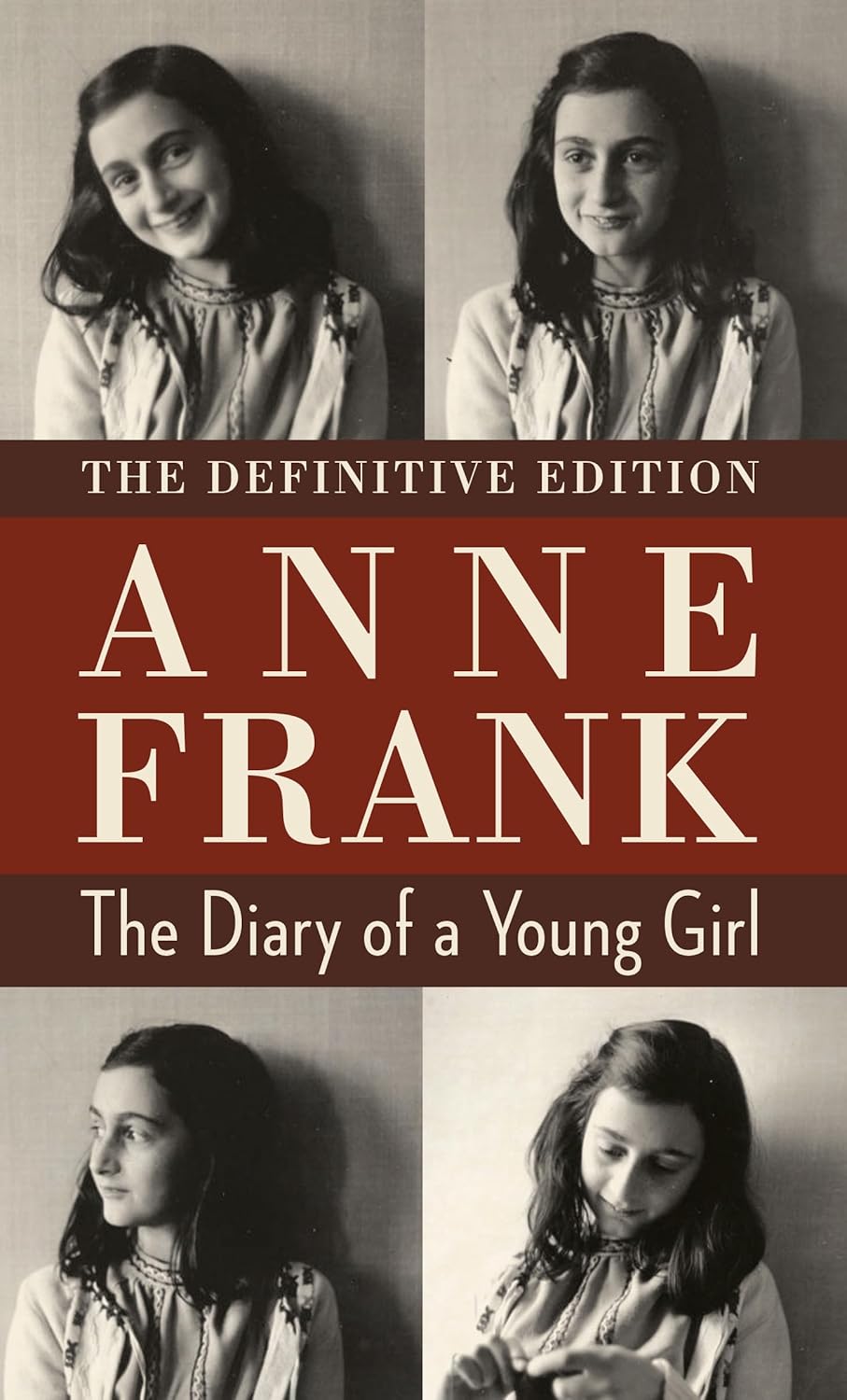
The Diary of a Young Girl by Anne Frank is the diary kept by a thirteen-year-old Jewish girl during the two years and one month she spent hiding with her family in a concealed apartment in Amsterdam, as Nazi Germany occupied the Netherlands and systematically deported the Jewish population to concentration camps. Anne Frank began writing on June 12, 1942, her thirteenth birthday, and her last entry is dated August 1, 1944, three days before the hiding place was betrayed and the family was arrested. Anne died in Bergen-Belsen concentration camp in February 1945, approximately three months before the camp’s liberation. She was fifteen years old. Her father Otto, the only family member to survive, found her diary after the war and arranged its publication. First published in Dutch in 1947, translated into more than seventy languages, and with over thirty million copies sold, it is the most widely read primary document of the Holocaust. This complete guide covers The Diary of a Young Girl‘s reading level, recommended age, content considerations, key figures, themes, and books similar to The Diary of a Young Girl, designed for parents, teachers, and students.
For Parents
A diary written by a teenage girl in hiding during the Holocaust — simultaneously one of the most universally assigned books in American middle school and one of the most challenged. Content includes Anne’s candid reflections on her body, her emerging sexuality, and her attraction to a female friend. The Definitive Edition (1995) restores passages removed from earlier editions. Appropriate for ages 11 and up; most commonly assigned in grades 6–8.
For Teachers
A Common Core ELA Text Exemplar for grades 6–8, widely considered an essential Holocaust education text. The diary’s two major editions — the edited version prepared by Otto Frank and the Definitive Edition restoring the omitted passages — are themselves productive teaching material for discussions of editorial decisions, memory, and what we preserve from the past. The ban history is among the most instructive in American literary history.
The Diary of a Young Girl at a Glance
Find on Amazon →| Author | Anne Frank |
| Written | June 12, 1942 – August 1, 1944 |
| First Published | 1947 (Het Achterhuis; Dutch); English 1952 |
| Definitive Edition | 1995 (restores omitted passages) |
| Grade Level | 6–8 for the standard edition; 7–9 for the Definitive Edition (our assessment) |
| Recommended Age | 11+ |
| ATOS Reading Level | 6.5 |
| Lexile | 1020L |
| Word Count | 82,762 |
| Pages | ~340 (Bantam paperback; varies by edition) |
| Structure | Dated diary entries; no chapters |
| Genre | Memoir / diary / primary historical document |
| Setting | Amsterdam, the Netherlands; June 1942 – August 1944 |
For official Lexile and AR levels, visit Lexile.com or AR BookFinder. ReadingVine provides independent editorial assessments.
What Reading Level Is The Diary of a Young Girl?
The Diary of a Young Girl has an ATOS reading level of 6.5 and a Lexile of 1020L. These scores are somewhat elevated relative to the prose’s actual accessibility — the diary was written by a thirteen-to-fifteen-year-old in Dutch and translated, and the English prose is clear and direct without being simple, reflecting both Anne’s genuine intelligence and the translation’s balance between fidelity and readability. The 1020L Lexile is consistent with upper middle school placement, and the book is a Common Core ELA Text Exemplar for grades 6–8.
The reading challenge in The Diary of a Young Girl is not the prose but the context and the emotional weight. Understanding what is happening outside the Secret Annex — what the deportations mean, what awaits the people being transported, what the Holocaust was — requires historical preparation that the diary does not provide internally. Anne writes about the outside world from a position of incomplete knowledge and sustained hope; readers who know what happened after the last entry will read those hopes with the kind of sustained grief that makes this the most emotionally demanding book commonly assigned in middle school. At 82,762 words and approximately 340 pages, most readers complete it in one to two weeks; classroom assignments typically run two to four weeks to allow time for the historical context. For official Lexile and AR scores, visit Lexile.com or AR BookFinder. ReadingVine’s assessments are independent editorial judgments.
Which Edition of Anne Frank’s Diary Should I Read?
This is a practically important question for parents and teachers. The Diary of a Young Girl exists in two major English editions with significant differences, and knowing which one you are assigning or reading matters.
The standard edition (sometimes called the Critical Edition or the edited edition) is based on the text prepared by Otto Frank after the war, in which he removed approximately a third of Anne’s original diary entries. Otto omitted passages in which Anne wrote critically about her mother, passages about Anne’s emerging sexuality and her anatomical self-observations, and entries he felt were too personal or too hurtful to surviving family members. This is the version most commonly assigned in middle school curricula and most commonly found in school libraries. It is the version that formed Anne Frank’s public image for most of the twentieth century.
The Definitive Edition was published in 1995, based on research by the Netherlands State Institute for War Documentation that restored the passages Otto had removed and incorporated material from Anne’s revised manuscript (she was revising the diary herself in 1944 for eventual publication). The Definitive Edition restores Anne’s anatomical self-description, her notes about her attraction to a female friend, her criticisms of her mother, and other material. It is a more complete picture of Anne Frank as a person — more contradictory, more adolescent, more fully human — than the edited version. Most of the challenges to the diary since 1995 have been directed at the Definitive Edition specifically. Our recommendation for middle school classroom use is the standard edited edition; for high school use, the Definitive Edition is the more complete and more honest text.
What Age Is The Diary of a Young Girl Appropriate For?
We recommend The Diary of a Young Girl for readers ages 11 and up. The diary is one of the most universally assigned books in American middle school for good reason: it is the most direct, most personal, most accessible primary document of the Holocaust, written from inside the experience by a person the same age as the students reading it. The emotional impact is significant — this is a diary whose author died — and that impact is educational rather than gratuitous.
The content that has generated challenges centers on two elements in the Definitive Edition: Anne’s anatomical self-observation (she describes her genitalia while examining herself in a mirror, in the voice of a curious adolescent rather than in any erotic register) and her expressed attraction to a female friend. Both of these passages reflect normal adolescent experience; neither is sexual content in any meaningful sense. The standard edited edition does not contain these passages. Parents who are using the Definitive Edition with middle schoolers should be aware they are present; parents using the standard edition should be aware they are not.
What Is The Diary of a Young Girl About?
On June 12, 1942, Anne Frank receives a diary as a birthday present. She is thirteen years old, living in Amsterdam, and already aware that life for Jewish people under Nazi occupation is becoming increasingly dangerous — her older sister Margot has just received a call-up notice to report for a “labor camp” in Germany. Within weeks, the Frank family — Otto, his wife Edith, Margot, and Anne — go into hiding in the concealed rear annex of Otto’s former business at 263 Prinsengracht. They are joined by the van Pels family (the van Daans in the diary) — Hermann, Auguste, and their son Peter — and later by Fritz Pfeffer (Albert Dussel), a dentist. Eight people in an approximately 500-square-foot hidden apartment, for two years and one month, sustained by a network of trusted non-Jewish employees who bring food, news, and contact with the outside world.
Anne’s diary is the record of those two years. She writes about ordinary adolescent things with the specific vividness of someone who has no other outlet: her relationships with her parents and sister, her quarrels with Mrs. van Pels and with Fritz Pfeffer, her developing feelings for Peter van Pels, her reading, her ambitions to be a writer, her frustrations with the confined space and the people she is confined with. She also writes about what she knows of the world outside — the deportations, the rumors, the war’s progress — with the incomplete knowledge of someone who receives only what their helpers bring them and who does not know that the people being “deported” are being murdered. Her hope, sustained across the diary’s two years, is the document’s most devastating quality in retrospect.
The diary’s last entry is dated August 1, 1944. Three days later, on August 4, the hiding place was betrayed to the Gestapo — by whom remains unknown, though the Anne Frank House continues to investigate. The eight residents of the Secret Annex were arrested and transported to Westerbork transit camp, then to Auschwitz-Birkenau, then to Bergen-Belsen. Edith Frank died in Auschwitz in January 1945. Margot and Anne died in Bergen-Belsen from typhus in February 1945, approximately three months before the British liberated the camp. Hermann van Pels was gassed at Auschwitz. Auguste van Pels died in April 1945. Fritz Pfeffer died in Neuengamme concentration camp. Peter van Pels died in Mauthausen. Otto Frank survived and was the only resident of the Secret Annex to return to Amsterdam. Miep Gies, one of the helpers who had sustained them, gave him Anne’s diary.
The Diary of a Young Girl: Key Figures
Is The Diary of a Young Girl Banned?
Anne Frank’s diary has a challenge history that spans more than seventy years and that is, in its accumulated irony, among the most significant in American literary history. The ALA has documented at least six formal challenges since 1990. Earlier documented challenges include Wise County, Virginia in 1982, where parents objected to Anne’s anatomical self-description and her expressed attraction to a female friend as “sexually offensive”; Alabama in 1983, where four members of the state textbook committee called for its rejection as “a real downer”; Corpus Christi, Texas in 1998, where two parents described it as pornographic and students’ subsequent letter-writing campaign led to its return; and Culpeper County, Virginia in 2010, where a parent again challenged it for “sexual material and homosexual themes.”
In 2023, Escambia County, Florida removed the original diary from schools as part of a review of more than 1,600 books under Florida’s book review laws — the first documented removal of the original diary in the United States since the contemporary parents’ rights movement began driving mass removals. The removal led to a lawsuit brought by Penguin Random House, PEN America, and local parents against the district. In the same period, the graphic novel adaptation Anne Frank’s Diary: The Graphic Adaptation (2018, written by Ari Folman, whose parents are Holocaust survivors) was removed from schools in Florida’s Indian River County by the Moms for Liberty chapter there, which cited two scenes — Anne walking near nude statues and Anne asking a friend to show each other their bodies — as “sexually explicit.”
The accumulated challenge history of this particular book is worth stating plainly: Anne Frank was murdered at age fifteen because she was Jewish, in a genocide carried out by a state that banned books, burned books, and controlled information as tools of authoritarian power. The diary she left is challenged in American schools, in part, for the same body-related observations that would be unremarkable in any other teenager’s private journal — and in recent years has been removed from school shelves by government action in the same state that also banned Maus, Art Spiegelman’s graphic account of Auschwitz, and Schindler’s List. The Anne Frank House in Amsterdam has issued statements addressing these challenges; it has urged that the diary be read in full, including the passages most frequently challenged, as the complete person Anne was.
The Diary of a Young Girl Themes and Lessons
The diary’s most profound teaching quality is the one that makes it irreplaceable as a Holocaust education text: it makes the Holocaust personal. The Holocaust is a historical event so large — six million Jews murdered, millions of others, across a continent, over years — that it resists individual comprehension. Anne Frank’s diary gives a specific person, a specific apartment, specific relationships and arguments and hopes and fears. The abstraction becomes a life. This is what primary documents do that no secondary account can fully replicate, and it is why the diary has been continuously assigned in schools since the 1950s.
Anne’s ambition to be a writer — documented throughout the diary and most explicit in the entries where she describes revising her earlier entries for eventual publication — gives the text a self-awareness that distinguishes it from a simple journal. She knew she was writing for an audience. The question of which Anne Frank we know — the one who wrote the original entries, the one who revised them, the one Otto edited for publication, the one the Definitive Edition reconstructed — is one of the most productive discussions the diary generates in any classroom that takes it seriously as a text rather than simply as a document.
The knowledge gap between Anne and her readers is the diary’s most sustained dramatic irony: she did not know what the deportations meant; we do. She hoped the war would end soon enough; we know it did not end in time. She wrote on August 1, 1944 that she would try to be better — and three days later she was arrested. Reading the diary is an experience of sustained, helpless foreknowledge, and this experience is both morally educating and emotionally difficult in ways that require classroom processing rather than private navigation.
Discussion questions for classrooms and families: What does reading a private diary — written without a specific reader in mind — ask of us as readers, and what obligations does it create? How does knowing what happens after August 1, 1944 change how you read the diary’s earlier entries? What does Otto Frank’s decision to edit the diary before publication say about what we preserve from the past and why? Why does the diary’s ban history — the repeated attempts to remove it from schools for “sexual content” — matter given what the diary is about? What does Anne mean when she writes that she wants to go on living even after her death?
How Long Is The Diary of a Young Girl?
The diary has no chapters — it is organized entirely as dated entries, running from June 12, 1942 through August 1, 1944. Page count varies by edition and publisher: most standard paperback editions run approximately 280–340 pages; the Definitive Edition is typically slightly longer. Word count is 82,762 for the standard edition. Most readers complete it in one to two weeks of casual reading; classroom assignments typically run two to four weeks to allow for the historical context discussions the book requires. The entries vary in length from a few sentences to several pages, and Anne’s voice changes across the two years in ways that reward reading the diary complete rather than in excerpts.
Books Similar to The Diary of a Young Girl
About Anne Frank
Anne Frank was born Annelies Marie Frank on June 12, 1929, in Frankfurt, Germany, to Otto and Edith Frank. The family moved to Amsterdam in 1934 after Adolf Hitler’s rise to power in Germany. Anne attended the Montessori school in Amsterdam; by her own account, she was a lively, sociable, and somewhat difficult student — funny, opinionated, interested in film stars and boys and the ongoing question of whether she was too talkative. She received her diary for her thirteenth birthday and began writing the same day.
When the family went into hiding in July 1942, she brought the diary with her. She continued to write throughout the two years in the Secret Annex, addressing entries to an imaginary friend named Kitty. In 1944, hearing a radio broadcast in which the Dutch Minister of Education suggested that diaries and letters would be valuable historical documents after the war, she began revising her earlier entries, intending to publish them under the title Het Achterhuis (The Secret Annex). She did not complete the revision.
After the arrest on August 4, 1944, Miep Gies found Anne’s papers scattered on the floor of the Secret Annex — the diary notebooks and the loose sheets of the revised entries — and saved them without reading them, intending to return them to Anne when the war ended. When Otto Frank returned to Amsterdam in June 1945 as the sole survivor of the Secret Annex, Miep gave them to him. He spent months reading and transcribing them before arranging their publication. The Dutch edition appeared in 1947; the English translation in 1952. In 1960, the Secret Annex at 263 Prinsengracht was opened to the public as the Anne Frank House; it receives more than a million visitors per year. The Anne Frank Foundation, which administers the house and Anne’s legacy, continues to conduct educational programs and to investigate the question of who betrayed the family.
The Diary of a Young Girl: Frequently Asked Questions
What reading level is The Diary of a Young Girl?
The Diary of a Young Girl has an ATOS of 6.5 and a Lexile of 1020L. It is a Common Core ELA Text Exemplar for grades 6–8. The prose is clear and direct; the primary challenge is historical context and emotional weight rather than linguistic complexity. Our editorial assessment places it at grades 6–8 for the standard edition and 7–9 for the Definitive Edition, ages 11 and up. For official Lexile and AR scores, visit Lexile.com or AR BookFinder.
What grade is The Diary of a Young Girl appropriate for?
We recommend ages 11 and up; grades 6–8 for standard classroom assignment. The standard edited edition is appropriate for this age range. The Definitive Edition restores passages about Anne’s body and sexuality and is most appropriate for grades 7–9 with teacher guidance. The emotional weight of the Holocaust context warrants classroom processing regardless of edition.
How many pages are in The Diary of a Young Girl?
Pages vary by edition — most standard paperbacks run approximately 280–340 pages. Word count is 82,762. The diary is structured as dated entries from June 12, 1942 through August 1, 1944, with no chapters. Most readers complete it in one to two weeks; classroom assignments typically run two to four weeks.
What is The Diary of a Young Girl about?
Anne Frank’s diary, kept during the two years and one month she spent hiding with her family in a concealed apartment in Amsterdam during the Nazi occupation of the Netherlands. She writes about her relationships with her family and the other people in hiding, her feelings for a boy named Peter, her ambitions to be a writer, and what she knows of the war outside — with the incomplete knowledge of someone who does not know that the deportations she hears about are leading to murder. Her last entry is August 1, 1944. She was arrested three days later and died in Bergen-Belsen in February 1945.
What is the difference between the editions of Anne Frank’s diary?
The standard edition is based on Otto Frank’s post-war editing, which removed approximately a third of the original diary — including Anne’s anatomical self-observations, her expressed attraction to a female friend, and her criticisms of her mother. The Definitive Edition (1995) restores these passages and incorporates Anne’s own revised manuscript. The standard edition is more commonly assigned in middle school; the Definitive Edition is a more complete portrait of Anne as a person. Most of the diary’s challenge history since 1995 involves the Definitive Edition specifically.
Why is The Diary of a Young Girl banned?
Challenges have focused on two elements in the Definitive Edition: Anne’s anatomical self-description (she examines her own genitalia and writes about it in the voice of a curious adolescent) and her expressed attraction to a female friend. Additional challenges have cited the diary as “too depressing.” In 2023, Escambia County, Florida removed the original diary from school shelves as part of a broad review — the first documented removal in the United States since the current book-ban movement began. The Anne Frank House in Amsterdam has urged that the diary be read in full.
How did Anne Frank die?
Anne Frank died in Bergen-Belsen concentration camp in February 1945, most likely from typhus, approximately three months before the camp was liberated by British forces. She was fifteen years old. Her sister Margot died in the same camp within days of Anne. Their mother Edith had died in Auschwitz the previous January. Their father Otto was the only resident of the Secret Annex to survive the war.
Who betrayed Anne Frank and her family?
The identity of the person who informed the Gestapo of the Secret Annex’s location on August 4, 1944 has never been definitively established. The Anne Frank House’s cold case team has conducted multiple investigations; a 2022 investigation named a Jewish notary named Arnold van den Bergh as a likely suspect, a conclusion the Anne Frank House itself has not formally endorsed. The investigation remains open. The betrayer’s identity, while historically significant, does not change the historical record: eight people were arrested, seven died, and Anne Frank’s diary survived.