
 = Partner Site
Educated Reading Level: A Complete Guide
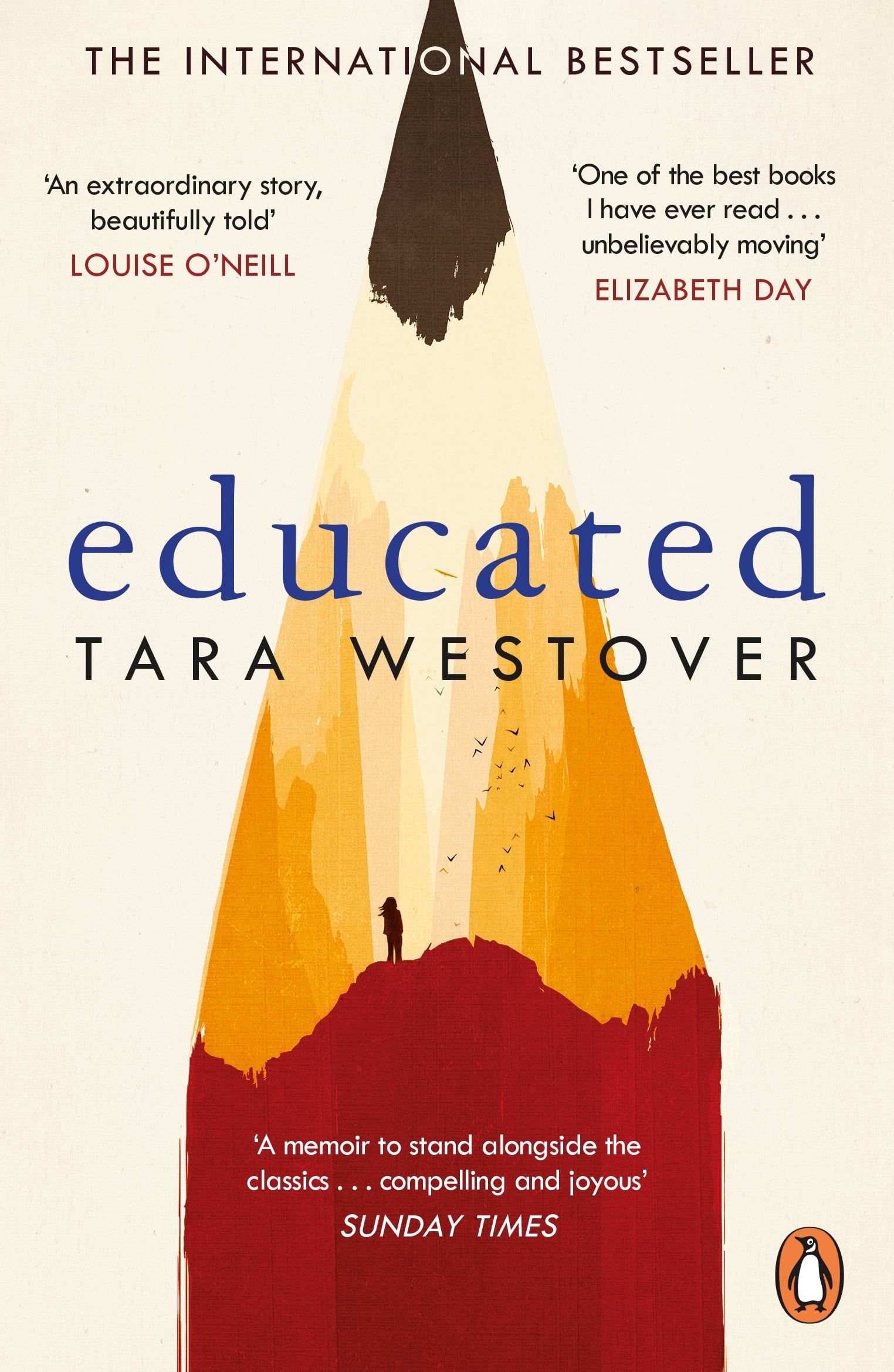
Educated by Tara Westover is a memoir about growing up as the youngest of seven children in a survivalist family in the mountains of rural Idaho — without birth certificates, without medical care, without school — and about the process, beginning at age seventeen, of educating herself into a world her parents had spent her childhood teaching her to distrust. Westover never set foot in a classroom before enrolling at Brigham Young University. She eventually completed a PhD in intellectual history at Cambridge University. The memoir traces both journeys: the physical one from the Idaho mountains to Cambridge, and the psychological one from a mind shaped entirely by one family’s beliefs to a mind capable of examining those beliefs from the outside. Published in 2018 to immediate critical acclaim, it spent two years on the New York Times bestseller list, sold more than eight million copies, and was translated into forty-five languages. This complete guide covers Educated‘s reading level, recommended age, content considerations, key figures, themes, and books similar to Educated, designed for parents, teachers, and students.
For Parents
A memoir about family violence, psychological manipulation, and self-education — written with literary sophistication and moral seriousness. Contains graphic depictions of physical abuse, serious injuries without medical treatment, and the sustained psychological weight of a family that denies its own history. Appropriate for ages 15 and up; most commonly assigned in grades 10–12 and college first-year programs.
For Teachers
An exceptional grades 10–12 and college text for teaching memoir, the ethics of memory, and the relationship between knowledge and identity. Westover is an intellectual historian by training, and the memoir’s engagement with how memory is constructed inside a closed system is itself one of its most productive analytical dimensions. The family’s public dispute of the book’s account is a productive extension of the same themes the memoir explores. Aligned to CCSS 11–12 standards for informational text.
Educated at a Glance
Find on Amazon →| Author | Tara Westover |
| Published | 2018 (Random House) |
| Grade Level | 10–12 (our assessment) |
| Recommended Age | 15+ |
| ATOS Reading Level | 6.4 |
| Lexile | 870L |
| Word Count | ~123,250 |
| Pages | 352 (Random House hardcover) |
| Structure | 3 parts; 40 chapters |
| Genre | Memoir / narrative nonfiction |
| Setting | Clifton, Idaho; BYU, Utah; Cambridge, England; 1980s–2010s |
| Awards | Finalist: National Book Critics Circle Award; PEN/America Jean Stein Book Award; Los Angeles Times Book Prize (2018); New York Times 10 Best Books of the Year (2018) |
For official Lexile and AR levels, visit Lexile.com or AR BookFinder. ReadingVine provides independent editorial assessments.
What Reading Level Is Educated?
Educated has an ATOS reading level of 6.4 and a Lexile of 870L. These scores accurately represent a memoir written by someone with doctoral training in intellectual history: the prose is clear, precise, and linguistically demanding without being ornate. Westover writes in a style shaped by both the cadences of the Idaho mountains she grew up in and the analytical habits she developed at Cambridge, and the combination produces writing that is simultaneously accessible and sophisticated. The 870L Lexile is consistent with grades 10–12 placement; the ATOS 6.4 is slightly higher than comparable memoirs in the catalog.
The reading challenge in Educated is primarily psychological and moral rather than linguistic. The memoir asks its reader to hold two things simultaneously: the subjective experience of the child Tara, who understood her world in terms of the framework her family gave her, and the retrospective analysis of the adult Tara, who is examining that framework from the outside. This dual perspective is the memoir’s most sophisticated formal achievement and also its most demanding feature for readers who have not practiced holding multiple epistemological frames at once. The publisher’s teacher guide aligns the book to CCSS 11–12 standards for informational text. Our editorial assessment places it at grades 10–12, ages 15 and up. At approximately 123,250 words and 352 pages, most readers complete it in a week to ten days. For official Lexile and AR scores, visit Lexile.com or AR BookFinder. ReadingVine’s assessments are independent editorial judgments.
What Age Is Educated Appropriate For?
We recommend Educated for readers ages 15 and up. The memoir’s content is the primary consideration: it depicts sustained physical and psychological abuse within a family, graphic injuries that go untreated (burns, severe scalp wounds, a brother whose leg is stripped to the bone in a junkyard accident), and the specific psychological dynamics of a family that gaslights a member who discloses abuse. These are not isolated incidents but the sustained conditions of Westover’s childhood, depicted with the kind of direct, unsparing prose that makes them fully real rather than abstract.
Westover’s brother Shawn is physically violent with her across multiple incidents that span her childhood and adolescence — grabbing her by the hair, pushing her head into a toilet, twisting her arm behind her back in ways that cause injury, threatening her in terms she takes seriously as threats to her life. These incidents are depicted in specific detail. More pervasive than the physical abuse is the psychological abuse: Shawn’s alternating warmth and cruelty that keeps Tara off-balance, and the family’s sustained campaign — when Tara eventually discloses the abuse — to convince her that she is mentally ill and imagining events that did not happen. Tara’s parents describe her as being under the influence of Satan. The gaslighting is the memoir’s most psychologically demanding content, more than the physical violence, because Westover depicts it from inside the experience of a person who has been trained to doubt her own perception. The memoir also depicts serious physical accidents — a car accident with serious injuries, a junkyard accident that nearly costs her brother his leg, her father’s severe burns in a fuel tank explosion — all of which go untreated beyond home herbal remedies. There is no explicit sexual content.
What Is Educated About?
Tara Westover grows up on Buck’s Peak, a mountain in southern Idaho, as the youngest of seven children. Her father Gene is a survivalist who believes the government, doctors, and public schools are tools of the Illuminati and the New World Order. He does not register most of his children’s births; some, including Tara, do not have birth certificates for years. The family works in his scrap metal junkyard and her mother’s herbal remedy business. No one goes to the hospital, regardless of how serious the injury. No one goes to school.
The memoir’s first section establishes the world of Buck’s Peak with specific sensory precision: the mountain, the seasons, the work, the family dynamics. It is, from the inside, a world with its own coherence — her father’s beliefs are internally consistent, her mother’s herbal work is effective for minor ailments, her older brothers are complex and individual. It is also a world in which Tara witnesses serious injuries go untreated, in which her brother Shawn begins the pattern of violence that will intensify as she grows older, and in which she has no framework for understanding her own life as anything other than the framework her family provides. She does not know what the Holocaust is. She cannot identify the photograph of a Nazi officer in a library book.
The second section begins when Tara — at the suggestion of her brother Tyler, who left Buck’s Peak to get a degree — teaches herself enough mathematics and grammar from old textbooks to score well on the ACT and gain admission to Brigham Young University. The culture shock of her first year at BYU is depicted with extraordinary precision: the ordinary reference to the Holocaust in a classroom that leaves her confused and exposed; the first time she sees a roommate take medication and wonders if it is legal. She discovers that what she was taught about the world is not what the world is. She discovers that she does not know how to sit in a classroom, or take notes, or believe what a professor says, because she was raised to distrust every institutional source of information.
She goes to Cambridge on a Gates scholarship. She begins a PhD. And she tries, over the course of several years, to address what Shawn did to her — going to her parents, who respond by telling her she is lying and that she is under the influence of Satan. She loses most of her family. Her sister Audrey initially corroborates her account and then recants. The family fractures: some siblings side with her parents, some validate what she described. The memoir ends with Tara’s reflection on what education gave her: not facts about the Holocaust or knowledge of how to take an exam, but the capacity to evaluate claims, to weigh evidence, to understand that the framework she grew up with is a framework — one possible interpretation of the world, not the world itself.
Educated: Key Figures
The Dispute Around Educated
Educated is not a banned or challenged book in the school library sense. It has no ALA challenge history. The controversy that surrounds it is a family dispute — Westover’s parents and her brother Shawn deny significant portions of her account, characterize the book as containing falsehoods, and have publicly challenged her characterization of events through their attorney and through her mother’s counter-memoir, Educating (2020).
Several facts about this dispute are worth establishing directly. Random House conducted extensive fact-checking before publication; the publisher’s position is that the core events of the memoir are confirmed. Two of Westover’s brothers — Tyler and Richard, both of whom also hold PhDs — have publicly validated her account of the family dynamics and of Shawn’s behavior. Westover herself acknowledges throughout the memoir that her memory is imperfect and that other family members experienced the same events differently — she is not claiming omniscience or a single authoritative version of events. Her parents dispute the portrayal but have not filed a defamation lawsuit, despite their attorney’s characterization of the book as potentially libelous. Legal experts have noted that a lawsuit would require discovery proceedings that would expose the family’s history to scrutiny.
The family dispute is worth discussing in any classroom engaging with Educated for the same reason the Boukreev dispute is worth discussing in any classroom engaging with Into Thin Air: it illuminates the epistemological questions the text itself raises. Educated is explicitly about how a family constructs and maintains a shared version of reality, and about what it costs an individual to challenge that version. The family’s response to the published memoir — denial, characterization of Tara as mentally ill or religiously corrupted — is structurally identical to what the memoir describes happening when Tara first disclosed Shawn’s abuse. The controversy does not invalidate the memoir; it extends its argument into the present.
Educated Themes and Lessons
Westover has described the memoir’s central question as: what is education for? Her answer, arrived at over the course of her narrative, is not the one the genre normally produces. Education is not simply the acquisition of facts or credentials. It is the development of a capacity to evaluate claims — to recognize that any framework for understanding the world, including the one you were born inside, is a framework: one possible interpretation, not the world itself. The moment Westover describes as most transformative is not passing the ACT or arriving at Cambridge but the moment she begins to recognize that her father’s version of reality is a version rather than a truth. Education gave her that capacity. It also cost her most of her family.
The memoir’s engagement with memory is its most formally sophisticated element. Westover writes as an intellectual historian — her doctoral work examines 19th-century moral philosophy — and her training is visible in how she handles the unreliability of her own recollection. She notes explicitly when she is uncertain, when her memory conflicts with another family member’s, when the child’s perception of an event may differ from what actually happened. This epistemic humility is not weakness: it is the argument. The memoir is about how knowledge is constructed inside a closed system, and the author cannot make that argument credibly if she claims perfect access to the truth. The uncertainty is part of the content.
The memoir has been widely read as a triumphant narrative of self-improvement — the Idaho mountain girl who made it to Cambridge. Westover has pushed back against this reading in essays and interviews, arguing that the triumphant framing obscures what the journey actually cost and what its conditions were. She was not a “bootstrap” success story in the way that framing implies: she had access to libraries, to the ACT exam, to a scholarship system, to Cambridge’s Gates program. She is not an argument that anyone can do what she did if they work hard enough; she is an argument that she was able to do what she did given the specific conditions she encountered. The distinction matters, she has argued, because using her story to suggest that structural barriers are merely motivational barriers is a misuse of it.
Discussion questions for classrooms and families: What does Westover mean when she says education gave her the capacity to see her father’s framework as a framework — and what did recognizing this cost her? How does the memoir handle its own uncertainty about memory, and what does this handling argue about the nature of memoir as a form? What is the difference between Westover’s story as a “bootstrap” narrative and as a story about the specific conditions that made her path possible? How does the family’s response to the published memoir — their denial of her account — replicate the dynamics she describes in the memoir itself? What does Professor Steinberg give Tara that her father and mother could not?
How Many Pages and Chapters in Educated?
The Random House hardcover is 352 pages across 40 chapters in three parts. Part One covers Westover’s childhood on Buck’s Peak through her first steps toward education. Part Two covers her years at BYU and her first year at Cambridge. Part Three covers her doctoral work, the confrontation with her family over Shawn’s abuse, and the estrangement that followed. Word count is approximately 123,250. Most readers complete it in a week to ten days; the three-part structure corresponds roughly to the three phases of the argument — the world before education, the world during the transition, and the world after. Most classroom assignments run three to four weeks.
Books Similar to Educated
About Tara Westover
Tara Westover was born on September 27, 1986, in Clifton, Idaho — a town of 259 people — as the youngest of seven children. She had no birth certificate for the first years of her life; her parents did not register her birth with the state. She never attended school. Her first formal education came when she taught herself enough mathematics and grammar from secondhand textbooks to score well enough on the ACT to gain admission to Brigham Young University, where she enrolled at seventeen. She graduated from BYU in 2008 with honors, received a Gates Cambridge scholarship, earned a master’s degree from Cambridge, and completed a PhD in intellectual history at Trinity College, Cambridge in 2014. Her doctoral dissertation, “The Family, Morality and Social Science in Anglo-American Cooperative Thought, 1813–1890,” examines the 19th-century intellectual context for how family structure and moral philosophy intersected.
She began writing Educated as a personal project in 2014 and published it in 2018 to immediate critical recognition: it was named one of the ten best books of the year by the New York Times, was endorsed by Michelle Obama, Barack Obama, and Bill Gates, spent two years on the New York Times bestseller list in hardcover, and has sold more than eight million copies. She was named one of Time magazine’s 100 most influential people in 2019. She was an A.M. Rosenthal Writer in Residence at the Shorenstein Center at Harvard Kennedy School in 2019 and a Senior Research Fellow there in 2020. She has pushed back publicly against readings of her story as a simple inspirational narrative, arguing in a 2022 New York Times op-ed that her success should not be used to obscure the structural barriers that prevent most people from similar paths. She lives in Brooklyn, New York.
Educated: Frequently Asked Questions
What reading level is Educated?
Educated has an ATOS reading level of 6.4 and a Lexile of 870L — accurately reflecting memoir written by a PhD intellectual historian. The prose is clear and linguistically demanding; the primary challenge is the psychological and moral complexity rather than vocabulary. Our editorial assessment places it at grades 10–12, ages 15 and up. For official Lexile and AR scores, visit Lexile.com or AR BookFinder.
What grade is Educated appropriate for?
We recommend grades 10–12, ages 15 and up. The memoir depicts sustained physical abuse by a sibling, serious injuries without medical treatment, and systematic gaslighting when Westover discloses the abuse to her parents. The publisher’s teacher guide aligns it to CCSS 11–12 standards; it is also widely used in college first-year programs.
How many pages are in Educated?
The Random House hardcover is 352 pages across 40 chapters in three parts. Word count is approximately 123,250. Most readers complete it in a week to ten days; classroom assignments typically run three to four weeks.
What is Educated about?
Tara Westover’s memoir of growing up as the youngest of seven children in a survivalist family in rural Idaho — without school, without medical care, without birth certificates — and her journey, beginning at age seventeen, from teaching herself the ACT to earning a PhD at Cambridge. The memoir traces both the physical journey and the psychological one: from a mind shaped entirely by her family’s beliefs to a mind capable of examining those beliefs from outside them.
Is Educated a true story?
Yes, with the acknowledgment that all memoir has limitations. Westover herself notes throughout the book that her memory is imperfect and that other family members experienced the same events differently. Random House conducted extensive fact-checking; the publisher stands behind the core events. Two of her brothers — both PhDs — have publicly validated her account of the family dynamics. Her parents and one brother dispute significant portions of the book, though they have not filed the defamation lawsuit their attorney described as potentially warranted.
Did Tara Westover ever have formal schooling before college?
No. She was born at home and never attended any school before enrolling at BYU at seventeen. She taught herself enough mathematics and grammar from secondhand textbooks to score well on the ACT and earn admission and a scholarship. She has described her only literacy education before this as reading the Bible, the Book of Mormon, and speeches by Joseph Smith and Brigham Young, taught to her by an older brother.
What did Tara Westover’s family say about Educated?
Her parents and her brother Shawn dispute significant portions of the book, characterizing it as containing falsehoods and distortions. Their attorney described the portrayal as potentially libelous; no lawsuit has been filed. Her mother, LaRee Westover, published a counter-memoir, Educating, in 2020. Two of her brothers — Tyler and Richard, who also hold PhDs — have validated her account publicly. The family dispute is itself an extension of the dynamics the memoir describes: when Tara disclosed her brother’s abuse, her parents denied it.
What is the title Educated about?
The title is Westover’s compressed answer to a question that runs through the entire memoir: what is education for? The obvious reading — she got educated and made it out — is the reading she pushes back against. Her deeper answer is that education gave her the capacity to recognize that her family’s framework for understanding the world was a framework: one interpretation, not the truth. Being educated, for Westover, means being able to see the constraints of the system you were born inside — which is both a liberation and a loss.