
 = Partner Site
The Perks of Being a Wallflower Reading Level: A Complete Guide
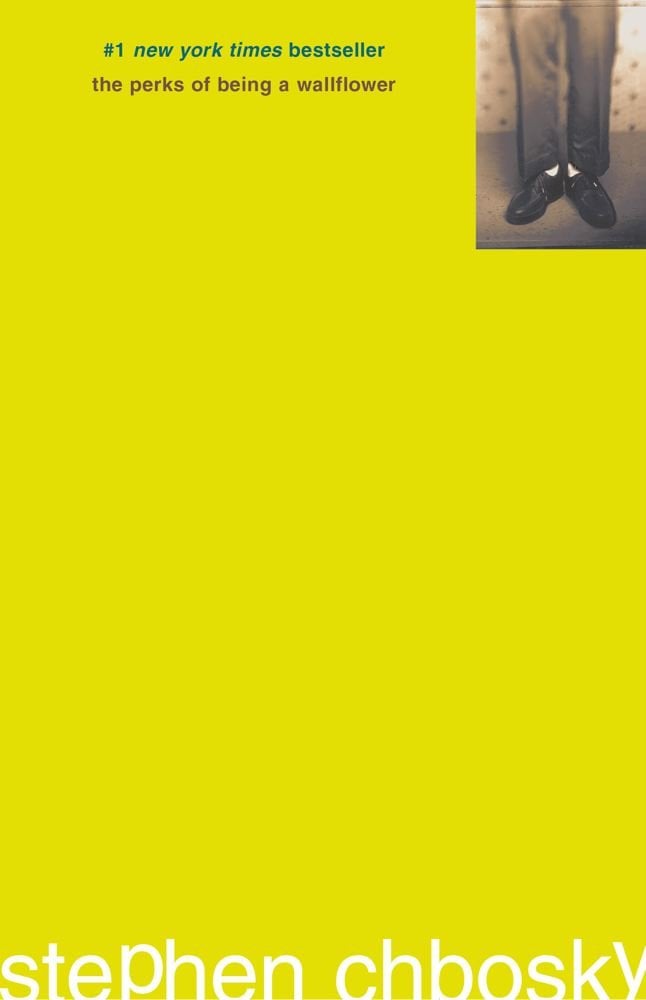
The Perks of Being a Wallflower by Stephen Chbosky is an epistolary novel — a story told entirely through letters — written by Charlie, a fifteen-year-old boy in a Pittsburgh suburb who addresses them to “a friend” he has never met. Charlie is beginning high school after the suicide of his best friend Michael and is navigating his freshman year with the help of two seniors, Sam and Patrick, who take him in and show him a version of adolescent life he had not imagined. Published in 1999, it has become one of the most read and most challenged young adult novels in American literary history: a book about being a teenager that teenagers recognize as true, and that adults have challenged, banned, and removed from schools and libraries continuously since its publication. This complete guide covers The Perks of Being a Wallflower‘s reading level, recommended age, content considerations, characters, themes, and books similar to The Perks of Being a Wallflower, designed for parents, teachers, and students.
For Parents
A YA coming-of-age novel structured as letters from a fifteen-year-old navigating mental illness, grief, first love, drugs, sexuality, and a traumatic past that he only fully discloses at the novel’s end. The content is substantial — drug use, sexual content, a same-sex relationship, and childhood sexual abuse revealed in the final chapters. Appropriate for ages 14 and up; most commonly assigned in grades 9–11.
For Teachers
A rich grades 9–11 text for teaching the epistolary form, unreliable narration, and the relationship between trauma and memory. Charlie’s narration is deceptively simple — the low reading metrics reflect the first-person letter format rather than the novel’s actual demands — and his unreliability as a narrator of his own experience is the novel’s central formal and thematic device. The novel’s consistent presence on the ALA’s most challenged list makes it a productive text for discussing the history and politics of book challenges alongside its literary content.
The Perks of Being a Wallflower at a Glance
Find on Amazon →| Author | Stephen Chbosky |
| Published | 1999 (Pocket Books / MTV Books) |
| Grade Level | 9–11 (our assessment) |
| Recommended Age | 14+ |
| ATOS Reading Level | 4.8 |
| Lexile | 720L |
| Word Count | 62,376 |
| Pages | 240 (Simon & Schuster paperback) |
| Structure | Epistolary (letters); no numbered chapters |
| Genre | Young adult / coming-of-age / epistolary fiction |
| Setting | Pittsburgh suburb; early 1990s |
For official Lexile and AR levels, visit Lexile.com or AR BookFinder. ReadingVine provides independent editorial assessments.
What Reading Level Is The Perks of Being a Wallflower?
The Perks of Being a Wallflower has an ATOS reading level of 4.8 and a Lexile of 720L. These scores are misleading in a way that is specific to this novel: Charlie writes in short, direct sentences because he is a teenager writing informal letters, not because the novel is simple. The epistolary form — all letter prose — naturally produces low formula scores because letters use shorter sentences and simpler vocabulary than literary narrative. The ATOS score of 4.8 and Lexile of 720L would suggest a 5th-grade text; TeachingBooks grades it 7–12 and Booksource’s interest level is 9–12. The gap between the formula scores and the content concern is wider here than for almost any other novel in this catalog.
The novel that the scores describe — a plainly written first-person account of a teenager’s freshman year — is not the novel that parents and teachers need to prepare for. Charlie is an unreliable narrator of his own experience in a specific and significant way: he is describing his life while suppressing the memory that would explain his behavior, and the explanation arrives in the final pages. A reader following the formula scores and assigning it to a 7th or 8th grader based on a 720L Lexile would be making a significant error of judgment about the content. At 62,376 words and 240 pages, most readers finish it in a single sitting or two; classrooms typically take one to two weeks. For official Lexile and AR scores, visit Lexile.com or AR BookFinder. ReadingVine’s assessments are independent editorial judgments.
What Age Is The Perks of Being a Wallflower Appropriate For?
We recommend The Perks of Being a Wallflower for readers ages 14 and up. The novel’s content is more serious than its reading metrics suggest and more complex than its reputation as a “feel-good YA novel” implies. It is a book about trauma, mental illness, and the specific forms of numbness and hypersensitivity that trauma produces — written from inside that experience, in the voice of someone who does not fully understand what is happening to him.
The novel contains drug use (marijuana and LSD, depicted at parties Charlie attends), alcohol use, sexual content (Charlie’s relationship with Sam; descriptions of sexual activity involving multiple characters), a same-sex relationship (Patrick’s), and frank references to masturbation. A character has an abortion, which Charlie discusses in his letters. The novel’s most significant content — which is not announced early and which many readers discover only in the final pages — is that Charlie was sexually abused as a young child by his Aunt Helen, whom he otherwise describes with love and grief (she died in a car accident when he was seven). This history is revealed through Charlie’s breakdown in the novel’s final section; the abuse is not depicted graphically, but its presence and its effect on Charlie’s psychology are the novel’s central explanatory fact. Parents and teachers who assign the novel should be aware of this revelation before students encounter it.
What Is The Perks of Being a Wallflower About?
Charlie is fifteen years old, about to begin high school, and recently emerged from a period of hospitalization following a breakdown after his best friend Michael shot himself. He begins writing letters to “a friend” — an unnamed, unseen recipient he has heard is “a good person” — as a way of making sense of what he is experiencing. The letters are dated but not numbered, and they span his freshman year from August to the following summer.
At school, Charlie is a wallflower — present, observing, absorbing everything, participating in very little. He is befriended by his English teacher Mr. Anderson, who gives him books to read outside the curriculum and writes notes in the margins for him. He is befriended by Sam and Patrick, seniors who bring him into their group of friends — the Rocky Horror Picture Show crowd, the people who don’t quite fit the standard high school categories. Sam is beautiful, funny, and damaged in ways Charlie is slowly learning to understand. Patrick is gay and conducting a secret relationship with a closeted football player named Brad. Charlie falls in love with Sam almost immediately, and spends most of the year watching her love other people while loving her himself.
The novel’s year is structured around the ordinary occasions of adolescence — parties, dances, holidays, summers — and each occasion carries more weight than it typically does because Charlie is always feeling too much. He cries at unexpected moments. He goes somewhere far away in his head when things get difficult. He is incapable of not caring about everything. He is, the novel gradually makes clear, a person whose emotional thermostat is broken — registering too high, then going numb — in ways that his freshman year friendships help but do not fix.
In the novel’s final section, Charlie has a breakdown. Sitting with Sam on the night before she leaves for college, she kisses him and he freezes — and a memory he has been suppressing surfaces. His Aunt Helen, who died when he was seven and who was his favorite person in the world, sexually abused him when he was a small child. He has not known this. Or he has known it and not been able to hold it and know it at the same time. He is hospitalized again. When he is released, Sam and Patrick are still there. He is still a wallflower. He is going to try to participate more.
The Perks of Being a Wallflower Characters
Is The Perks of Being a Wallflower Banned?
The Perks of Being a Wallflower has one of the most extensive challenge and ban histories of any novel in this catalog. It has appeared on the ALA’s annual list of most frequently challenged books in 2004, 2006, 2007, 2008, 2009, 2013, 2014, 2022, 2023, and 2025 — reaching #2 on the 2025 list. Marshall University Library documents more than fifteen challenges, most alleging sexually explicit content and illicit behavior. Reasons cited across those challenges include sexual content, drug use, profanity, depiction of rape and sexual abuse, LGBTQ+ content, and descriptions of masturbation. In April 2025, the Lukashenko government in Belarus added the book to its list of publications whose distribution could harm national interests.
Recent challenges have included high-profile removals: the Wilson County School District in Tennessee removed it from libraries along with 418 other titles in response to the state’s HB 843; the Plano Independent School District in Texas withdrew it along with 64 of 66 reviewed titles. A grandmother in Springfield, Missouri challenged the book’s use in an elective film and literature course, describing it as “pornographic” while acknowledging she had not read past page 31.
The 2025 ALA data is worth quoting in full because it changes the standard picture of book challenges: 92 percent of all book challenges in 2025 were initiated by pressure groups and government officials, not individual parents — up from 72 percent in 2024. Less than 3 percent of challenges originated from individual parents. The narrative of concerned individual parents as the primary drivers of book removal does not match the current data. Chbosky has said of the challenges: “I no longer find the argument exciting, and it’s certainly not a matter of pride. It’s more of mourning the fact that people can’t agree to disagree, and people can’t find common ground.”
The Perks of Being a Wallflower Themes and Lessons
The novel’s central image — the wallflower, the person who watches rather than participates — is both Charlie’s accurate self-description and the novel’s argument about what trauma does to a person. Wallflowers, by definition, see everything. Charlie’s letters are full of observation that is precise and generous and sometimes startling: he notices things about his friends and family that they do not notice about themselves, and his noticing is the form his love takes. But observation is also protection. Charlie watches because engaging too directly is dangerous — not because he has reasoned this out, but because some part of him learned it early, in circumstances he can no longer access consciously. The novel’s resolution — his declaration, from the tunnel with Sam and Patrick, that he is alive — is the moment he begins to participate rather than just witness.
The books Mr. Anderson assigns Charlie are not decorative. The Catcher in the Rye is the most direct ancestor of Perks — both are narrated by a sensitive, alienated, unreliable teenage boy in the first person, and both have been banned and challenged for depicting the adolescent reality they were written to describe. Chbosky’s debt to Salinger is conscious and acknowledged within the novel, and teachers who assign Perks alongside The Catcher in the Rye find the comparison illuminating both ways. To Kill a Mockingbird, This Side of Paradise, and Kerouac’s On the Road also appear by name; they represent the tradition of American writing about young people finding their place in a world that did not prepare them for what it actually contains.
The novel’s treatment of mental health is one of its most valuable features for classroom discussion. Charlie’s symptoms — emotional flooding, dissociation, the intrusive memory that surfaces unexpectedly — are rendered from inside, in the voice of someone who is experiencing them without a clinical framework for understanding them. Students who recognize these experiences in themselves or in people they love frequently describe the novel as the first time they encountered their own experience in a book. This is what Chbosky said he was writing for: validation of what teenagers actually go through.
Discussion questions for classrooms and families: What does it mean to be a wallflower — and is being a wallflower a choice or a condition in Charlie’s case? How does Charlie’s narration change once you know what he has suppressed — go back to the beginning and look for what the earlier letters are not saying? What does Mr. Anderson’s book list add to the novel — why does Chbosky include the specific titles he includes? What does Patrick’s secret relationship with Brad argue about the cost of the closet? What does the novel argue that the right response to being a wallflower is?
How Many Pages and Chapters in The Perks of Being a Wallflower?
The Simon & Schuster paperback is 240 pages. The novel has no numbered chapters — it is structured as letters dated from August of Charlie’s freshman year through the following summer, with each letter beginning “Dear friend.” Word count is 62,376. Most readers finish it in a single long sitting or two short ones; classrooms typically take one to two weeks. The undivided letter structure means there are no natural stopping points built into the text — each letter begins immediately after the last — which gives the novel its sense of accumulation and intimacy: Charlie is always in the middle of telling you something.
Books Similar to The Perks of Being a Wallflower
About Stephen Chbosky
Stephen Chbosky was born in 1970 in Pittsburgh, Pennsylvania — the city in which the novel is set. He studied film directing at the University of Southern California and began writing the story that became The Perks of Being a Wallflower in the summer of 1996, completing a draft in about ten weeks. He drew heavily on his own memories of growing up in Pittsburgh, and Charlie is loosely based on himself. The novel was published in 1999 through Pocket Books’ MTV Books imprint and became that imprint’s bestselling title.
Since its publication, the novel has spent more than a year on the New York Times bestseller list — aided substantially by the 2012 film adaptation, which Chbosky wrote and directed himself. The film starred Logan Lerman as Charlie, Emma Watson as Sam, and Ezra Miller as Patrick, and was widely praised as one of the most faithful YA adaptations ever made; Chbosky has said that directing it himself was important to him precisely because he wanted to preserve what he had written rather than have it translated by someone who hadn’t lived it. He has written one other novel, Imaginary Friend (2019), a horror novel for adults. He has also written for film and television, including the screenplay for the 2017 film adaptation of Wonder.
The Perks of Being a Wallflower: Frequently Asked Questions
What reading level is The Perks of Being a Wallflower?
The Perks of Being a Wallflower has an ATOS of 4.8 and a Lexile of 720L — scores that reflect the plain, short-sentence style of a teenager’s informal letters rather than the novel’s actual content demands. The 720L Lexile is one of the widest gaps between formula score and appropriate grade level in this catalog. Our editorial assessment places it at grades 9–11, ages 14 and up, consistent with Booksource’s interest level of 9–12. For official Lexile and AR scores, visit Lexile.com or AR BookFinder.
What grade is The Perks of Being a Wallflower appropriate for?
We recommend grades 9–11, ages 14 and up. Despite the low formula scores, the novel contains drug use, sexual content, a same-sex relationship, an abortion, and the revelation in the final chapters that Charlie was sexually abused as a young child. The low reading metrics reflect the epistolary format, not the content.
How many pages are in The Perks of Being a Wallflower?
The Simon & Schuster paperback is 240 pages with no numbered chapters — the novel is structured as dated letters. Word count is 62,376. Most readers finish it in one or two sittings; classrooms typically take one to two weeks.
What is The Perks of Being a Wallflower about?
Charlie, a fifteen-year-old in a Pittsburgh suburb, writes letters to an unnamed friend through his freshman year of high school after his best friend’s suicide. Befriended by two seniors — Sam and Patrick — he navigates first love, drug use, sexuality, mental illness, and the trauma of a past he cannot fully access. The novel ends with a breakdown and the revelation of childhood sexual abuse that has been organizing Charlie’s behavior throughout.
Is The Perks of Being a Wallflower appropriate for a 7th grader?
We recommend it for ages 14 and up — high school rather than middle school. TeachingBooks grades it 7–12, but Booksource’s interest level is 9–12, and the novel’s content — drug use, sexual content, same-sex relationship, abortion, and childhood sexual abuse revealed in the final pages — places it firmly in the high school range. The low ATOS score of 4.8 reflects the epistolary format rather than the content maturity. Assigning it based on formula scores alone would be a significant misjudgment.
What is the ending of The Perks of Being a Wallflower?
In the novel’s final section, Charlie has a mental breakdown triggered by a moment with Sam that causes a suppressed memory to surface: his Aunt Helen, who died in a car accident when he was seven and whom he has described throughout with love and grief, sexually abused him when he was a young child. He is hospitalized. When he is released, Sam and Patrick are there. The final letter describes him sitting in the back of a pickup truck in a tunnel, the wind in his face, feeling — for a moment — infinite. He is going to try to participate more.
Is The Perks of Being a Wallflower based on a true story?
Loosely autobiographical. Chbosky was born in Pittsburgh and drew heavily on his own high school memories for the novel’s setting and atmosphere. Charlie is loosely based on himself. He has said that he wrote the novel to validate what teenagers actually experience — not his specific biography, but the texture of the experience of being a teenager who feels too much and belongs nowhere obvious.
Is there a Perks of Being a Wallflower movie?
Yes — a 2012 film written and directed by Chbosky himself, starring Logan Lerman, Emma Watson, and Ezra Miller. Chbosky has said he insisted on directing it himself to ensure it was not translated away from what he had written. It is rated PG-13 and is widely considered one of the most faithful YA adaptations ever made. It substantially boosted the novel’s sales and readership.