
 = Partner Site
Series of Unfortunate Events: The Bad Beginning Reading Level: A Complete Guide
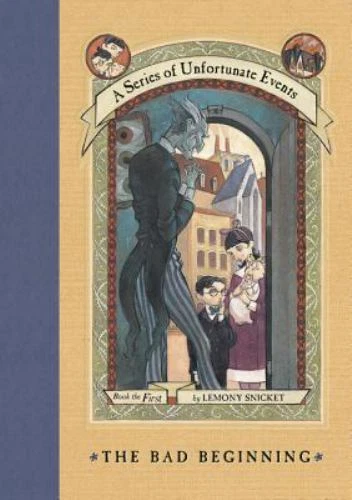
The Bad Beginning by Lemony Snicket is the first book in A Series of Unfortunate Events, following the three Baudelaire orphans — Violet, Klaus, and Sunny — as they are sent to live with a distant relative named Count Olaf after the sudden death of their parents, and discover that he is determined to steal their family fortune by any means necessary. First published in 1999, it is a darkly comic Gothic novel that operates simultaneously as children’s entertainment, literary satire, and an affectionate homage to Dickens, Dahl, and Edward Gorey. This complete guide covers The Bad Beginning‘s reading level, recommended age, content considerations, characters, themes, and books similar to The Bad Beginning, designed for parents, teachers, and students.
For Parents
Genuinely funny and genuinely dark in equal measure — Snicket’s mock-Gothic voice is immediately distinctive, and the children’s intelligence and loyalty to each other are the book’s emotional anchor. Best for readers ages 8–12. The darkness is theatrical rather than disturbing, and the narrator’s constant warnings to put the book down are part of the joke.
For Teachers
An excellent grades 4–6 independent read that rewards discussion of narrative voice, unreliable narrators, and Gothic conventions. Snicket’s running vocabulary instruction — “a word which here means…” — is both a literary device and a genuine vocabulary teaching tool. Pairs well with Roald Dahl for a unit on darkly comic children’s fiction.
A Series of Unfortunate Events: The Bad Beginning at a Glance
Find on Amazon →| Author | Lemony Snicket (Daniel Handler) |
| Illustrator | Brett Helquist |
| Published | 1999 (HarperCollins) |
| Grade Level | 4–7 (our assessment) |
| Recommended Age | 8–12 |
| Flesch-Kincaid Grade | ~6.4 |
| Word Count | 24,130 |
| Pages | 176 (HarperCollins paperback) |
| Chapters | 13 |
| Genre | Gothic fiction / dark comedy / children’s fiction |
| Setting | A fictional city; early-to-mid 20th century ambiguity |
| Series | A Series of Unfortunate Events, Book 1 (of 13) |
For official Lexile and AR levels, visit Lexile.com or AR BookFinder. ReadingVine provides independent editorial assessments.
What Reading Level Is The Bad Beginning?
The Bad Beginning reads at approximately a 4th–7th grade level by our editorial assessment, with a Flesch-Kincaid grade level of around 6.4 and a Lexile of 1010L. The score is higher than the reading experience suggests because Snicket’s vocabulary is deliberately elevated — he regularly introduces words most children will not know and then defines them in context, often with a humorous or thematically loaded definition. This is a literary device as well as a vocabulary teaching tool, and it is one of the series’ most distinctive features: children who read these books reliably expand their vocabularies in the process.
At 24,130 words and 176 pages, The Bad Beginning is one of the shorter books in the catalog — it reads faster than most novels at this grade level because the text is generously formatted and the pacing is brisk. Many readers in the target age range finish it in two to four sittings. The FK score and Lexile both suggest grades 5–7, but strong readers as young as 8 handle it comfortably, and the humor and emotional content are calibrated for the 8–12 range rather than older readers. For official Lexile and AR scores, visit Lexile.com or AR BookFinder. ReadingVine’s assessments are independent editorial judgments.
What Age Is The Bad Beginning Appropriate For?
We recommend The Bad Beginning for readers ages 8–12. The book is darker in tone and subject matter than most children’s fiction of its era — orphaned children, a villainous adult who menaces them physically and emotionally, a plot involving forced marriage — but the darkness is theatrical, the narrator’s mock-Gothic voice signals to the reader that this is a particular kind of stylized horror rather than genuine threat, and Snicket’s constant ironic commentary ensures that the reader is always in on the joke.
The novel’s central threat involves Count Olaf’s scheme to marry fourteen-year-old Violet in order to legally gain access to the Baudelaire fortune. This plot point — a child forced into marriage with a threatening adult — is treated with clear moral condemnation by the narrative, but parents of younger or more sensitive readers should be aware it is the book’s driving conflict. Count Olaf also physically threatens and strikes Klaus in one scene, and the Baudelaires are subjected to neglect, cold, hunger, and psychological cruelty throughout the book. All of this is rendered in the mock-Gothic style that signals to the reader that this is the tradition of Roald Dahl and Edward Gorey rather than realistic peril — the darkness is part of the book’s comic and literary fabric. No reader is genuinely endangered, and the children’s intelligence, loyalty, and competence are the story’s genuine reassurance. The book is appropriate for its recommended age range; parents of sensitive readers under 8 should be aware of the content.
For readers 8 and up, the theatrical darkness is one of the book’s greatest pleasures. Snicket’s voice — which constantly warns the reader not to read the book while simultaneously supplying every reason to continue — is the series’ most distinctive achievement, and children who catch the joke are usually devoted from the first chapter.
What Is The Bad Beginning About?
Violet, Klaus, and Sunny Baudelaire are at the beach when a family friend named Mr. Poe delivers the news: their parents have died in a fire that destroyed their home. The children are taken in by Mr. Poe, a banker who manages their affairs, while he locates a suitable guardian. The guardian he finds is Count Olaf — a distant relative, a terrible actor, and a man whose eyes shine with a “greedy glow” that makes children instinctively uneasy. His crumbling house is cheerless, his theatrical troupe is sinister, and his interest in the children is exclusively financial: the Baudelaire fortune is held in trust until Violet turns eighteen, and Count Olaf intends to get it sooner.
The children — Violet, who invents things; Klaus, who reads everything; and Sunny, an infant who bites things and communicates in a private language her siblings understand — are resourceful and loyal and absolutely outmatched by an adult world that consistently refuses to listen to them. Mr. Poe does not believe their concerns. Justice Strauss, a kind neighbor, cannot help within the rules she operates by. The adults around them are either complicit, oblivious, or helpless, and the children must figure out on their own how to survive.
Count Olaf’s scheme involves a theatrical performance of a play about marriage, in which he plans to use Violet as the bride in a ceremony that will be legally binding — and therefore legally give him access to the fortune. The plan, and the children’s effort to expose and foil it, drives the novel’s final act. Snicket presents the whole thing through his narrator’s mock-funereal voice, assuring the reader throughout that things will not improve, that adults will continue to fail the children, and that they might want to read a different book entirely — a rhetorical strategy that has the opposite of its stated effect on virtually every reader who encounters it.
The Bad Beginning Characters
Is The Bad Beginning Banned?
The Bad Beginning and the Series of Unfortunate Events have been challenged in some schools and libraries, primarily for the dark themes, the portrayal of adults as persistently unhelpful, and the general atmosphere of unrelenting misery that the series celebrates. These challenges have not resulted in widespread removal. The series is widely shelved and commonly assigned, and the concerns raised have generally been addressed by the books’ evident humor and their consistent endorsement of children’s intelligence and agency.
The Bad Beginning Themes and Lessons
Snicket’s most persistent argument across the series is that adults consistently fail children not through malice but through the more common failure of simply not listening. Mr. Poe is the series’ most sustained portrait of this: he is not evil, he does not want the children to suffer, and he is genuinely incapable of taking their concerns seriously because he has decided, before they speak, that children do not understand the world well enough to have valid assessments of their situation. The novel makes this argument with consistent comic precision and considerable genuine anger.
The three children’s complementary skills — Violet invents, Klaus researches, Sunny bites — is Snicket’s argument about what intelligence looks like when it is allowed to develop in different directions rather than being measured against a single standard. None of the children is simply “the smart one”; each has a specific kind of intelligence that the situation regularly requires, and the series consistently values all three equally.
The narrative voice is the book’s most teachable element. Snicket’s running vocabulary definitions (“a phrase which here means…”) are both genuinely useful for readers building their vocabulary and a formal device that foregrounds the narrator’s presence and authority. His warnings to the reader not to continue, his personal asides about his grief and his research, and his consistent positioning of himself as a researcher rather than an inventor of the story — all of these are more sophisticated literary techniques than most children’s fiction employs, and they reward discussion with readers who are ready to notice them.
Discussion questions for classrooms and families: Why do the adults in this book — Mr. Poe, Justice Strauss — not believe the children when they explain what Count Olaf is doing? What does each Baudelaire sibling contribute to their survival — do their different skills matter equally? What does Snicket’s narrator voice add to the story — why is it funnier to have a narrator who keeps warning you not to read the book? What is the difference between Snicket’s Gothic darkness and genuinely frightening darkness?
How Many Pages and Chapters in The Bad Beginning?
The HarperCollins paperback is 176 pages across 13 chapters. Word count is 24,130 words — a very short novel, faster than its page count suggests because of the generous formatting and Brett Helquist’s illustrations throughout. Most readers in the target age range finish it in one to three sittings. The series runs to thirteen books, each slightly longer than the last as the Baudelaires’ situation grows more complicated; the later books in the series are considerably more emotionally complex. Most readers who enjoy The Bad Beginning move directly to The Reptile Room.
Books Similar to The Bad Beginning
About Lemony Snicket (Daniel Handler)
Lemony Snicket is the pen name of Daniel Handler, who was born in 1970 in San Francisco, California. Handler studied writing at Wesleyan University and worked as a writer, journalist, and accordion player before creating the Snicket persona and the Series of Unfortunate Events. He has said that he invented Lemony Snicket as a way to do research for a novel he was writing — Snicket was the name he gave journalists when he needed a fake source — and that the character eventually grew larger than the original project.
The thirteen books of A Series of Unfortunate Events were published between 1999 and 2006. The series has sold more than 60 million copies worldwide. A feature film starring Jim Carrey as Count Olaf was released in 2004; a Netflix television series starring Neil Patrick Harris ran from 2017 to 2019 and is widely considered the more faithful and successful adaptation. Handler has written additional books under both his own name and Snicket’s, including the prequel series All the Wrong Questions and a standalone novel, Adverbs. He lives in San Francisco.
The Bad Beginning: Frequently Asked Questions
What reading level is The Bad Beginning?
The Bad Beginning has a Flesch-Kincaid grade level of approximately 6.4 and a Lexile of 1010L. Our editorial assessment places it at grades 4–7 (ages 8–12). The scores reflect Snicket’s elevated vocabulary, but strong readers as young as 8 handle it comfortably and find the humor landing immediately. For official Lexile and AR scores, visit Lexile.com or AR BookFinder.
What grade is The Bad Beginning appropriate for?
We recommend grades 4–7, ages 8–12. The dark themes — orphaned children, a threatening villain, a forced marriage plot — are handled in the theatrical Gothic tradition rather than realistically, and the narrator’s mock-funereal voice signals this clearly. Parents of sensitive readers under 8 should review the content note above.
How many pages are in The Bad Beginning?
The HarperCollins paperback is 176 pages across 13 chapters. Word count is 24,130 words. Most readers in the target age range finish it in one to three sittings.
What is The Bad Beginning about?
The three Baudelaire children — Violet, Klaus, and Sunny — are orphaned when their parents die in a fire and are sent to live with a distant relative named Count Olaf, who immediately begins plotting to steal their family fortune. The children must use their respective skills — inventing, reading, biting — to survive and expose his scheme, while the adults around them consistently fail to listen.
Is The Bad Beginning part of a series?
Yes — the first of thirteen books in A Series of Unfortunate Events, published between 1999 and 2006. The series follows the Baudelaire children through increasingly elaborate disasters as Count Olaf pursues them across the books. Each book is somewhat self-contained but the overarching mystery of the Baudelaire parents’ death and the secret organization VFD deepens across the series.
Who is Lemony Snicket?
Lemony Snicket is the fictional narrator and pen name of the real author Daniel Handler. Snicket presents himself as a researcher and documentarian of the Baudelaire orphans’ story rather than its inventor — a literary device that places him inside the fiction while giving Handler the freedom to comment on events, insert his own history and grief, and address the reader directly in a voice that is simultaneously inside and outside the narrative.
Is there a Bad Beginning movie or show?
Yes — both. A feature film, Lemony Snicket’s A Series of Unfortunate Events, was released in 2004 starring Jim Carrey as Count Olaf, covering roughly the first three books. A Netflix television series starring Neil Patrick Harris as Count Olaf ran from 2017 to 2019, adapting all thirteen books across three seasons. The Netflix series is generally considered the more faithful and successful adaptation.
What does Lemony Snicket mean by “a word which here means”?
Snicket’s running vocabulary instruction is a recurring device throughout the series: when he uses a word the reader might not know, he follows it with “a word which here means…” and provides a definition. The definitions are sometimes accurate, sometimes humorously loaded, and sometimes thematically specific to the scene at hand (“adversity” is defined as “Count Olaf” at one point). The device teaches vocabulary while also foregrounding the narrator’s presence and voice — it is both useful and funny.