
 = Partner Site
The Catcher in the Rye Reading Level: A Complete Guide
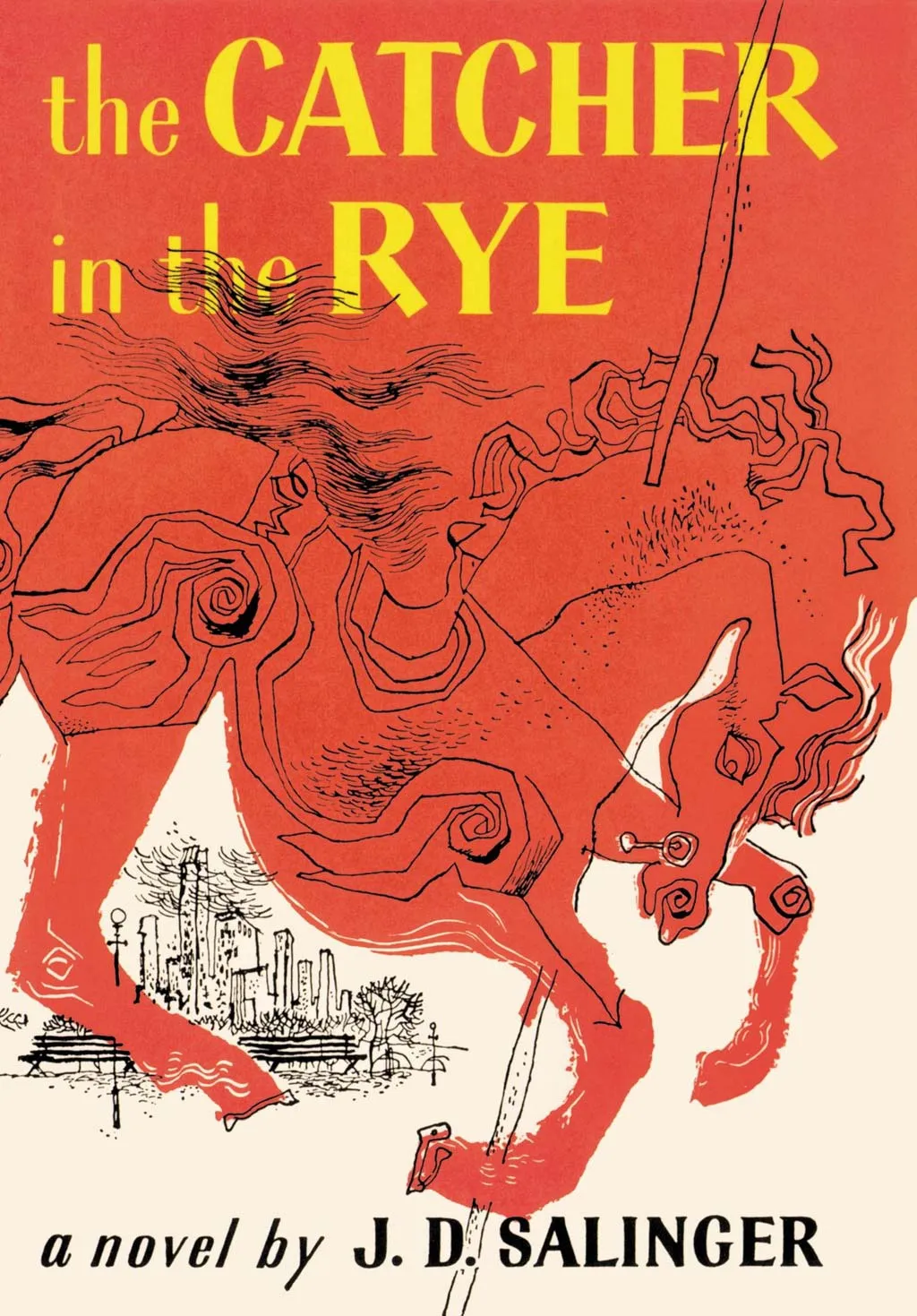
The Catcher in the Rye is a 1951 novel by J.D. Salinger, narrated entirely in the voice of sixteen-year-old Holden Caulfield over the course of three days following his expulsion from a Pennsylvania prep school. It is one of the most widely read, most frequently assigned, and most frequently challenged novels in American literary history—a landmark of coming-of-age fiction whose portrait of adolescent alienation, grief, and the terror of growing up has resonated with generations of readers. This guide covers the book’s reading level, age appropriateness, themes, characters, and teaching resources for high school students, parents, and educators.
For Parents
The Catcher in the Rye contains frequent profanity, underage drinking and smoking, a brief encounter with a prostitute (non-sexual in execution), and sexual references throughout. Holden also describes what is widely interpreted as a past experience of childhood sexual abuse, though it is handled obliquely. The novel’s emotional core is the portrait of a grieving, depressed, and possibly mentally ill teenager—rendered with remarkable honesty. It is most commonly assigned in grades 9–11, and is appropriate for most readers ages 14 and older.
For Teachers
Few novels offer a more immediate opportunity for voice-driven close reading than The Catcher in the Rye. Holden’s first-person narration is one of the most precisely constructed in American fiction, and examining how Salinger builds character, unreliability, and emotional depth through diction and repetition alone is a powerful introduction to literary analysis. The novel pairs productively with texts on adolescent psychology, grief and trauma, post-war American culture, and the history of censorship. It also connects naturally to The Adventures of Huckleberry Finn—another first-person narration by an alienated boy fleeing a world he can’t accept—and to contemporary YA fiction that owes a direct debt to Holden’s voice.
The Catcher in the Rye at a Glance
Find on Amazon →| Author | J.D. Salinger |
| Published | 1951 |
| Grade Level | 9–11 (our assessment) |
| Recommended Age | 14–17 |
| Flesch-Kincaid Grade | 4.7 |
| Word Count | ~73,000 |
| Pages | ~277 (standard paperback) |
| Chapters | 26 |
| Genre | Coming-of-age fiction / literary novel |
| Setting | Pencey Prep, Pennsylvania; New York City, 1949 |
For official Lexile and AR levels, visit Lexile.com or AR BookFinder. ReadingVine provides independent editorial assessments.
What Reading Level Is The Catcher in the Rye?
ReadingVine places The Catcher in the Rye at a grade 9–11 reading level. Its Flesch-Kincaid score of approximately 4.7 is deceptively low—the same phenomenon that applies to Of Mice and Men and Animal Farm, where the reading challenge lies not in vocabulary or sentence complexity but in what the text is doing beneath the surface. Holden’s voice is conversational, repetitive, and deliberately vernacular. A middle school reader can follow every word without difficulty.
The real challenge is interpretive. Holden is one of American literature’s most carefully constructed unreliable narrators—he says one thing and means another, dismisses things that clearly matter to him, and narrates from a position of emotional breakdown that he never fully acknowledges to the reader. Understanding what the novel is actually about—grief, trauma, depression, the terror of losing childhood’s protective innocence—requires the kind of reading between the lines that develops in high school. The novel is most commonly and most productively taught in grades 9–11, and many readers find it more powerful on a second reading with more life experience behind them.
For official Lexile and AR scores, visit Lexile.com or AR BookFinder.
What Age Is The Catcher in the Rye Appropriate For?
ReadingVine recommends The Catcher in the Rye for readers ages 14–17. The mature content is real—profanity is frequent and includes the full range of mid-century American slang, Holden drinks throughout the novel, he hires a prostitute (though the scene is non-sexual and ends with him paying her and sending her away), and there are several sexual references. But the context for all of this is a portrait of a deeply troubled teenager acting out in the aftermath of unprocessed grief and trauma, and most high school readers are sophisticated enough to engage with it in that spirit.
The Catcher in the Rye contains pervasive profanity throughout, used as a deliberate element of Holden’s voice and social critique. Holden smokes and drinks throughout the novel, despite being underage. In one chapter, he hires a prostitute through a hotel elevator operator, but the scene is entirely non-sexual—Holden sends her away and pays her, and she later returns with her pimp to extort him. The novel contains several sexual references and brief descriptions of sexual experiences. A former teacher, Mr. Antolini, strokes Holden’s hair while he sleeps, and Holden flees in what is widely read as a response to a past experience of sexual abuse rather than to this specific incident. There is no graphic violence. The novel is one of the most honest depictions of adolescent depression and emotional breakdown in American literature, which is both its greatest asset and the source of some parental concern about its content.
What Is The Catcher in the Rye About?
Holden Caulfield, sixteen years old, has just been expelled from Pencey Preparatory Academy in Pennsylvania—his fourth expulsion from a prep school. Rather than wait until the official end of term to go home for Christmas break, he leaves early and goes to New York City, where he wanders for three days: checking into a hotel, hiring a prostitute he doesn’t know what to do with, calling old acquaintances he can barely stand, visiting jazz bars and skating rinks, and gradually coming apart at the seams. He tells the story from some unspecified institution—presumably a psychiatric facility—where he has ended up after the events of those three days.
What drives Holden’s three-day breakdown, and what he can barely bring himself to mention directly, is the death of his younger brother Allie from leukemia three years earlier. Allie was, by Holden’s account, one of the most genuinely good people he ever knew—kind, intelligent, possessed of the innocent authenticity that Holden finds entirely absent in the adult world, which he diagnoses as comprehensively “phony.” Holden’s mission, such as it is, becomes preserving innocence wherever he finds it—particularly in his ten-year-old sister Phoebe, who is the one person in the novel he can be fully honest with and fully love. The novel’s title comes from a misremembering of a Robert Burns poem: Holden imagines himself as the catcher in the rye, standing at the edge of a cliff to catch children who might fall over as they run and play in a field—a protector of childhood innocence against the fall into adult corruption.
Salinger began developing the character of Holden Caulfield in short stories published in the early 1940s, before serving in World War II. He reportedly carried drafts of the novel with him during the Normandy invasion and other campaigns, and was hospitalized for what was then called combat stress reaction after the war. The Catcher in the Rye was published in July 1951, became an immediate bestseller, and has sold approximately one million copies every year since. It has never been out of print.
The Catcher in the Rye Characters
Is The Catcher in the Rye Banned?
The Catcher in the Rye has one of the most extensive and well-documented censorship histories in American literary history. It was the most censored book in American high schools and public libraries from 1961 to 1982, and by 1963 the American Book Publishers Council reported it had become the most censored book in American public schools. It was the 10th most frequently challenged book from 1990 to 1999 according to the ALA, and reappeared on the most challenged lists in 2005 and 2009. Challenges have occurred continuously since 1954 and have included bans, teacher firings, and school board controversies across the country.
The reasons for challenges have been remarkably consistent: profanity, sexual references, underage drinking and smoking, undermining of family values and moral codes, encouragement of rebellion, and blasphemy. Some challenges have gone further—a 1978 ban in Issaquah, Washington alleged the book was part of an “overall communist plot.” A teacher in Tulsa, Oklahoma was fired for assigning it in 1960, though she was later reinstated. The novel has also attracted an unusual and disturbing association: Mark David Chapman was found with a copy after murdering John Lennon in 1980, and John Hinckley Jr. had read it before his assassination attempt on Ronald Reagan. Salinger himself never commented publicly on these associations, or on any of the challenges to his work. The novel remains widely assigned despite its history, and is available in virtually all American school and public libraries.
The Catcher in the Rye Themes and Lessons
The novel’s most powerful theme is grief—specifically, the grief of a boy who cannot bear to process the death of his younger brother and has constructed an entire worldview around the impossibility of that loss. Holden’s contempt for phoniness is not, at its root, a teenage pose: it is an expression of genuine anguish at the fact that the adult world, with all its compromises and performances, will require him to be someone other than the person Allie would have recognized. Growing up means leaving Allie behind a second time, and Holden cannot do it. The catcher in the rye fantasy—protecting children from falling off the cliff into adulthood—is a transparent wish to protect himself and everyone he loves from the loss he has already suffered.
The novel is also a remarkably precise depiction of depression and its cognitive patterns: the inability to find pleasure in things that should be pleasurable, the exhausting ambivalence, the way Holden reaches toward connection and then sabotages it at the last moment, the dissociation he experiences in the museum scene. Reading The Catcher in the Rye as a portrait of mental illness rather than simple teenage rebellion unlocks most of the novel’s apparent contradictions and makes Holden a far more sympathetic and illuminating figure. Discussion questions: What does Holden actually want, underneath all the things he says he hates? What does Phoebe do that no other character in the novel manages to do? Why do you think Holden keeps asking where the ducks in Central Park go in the winter?
How Many Pages and Chapters Are in The Catcher in the Rye?
The Catcher in the Rye is divided into 26 chapters and runs approximately 277 pages in the standard Little, Brown paperback—the edition most commonly used in American schools. Its word count of approximately 73,000 makes it one of the longer novels in the standard high school canon, longer than The Great Gatsby, Of Mice and Men, and Animal Farm, though shorter than 1984 or Brave New World. An average high school reader will complete it in 5–7 hours. Most teachers assign it over two to three weeks. Because the chapters are short—often just a few pages—it lends itself well to daily reading assignments of two or three chapters at a time, with discussion following each cluster.
Books Similar to The Catcher in the Rye
About J.D. Salinger
Jerome David Salinger (1919–2010) was born in New York City to a Jewish father and Irish-Scottish mother and grew up on the Upper West Side of Manhattan. He attended various schools including Valley Forge Military Academy in Pennsylvania—a likely model for Pencey Prep—before taking a writing course at Columbia University under Whit Burnett, editor of Story magazine, who became a significant early mentor. Salinger published short stories through the early 1940s, developing the character of Holden Caulfield in several of them, before being drafted into the U.S. Army. He participated in the Normandy invasion on D-Day and other major campaigns, reportedly carrying drafts of The Catcher in the Rye with him throughout, and was hospitalized for combat stress reaction after the war. The Catcher in the Rye was published in 1951 and was the only full novel he ever published. He followed it with Nine Stories (1953), Franny and Zooey (1961), and two novellas published together in 1963, then withdrew almost entirely from public life, moving to rural New Hampshire and refusing interviews, appearances, and adaptations of his work for the rest of his life. His last published work appeared in The New Yorker in 1965. He died in 2010 at age ninety-one. His estate is reportedly preparing to publish previously unseen manuscripts.
The Catcher in the Rye: Frequently Asked Questions
What is the reading level of The Catcher in the Rye?
ReadingVine places The Catcher in the Rye at a grade 9–11 reading level, with a Flesch-Kincaid score of approximately 4.7. The low score reflects Holden’s deliberately conversational, vernacular narration—the challenge is entirely interpretive rather than linguistic, requiring readers to understand unreliable narration, read subtext, and recognize what Holden cannot or will not say directly. It is most appropriately taught in grades 9–11 for students ages 14 and older.
Did The Catcher in the Rye win any awards?
The Catcher in the Rye won no formal literary prize. It was named on both the editors’ and readers’ versions of the Modern Library’s 100 Best Novels of the twentieth century, and was included in Time magazine’s 100 Best English-Language Novels published from 1923 to 2005. It has sold approximately one million copies every year since publication—a record of sustained readership that few novels in any category can match—and has never been out of print.
What does “catcher in the rye” mean?
The title comes from Holden’s fantasy of his ideal purpose in life. He misremembers a line from Robert Burns’s poem “Comin’ Thro’ the Rye”—imagining a field of rye full of children playing, with a cliff at the edge, and himself as the catcher who stands at the edge to catch any child who might fall over. In Holden’s vision, the cliff represents the fall from childhood innocence into the corrupt adult world, and the catcher’s job is to prevent that fall. The image is a transparent expression of his desire to protect his dead brother Allie—and himself—from the losses that growing up inevitably brings. His sister Phoebe points out gently that he has misremembered the poem.
What does “phony” mean to Holden Caulfield?
“Phony” is Holden’s most frequent and most loaded term of criticism, applied to everything from his classmates to movie actors to the adult world in general. For Holden, phoniness means performance over authenticity—the adoption of social roles, pretenses, and behaviors designed to impress or fit in rather than to express genuine feeling. His contempt for phoniness is real, but it is also a defense mechanism: by diagnosing everyone around him as phony, he avoids the risk of genuine connection and the vulnerability it requires. It is worth noting that Holden himself is frequently dishonest and performs various roles throughout the novel—something he is occasionally self-aware enough to acknowledge.
Is Holden Caulfield mentally ill?
Holden is never formally diagnosed within the novel, but the text strongly implies he is narrating from a psychiatric institution after a breakdown, and many of his behaviors and thought patterns align with clinical depression, grief disorder, and possibly post-traumatic symptoms related to childhood sexual trauma and the loss of his brother Allie. Salinger was himself hospitalized for combat stress reaction after World War II, and it is widely believed that Holden’s psychological portrait draws on personal experience. Reading the novel through the lens of mental illness rather than simple adolescent rebellion is one of the most productive approaches for classroom discussion.
Why has The Catcher in the Rye been so frequently banned?
The Catcher in the Rye was the most censored book in American schools and libraries from 1961 to 1982, and has been challenged repeatedly ever since. The primary objections are its pervasive profanity, sexual references, and depictions of underage drinking and smoking. Additional grounds for challenges have included blasphemy, undermining of family values, encouragement of rebellion, and—in one memorable case—allegations of communist conspiracy. A teacher in Tulsa was fired for assigning it in 1960. The novel’s association with several high-profile crimes, including John Lennon’s murder, has added a further layer of controversy, though these associations say more about the people who committed those crimes than about the book itself.
How does The Catcher in the Rye end?
After a painful confrontation with Phoebe—who insists on running away with him when she learns he plans to go out West—Holden takes her to Central Park to ride the carousel. Watching her reach for the gold ring on the carousel horse, he is flooded with happiness for the first time in the novel. He doesn’t try to catch her or protect her. He lets her reach. In the final chapter, Holden is in the institution where he has been recovering, and he admits that he misses the people he has described—even the ones he complained about bitterly. He expresses ambivalence about going back to school in the fall. The ending is deliberately open: Holden has not solved anything, but something small has shifted. The carousel scene is one of the most discussed endings in American fiction.
How many pages and words is The Catcher in the Rye?
The Catcher in the Rye is approximately 277 pages in the standard Little, Brown paperback edition, divided into 26 chapters. Its word count of approximately 73,000 words makes it longer than most readers expect given the novel’s relatively short reputation. An average high school reader will complete it in 5–7 hours of reading time, and most teachers assign it over two to three weeks.