
 = Partner Site
The Joy Luck Club Reading Level: A Complete Guide
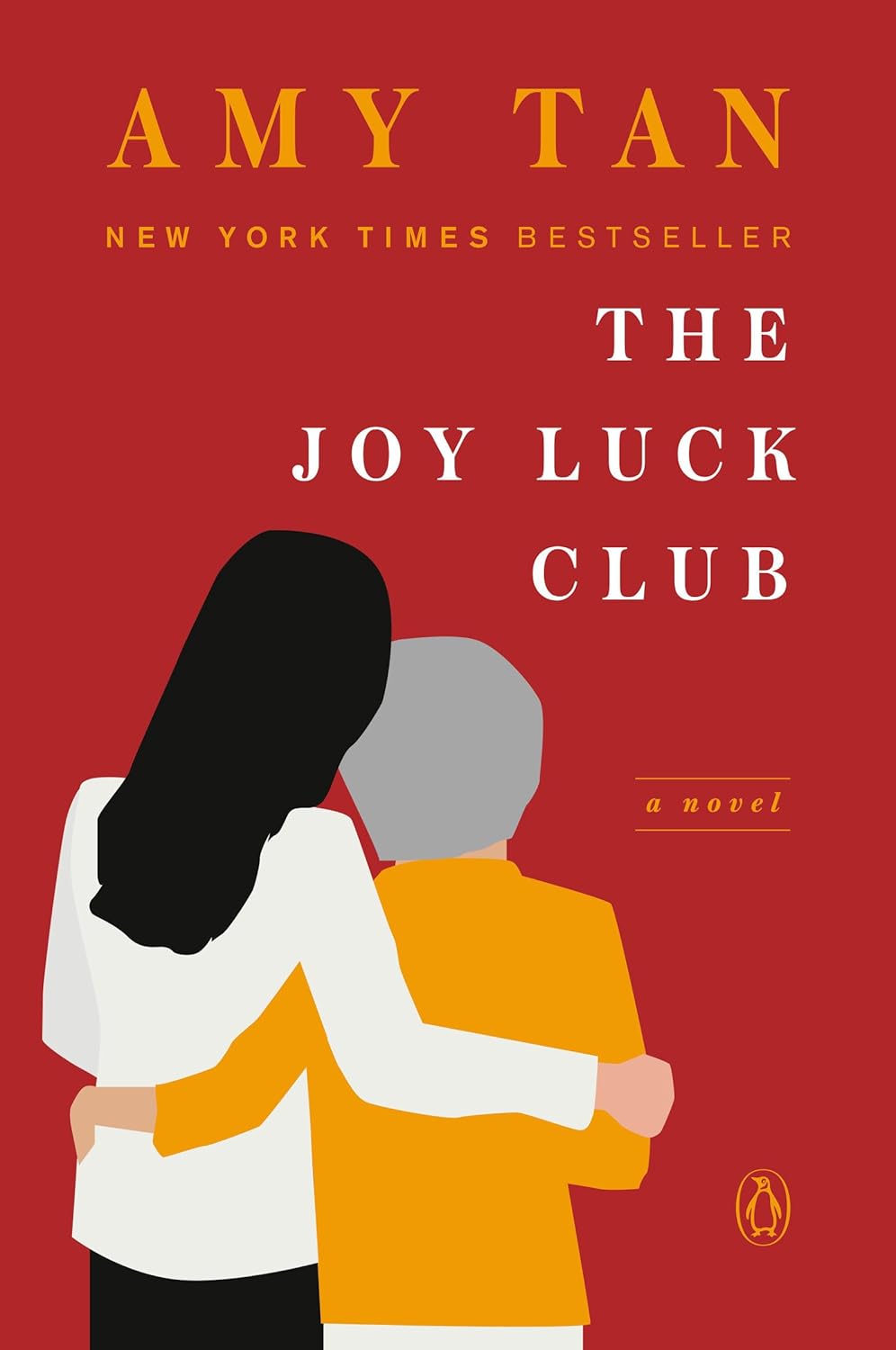
The Joy Luck Club by Amy Tan is a novel told in sixteen interconnected stories about four Chinese immigrant mothers and their American-born daughters, moving back and forth between China in the early twentieth century and San Francisco in the 1980s. The mothers — Suyuan Woo, An-mei Hsu, Lindo Jong, and Ying-ying St. Clair — left China under conditions ranging from devastating to horrifying. Their daughters — June, Rose, Waverly, and Lena — grew up in America knowing almost nothing about those conditions, and have spent their adult lives failing to understand why their mothers are the way they are. Published in 1989, it was a finalist for the National Book Award and the National Book Critics Circle Award, became a bestseller in twelve languages, and was adapted into a celebrated film in 1993. This complete guide covers The Joy Luck Club‘s reading level, recommended age, content considerations, characters, themes, and books similar to The Joy Luck Club, designed for parents, teachers, and students.
For Parents
A rich, emotionally immediate novel structured as sixteen interlocking stories alternating between mothers’ and daughters’ voices. Contains sexual content, rape, domestic violence, arranged marriage, the death of children, and detailed depictions of wartime China. Appropriate for ages 14 and up; widely assigned in grades 9–11.
For Teachers
An excellent grades 9–11 text for teaching narrative structure and point of view — the sixteen-story format, with mothers and daughters telling parallel and sometimes contradictory accounts, is ideal for discussing how the same events look different from different perspectives. The mothers’ China stories require and reward historical context on the Sino-Japanese War, Chinese marriage customs, and the 1949 Communist revolution. A National Endowment for the Arts Big Read selection with substantial curriculum support.
The Joy Luck Club at a Glance
Find on Amazon →| Author | Amy Tan |
| Published | 1989 (Putnam) |
| Grade Level | 9–11 (our assessment) |
| Recommended Age | 14+ |
| Lexile | 930L |
| Word Count | ~72,000 |
| Pages | 352 (Penguin paperback) |
| Structure | 16 stories in 4 sections |
| Genre | Literary fiction / story cycle |
| Setting | San Francisco, 1980s; China, early–mid 20th century |
| Awards | National Book Award finalist (1989); National Book Critics Circle Award finalist (1989) |
For official Lexile and AR levels, visit Lexile.com or AR BookFinder. ReadingVine provides independent editorial assessments.
What Reading Level Is The Joy Luck Club?
The Joy Luck Club has a Lexile of 930L. This score reflects the novel’s prose accurately: Tan writes with clarity and emotional directness, and the sentence complexity is consistent with grades 9–11 placement without the inflated scores that verse or translation can produce. The primary reading challenge is not linguistic but structural and contextual. The novel’s sixteen stories, told by eight different narrators alternating between two time periods and two continents, require readers to track a relatively large cast of characters and to understand that different narrators are giving partial and sometimes contradictory accounts of the same events. Students who read it as a straightforward linear narrative miss much of what Tan is doing.
The historical context of the mothers’ stories — the Sino-Japanese War, the practice of concubinage in Chinese households, arranged marriage, the chaos of China before and after the 1949 Communist revolution — is not explained in detail within the text, and readers who lack this context find the mothers’ stories less fully accessible than the daughters’ contemporary American narratives. Some pre-reading preparation on modern Chinese history significantly improves the reading experience. At approximately 72,000 words and 352 pages, most classrooms complete the novel in three to four weeks. For official Lexile and AR scores, visit Lexile.com or AR BookFinder. ReadingVine’s assessments are independent editorial judgments.
What Age Is The Joy Luck Club Appropriate For?
We recommend The Joy Luck Club for readers ages 14 and up. The mothers’ stories include rape, arranged marriage to men the mothers did not choose and could not leave, domestic violence, the death of children and infants, suicide, and the abandonment of children under wartime duress. The daughters’ contemporary stories include unhappy marriages, infidelity, and the specific emotional difficulties of women who do not understand why they behave the way they do. The content is handled with care and serves the novel’s larger argument about what is inherited across generations, but parents and teachers should be fully prepared for the mothers’ stories before assigning.
An-mei’s mother was raped by her second husband Wu Tsing and forced into his household as a lowly concubine; An-mei watches her mother sacrifice herself — deliberately consuming opium — to give her daughter a better position in the household after her death. Ying-ying St. Clair kills her infant son in a moment of desperate rage against her first husband’s abandonment, an event that haunts the novel’s present. Suyuan Woo is forced to abandon her twin baby daughters on a roadside in wartime China, believing she is dying; the novel’s frame is her daughter June coming to terms with this history. Lindo Jong is betrothed at age four to a boy she barely knows and forced to live in his family’s household as a child-bride-in-waiting. These events are not gratuitous — they are the specific history the daughters do not know and cannot understand without, and the novel’s entire argument depends on their weight. Teachers assigning the novel should introduce this material before students encounter it rather than leaving them to absorb it without preparation.
What Is The Joy Luck Club About?
In 1949, four Chinese women recently arrived in San Francisco begin meeting weekly to play mahjong, invest modestly in stocks, and tell each other stories. They call themselves the Joy Luck Club, a name borrowed from an earlier club Suyuan Woo organized in wartime Chungking to survive on hope when survival on anything else seemed impossible. In 1989, Suyuan has just died unexpectedly. Her daughter June is asked to take her mother’s place at the mahjong table — and to travel to China to meet the twin half-sisters her mother was forced to leave behind during the war. The novel moves between June’s present and the stories of all four mothers and all four daughters, building a layered portrait of what each generation inherited from the one before it, understood and misunderstood.
The mothers’ stories come from a China in which women had almost no power: marriages were arranged without their consent, husbands could take concubines, and the only available forms of resistance were tactical — feigning illness, manipulating superstition, engineering escape through whatever opening appeared. Each mother survived something that required her to become a specific kind of person: guarded, indirect, speaking through implication rather than declaration, expressing love through practical concern rather than verbal affirmation. These are the mothers their daughters grew up with in America, and they make no sense to daughters raised in a culture that values directness and emotional expression.
The daughters’ stories take place in San Francisco, in the 1980s, mostly in marriages that are failing or have failed. Rose Hsu Jordan is separating from her American husband; Waverly Jong is navigating a second marriage and her mother’s judgment; Lena St. Clair is in a marriage organized around financial equality that is actually organized around her husband’s needs; June Woo is struggling with the knowledge that she has disappointed her mother without fully understanding how. What each daughter gradually discovers — through the novel’s accumulation of her mother’s stories alongside her own — is that the behavior she found most alien and most painful in her mother was the residue of a history she never knew. The indirection was protection. The pressure was hope. The criticism was love in the only form it could take given what the mother had survived.
The Joy Luck Club Characters
Is The Joy Luck Club Banned?
The Joy Luck Club was challenged at Arrowhead High School in Merton, Wisconsin, in 2004 as an elective reading list assignment on the grounds that the book contains “sexually explicit and inappropriate material.” The outcome of that challenge was not definitively reported. The novel has also been challenged in other secondary school contexts for sexual content, primarily related to the mothers’ stories of rape, concubinage, and arranged marriage. It is a National Endowment for the Arts Big Read selection and is widely taught without controversy in American high schools and universities.
The novel has also been the subject of a substantive critical debate within Asian American communities about representation that is distinct from standard content challenges. Some Asian American critics and readers have argued that The Joy Luck Club reinforces damaging stereotypes — specifically, that it portrays Chinese and Asian men primarily as abusive or absent while portraying white American men as saviors, and that its portrait of Chinese culture emphasizes suffering and patriarchal cruelty in ways that feed Western assumptions. This critique, articulated by writers including Frank Chin and others, is taken seriously by scholars of Asian American literature and is worth addressing directly in any classroom where the novel is taught.
The representation debate deserves honest engagement rather than dismissal: the argument about what a single novel is asked to represent for an entire community — and what it costs when that novel becomes the primary literary exposure many non-Asian readers have to Asian American experience — is a genuine critical question. Tan has responded that she wrote about her mother and women she knew, not as a spokesperson for Chinese American culture, and that the expectation that a single book represent an entire community is itself a form of the marginalization it claims to resist. Both positions illuminate something real, and a classroom that discusses both is doing something more valuable than one that ignores the debate.
The Joy Luck Club Themes and Lessons
The novel’s structural argument — sixteen stories, eight narrators, alternating between two time periods — is itself its most important thematic statement: the same relationship looks entirely different depending on who is narrating it, and neither mother nor daughter has the full picture. The daughters see their mothers’ behavior without understanding its origins; the mothers see their daughters’ failures without being able to explain what they fear they will repeat. The novel’s resolution — which is not a resolution in the conventional sense, more a series of partial recognitions — comes when individual mothers and daughters begin to tell each other what they have not said, and find that the unsaid was the substance of the relationship all along.
The novel’s engagement with language itself — with what survives translation and what is lost — runs throughout. The mothers speak in a Chinese-inflected English that their daughters sometimes find embarrassing and sometimes find moving. Tan has described this linguistic register as her mother’s voice, and it is the voice in which the mothers’ stories are told: direct, image-based, parable-like. The daughters speak in standard American English and find their mothers’ indirection frustrating. What the novel gradually reveals is that the indirection is not a failure of communication but a mode of communication specific to a particular experience of survival — that saying things too directly, in the world the mothers came from, was dangerous, and the habit of protection through obliqueness was not a flaw but an inheritance from conditions that required it.
The mothers all came to America carrying versions of the same hope: that their daughters would have the freedom they did not, would be able to say what they wanted and take what they needed and make choices they were never given. What they did not expect was that daughters raised in that freedom would not understand the cost of it — would not understand that the freedom was purchased with specific sufferings by specific women who are now standing in front of them criticizing their hairdos. The novel’s most painful irony is that the closer the mothers come to giving their daughters what they wanted for them, the less the daughters can hear them.
Discussion questions for classrooms and families: How does the novel’s structure — eight narrators, two time periods — shape the reader’s understanding of the mother-daughter relationships it depicts? What does each mother’s China story explain about the behavior the daughter found most difficult to live with? What is the novel arguing about what is lost and what survives in the process of immigration? How should readers approach the representation debate — Tan’s portrait of Chinese culture and Chinese men — and what does the debate itself reveal about the position of minority literature in American culture? What does June’s journey to China at the novel’s end resolve, and what does it leave unresolved?
How Many Pages and Chapters in The Joy Luck Club?
The Penguin paperback is 352 pages structured as sixteen stories across four sections. Each section is introduced by a brief parable-like vignette, and then contains four stories — one from each of the four mothers or four daughters, depending on the section. The four sections alternate: the first and third sections are dominated by the mothers’ voices; the second and fourth by the daughters’. Word count is approximately 72,000. Most classrooms complete it in three to four weeks, often assigning one section per week.
The novel is commonly described as a story cycle rather than a novel in the traditional sense — a collection of related stories that build meaning cumulatively rather than through a single continuous plot. Individual stories can be read and discussed as units, and many teachers assign selected stories independently before assigning the full text. “Rules of the Game” (Waverly’s chess story), “Two Kinds” (June and the piano), and “A Pair of Tickets” (June’s journey to China) are the most frequently anthologized and assigned individually. Reading the full text reveals dimensions of each story that individual reading misses.
Books Similar to The Joy Luck Club
About Amy Tan
Amy Tan was born in 1952 in Oakland, California, the daughter of Chinese immigrants. Her father and elder brother died of brain tumors within months of each other when she was fifteen, after which her mother moved the family to Switzerland. It was in Europe that Tan first learned about her mother’s first marriage in China — to an abusive man — and about the three daughters her mother had been forced to leave behind when she fled Shanghai in 1949 ahead of the Communist takeover. Tan did not meet her Chinese half-sisters until 1987, at the age of thirty-four, a visit that directly inspired The Joy Luck Club‘s ending.
She worked as a technical writer and business writer before turning to fiction; her agent initially told her the book would not sell because no one wanted to read about Chinese Americans. The Joy Luck Club spent forty weeks on the New York Times bestseller list and was a finalist for the National Book Award and the National Book Critics Circle Award. The 1993 film adaptation, directed by Wayne Wang with a screenplay co-written by Tan and Ronald Bass, became one of the most successful literary film adaptations of that era. Tan has said in interviews that she wrote the novel for her mother — to give her mother a way of being heard in the language her mother never fully mastered — and that her mother’s voice is the voice of the mothers in the book.
Her subsequent novels include The Kitchen God’s Wife (1991), which draws even more directly on her mother’s life in China, The Hundred Secret Senses (1995), and The Bonesetter’s Daughter (2001). She has also written a memoir, The Opposite of Fate (2003). She lives in northern California.
The Joy Luck Club: Frequently Asked Questions
What reading level is The Joy Luck Club?
The Joy Luck Club has a Lexile of 930L. The prose is clear and emotionally direct; the primary challenge is structural — sixteen stories told by eight narrators across two time periods — and contextual, requiring some historical knowledge of early twentieth-century China. Our editorial assessment places it at grades 9–11, ages 14 and up. For official Lexile and AR scores, visit Lexile.com or AR BookFinder.
What grade is The Joy Luck Club appropriate for?
We recommend grades 9–11, ages 14 and up. The mothers’ stories include rape, arranged marriage, infanticide, suicide, and the abandonment of children under wartime duress. The content is handled with care and is central to the novel’s argument; teachers should introduce this material before students encounter it.
How many pages are in The Joy Luck Club?
The Penguin paperback is 352 pages across sixteen stories in four sections, approximately 72,000 words. Most classrooms complete it in three to four weeks, often one section per week. Individual stories — particularly “Two Kinds,” “Rules of the Game,” and “A Pair of Tickets” — are frequently assigned independently.
What is The Joy Luck Club about?
Four Chinese immigrant mothers and their American-born daughters in San Francisco in the 1980s, whose relationships are shaped by histories the daughters do not fully know. The mothers’ stories — told in alternating sections — reveal what each woman survived in China and how that survival formed her. The daughters’ stories reveal what it costs to be raised by women whose love speaks in a language shaped by conditions the daughters never experienced. The novel is about the gap between what is given across generations and what is received, and what it takes for each side to finally hear the other.
Is The Joy Luck Club a novel or a short story collection?
It is most accurately described as a story cycle or a novel-in-stories: sixteen interconnected stories that share characters, settings, and themes, and that build meaning cumulatively rather than through a single continuous plot. It was published and marketed as a novel. Individual stories work as standalone pieces, but the full text reveals dimensions of each story that individual reading misses — particularly the ways in which a mother’s story illuminates the behavior her daughter describes in an adjacent section.
Why are the mothers so critical of their daughters?
This is the novel’s central question, and it answers it gradually rather than all at once. The short answer is that the mothers’ expressions of love take forms that their daughters read as criticism: constant concern about practical matters, indirect expression of feeling, and high expectations that the daughters experience as pressure. The novel reveals why each mother is the way she is — what she survived, and how survival shaped her. What the daughters eventually understand is that what they experienced as suffocating criticism was the only form the mothers’ enormous hope for them could take, given what the mothers had been through.
Is The Joy Luck Club based on a true story?
Substantially autobiographical in its origins. Tan drew directly on her mother Daisy Tan’s life in China — including a first marriage to an abusive man, rape by a second husband, and daughters she was forced to leave behind when she fled Shanghai in 1949. Tan met her Chinese half-sisters in 1987, which directly inspired the novel’s ending. The characters are invented composites rather than portraits of specific people, but the historical and emotional material is drawn from her mother’s and her own experience.
Is there a Joy Luck Club movie?
Yes — a 1993 film directed by Wayne Wang, with a screenplay co-written by Amy Tan and Ronald Bass. It was filmed with an almost entirely Asian and Asian American cast, won the BAFTA Award for Best Adapted Screenplay, and received strong critical reviews. It is rated R for some sexual content and is appropriate for the same age range as the novel. Tan has said the film is the adaptation she is most proud of among her work’s adaptations.