
 = Partner Site
Things Fall Apart Reading Level: A Complete Guide
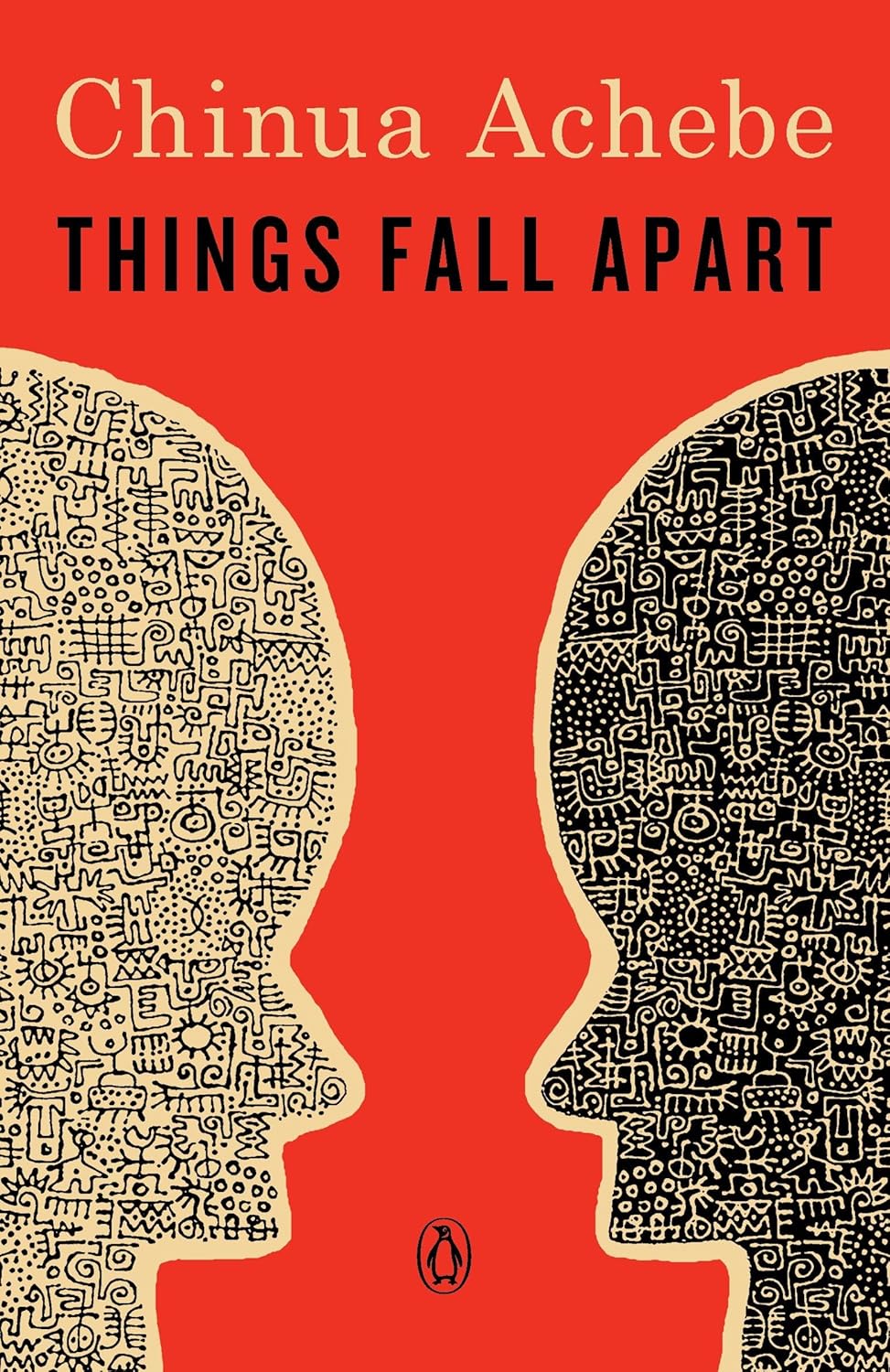
Things Fall Apart by Chinua Achebe is a novel about Okonkwo, a proud and accomplished Igbo warrior in the fictional Nigerian village of Umuofia, whose life and world are dismantled by the arrival of British colonialism in the late nineteenth century. First published in 1958, it is the most widely read African novel in the English language, with more than twenty million copies sold and translations into fifty-seven languages. Achebe wrote it explicitly as a response to the colonial literature that had represented Africa and Africans from the outside — most directly Joseph Conrad’s Heart of Darkness — to give Igbo culture and its people their interior life back. Toni Morrison called it a book without which African literature is incomplete and unthinkable. This complete guide covers Things Fall Apart‘s reading level, recommended age, content considerations, characters, themes, and books similar to Things Fall Apart, designed for parents, teachers, and students.
For Parents
A short, clear, and genuinely important novel about colonialism and cultural destruction, told from inside the culture being destroyed. Contains violence including the killing of a child, ritual sacrifice, and Okonkwo’s suicide. The darkness is purposeful and not gratuitous. Appropriate for ages 13 and up; widely assigned in grades 9–11.
For Teachers
A Common Core ELA Text Exemplar and a standard grades 9–12 text with exceptional curriculum support. The novel’s three-part structure — Igbo life before colonialism, disruption, destruction — is one of the cleanest structural arguments in the curriculum, and Achebe’s narrative voice, which moves between Igbo oral tradition and realist fiction, rewards close attention to how a writer’s formal choices embody their argument. Best paired with historical context on British colonialism in Nigeria and, for upper grades, with Achebe’s 1975 lecture on Conrad.
Things Fall Apart at a Glance
Find on Amazon →| Author | Chinua Achebe |
| Published | 1958 (William Heinemann) |
| Grade Level | 9–11 (our assessment) |
| Recommended Age | 13+ |
| ATOS Reading Level | 6.2 |
| Lexile | 890L |
| Word Count | ~52,000 |
| Pages | 224 (Anchor Books paperback) |
| Chapters | 25 (in 3 parts) |
| Genre | Literary fiction / postcolonial fiction |
| Setting | Umuofia and Mbanta, Nigeria; late 19th century |
For official Lexile and AR levels, visit Lexile.com or AR BookFinder. ReadingVine provides independent editorial assessments.
What Reading Level Is Things Fall Apart?
Things Fall Apart has an ATOS reading level of 6.2 and a Lexile of 890L — scores that are more accurate than the Hemingway and Steinbeck scores in this catalog but that still require context. The prose is genuinely clear and accessible: Achebe writes with the cleanness of someone who has thought very hard about how English can carry an African story without distorting it, and the sentences are direct without being plain in the way Hemingway’s sentences are plain. The vocabulary is not difficult. What requires work is cultural and historical context — the Igbo customs, the clan structure, the oracle system, the concept of chi — that the novel neither over-explains nor leaves entirely opaque, but that a reader approaching it without any prior knowledge of West Africa needs some preparation to navigate.
The novel is a Common Core ELA Text Exemplar, listed at grades 9–12. Booksource’s interest level is grades 9–12. Our editorial assessment places it at grades 9–11, appropriate for students who have some capacity for reading about an unfamiliar culture on its own terms rather than through a Western interpretive frame. At approximately 52,000 words and 224 pages across 25 chapters in three parts, most classrooms complete it in two to three weeks. The brevity is one of the novel’s most important qualities: Achebe tells the entire story of Okonkwo and the destruction of Umuofia in less space than many novels use for a single character’s backstory. For official Lexile and AR scores, visit Lexile.com or AR BookFinder. ReadingVine’s assessments are independent editorial judgments.
What Age Is Things Fall Apart Appropriate For?
We recommend Things Fall Apart for readers ages 13 and up. The novel contains violence — including the killing of Ikemefuna, a boy in Okonkwo’s care; the ritual beating of women during the Week of Peace; and Okonkwo’s beheading of a colonial court messenger — and ends with Okonkwo’s suicide. The violence is neither gratuitous nor softened: Achebe depicts it with the same even, clear prose he uses for everything else, which makes it land with particular weight. There is no sexual content. The content concerns are modest by comparison with other novels in this catalog; the age recommendation is based on the maturity required to engage seriously with colonialism’s human costs rather than on content alone.
The killing of Ikemefuna — a teenage boy who has lived in Okonkwo’s household for three years and has come to regard him as a father — is the novel’s most emotionally difficult passage. The clan’s oracle orders his death; Okonkwo, despite being warned not to participate, strikes the killing blow himself because he does not wish to appear weak. The scene is not graphic but is written with full emotional weight; most readers find it the hardest moment in the novel. Okonkwo’s suicide in the final chapter — he hangs himself rather than be tried in a colonial court — is reported indirectly but clearly. The novel also depicts domestic violence in Okonkwo’s household and ritual violence associated with Igbo custom, including the sacrifice of a she-goat. These are presented as elements of the society Achebe is depicting rather than as spectacle.
What Is Things Fall Apart About?
Okonkwo is the greatest wrestler in the nine villages of Umuofia and a man of wealth and standing in his clan. He has achieved everything from nothing — his father Unoka was a lazy, indebted man whom the village regarded with contempt, and Okonkwo has spent his entire life in deliberate opposition to everything his father was. He is strong, industrious, and feared; he is also rigid, quick to anger, and unwilling to show tenderness even in moments that require it. His chi — his personal god or fate — is, he believes, a good one, but he is haunted by the fear that any weakness might reveal him to be his father’s son after all.
The novel’s first part, the longest, is a portrait of Igbo life in Umuofia before the arrival of Europeans. Achebe does not romanticize it — the clan practices things that are genuinely difficult, including the killing of twins (considered an abomination) and the oracle’s decree on Ikemefuna — but he portrays it as a complete, coherent world with its own laws, its own beauty, and its own system of justice and meaning. When Okonkwo accidentally kills a clansman’s son at a funeral, he is exiled for seven years to his mother’s village of Mbanta. He leaves a man at the center of his world; he will return to find that world has changed beneath him.
During Okonkwo’s exile, British missionaries arrive in Umuofia. The second and third parts of the novel track the incremental dismantling of the clan’s authority and self-determination. The missionaries establish a church that absorbs the outcasts and then the sons of respected men; the British colonial government establishes a court that displaces the clan’s justice system; a trading post absorbs the economy. Each displacement is presented from the inside — not as the march of progress but as the specific loss of specific things that mattered to specific people. When Okonkwo returns after his exile, the Umuofia he returns to is not the one he left.
The novel’s final crisis arrives when colonial authorities imprison Okonkwo and other clan leaders, humiliate them, and release them on payment of a fine. At a subsequent meeting, Okonkwo kills a court messenger with his machete — and looks around to see that no one else has moved to join him. The clan has accommodated itself to the new order. Okonkwo understands, in that moment, that the fight he wanted to have is not going to happen. He hangs himself. The novel ends with the District Commissioner reflecting that Okonkwo’s story might make an interesting paragraph in the book he is writing: The Pacification of the Primitive Tribes of the Lower Niger. Achebe holds that final image for a moment — the colonizer’s reduction of a man’s whole life to a footnote — and then ends.
Things Fall Apart Characters
Is Things Fall Apart Banned?
Things Fall Apart has been banned in Malaysia and Nigeria — in Nigeria, paradoxically, for its negative portrayal of British colonialism and Christian missionaries, a position that reflects the political complexity of postcolonial nation-building. It was challenged in Texas schools in 2012 as part of a list of books alleged to contain content that teaches “Critical Race Theory.” It appeared on the ALA’s 2018 list of most challenged books. The challenges in American contexts have primarily focused on its critical portrayal of colonialism and its depiction of indigenous religious practices.
The irony of the novel’s challenge history is worth naming directly. Achebe wrote the book precisely because the existing literary representation of Africa — most famously in Conrad’s Heart of Darkness — had for decades depicted the continent and its people as background for European self-examination, reducing Africans to figures in someone else’s moral landscape. Things Fall Apart gives Igbo people interior lives, coherent values, and a perspective from which colonialism is not progress but destruction. The challenges to the novel for its “negative portrayal” of British colonialism are challenges to that correction: objections to a Nigerian author’s account of what colonialism did to Nigeria.
Things Fall Apart Themes and Lessons
Achebe’s most fundamental argument is structural: the novel’s first part shows Igbo life as a world — complex, coherent, with its own beauty and its own injustice — before the reader is asked to watch it being dismantled. This sequence is not accidental. By the time the British missionaries arrive in Part Two, the reader has been given enough of Umuofia to understand what is being lost. The colonial project does not appear in the novel as a contest between civilization and savagery but as the displacement of one complex world by another, backed by guns and backed by the specific psychological offer of Christian conversion to those the Igbo system had excluded. Achebe is precise about both the appeal and the cost.
Okonkwo’s tragedy is partly structural — colonialism was going to destroy Umuofia regardless of who he was — and partly personal, rooted in the specific shape of his fear of weakness. The concept of chi, which Achebe introduces early in the novel — a person’s individual spirit or fate, not entirely within their control — frames Okonkwo’s story within the Igbo cosmological framework rather than the Western tragic tradition. Whether Okonkwo’s chi turned against him or whether he brought his fate on himself through his own rigidity is a question the novel deliberately leaves open: “When a man says yes, his chi says yes also” — but also, from the elders, that a man does not challenge his chi. Both formulations are available in the text, and the tension between them is the novel’s philosophical center.
The title comes from W.B. Yeats’s poem “The Second Coming”: “Things fall apart; the centre cannot hold; / Mere anarchy is loosed upon the world.” Achebe takes the line to describe not global apocalypse but a specific local one: the destruction of a particular world by a particular force, experienced by particular people. The Yeats poem imagines an era’s collapse from a bird’s-eye view; Achebe’s novel insists on the ground-level view — the individual, the family, the clan, the village — which is the formal argument of the book. What falls apart is not an abstraction.
Discussion questions for classrooms and families: How does Achebe present Igbo society in Part One — what does he show that complicates a simple portrait of a people wrongly destroyed? What is the role of chi in Okonkwo’s fate — is his tragedy determined, or does he bring it on himself? Why does Nwoye convert, and what does his conversion reveal about the sources of colonialism’s appeal? What is the effect of the final paragraph — the District Commissioner’s reflection on Okonkwo’s story — on the reader who has just spent the novel with him? What does the novel argue that Conrad’s Heart of Darkness does not?
How Many Pages and Chapters in Things Fall Apart?
The Anchor Books paperback is 224 pages across 25 chapters organized into three parts. Part One (Chapters 1–13) is the longest, covering Okonkwo’s life and the society of Umuofia before colonialism’s arrival; Part Two (Chapters 14–19) covers his exile in Mbanta; Part Three (Chapters 20–25) covers his return and the novel’s final collapse. Word count is approximately 52,000. Most classrooms complete it in two to three weeks. The chapters are short — most run six to ten pages — and Achebe’s prose moves quickly, making the novel feel faster than its page count suggests.
The three-part structure is the novel’s clearest formal argument: before, during, and after. Students who understand the structure before reading will track the transition between parts as a deliberate marking of historical stages rather than narrative convenience. Part Two’s relative brevity — Okonkwo in exile, the world changing without him — is itself a formal choice: his marginalization during the crucial period of colonial establishment is enacted by how little space Achebe gives to those years.
Books Similar to Things Fall Apart
About Chinua Achebe
Chinua Achebe was born in 1930 in Ogidi, in what is now southeastern Nigeria, to an Igbo family. His father was a teacher for the Church Missionary Society, and Achebe grew up between Igbo oral tradition and Western education — a position he would spend his career examining. He studied at the University of Ibadan and later worked for the Nigerian Broadcasting Corporation, where he began writing the manuscript that became Things Fall Apart. Several publishers rejected it before William Heinemann accepted it in 1958, publishing it as the first title in the Heinemann African Writers Series. The novel established that series and African literature in English as a legitimate publishing category at a moment when literary culture in the West had largely written African writing off.
Achebe’s most consequential critical intervention came in 1975, when he delivered a lecture at the University of Massachusetts titled “An Image of Africa: Racism in Conrad’s Heart of Darkness” — arguing that Conrad’s celebrated novel, widely taught in Western universities as a critique of colonialism, in fact dehumanized African people by using them as background for European self-examination and denying them interiority or speech. The lecture became one of the most cited texts in postcolonial criticism and permanently changed how Heart of Darkness is taught. Achebe’s argument — that the representation of Africa in Western literature was itself a form of violence — is the intellectual context in which Things Fall Apart should be understood.
He wrote four novels in total — the “African Trilogy” (Things Fall Apart, No Longer at Ease, Arrow of God) and A Man of the People — along with poetry, essays, and children’s books. He received the Man Booker International Prize in 2007. He died in 2013 at the age of eighty-two. Barack Obama called Things Fall Apart “a true classic of world literature” and “a masterpiece that has inspired generations of writers in Nigeria, across Africa, and around the world.”
Things Fall Apart: Frequently Asked Questions
What reading level is Things Fall Apart?
Things Fall Apart has an ATOS reading level of 6.2 and a Lexile of 890L. The prose is clear and accessible; the primary challenge is cultural and historical context — Igbo customs, clan structure, and the colonial history of Nigeria — rather than linguistic complexity. Our editorial assessment places it at grades 9–11 (ages 13+). It is a Common Core ELA Text Exemplar. For official Lexile and AR scores, visit Lexile.com or AR BookFinder.
What grade is Things Fall Apart appropriate for?
We recommend grades 9–11, ages 13 and up. The novel contains the killing of a child (Ikemefuna), domestic violence, ritual violence, and ends with Okonkwo’s suicide. The content is handled without gratuitousness. The age recommendation reflects the maturity required to engage seriously with colonialism rather than content difficulty specifically.
How many pages are in Things Fall Apart?
The Anchor Books paperback is 224 pages across 25 chapters in three parts. Word count is approximately 52,000. Most classroom readers complete it in two to three weeks. The short chapters and propulsive prose make it feel faster than its length suggests.
What is Things Fall Apart about?
Okonkwo, a respected Igbo warrior in the Nigerian village of Umuofia, builds everything his weak father was not — and is undone by a combination of his own rigidity and the arrival of British colonialism, which dismantles the social world his identity depended on. The novel traces Igbo life before colonialism, Okonkwo’s exile, and his return to a Umuofia changed beyond what he can survive. He kills himself rather than submit to a colonial court.
Why did Achebe write Things Fall Apart?
Achebe wrote the novel as a response to the literary tradition that had represented Africa to Western audiences — most directly Conrad’s Heart of Darkness — which portrayed Africans without interiority, without speech, without a perspective of their own. He wanted to write a novel from inside an African culture that gave that culture and its people their full humanity, and to do so at the moment of colonialism’s arrival so that the destruction could be registered as loss rather than progress. He later delivered a landmark 1975 lecture arguing that Conrad’s novel was racist in its very structure, and that correcting that representation required African writers to tell their own stories.
What does “chi” mean in Things Fall Apart?
Chi is the Igbo concept of a person’s individual spirit, fate, or personal god — a force that is neither entirely internal nor entirely external, neither fully within a person’s control nor entirely determining their fate. Achebe introduces the concept early: “when a man says yes, his chi says yes also” — but the elders also say that a man does not challenge his chi. The tension between these formulations — chi as responsive to human will versus chi as a fixed fate — is central to the question of whether Okonkwo brings his tragedy on himself or is destroyed by forces beyond his control.
Where does the title Things Fall Apart come from?
From W.B. Yeats’s poem “The Second Coming”: “Things fall apart; the centre cannot hold; / Mere anarchy is loosed upon the world.” Achebe takes the line to describe not global apocalypse but a specific local one — the destruction of Umuofia by colonial forces. Where Yeats imagines collapse from above, Achebe renders it from the ground: the individual, the family, the clan, the village. The choice of an Irish poet writing about the collapse of European civilization to title a novel about the collapse of an African one is itself an argument about whose centers have been allowed to hold.
Is there a Things Fall Apart movie?
A 1971 Nigerian-British film adaptation exists, directed by Hans Jürgen Pohland with a Nigerian cast and filmed on location in Nigeria. It is not widely available in the United States. No major English-language Hollywood adaptation has been produced, though several have been announced and not completed — a fact that has been noted as itself reflecting the dynamics of whose stories receive mainstream film adaptation. Achebe himself expressed reservations about Hollywood adaptations of his work.