
 = Partner Site
Stamped: Racism, Antiracism, and You Reading Level: A Complete Guide
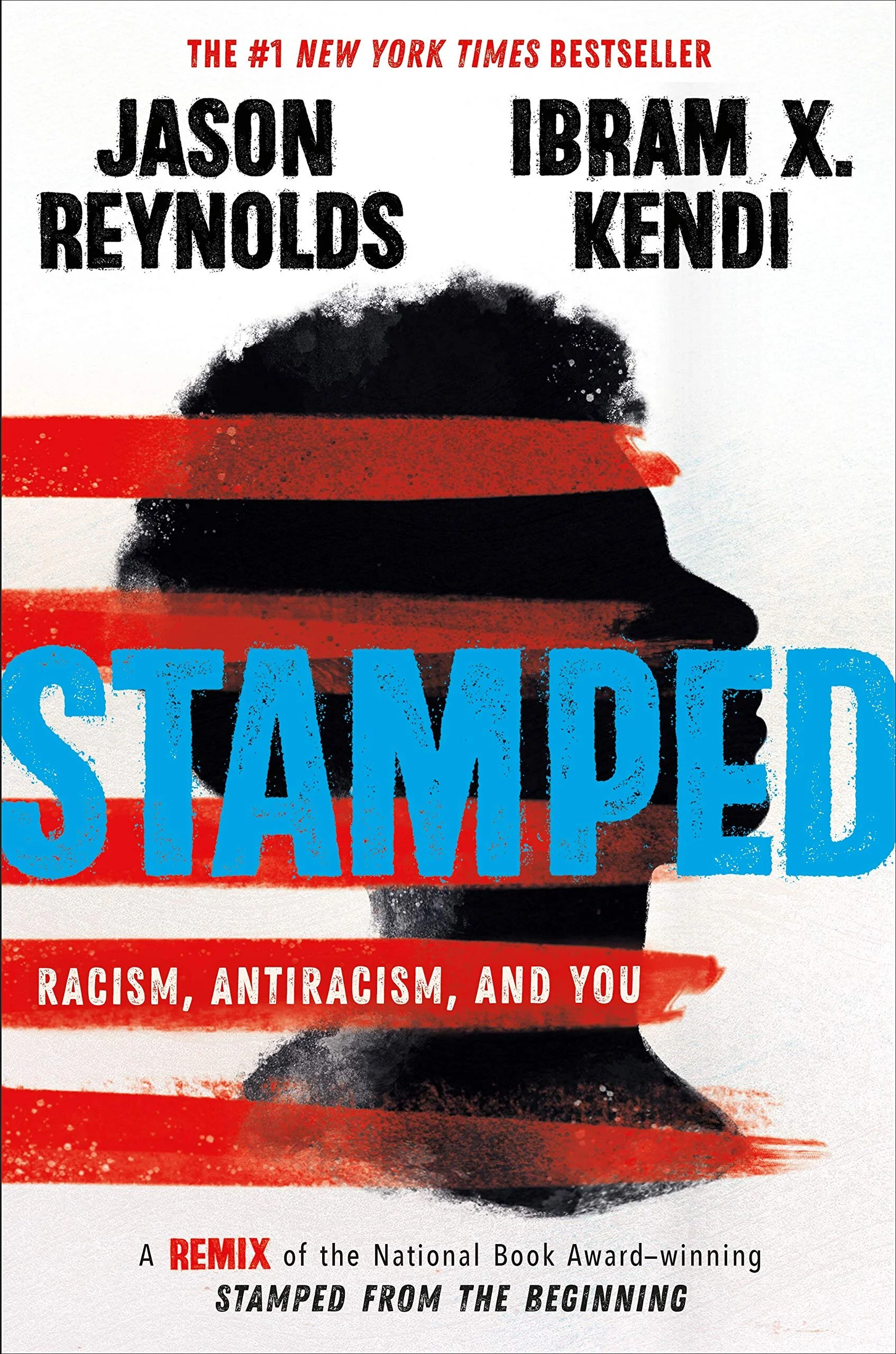
Stamped: Racism, Antiracism, and You is a nonfiction book written by Jason Reynolds and adapted from the National Book Award–winning Stamped from the Beginning by Ibram X. Kendi. Published in 2020, it traces the history of racist ideas in America from 15th-century Portugal to the present — not as a conventional history but as a direct, conversational address to a young reader, delivered in Reynolds’s signature voice: immediate, honest, often funny, and always purposeful. It became the #1 New York Times bestseller, was the second most challenged book in American schools and libraries in 2020, and remains one of the most discussed works of nonfiction in contemporary secondary education. This complete guide covers Stamped‘s reading level, recommended age, content considerations, structure, themes, and books similar to Stamped: Racism, Antiracism, and You, designed for parents, teachers, and students.
For Parents
A direct, energetic, and often funny history of racist ideas in America, written specifically to be readable by young people who find conventional history inaccessible. Reynolds addresses the reader as an intelligent person who deserves the truth. Best for readers ages 12 and up; the material is challenging but the voice is warm and the argument is clear.
For Teachers
One of the most taught nonfiction texts in contemporary middle and high school classrooms, with extensive curriculum support available from the publisher. Grades 6–12. Strong material for units on American history, civil rights, media literacy, and the history of ideas. Reynolds’s conversational style makes it accessible to reluctant readers in a way that more conventional nonfiction rarely achieves.
Stamped: Racism, Antiracism, and You at a Glance
Find on Amazon →| Authors | Jason Reynolds; adapted from Ibram X. Kendi |
| Published | 2020 (Little, Brown Books for Young Readers) |
| Grade Level | 6–12 (our assessment) |
| Recommended Age | 12+ |
| Flesch-Kincaid Grade | ~7.4 |
| Word Count | 36,733 |
| Pages | 320 (Little, Brown paperback) |
| Chapters | 28 |
| Genre | Nonfiction / history / social commentary |
| Subject | History of racist ideas in America; antiracism; American history from 1415 to present |
| Awards | #1 New York Times Bestseller; Coretta Scott King Author Honor (2021) |
For official Lexile and AR levels, visit Lexile.com or AR BookFinder. ReadingVine provides independent editorial assessments.
What Reading Level Is Stamped: Racism, Antiracism, and You?
Stamped reads at approximately a 6th–12th grade level by our editorial assessment, with a Flesch-Kincaid grade level of around 7.4 and a Lexile of 1000L. The ATOS reading level of 7.4 reflects Reynolds’s sophisticated sentence structures and vocabulary, but the actual reading experience is considerably more accessible than those scores suggest because of how Reynolds writes: in direct address, with humor, with asides and commentary, and with a rhythm borrowed from spoken word poetry rather than academic prose. A strong 6th-grade reader will follow it; a 12th-grade reader will still be thinking about it.
At 36,733 words and 320 pages, Stamped is one of the shorter books in the catalog for its page count — the formatting is generous, with significant white space, and the chapters are not dense. Most readers in the target age range finish it in one to two weeks of casual reading, though it rewards slower reading because the arguments are substantive and benefit from pause and reflection. Reynolds begins the book with a direct address to the reader: “This is not a history book.” What he means is that it is not organized like a textbook or written in the voice of one — it is organized as an argument, and it should be read as one. For official Lexile and AR scores, visit Lexile.com or AR BookFinder. ReadingVine’s assessments are independent editorial judgments.
What Age Is Stamped: Racism, Antiracism, and You Appropriate For?
We recommend Stamped for readers ages 12 and up. The book contains no profanity, no sexual content, and no graphic violence. Its subject matter — the history of racist ideas and their consequences — involves the discussion of slavery, segregation, racial violence, and systemic discrimination with candor and historical specificity. This is appropriate for the age range and is handled with care rather than gratuitousness.
Reynolds is addressing young readers directly and honestly about American history, and some of what he describes is painful — the history of slavery, the ideology that sustained it, the ways racist ideas have been remade and redistributed across generations. Parents who are concerned about introducing this material to their children should know that Reynolds’s approach is not to dwell on trauma but to explain mechanisms: how racist ideas were created, how they spread, and how they can be identified and resisted. The book is an argument for young people’s agency, not an exercise in despair.
What Is Stamped: Racism, Antiracism, and You About?
Reynolds opens the book by telling the reader that it is not a history book, not a book about Black people, not a book about white people, and not a book about blaming anyone. It is, he says, a book about ideas — specifically about racist ideas: where they came from, how they spread, who has benefited from them, and what it means to resist them. He then proceeds to trace exactly that, from 1415 and the beginning of the Portuguese slave trade to the election of Barack Obama and the present day.
The book is organized chronologically through the careers of five historical figures whose lives illuminate different phases of the history of racist ideas in America: Gomes Eanes de Zurara (the first writer to articulate a framework justifying the enslavement of Africans), Cotton Mather (the Puritan minister whose religious framework shaped colonial American attitudes), Thomas Jefferson (whose contradictions on race shaped the founding generation), William Lloyd Garrison (the abolitionist whose progressive racism complicated the antislavery movement), and W.E.B. Du Bois (whose intellectual evolution across his lifetime traced the possibilities and limits of assimilationist thinking). Reynolds doesn’t simply narrate; he analyzes, comments, and regularly addresses the reader directly with the question of which ideas in any given period were segregationist, which were assimilationist, and which were antiracist — and why the distinction matters.
The framework — segregationist, assimilationist, antiracist — is Kendi’s central intellectual contribution, and Reynolds deploys it consistently throughout. Segregationist ideas claim Black people are inherently inferior and use that as justification for oppression. Assimilationist ideas accept that racism is a problem but locate the solution in Black people changing to meet white standards. Antiracist ideas locate the problem in racist systems and policies rather than in people, and the solution in changing those systems. Reynolds argues, drawing on Kendi, that the assimilationist position has been the most persistently seductive and the most persistently inadequate — that it asks the wrong question — and that genuinely antiracist thinking requires a different kind of honesty about what racism actually is.
Key Figures in Stamped
Is Stamped: Racism, Antiracism, and You Banned?
Stamped was the second most challenged book in American schools and libraries in 2020, according to the American Library Association. It has been challenged and removed in multiple school districts, including being pulled from all Pickens County, South Carolina school libraries and classrooms in 2022, prompting a lawsuit by the local NAACP chapter. A teacher in Berlin, New Jersey resigned after parents harassed her by phone and email following her assignment of the book to 8th-grade students. Challenges have cited claims that the book teaches “critical race theory,” is “divisive,” contains “selective storytelling,” and “does not encompass racism against all people.”
The book has been defended by the ALA, the National Education Association, the New Jersey Library Association, and numerous educators and librarians. It remains widely available in public libraries and bookstores and is taught in school districts across the country. The challenges to Stamped are part of a broader national pattern of challenges to books addressing race, racism, and American history; the ALA has documented record numbers of book challenges in 2021, 2022, and 2023, with books by Black authors addressing racism among the most frequently targeted.
Stamped: Racism, Antiracism, and You Themes and Lessons
Reynolds’s central argument — drawing on Kendi — is that racist ideas did not arise from observations about difference but were created to justify exploitation. The Portuguese slave traders of the 15th century did not enslave Africans because they believed Africans were inferior; they created the idea of African inferiority to justify the enslavement they had already decided was economically useful. This is the book’s foundational claim, and Reynolds returns to it consistently: racist ideas are always downstream of racist systems and the interests those systems serve. Understanding this, he argues, is the beginning of being able to think clearly about race in America.
The segregationist/assimilationist/antiracist framework is the book’s most practically useful intellectual contribution for classroom discussion. It gives students a vocabulary for distinguishing between arguments that appear to address racism and arguments that actually do — between approaches that ask Black people to change themselves to earn equality and approaches that ask systems to change. Reynolds is careful to apply this framework to historical figures across the political spectrum, including figures who were allies of Black freedom movements, because part of his argument is that assimilationist thinking is easy to fall into precisely because it feels progressive.
Reynolds consistently addresses the reader as an intelligent person capable of changing their thinking. The book does not end in despair. It ends with an argument that antiracist ideas are achievable, that the work is ongoing and demanding, and that young readers are the people who will do it. This is not naive optimism but a deliberate choice about what kind of book Reynolds wanted to write: not a book about how things are but a book about how they could be different.
Discussion questions for classrooms and families: What is the difference between segregationist, assimilationist, and antiracist thinking — can you find examples of each in current events? Reynolds says racist ideas were created to justify racist systems rather than arising from observations about people. Do you agree? What does it mean for an idea to be “progressive racism”? Why does Reynolds keep asking the reader to identify which category a given idea falls into? What does it mean to “stamp out” a racist idea?
How Many Pages and Chapters in Stamped?
The Little, Brown paperback is 320 pages across 28 chapters, with a foreword by Ibram X. Kendi and a note from Reynolds on the book’s origins. Word count is 36,733 words — short for a 320-page book, reflecting the generous formatting. Most readers in the target age range finish it in one to two weeks. The chapters vary in length and each focuses on a specific period or figure; the book can be read straight through or assigned in sections. The publisher provides a free educator guide available at hachettebookgroup.com that includes discussion questions, activities, and curriculum connections.
A companion book, Stamped (for Kids): Racism, Antiracism, and You, adapted by Sonja Cherry-Paul and illustrated by Rachelle Baker, was published in 2021 for younger readers in grades 4–6. Kendi also published an adult version, Stamped from the Beginning: The Definitive History of Racist Ideas in America, which won the National Book Award in 2016 and is the source text for both adaptations.
Books Similar to Stamped: Racism, Antiracism, and You
About Jason Reynolds and Ibram X. Kendi
Jason Reynolds was born in 1983 in Washington, D.C., and grew up in Oxon Hill, Maryland. He has said that he did not read a book he loved until he was seventeen, when he discovered poetry, and that this experience shapes how he thinks about writing for young people — he writes the books he wishes had existed when he was a teenager. He has won two National Book Award nominations, a Newbery Honor, a Printz Honor, and multiple Coretta Scott King honors. He served as the National Ambassador for Young People’s Literature from 2020 to 2022. He initially declined Kendi’s invitation to write Stamped, insisting he was a fiction writer; he eventually agreed after Kendi convinced him that a fiction writer’s skills — not an academic’s — were exactly what the project needed.
Ibram X. Kendi is the author of Stamped from the Beginning: The Definitive History of Racist Ideas in America, which won the National Book Award in nonfiction in 2016, and How to Be an Antiracist (2019), which became one of the bestselling books of the 2020 racial justice conversation. He founded the BU Center for Antiracist Research and has been one of the most influential voices in contemporary American thinking about race. He wrote the foreword to Stamped and provided the research and intellectual framework that Reynolds adapted. Both men live in the United States.
Stamped: Racism, Antiracism, and You: Frequently Asked Questions
What reading level is Stamped: Racism, Antiracism, and You?
Stamped has a Flesch-Kincaid grade level of approximately 7.4 and a Lexile of 1000L. Our editorial assessment places it at grades 6–12 (ages 12+). The scores reflect the sophistication of Reynolds’s writing, but his conversational style and direct address make it considerably more accessible than those numbers suggest. For official Lexile and AR scores, visit Lexile.com or AR BookFinder.
What grade is Stamped: Racism, Antiracism, and You appropriate for?
We recommend grades 6–12, ages 12 and up. The subject matter — the history of racism in America — is handled with honesty and historical specificity appropriate for the age range. There are no content concerns beyond the subject itself. A version for younger readers (Stamped for Kids) is available for grades 4–6.
How many pages are in Stamped: Racism, Antiracism, and You?
The Little, Brown paperback is 320 pages across 28 chapters, with a foreword by Ibram X. Kendi. Word count is 36,733 words. Most readers finish it in one to two weeks; the generous formatting makes it read faster than the page count suggests.
What is Stamped: Racism, Antiracism, and You about?
A history of racist ideas in America, told through the lives of five historical figures from 1415 to the present, written in Jason Reynolds’s direct, conversational voice. Reynolds traces how racist ideas were created, how they spread, who benefited from them, and how they can be identified and resisted — organized around Ibram X. Kendi’s framework of segregationist, assimilationist, and antiracist thinking.
Is Stamped a banned book?
Yes — it was the second most challenged book in American schools and libraries in 2020 according to the ALA, and has been removed from multiple school districts since. Challenges have cited “critical race theory,” divisiveness, and selective history. The book has been defended by the ALA, the NEA, and educators and librarians nationally, and remains widely available in public libraries and bookstores.
What is the difference between the three types of thinking Reynolds describes?
Segregationist thinking holds that Black people are inferior and uses this to justify discrimination. Assimilationist thinking acknowledges racism as a problem but believes the solution is for Black people to change — to meet white cultural standards — in order to earn equality. Antiracist thinking holds that racist systems and policies are the problem, that no group of people is inferior or superior, and that the solution is to change systems rather than people. Reynolds argues that assimilationist thinking is common even among people who consider themselves progressive, and that distinguishing it from antiracist thinking is important.
Who is the book written for?
Reynolds addresses the book directly to “you” — a young person, of any background, who is trying to understand racism in America. He explicitly says it is not a book about Black people or white people but about ideas, and that understanding those ideas is useful for anyone who lives in a society shaped by them. The book is widely assigned to students of all racial backgrounds in grades 6–12.
Is there a version for younger readers?
Yes. Stamped (for Kids): Racism, Antiracism, and You, adapted by Sonja Cherry-Paul and illustrated by Rachelle Baker, was published in 2021 for readers in grades 4–6 (ages 8–12). It covers the same material at an accessible level for elementary and middle grade readers. It has also been challenged in some school districts.