
 = Partner Site
The Boy in the Striped Pajamas Reading Level: A Complete Guide
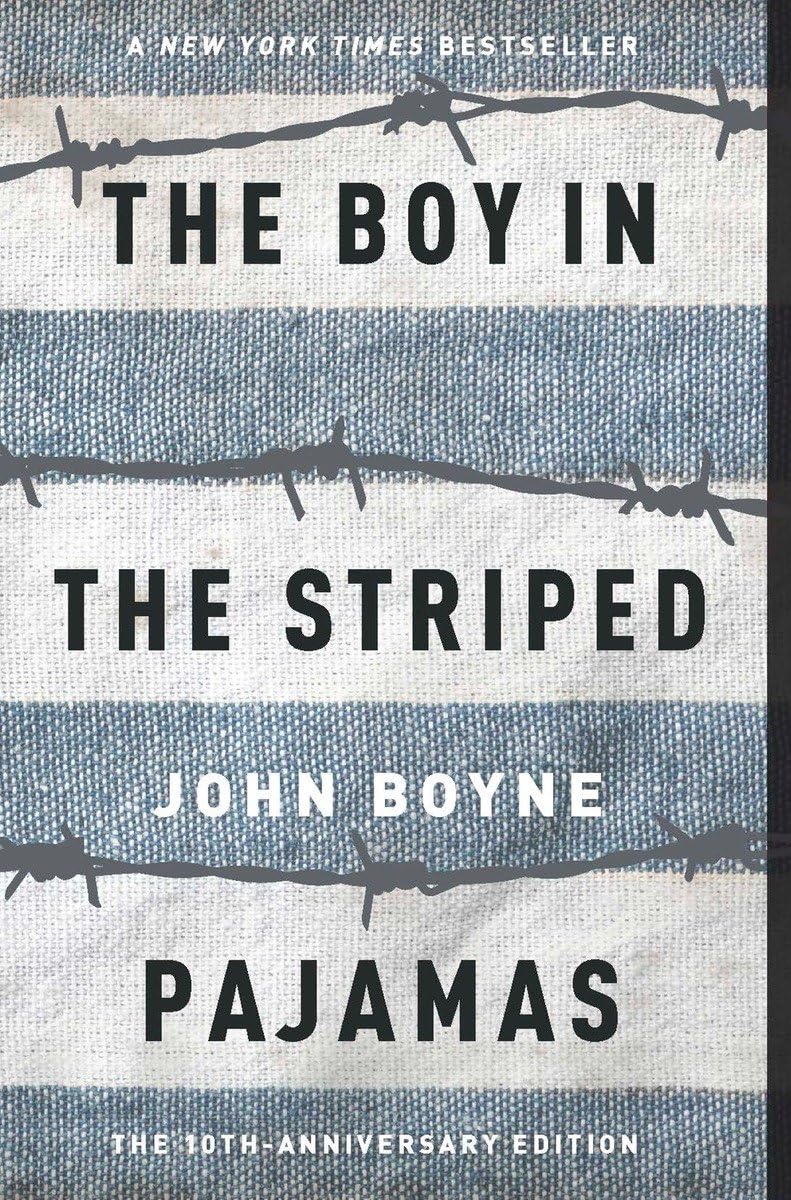
The Boy in the Striped Pajamas by John Boyne is a novel about nine-year-old Bruno, the son of a Nazi commandant, who is relocated with his family to “Out-With” — Auschwitz — and who befriends a Jewish boy named Shmuel through the fence of the concentration camp. Published in 2006 and widely assigned in schools across the English-speaking world, it is one of the most read novels about the Holocaust for young people, and also one of the most criticized by Holocaust historians, educators, and the Auschwitz Memorial itself for its historical inaccuracies and for the distorted understanding of the Holocaust it has been shown to produce in students. This complete guide covers The Boy in the Striped Pajamas‘s reading level, recommended age, content considerations, historical accuracy concerns, characters, themes, and books similar to The Boy in the Striped Pajamas, designed for parents, teachers, and students.
For Parents
An emotionally powerful novel that many children encounter as their first introduction to the Holocaust — and one that historians and Holocaust educators have documented produces serious historical misconceptions when read without substantial contextual support. Best for ages 12 and up, and best read alongside accurate historical information rather than as a standalone introduction to the subject.
For Teachers
Widely assigned in grades 6–9, but with significant caveats: the Auschwitz Memorial and Museum has stated it should be avoided by anyone studying or teaching Holocaust history, and the UCL Centre for Holocaust Education has published research showing it produces measurable historical misconceptions in students. If taught, it requires substantial framing, historical correction, and explicit discussion of the novel’s fictional nature and the ways it departs from historical reality.
The Boy in the Striped Pajamas at a Glance
Find on Amazon →| Author | John Boyne |
| Published | 2006 (David Fickling Books) |
| Grade Level | 6–9 (our assessment) |
| Recommended Age | 12+ |
| Flesch-Kincaid Grade | ~5.8 |
| Word Count | ~46,875 |
| Pages | 218 (David Fickling Books paperback) |
| Chapters | 20 |
| Genre | Historical fiction / fable |
| Setting | Berlin; Auschwitz (“Out-With”); 1942–43 |
| Awards | Irish Book Award (2006); Bisto Book of the Year |
For official Lexile and AR levels, visit Lexile.com or AR BookFinder. ReadingVine provides independent editorial assessments.
What Reading Level Is The Boy in the Striped Pajamas?
The Boy in the Striped Pajamas reads at approximately a 6th–9th grade level by our editorial assessment, with a Flesch-Kincaid grade level of around 5.8 and a Lexile of 1000L — notably high for a relatively short novel with accessible prose, reflecting the sophistication of Boyne’s narrative technique. The entire novel is filtered through Bruno’s deliberately naive nine-year-old perspective, and his misunderstandings — “Out-With” for Auschwitz, “the Fury” for the Führer, his inability to grasp what he sees — operate as dramatic irony throughout. The reader understands what Bruno does not, and the gap between Bruno’s innocence and the horror being enacted around him is the novel’s central literary device.
At approximately 46,875 words and 218 pages, the book is short — comparable in length to The Hitchhiker’s Guide to the Galaxy — and most readers finish it in a day or two. The prose is clear and the pacing is deliberate, building slowly toward a devastating conclusion. The reading experience is accessible to strong readers in grades 5–6, but the historical subject matter and the emotional weight of the ending make it more appropriate for readers 12 and up. For official Lexile and AR scores, visit Lexile.com or AR BookFinder. ReadingVine’s assessments are independent editorial judgments.
What Age Is The Boy in the Striped Pajamas Appropriate For?
We recommend The Boy in the Striped Pajamas for readers ages 12 and up. The novel contains no profanity and no explicit violence, though its ending — which involves a child’s death in a gas chamber — is devastating in a way that the book’s gentle, fairytale-like tone does not fully prepare readers for. Parents should be aware of the ending before placing it with a sensitive younger reader.
The novel ends with Bruno crawling under the fence to join Shmuel in the camp and being killed with him in the gas chamber — both children die together, which is the story’s final tragedy. This ending is not telegraphed clearly; the tone of the novel has been that of a gentle fable, and the sudden violence of the conclusion catches many readers off guard. Parents of younger or more sensitive readers should know the ending before the book is placed. More significantly, parents and teachers should be aware that this is a novel about the Holocaust that takes significant historical liberties — see the historical accuracy section below — and that reading it without correction from historically accurate sources risks producing genuine misconceptions about how the Holocaust actually worked and who its victims were.
The novel is not inappropriate for its recommended age range in terms of content. The historical accuracy concerns — which are significant and widely documented — are a matter of educational rather than content appropriateness, and are addressed in the section below.
What Is The Boy in the Striped Pajamas About?
Nine-year-old Bruno lives in a comfortable Berlin home until the day his father — a high-ranking Nazi officer — receives a new assignment and the family relocates to a place Bruno calls “Out-With.” The house is bleak and isolated, surrounded by a vast wire fence, and on the other side of the fence Bruno can see rows of low buildings and people in striped pajamas moving around inside. He doesn’t understand what he’s looking at.
Bored and lonely in the new place, Bruno begins to explore along the fence and meets Shmuel, a Jewish boy his own age who lives on the other side. Despite the fence between them, they develop a friendship over many months — talking, playing word games, and sharing what they know of each other’s very different lives. Bruno, still not understanding where he is or what the place is, continues to imagine it as a kind of farm or village. Shmuel understands perfectly where he is.
The novel is subtitled “A Fable” by its author, and it operates on the logic of fable rather than historical realism: the innocence of the two boys — and in particular Bruno’s sustained, improbable ignorance of what Auschwitz is — is a literary device rather than a historical claim. The ending, in which Bruno crosses the fence to help Shmuel search for his missing father and both are killed in the gas chamber, is the fable’s moral conclusion: that the evil of the Holocaust consumed everyone in its proximity, including the children of those who operated it.
The Boy in the Striped Pajamas Characters
Is The Boy in the Striped Pajamas Banned?
The Boy in the Striped Pajamas has not been widely banned in American schools and does not appear prominently on the ALA’s challenged books lists. It has, however, been removed from some curricula — not for age-inappropriateness but for historical inaccuracy. The Auschwitz Memorial and Museum has publicly stated that the novel “should be avoided by anyone who studies or teaches about the history of the Holocaust.” A number of school districts in the UK and elsewhere have removed it from required reading lists following publication of research by the UCL Centre for Holocaust Education documenting the measurable historical misconceptions the book produces in students.
The debate around this book in educational settings is unusually significant and deserves specific attention from parents and teachers. It is one of the most widely read Holocaust books in secondary education, and the concerns about it are substantive enough that simply assigning it without extensive historical framing is widely considered pedagogically problematic by Holocaust education specialists.
Historical Accuracy: What Parents and Teachers Need to Know
The Boy in the Striped Pajamas is subtitled “A Fable” and its author has described it as a work of fiction rather than history. This is important context, because the book is widely used in schools as a Holocaust text, and research has documented that students frequently emerge from reading it with specific and serious historical misconceptions.
The following elements of the novel’s premise are historically impossible or highly improbable, and Holocaust educators have identified them as sources of measurable student misconceptions: Jewish children at Auschwitz were almost never kept alive upon arrival — the vast majority were killed immediately in the gas chambers. A Jewish child of Shmuel’s age walking freely near the fence, maintaining an ongoing friendship with the commandant’s son over many months, would have been impossible under the conditions of the actual camp. A nine-year-old son of the commandant would not have been permitted to wander the perimeter of Auschwitz alone, and the German family of a senior Nazi officer would not have been as ignorant of the camp’s function as Boyne portrays them. The novel’s most criticized element — identified explicitly by the Auschwitz Memorial and the UCL Centre for Holocaust Education — is the sympathy it directs toward the commandant’s family: placing the grief of a Nazi officer’s family at the emotional center of a Holocaust story has been shown in research to cause some students to perceive ordinary Germans as “victims too.” This novel is not appropriate as a standalone or primary Holocaust text for students. If used, it should be accompanied by historically accurate material and explicit discussion of the ways the fable departs from historical reality. The Diary of Anne Frank, Night by Elie Wiesel, Maus by Art Spiegelman, and the United States Holocaust Memorial Museum’s educational resources are the recognized standards for Holocaust education.
The Boy in the Striped Pajamas Themes and Lessons
As a fable, The Boy in the Striped Pajamas is making a specific moral argument: that the ideology of the Holocaust was so poisonous that it ultimately destroyed even those who operated it. Bruno’s death — a German child killed alongside a Jewish child in the gas chambers his own father oversaw — is the fable’s statement that hatred and dehumanization cannot be contained. The evil that was built for one group ultimately consumed the perpetrators’ own children.
This is a meaningful moral argument about the self-destroying nature of hatred. The difficulty, as Holocaust educators have documented, is that the fable’s mechanism — Bruno’s innocence, the commandant’s family’s grief, the narrative sympathy directed toward German characters — can produce a false equivalence between victims and perpetrators that misrepresents the Holocaust’s actual moral structure. The Holocaust was not something that happened to Germans; it was something Germans did to Jews and other targeted groups. A narrative that centers the grief of a Nazi commandant’s family redirects attention from where it belongs.
The novel works best as a literary text — an examination of dramatic irony, of how fables use innocence to make moral arguments, and of the limits of that technique — rather than as a historical one. Used with that framing, it can generate productive discussion. Used as Holocaust education, without substantial correction, it has been documented to cause harm.
Discussion questions for classrooms and families: Why does Boyne call this a fable rather than a historical novel — what does that distinction mean? What does Bruno’s sustained ignorance do for the story’s emotional impact? What does the ending argue about who is harmed by hatred and prejudice? What are the risks of telling a Holocaust story through the perspective of a German child rather than a Jewish one? What historical information would you want to read alongside this book?
How Many Pages and Chapters in The Boy in the Striped Pajamas?
The David Fickling Books paperback is 218 pages across 20 chapters. Word count is approximately 46,875 words — a short novel that most readers finish in a day or two. The chapters are brief and the pacing is deliberately slow, building through Bruno’s incremental discovery of his surroundings toward the final act. The novel’s ending is its most emotionally affecting sequence and arrives more abruptly than the measured pace of the preceding chapters prepares readers for.
Books Similar to The Boy in the Striped Pajamas
About John Boyne
John Boyne was born in 1971 in Dublin, Ireland, and studied English literature at Trinity College Dublin and creative writing at the University of East Anglia. He published several adult novels before writing The Boy in the Striped Pajamas in 2004, which he has said he wrote in two and a half days. The book was published in 2006 and became a global bestseller, selling more than eleven million copies and being translated into fifty-seven languages. A film adaptation was released in 2008.
Boyne has described the novel as a fable and has said he intended it as a work of moral imagination rather than historical documentation. He has defended the novel against historical criticisms on the grounds that fiction need not be accurate. Critics — including Art Spiegelman, the Auschwitz Memorial, and the UCL Centre for Holocaust Education — have responded that a work widely used as Holocaust education for children carries responsibilities that a purely literary defense does not discharge. A sequel, All the Broken Places, told from Bruno’s sister Gretel’s perspective, was published in 2022. Boyne lives in Dublin.
The Boy in the Striped Pajamas: Frequently Asked Questions
What reading level is The Boy in the Striped Pajamas?
The Boy in the Striped Pajamas has a Flesch-Kincaid grade level of approximately 5.8 and a Lexile of 1000L. Our editorial assessment places it at grades 6–9 (ages 12+). The prose is accessible to strong readers in grades 5–6, but the subject matter and the emotional weight of the ending make it more appropriate for readers 12 and up. For official Lexile and AR scores, visit Lexile.com or AR BookFinder.
What grade is The Boy in the Striped Pajamas appropriate for?
We recommend grades 6–9, ages 12 and up. The ending — both children die in the gas chamber — is devastating in a way the book’s gentle tone does not fully prepare younger readers for. The historical accuracy concerns are significant regardless of age, and the book should always be accompanied by historically accurate Holocaust education materials.
How many pages are in The Boy in the Striped Pajamas?
The David Fickling Books paperback is 218 pages across 20 chapters. Word count is approximately 46,875 words. Most readers finish it in a day or two of comfortable reading.
What is The Boy in the Striped Pajamas about?
Nine-year-old Bruno, the son of the commandant of Auschwitz, befriends a Jewish boy named Shmuel through the camp’s fence — not understanding where he is or what the camp is. The novel follows their friendship over many months, ending with Bruno crossing the fence and both children being killed in the gas chamber.
Is The Boy in the Striped Pajamas historically accurate?
No — and this is widely and specifically documented. The Auschwitz Memorial has stated the book “should be avoided by anyone who studies or teaches about the history of the Holocaust.” The central premise — a Jewish child surviving long enough to befriend the commandant’s son — was historically impossible at Auschwitz, where the vast majority of Jewish children were killed upon arrival. Research by the UCL Centre for Holocaust Education has documented that the book produces measurable historical misconceptions in students, including inappropriate sympathy for Nazi perpetrators. John Boyne calls it a fable, not a historical novel, and it should be treated as such.
What does “Out-With” mean in The Boy in the Striped Pajamas?
“Out-With” is Bruno’s mishearing and misunderstanding of “Auschwitz” — the Nazi concentration and extermination camp in occupied Poland where approximately 1.1 million people, mostly Jewish, were killed. Bruno’s sustained inability to understand or correctly name what surrounds him is the novel’s central literary device: his innocence operates as dramatic irony, with the reader understanding what the child narrator cannot.
What is a better Holocaust book for students than The Boy in the Striped Pajamas?
For most educators and age groups: The Diary of Anne Frank for ages 11 and up; Number the Stars by Lois Lowry for ages 9–12; Refugee by Alan Gratz for ages 10–14 (includes a Jewish boy fleeing Nazi Germany in 1939); and Night by Elie Wiesel for ages 13 and up. The United States Holocaust Memorial Museum (ushmm.org) maintains resources and book recommendations for Holocaust education at every grade level.
Is there a Boy in the Striped Pajamas movie?
Yes. A film adaptation was released in 2008, directed by Mark Herman and starring Asa Butterfield as Bruno and Jack Scanlon as Shmuel. It received positive reviews for its emotional impact but was extensively criticized by Holocaust scholars for the same historical inaccuracies as the novel, and additionally for its final sequence, which focuses on the grief of the Nazi commandant’s family. It is rated PG-13.