
 = Partner Site
The Crucible Reading Level: A Complete Guide
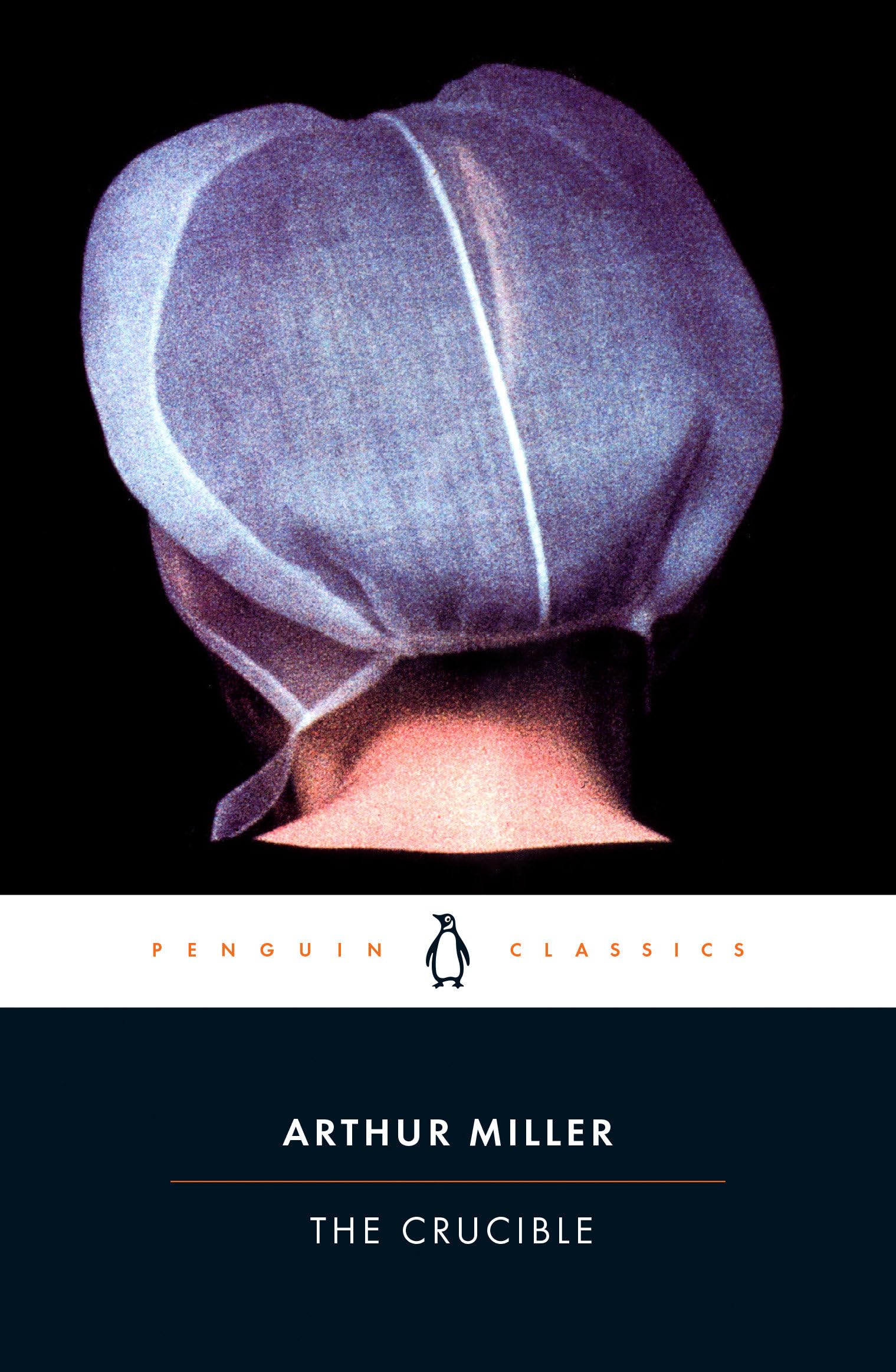
The Crucible by Arthur Miller is a four-act play dramatizing the Salem witch trials of 1692, in which accusations of witchcraft spread through a Massachusetts Puritan community and nineteen people were hanged before the hysteria collapsed. Miller wrote the play in 1952 and 1953 as an explicit allegory for McCarthyism — the congressional investigations led by Senator Joseph McCarthy that accused hundreds of Americans of communist sympathies, destroyed careers, and operated by the same mechanism as the Salem trials: accusation as conviction, denial as guilt. First performed on Broadway in 1953, it has been the most frequently produced American play for decades and is a fixture of American high school curricula. This complete guide covers The Crucible‘s reading level, recommended age, content considerations, characters, themes, and books similar to The Crucible, designed for parents, teachers, and students.
For Parents
A tightly constructed, morally serious play about the mechanics of mass hysteria and what it costs individuals to resist it — the central dramatic question is whether John Proctor will sign a false confession to save his life or refuse and hang. The marital affair that drives the plot’s central conflict requires some context for younger readers. Appropriate for ages 13 and up; widely assigned in grades 9–11.
For Teachers
A standard grades 9–12 text with dual historical contexts — the Salem witch trials and McCarthyism — that make it unusually rich for discussion of how political persecution works in different eras. The play’s construction is technically cleaner than Death of a Salesman and more accessible as a first dramatic text. Common Core ELA Text Exemplar for grades 9–10. Pairs naturally with Miller’s essay “Why I Wrote The Crucible,” with primary source documents on the Salem trials, and with the HUAC hearings.
The Crucible at a Glance
Find on Amazon →| Author | Arthur Miller |
| First Performed | 1953 (Martin Beck Theatre, New York) |
| Published | 1953 (Viking Press) |
| Grade Level | 9–12 (our assessment) |
| Recommended Age | 13+ |
| ATOS Reading Level | 4.9 |
| Lexile | 1320L (NP — Non-Prose; see reading level note) |
| Word Count | 35,560 |
| Pages | ~152 (Penguin Classics paperback) |
| Structure | 4 acts; no chapters |
| Genre | Historical drama / political allegory |
| Setting | Salem, Massachusetts; 1692 |
| Awards | Tony Award for Best Play (1953) |
For official Lexile and AR levels, visit Lexile.com or AR BookFinder. ReadingVine provides independent editorial assessments.
What Reading Level Is The Crucible?
The Crucible has an ATOS reading level of 4.9 and a Lexile of 1320L. The wide gap between these two scores reflects a genuine ambiguity about how to measure plays. The ATOS score is based on sentence complexity and vocabulary — the dialogue of 17th-century Salem is formal and archaic in places, and Miller’s stage directions are dense with historical context, but the speeches are direct and the sentences are not long. The Lexile score uses a non-prose (NP) designation to signal that standard Lexile measurement does not apply cleanly to dramatic texts. Neither score meaningfully captures what reading The Crucible actually demands.
Those demands are primarily contextual. The play requires knowledge of the Salem witch trials — at minimum, what they were and what happened — and knowledge of McCarthyism, which is the historical context Miller was allegorizing in 1953 and which remains the interpretive frame for the play’s political argument. It also requires the ability to read dramatic dialogue as argument: to hear what characters are actually saying beneath what they claim to be saying, to understand how Abigail uses accusation as a weapon, and to follow the logic by which a community’s fear of the devil becomes a mechanism for settling personal grudges and community conflicts. Students who have never encountered these contexts will need preparation; those who have will find the play moves with unusual speed and clarity. At 35,560 words and approximately 152 pages, the text can be read in one to two sittings; a classroom typically takes one to two weeks. For official Lexile and AR scores, visit Lexile.com or AR BookFinder. ReadingVine’s assessments are independent editorial judgments.
What Age Is The Crucible Appropriate For?
We recommend The Crucible for readers ages 13 and up. The play is less sexually explicit than Death of a Salesman — the affair between John Proctor and Abigail Williams is established but not depicted — and its violence is judicial execution rather than graphic. The thematic content is entirely appropriate for high school: the mechanics of mass hysteria, the destruction of the innocent by false accusation, and the personal cost of integrity under institutional pressure are all subjects that reward serious engagement from readers in their early teens and up.
The play’s central conflict originates in an extramarital affair: John Proctor, a married farmer in his thirties, had a sexual relationship with Abigail Williams, a seventeen-year-old former servant in his household. The affair ended before the play begins — Proctor ended it — and Abigail’s resentment of his wife Elizabeth, whom she accuses of witchcraft, is the mechanism that sets the plot in motion. The affair is discussed directly in the play but not depicted. Nineteen people die by hanging in the play’s historical and narrative frame; the execution of Proctor and the deaths of Giles Corey (pressed to death) and others are referred to directly. The deaths are not graphic but are treated with full moral seriousness. Parents of 13-year-old students should be aware that the play asks readers to hold in mind simultaneously the injustice of what is happening and the complicity of nearly every character in it.
What Is The Crucible About?
In Salem, Massachusetts, in 1692, a group of girls led by seventeen-year-old Abigail Williams are caught dancing in the woods at night. Dancing was forbidden in Puritan Salem; one of the girls falls ill. Rumors of witchcraft begin. Abigail, who previously worked as a servant in the Proctor household and had an affair with John Proctor before his wife Elizabeth dismissed her, accuses Elizabeth Proctor of witchcraft. The accusation quickly becomes fact in the court’s eyes: in a theocracy that regards the devil as a literal presence, accusation by a credible witness is treated as sufficient proof, and any denial can be reframed as the devil’s work.
The court — presided over by Deputy Governor Danforth, who has invested his own authority in the trials’ validity — proceeds on the logic that confession and naming of other witches is the only path to clemency. This is exactly the logic of the congressional committees Miller was allegorizing: confess and name names, and you will be protected. Refuse, and your refusal is itself evidence. John Proctor, whose affair with Abigail gives him some understanding of her motives, attempts to expose the girls as frauds by having his wife testify — but Elizabeth, not knowing John has already confessed the affair, lies to protect his reputation, and the attempt backfires.
The play’s final act is its moral crisis. Proctor has been arrested, convicted on spectral evidence, and given the choice of signing a false confession and living or refusing and hanging. He signs — and then tears the confession apart. He cannot allow a lie to be nailed to the church door, he says; he cannot have his name attached to a document that will be used to condemn others. His execution at the end of the play is simultaneously a defeat and the only authentic act of his adult life. His wife Elizabeth’s final line — “He have his goodness now. God forbid I take it from him.” — is the play’s clearest statement of what integrity costs and what it is worth.
The Crucible Characters
Is The Crucible Banned?
The Crucible has been challenged in some school districts over the decades, primarily on the grounds that it portrays religious authority negatively, that it depicts witchcraft (even as a false accusation), or that its political allegory constitutes an inappropriate critique of American institutions. None of these challenges has resulted in widespread removal. The play is broadly taught in American high schools and is a Common Core ELA Text Exemplar for grades 9–10. It does not appear prominently on ALA challenged books lists.
It is worth noting that the play’s historical subject — the Salem witch trials — involved the very mechanism of persecution that challenges to books often use: accusation treated as evidence, denial treated as further proof of guilt. Miller was aware of this irony when he wrote the play, and teachers who assign it in contexts where it has been challenged occasionally find themselves inhabiting the play’s argument.
The Crucible Themes and Lessons
The play’s most durable argument is structural: it describes, with clinical precision, the mechanism by which a community destroys its own members through the logic of accusation. Accusation becomes evidence because the accusers are assumed to have no motive for lying. Denial becomes further evidence because only a witch would deny being a witch. Confession earns clemency only if it is accompanied by naming others — ensuring that the accused become accusers, spreading the guilt and implicating the innocent. This mechanism does not require malice at its center; it requires only people who believe that the threat is real and that extraordinary measures are therefore justified.
The McCarthyism allegory is not incidental or peripheral — it is the reason the play exists. Miller wrote it during a period when his own friends and colleagues were being called before the House Un-American Activities Committee and asked to name names. The logic was identical to Salem’s: confess your communist sympathies and name others who attended meetings with you, and you will be protected; refuse, and your refusal is evidence of guilt. Miller himself was called before the committee in 1956 and convicted of contempt of Congress for refusing to identify others. He understood from the inside the choice Proctor faces.
The play’s treatment of John Proctor’s decision not to sign the false confession is its most demanding moral argument. Proctor’s life could be saved — the court wants his confession more than his death. What he refuses is not death but the use of his name: a signed confession would be nailed to the church door, giving the court a propaganda victory and implicating others. He chooses death over lending his name’s authority to a system he knows is unjust. This is heroism, but Miller does not romanticize it: Proctor is terrified, wavering, and finally resolute — and his resolution costs him and everyone who loves him everything.
Discussion questions for classrooms and families: How does the court’s logic make it impossible to prove innocence — and how does this mirror the logic of other persecution campaigns? Why does Proctor ultimately refuse to sign the confession — what specifically does he say he cannot give them? What is Reverend Hale’s role in the play — is he a villain, a victim, or something more complicated? How does Miller use the 1692 Salem trials to argue about 1953 America — and does the allegory work for contemporary situations as well? What does Giles Corey’s death add to the play’s argument about how people resist unjust authority?
How Long Is The Crucible?
The Crucible is a play in four acts with no chapter divisions. The Penguin Classics paperback is approximately 152 pages with a word count of 35,560. This is slightly longer than Death of a Salesman in word count and comparable in page length. Most readers can work through the full text in one to two sittings; a classroom typically takes one to two weeks to read and discuss it thoroughly.
Unlike Death of a Salesman, The Crucible does not have an expressionist structure — it moves forward in linear time, which makes it more accessible as a first dramatic text. Miller includes substantial narrative stage directions, particularly in Act One, which provide historical context and character backstory that would not be visible in performance but give the reading experience a novelistic quality. These stage directions are worth reading closely; they contain much of Miller’s most direct commentary on the events he is depicting.
Books and Plays Similar to The Crucible
About Arthur Miller
Arthur Miller was born in 1915 in New York City. He wrote The Crucible in 1952 and 1953 while the McCarthy era investigations were at their height and while friends and colleagues in the theater and film communities were being called before the House Un-American Activities Committee. He visited Salem himself to research the 1692 trials and found, he later wrote, that the parallels with the 1950s investigations were so precise that the historical record required almost no embellishment to become an allegory of the present.
The play opened on Broadway in January 1953 to mixed reviews — critics found it politically heavy-handed — but it found its audience quickly and has never left the stage. Miller was subpoenaed by HUAC in 1956, three years after the play’s premiere, and refused to name names; he was convicted of contempt of Congress, a conviction later overturned on appeal. His essay “Why I Wrote The Crucible,” published in The New Yorker in 1996, remains the clearest account of the play’s origins and intentions and is often assigned alongside the play in high school and college courses.
Miller’s major plays also include All My Sons (1947), Death of a Salesman (1949), and A View from the Bridge (1955). He died in 2005. The Crucible has been in continuous production worldwide since its premiere and is performed more frequently than any other American play.
The Crucible: Frequently Asked Questions
What reading level is The Crucible?
The Crucible has an ATOS reading level of 4.9 and a Lexile of 1320L (Non-Prose designation). The wide gap reflects the difficulty of applying prose metrics to dramatic texts — the dialogue is direct and the sentences are not complex, but reading the play well requires historical context about the Salem witch trials and McCarthyism that the text alone does not provide. Our editorial assessment places it at grades 9–12, ages 13 and up. For official Lexile and AR scores, visit Lexile.com or AR BookFinder.
What grade is The Crucible appropriate for?
We recommend grades 9–12, ages 13 and up. The play contains an extramarital affair as backstory and ends with multiple executions by hanging. The thematic demands — the mechanics of mass hysteria, false confession, and institutional persecution — are appropriate for high school and reward the maturity readers bring to them. It is a Common Core ELA Text Exemplar for grades 9–10 and is most commonly assigned in grades 9–11.
How long is The Crucible?
The Penguin Classics paperback is approximately 152 pages in four acts, with a word count of 35,560. Most readers can work through the text in one to two sittings; a classroom typically takes one to two weeks. The play runs about two and a half hours in performance.
What is The Crucible about?
A series of witchcraft accusations spreads through Salem, Massachusetts, in 1692, destroying the innocent as the court accepts accusation as proof and treats denial as further evidence of guilt. The play centers on John Proctor — a farmer whose affair with the chief accuser, Abigail Williams, gives him insight into her motives — and his choice in the final act between signing a false confession to save his life and refusing to lend his name’s authority to the system that has condemned him.
What does The Crucible have to do with McCarthyism?
Miller wrote the play in 1952–53 as an explicit allegory for the congressional investigations led by Senator Joseph McCarthy, which accused hundreds of Americans of communist sympathies. The mechanism was identical to Salem’s: accusations were treated as evidence; denial was treated as further proof of guilt; the accused were offered clemency in exchange for confessing and naming others. Miller himself was called before the House Un-American Activities Committee in 1956 and convicted of contempt for refusing to name names — living out the same choice he gave John Proctor.
Why does John Proctor refuse to sign the confession?
Proctor has already wavered — he signs the confession, and then tears it up. His reason: the signed document would be nailed to the church door as propaganda, lending his name’s authority to the court’s proceedings and potentially implicating others. He says: “Because it is my name! Because I cannot have another in my life!” His name is the only thing left that is genuinely his, and he will not give it to a system he knows is unjust, even to save his life.
Who is Giles Corey in The Crucible?
Giles Corey is an elderly farmer who is pressed to death — crushed under stones — for refusing to name the person who provided him with information about the trials. Under the law, he could neither be tried nor have his estate confiscated unless he entered a plea; by refusing to plead, he died protecting both his informant and his property for his heirs. His reported final words were “more weight.” Miller uses him as the play’s most extreme image of resistance to unjust authority.
Is there a Crucible movie?
Yes — a 1996 film starring Daniel Day-Lewis as John Proctor and Winona Ryder as Abigail Williams, with a screenplay written by Arthur Miller himself. It was directed by Nicholas Hytner and is widely considered a faithful and powerful adaptation. It is rated PG-13 and is appropriate for the same age range as the play.