
 = Partner Site
Like Water for Chocolate Reading Level: A Complete Guide
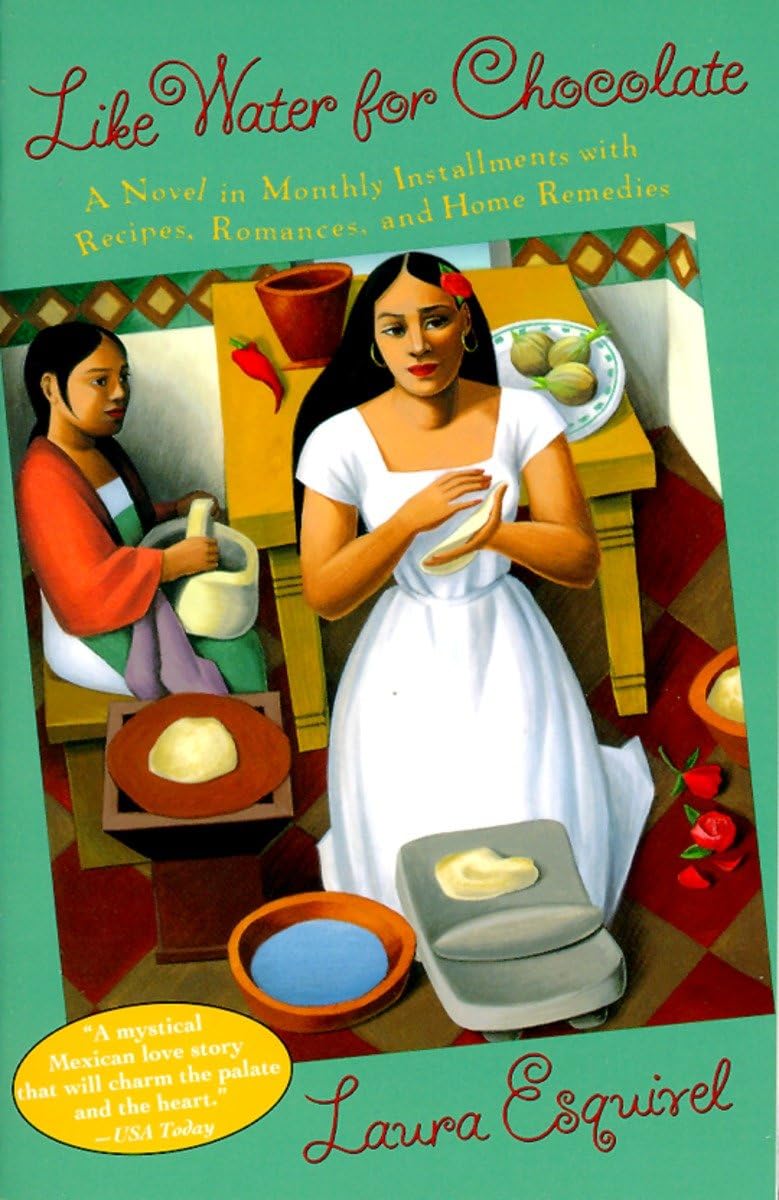
Like Water for Chocolate by Laura Esquivel is a novel about Tita de la Garza, the youngest daughter of a Mexican ranching family near the U.S. border during the Revolution of 1910, who is forbidden by family tradition from marrying and must remain at home to care for her mother until her death. Tita is in love with Pedro Musquiz, who marries her elder sister Rosaura rather than lose Tita entirely. What follows is a decades-long story of thwarted love, maternal tyranny, and the magical properties of food — each of the novel’s twelve chapters is named for a month, opens with a recipe, and centers on what happens when Tita’s emotions enter the food she cooks and are transmitted to everyone who eats it. Published in Spanish in 1989 and translated into English in 1992, it became a bestseller in both languages and was adapted into an acclaimed film in 1992. This complete guide covers Like Water for Chocolate‘s reading level, recommended age, content considerations, characters, themes, and books similar to Like Water for Chocolate, designed for parents, teachers, and students.
For Parents
A magical realism romance structured as a cookbook, set during the Mexican Revolution, with strong themes of female autonomy and emotional repression. Contains sensuality, a sexual assault, physical abuse, miscarriage, and the death of a child. Appropriate for ages 14 and up; widely assigned in grades 9–11 Spanish-language and world literature courses.
For Teachers
An excellent grades 9–11 text for teaching magical realism alongside or after One Hundred Years of Solitude, with the advantage of a shorter, more accessible narrative and a formal structure — twelve monthly chapters, each with a recipe — that is easy to discuss as argument. The novel’s treatment of food as emotional and political expression rewards close reading of individual chapters as units, and pairs well with the Mexican Revolution as historical context.
Like Water for Chocolate at a Glance
Find on Amazon →| Author | Laura Esquivel |
| Published | 1989 (Planeta, Mexico); English translation 1992 |
| Translator | Carol Christensen and Thomas Christensen (English) |
| Grade Level | 9–11 (our assessment) |
| Recommended Age | 14+ |
| ATOS Reading Level | 7.2 |
| Lexile | 1030L |
| Word Count | ~60,000 |
| Pages | ~246 (Doubleday paperback) |
| Chapters | 12 (one per month, each with a recipe) |
| Genre | Magical realism / romance / historical fiction |
| Setting | De la Garza ranch, northern Mexico; c. 1910–1930s |
For official Lexile and AR levels, visit Lexile.com or AR BookFinder. ReadingVine provides independent editorial assessments.
What Reading Level Is Like Water for Chocolate?
Like Water for Chocolate has an ATOS reading level of 7.2 and a Lexile of 1030L. The Lexile score is notably higher than most novels at this grade level — a reflection of the translation’s somewhat formal, elevated prose and the novel’s sentence complexity, which runs longer and is more ornate than the clean plainness of Hemingway or the clarity of Achebe. The ATOS of 7.2 is the more practically useful number for secondary school placement. Both scores are consistent with the grades 9–11 assignment range.
The reading challenge in Like Water for Chocolate is not primarily linguistic but contextual. The novel’s magical realism — the mode in which extraordinary events are reported with the same matter-of-fact tone as ordinary ones, developed most fully in Latin American fiction by García Márquez and adapted here by Esquivel for a domestic, feminist register — requires readers who understand that the magical elements are not metaphor and not dreams but the literal form in which the story’s emotional realities take shape. Students who have read One Hundred Years of Solitude will recognize the mode; for students encountering it for the first time, brief preparation helps considerably. The Mexican Revolution context and the novel’s parody of the “calendar for young ladies” format — a 19th-century Mexican publication genre of monthly fiction installments with recipes and home remedies, which Esquivel is both imitating and satirizing — also reward some pre-reading introduction.
At approximately 60,000 words and 246 pages across twelve chapters, most classrooms complete the novel in two to three weeks. For official Lexile and AR scores, visit Lexile.com or AR BookFinder. ReadingVine’s assessments are independent editorial judgments.
What Age Is Like Water for Chocolate Appropriate For?
We recommend Like Water for Chocolate for readers ages 14 and up. The novel is more sensual and more emotionally intense than its food-and-magic surface suggests. It contains a sexual assault, sustained physical and psychological abuse by Mama Elena, a miscarriage caused by stress, the death of a child, and explicit sensuality in the passages describing Tita and Pedro’s relationship and in the magical effects of Tita’s cooking on those who eat it.
Tita is abused by her mother Mama Elena throughout the novel — psychological manipulation, verbal cruelty, and physical beating. One of Tita’s nephews dies in infancy under circumstances linked to Mama Elena’s intervention. A soldier sexually assaults Tita’s sister Gertrudis; this scene occurs off-page but is clearly described afterward. Tita has a mental breakdown and is hospitalized. The relationship between Tita and Pedro, while never graphically depicted, is erotic throughout; the magical effects of her cooking — notably the quail in rose petal sauce, which causes sexual arousal in those who eat it — are part of the novel’s treatment of erotic longing as a physical force. The novel ends with both Tita and Pedro dying together in a moment of consummation; Esquivel depicts this as a transcendent rather than tragic death, but it is a death. The overall tone is sensual, lyrical, and passionate — this is adult literary fiction, not a young adult romance.
What Is Like Water for Chocolate About?
The De la Garza ranch sits near the Texas border in northern Mexico. Mama Elena runs it with an iron will following the departure and death of her husband. The family has a tradition: the youngest daughter must remain unmarried to care for her mother. Tita, the youngest, was born in the kitchen when her mother was chopping onions, and has grown up under the cook Nacha’s care, developing an extraordinary relationship with food. When Pedro Musquiz asks to marry her and Mama Elena refuses, Pedro instead asks to marry Tita’s sister Rosaura — reasoning that remaining near Tita, even married to her sister, is better than losing her entirely. Tita is devastated. She begins channeling her grief into her cooking.
The novel’s central device is that Tita’s emotions enter the food she prepares and are experienced by those who eat it. The wedding cake she bakes while weeping with grief causes all the guests to fall into waves of longing and sorrow. The quail she prepares in a sauce of rose petals — using roses Pedro gave her — causes the guests to feel intense arousal; Tita’s sister Gertrudis, overwhelmed, runs naked from the shower, is picked up by a revolutionary soldier, and rides away on horseback to join the army. The ox-tail soup she makes while grieving Nacha’s death causes everyone who eats it to fall ill with indescribable longing. Food is Tita’s only available language for what she cannot say directly, and it is the most powerful language in the novel.
The novel moves through twelve months across roughly twenty years. Pedro and Rosaura have children. One of their babies dies — in circumstances Tita believes are connected to Mama Elena’s cruelty. Tita has a breakdown and is taken in by the kind American doctor John Brown. She gradually recovers. She and Pedro eventually consummate their love; Mama Elena dies; Rosaura dies; their daughter Esperanza, freed from the family’s tradition by her mother’s death, marries John Brown’s son. In the final chapter, Tita and Pedro are finally alone together. Their consummation generates enough heat to burn down the ranch. The novel ends with the narrator — who has been cooking from Tita’s recipe book throughout, and who is Esperanza’s daughter — noting that the ranch is gone but the book survives.
Like Water for Chocolate Characters
Is Like Water for Chocolate Banned?
Like Water for Chocolate has been challenged in some secondary school contexts for its sexual content and sensuality — the erotic charge of the cooking scenes, the explicitness of certain passages, and the novel’s overall treatment of female desire as a physical and magical force. No widely documented single challenge has produced the kind of removal or lawsuit that marks the One Hundred Years of Solitude case in this catalog, but the novel appears on various challenged books lists for the same reasons as similar works: sexual content, mature themes, and treatment of topics deemed inappropriate for younger readers. These challenges tend to underestimate the novel’s literary seriousness while correctly identifying that it is not suitable for middle school readers.
Like Water for Chocolate Themes and Lessons
The novel’s central formal argument is that food is not a neutral domestic activity but a form of expression as powerful as language — more powerful in Tita’s case, because it is the only form she has. The tradition that forbids Tita from marrying does not forbid her from feeling; it only forbids her from expressing those feelings directly. The kitchen becomes the space where the inexpressible becomes edible, and the magic of the cooking is Esquivel’s way of literalizing what the domestic sphere contains when women are not permitted other forms of expression. The rose petal quail does not metaphorically suggest arousal — it causes it. The wedding cake does not symbolize grief — it transmits it. Esquivel takes the domestic seriously as a site of power and gives that power a form that makes it impossible to dismiss.
The novel’s parody of the “calendar for young ladies” format — the 19th-century Mexican publication genre of monthly fiction installments with recipes and home remedies — is its most overtly literary argument. Esquivel takes a form associated with the containment of women’s reading within the domestic and feminine and uses it to tell a story that challenges the very structures that produced the form. Each chapter opens with a recipe that is both literally a recipe and metaphorically an account of Tita’s emotional state; the monthly structure that was designed to organize women’s time becomes the structure through which the novel traces the cost of that organization across years.
The Mexican Revolution of 1910 runs through the novel as a backdrop that gradually becomes foreground. It is the context that liberates Gertrudis — she joins the revolutionary army and becomes a general — while leaving Tita and Rosaura trapped in the domestic sphere. Esquivel is making a specific argument: the Revolution changed the public political landscape of Mexico without touching the private domestic structures that organized women’s lives. The ranch operates by the same rules in 1930 that it did in 1910. The external revolution did not reach the kitchen.
Discussion questions for classrooms and families: How does the novel use food as a formal device — what is the relationship between the opening recipe and the events of each chapter? What argument does Esquivel make by using the “calendar for young ladies” format for a story about female repression? Does Pedro’s decision to marry Rosaura to stay near Tita represent love or a failure of integrity? What does Gertrudis’s escape represent in the novel’s argument about female freedom? What does the ending — Tita and Pedro’s death in the fire they generate — argue about the nature of the love they have been carrying?
How Many Pages and Chapters in Like Water for Chocolate?
The Doubleday paperback is approximately 246 pages across twelve chapters — one for each month of the year. Each chapter opens with the title of a recipe and lists its ingredients, then moves into the narrative. The recipes are real and functional; some readers cook from them while reading. Word count is approximately 60,000. Most classrooms complete the novel in two to three weeks, often assigning one or two chapters per session, which suits the monthly structure naturally. Each chapter is largely self-contained in terms of its central event, though the emotional arc builds continuously across all twelve.
The chapter-as-month structure is worth discussing with students before reading: it is not merely an organizing convenience but a formal argument about how women’s time was organized in the culture the novel depicts. The “calendar for young ladies” format that Esquivel is parodying structured women’s reading and domestic activity in monthly installments; by using that structure for a novel about what the domestic sphere costs women, Esquivel turns the form against itself.
Books Similar to Like Water for Chocolate
About Laura Esquivel
Laura Esquivel was born in Mexico City in 1950. She trained as a kindergarten teacher and began writing plays and stories for children before transitioning to fiction and screenwriting. Her first husband was the director Alfonso Arau, who produced and directed the 1992 film adaptation of Like Water for Chocolate — which she wrote the screenplay for — and which went on to become, at the time of its release, the highest-grossing foreign-language film ever released in the United States. It won eleven Ariel Awards from the Mexican Academy of Motion Pictures. The novel on which it was based had already become the bestselling novel in Mexico in 1990; the combination of novel and film made Esquivel an internationally recognized figure in Latin American literature.
Esquivel has described the novel as emerging from her love of cooking and her grandmother’s kitchen, and from her observation that the labor of cooking — which in Mexico as elsewhere was organized as women’s work — carried an enormous emotional weight that was neither acknowledged nor compensated by the culture that required it. The novel’s magical realism, she has said, is not a literary device imported from García Márquez but the natural mode for a story about how emotional intensity becomes literal in the kitchen: when you cook in grief, the grief enters the food. She has subsequently written several other novels, including The Law of Love, Swift as Desire, and Malinche, and has been involved in Mexican politics. Like Water for Chocolate has been translated into thirty-five languages with more than four million copies in print.
Like Water for Chocolate: Frequently Asked Questions
What reading level is Like Water for Chocolate?
Like Water for Chocolate has an ATOS reading level of 7.2 and a Lexile of 1030L. The Lexile is higher than most novels at this grade level due to the translation’s formal prose and sentence complexity; the ATOS of 7.2 is the more practically useful placement guide. Our editorial assessment places it at grades 9–11 (ages 14+). For official Lexile and AR scores, visit Lexile.com or AR BookFinder.
What grade is Like Water for Chocolate appropriate for?
We recommend grades 9–11, ages 14 and up. The novel contains a sexual assault, physical and psychological abuse by Mama Elena, a miscarriage, the death of a child, and explicit sensuality in the cooking scenes and in Tita and Pedro’s relationship. The content reflects adult literary fiction rather than a young adult novel. Most commonly assigned in grades 9–10 world literature or AP Spanish courses.
How many pages are in Like Water for Chocolate?
The Doubleday paperback is approximately 246 pages across twelve chapters — one per month. Word count is approximately 60,000. Most classrooms complete it in two to three weeks. The monthly chapter structure naturally accommodates one or two chapters per class session.
What is Like Water for Chocolate about?
Tita de la Garza is forbidden by family tradition from marrying — as the youngest daughter, she must care for her mother until her death. She is in love with Pedro Musquiz, who marries her elder sister Rosaura to stay near her. Tita channels her grief and longing into cooking, with the result that her emotions enter the food and are transmitted to everyone who eats it. The novel spans roughly twenty years, structured as twelve monthly chapters each opening with a recipe, tracing Tita’s life under her mother’s tyranny and her sustained, impossible love for Pedro.
What does the title Like Water for Chocolate mean?
The phrase “como agua para chocolate” is a Mexican Spanish idiom — water for chocolate must be brought to a full boil before the chocolate is added, so “like water for chocolate” means at the boiling point, ready to explode. As a description of Tita, it captures her emotional state throughout the novel: a woman whose feelings are always at boiling point, contained by circumstance rather than by their own nature, perpetually on the verge of the eruption she cannot permit herself. It describes the intensity of her love for Pedro, which is never allowed to express itself in the way it demands.
Why is the novel structured around monthly recipes?
Esquivel is both using and parodying the “calendar for young ladies” — a 19th-century Mexican publication genre of monthly fiction installments with recipes, home remedies, dressmaking patterns, and domestic advice. By using that form for a novel about what the domestic sphere costs women, she turns the form against itself: the structure that was designed to contain women’s reading and activity within the domestic becomes the structure through which she argues about the cost of that containment. Each recipe is also a map of the chapter’s emotional content — what Tita is making is always an expression of what she is feeling.
Is there a Like Water for Chocolate movie?
Yes — a 1992 Spanish-language Mexican film directed by Alfonso Arau, with a screenplay written by Esquivel herself. It was filmed in Mexico with a Mexican cast and became the highest-grossing foreign-language film released in the United States at the time of its release. It won eleven Ariel Awards from the Mexican Academy of Motion Pictures and is generally considered one of the finest Latin American film adaptations of a literary work. Not rated by the MPAA; equivalent to approximately R for sensuality and mature content.
What is magical realism in Like Water for Chocolate?
Magical realism is a narrative mode in which extraordinary events are described with the same matter-of-fact tone as ordinary ones — without marking them as dreams, metaphors, or departures from reality. In Like Water for Chocolate, Tita’s emotions literally enter the food she cooks and are experienced by those who eat it: the wedding cake causes guests to weep with longing; the rose petal quail causes sexual arousal; the champandongo sends those who eat it into a state of nostalgic peace. Esquivel does not frame these as magical departures from realism — they are simply what happens, reported the same way as the Revolution outside or the birth of a baby.