
 = Partner Site
The Jungle Book Reading Level: A Complete Guide
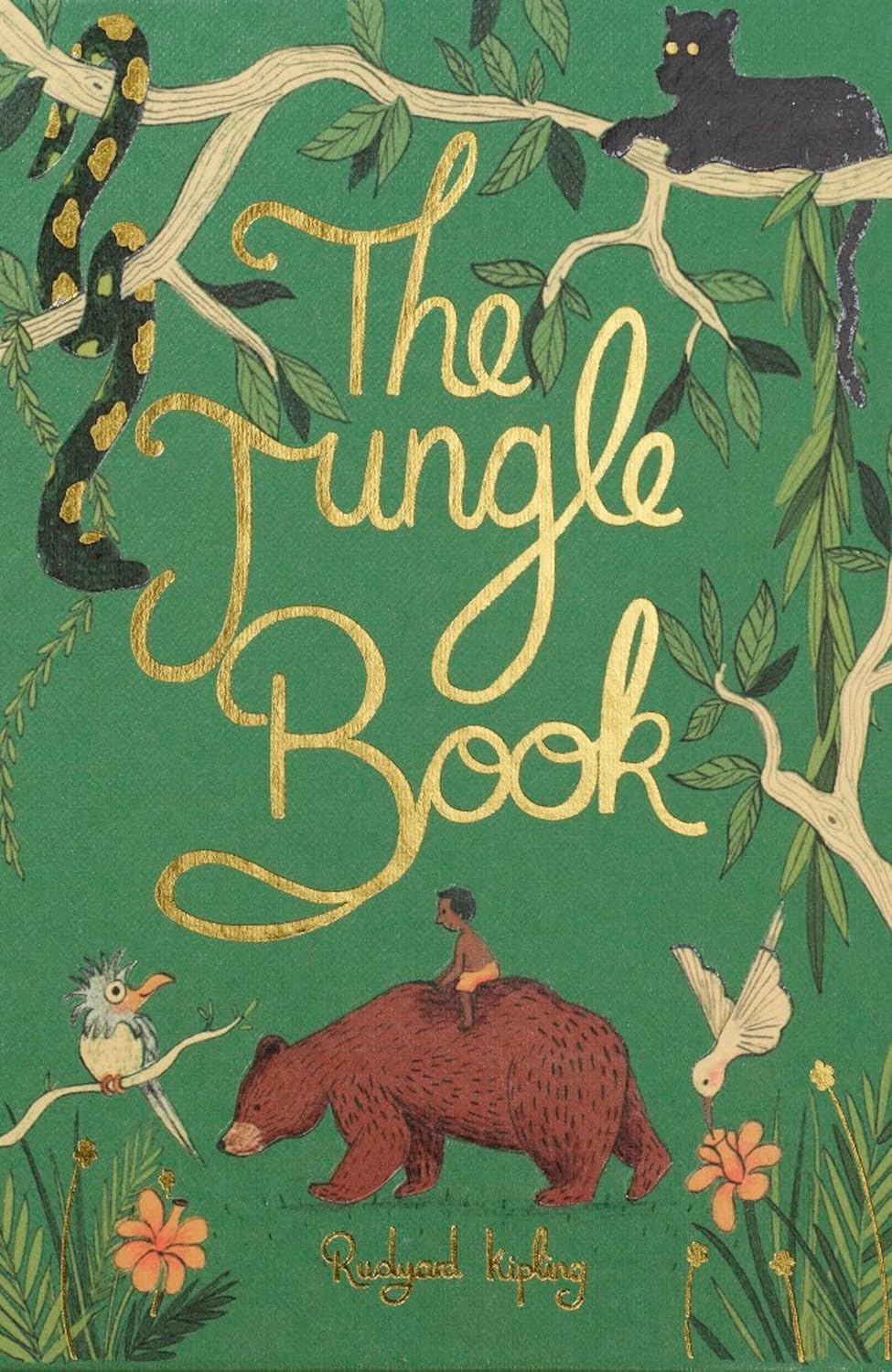
The Jungle Book, written by Rudyard Kipling and illustrated by his father John Lockwood Kipling, is a collection of seven stories first published in 1894 — three of them following Mowgli, a boy raised by wolves in the Indian jungle, and four following other animals including a mongoose, a white seal, a young elephant boy, and a collection of army pack animals. The Mowgli stories introduce Baloo the bear, Bagheera the black panther, Shere Khan the tiger, and Akela the wolf — all characters who have remained in cultural circulation through more than a century of film and stage adaptations. The non-Mowgli stories — “Rikki-Tikki-Tavi,” “The White Seal,” “Toomai of the Elephants,” and “Her Majesty’s Servants” — are each self-contained and widely anthologized independently of the Mowgli narrative. Kipling received the Nobel Prize in Literature in 1907, the first English-language writer to do so. His work is also the subject of substantial critical discussion regarding its celebration of British imperialism and its depiction of colonized peoples — a conversation that belongs in any contemporary classroom engagement with this text. This guide covers reading level, the edition question, age appropriateness, content, themes, the colonial framing, and similar books.
For Parents
A 19th-century collection of animal fables from British India — including the Mowgli stories and “Rikki-Tikki-Tavi” — that has been in continuous circulation for 130 years through dozens of adaptations. Ages 10–14, grades 5–8 for the original unabridged text. The full original has a Lexile of 1140L; most children encounter it through abridged editions or specific individual stories. Content note: the colonialist framework of the original text is worth discussion in any classroom context.
For Teachers
A grades 5–8 classic most commonly taught as individual stories (“Rikki-Tikki-Tavi” is the most frequently anthologized) or in abridged editions focusing on the Mowgli narrative. The full original text at 1140L is demanding; the colonial framing and Kipling’s imperialist views are part of the critical conversation that contemporary classroom use requires. Nobel Prize in Literature 1907. Public domain.
The Jungle Book at a Glance
Find on Amazon →| Author | Rudyard Kipling (1865–1936) |
| Illustrator | John Lockwood Kipling (Rudyard’s father) |
| Original Publication | 1894 (Macmillan, London) |
| Grade Level | 5–8 (full text); 3–6 (abridged/adapted editions) |
| Recommended Age | 10–14 (full text); 8–12 (abridged) |
| Lexile | 980L–1140L (full text, varies by edition) |
| ATOS Level | Not confirmed |
| Format | Short story collection (7 stories + poems) |
| Genre | Animal fables / adventure / classic |
| Setting | India; late 19th century |
| Status | Public domain; multiple adaptations and editions |
| Awards | Nobel Prize in Literature (1907, to Kipling for his body of work) |
For official Lexile and AR levels, visit Lexile.com or AR BookFinder. ReadingVine provides independent editorial assessments.
Editions and Adaptations — The Most Important Practical Question
Most children who encounter The Jungle Book do so through one of three routes: the Disney 1967 animated film, an abridged children’s novel focusing on the Mowgli stories, or the classroom anthology story “Rikki-Tikki-Tavi” read as a standalone. The full original 1894 text — seven stories plus accompanying poems — has a Lexile of approximately 1100–1140L and is demanding prose by any standard. A few key distinctions:
The full collection vs. the Mowgli stories: Many children’s editions present only the three Mowgli stories as a continuous narrative, omitting “Rikki-Tikki-Tavi,” “The White Seal,” “Toomai of the Elephants,” and “Her Majesty’s Servants.” Some go further and combine the Mowgli stories with stories from The Second Jungle Book (1895) to create a single longer narrative. The reading level of these abridged Mowgli editions varies; many are edited for grades 3–6.
“Rikki-Tikki-Tavi” as a standalone: The mongoose story is the most frequently taught individual piece and is widely anthologized in middle-grade readers and literature textbooks. At approximately 6,000 words, it is a manageable short story for independent reading or classroom use and does not require the full collection context.
Our recommendation: For grades 3–6, an abridged Mowgli edition or the standalone “Rikki-Tikki-Tavi” is the most accessible entry point. For grades 7–8 and above, the full Kingston translation (available free at Project Gutenberg) gives the complete text including all seven stories and their accompanying poems.
What Reading Level Is The Jungle Book?
The full original text has a Lexile of 1100–1140L (TeachingBooks: 1140L for one edition; LightSail: 1100L for another) — placing it at approximately a high school reading level by formula. ATOS is not confirmed. Kipling’s prose style is dense and allusive, his vocabulary formal and sometimes archaic, and his sentences long and complexly constructed. The interest level and the appeal of the animal characters are considerably lower (grades 4–7) than the Lexile suggests, which is why abridged editions are the standard for classroom use. For official scores by specific edition, visit Lexile.com or AR BookFinder and search by ISBN.
The Seven Stories
Mowgli’s Brothers — The foundational Mowgli story: the infant Mowgli is accepted by the Seeonee wolf pack, grows up under the protection of Baloo and Bagheera, and is eventually driven out by Shere Khan’s influence over the pack.
Kaa’s Hunting — Mowgli is kidnapped by the Bandar-log (the monkey people) and rescued by Baloo, Bagheera, and the python Kaa.
“Tiger! Tiger!” — Mowgli goes to the village, learns to herd water buffalo, and ultimately drives Shere Khan to his death.
The White Seal — Kotick, a white fur seal, searches for a safe island where his people will be beyond the reach of the sealers who hunt them.
Rikki-Tikki-Tavi — A young mongoose is adopted by a British family in India and must protect them from the cobras Nag and Nagaina. The most anthologized story in the collection.
Toomai of the Elephants — Little Toomai, a boy who works with elephants, is shown a secret gathering of elephants that no adult human has ever seen.
Her Majesty’s Servants — The animals in a British army camp discuss their respective duties and the nature of obedience and service.
Kipling and the Colonial Framework
Rudyard Kipling was born in Bombay in 1865 to British parents and spent formative years in India before being sent to school in England. His writing reflects a deep personal attachment to India alongside the ideological assumptions of the British colonial project — the belief in the civilizing mission of empire, the hierarchical ordering of peoples, and the naturalness of British authority over colonized lands and peoples. These assumptions are embedded in The Jungle Book in ways that are visible at the level of narrative structure: the Jungle Law is an orderly system of rules and hierarchy that mirrors British imperial values; Mowgli’s eventual departure for the human village represents the pull of civilization; the Indian characters are depicted through a colonial lens.
Kipling is now a contested figure in literary history precisely because his literary gifts were inseparable from his imperialist politics. His poem “The White Man’s Burden” (1899) is among the most explicit celebrations of colonial ideology in English-language literature. Contemporary classroom use of The Jungle Book benefits from acknowledging this context — not to dismiss the literary achievement of the stories, but to read them with the historical awareness that makes them more fully understood. The animal fables can be enjoyed on their own terms; the colonial framework in which they are embedded is also there, and worth naming.
The Jungle Book Themes and Lessons
The Mowgli stories are fundamentally about belonging between two worlds — the jungle and the village, the animal and the human — without fully belonging to either. Mowgli knows the Law of the Jungle but is not a wolf; he can walk among humans but is not fully human to them either. This in-between status, and the specific loneliness it creates, is the emotional core of the Mowgli stories and the thread that gives them their lasting resonance with readers who have felt similarly out of place.
The Jungle Law itself — the formal code of behavior that governs the wolf pack and the jungle’s other creatures — is one of Kipling’s most specific inventions and one of the texts most visibly shaped by his colonial worldview: it is explicitly hierarchical, explicitly concerned with order and obedience, and explicitly presents the maintenance of that order as the highest good. Robert Baden-Powell drew heavily on the Jungle Book for the structure and language of the Scout movement — Mowgli, Baloo, Akela, and the Law of the Jungle are all Scout movement touchstones.
Film and Stage Adaptations
The Disney 1967 animated film, the last film approved by Walt Disney before his death, is the most culturally influential adaptation — its songs (“The Bare Necessities,” “I Wanna Be Like You”) are more familiar than the original text for most contemporary audiences. It departs significantly from Kipling: the tone is light comedy rather than moral fable, most of the darker elements of the Mowgli stories are absent, and King Louie (the orangutan who wants to learn to make fire) is not a character in Kipling’s original at all. The 2016 live-action/CGI remake directed by Jon Favreau is considerably closer to the original in tone and was widely praised for its visual effects. Both films are rated PG (the 1967 film predates the PG rating but was rated G on original release). A 2018 Netflix animated series and multiple other stage and screen adaptations exist across the intervening decades.
Books Similar to The Jungle Book
About Rudyard Kipling
Rudyard Kipling (1865–1936) was born in Bombay, India, to British parents. He was sent to school in England at age six — a separation from India that he found deeply painful and that shaped much of his subsequent work. He returned to India as a journalist in his late teens, working for newspapers in Lahore and Allahabad, and the poems and stories he wrote during those years established his literary reputation before he was twenty-five. He married an American woman and spent several years in Vermont, where he wrote The Jungle Books as well as Captains Courageous and the Just So Stories. He received the Nobel Prize in Literature in 1907 — the first English-language writer to receive it — and is also remembered for Kim, Barrack-Room Ballads, and the Just So Stories. His literary reputation declined sharply in the second half of the 20th century as his imperialist politics became more widely understood and criticized; he is now a contested figure whose literary gifts are acknowledged alongside sustained critique of his political commitments. He died in 1936.
The Jungle Book: Frequently Asked Questions
What reading level is The Jungle Book?
Full original text: Lexile 1100–1140L (TeachingBooks); ATOS not confirmed. Grades 5–8 for the full original; grades 3–6 for abridged children’s editions. The interest level is considerably lower than the Lexile — the animal characters appeal to children ages 8 and up — which is why abridged editions are the standard for classroom use. For specific edition scores, visit Lexile.com or AR BookFinder with the ISBN.
What is The Jungle Book about?
A collection of seven stories set in British India — three following Mowgli, a boy raised by wolves, as he grows up among the animals of the jungle and eventually returns to the human world; plus “Rikki-Tikki-Tavi” (a mongoose protecting a British family from cobras), “The White Seal” (a seal searching for a safe home), “Toomai of the Elephants,” and “Her Majesty’s Servants.”
Is The Jungle Book appropriate for children?
The full original text is appropriate for ages 10–14 in terms of reading level; the interest level appeals to children from about age 8. Individual stories (especially “Rikki-Tikki-Tavi”) and abridged Mowgli editions are widely used in grades 3–6. The colonial framing and Kipling’s imperialist worldview are part of the text and worth discussion in any classroom context.
How different is the Disney movie from the book?
Very different. The 1967 animated film is light comedy; the original stories are moral fables with a darker, more formal tone. King Louie (the orangutan) does not appear in Kipling’s text at all. The songs and much of the humor are Disney inventions. The 2016 Jon Favreau live-action/CGI remake is considerably closer to the original in tone and is the more faithful film adaptation.
Is The Jungle Book in the public domain?
Yes — the original 1894 text is in the public domain. Free editions are available at Project Gutenberg and other sources. Specific modern editions with editorial additions, new illustrations, or abridged text may be under copyright.