
 = Partner Site
The Swiss Family Robinson Reading Level: A Complete Guide
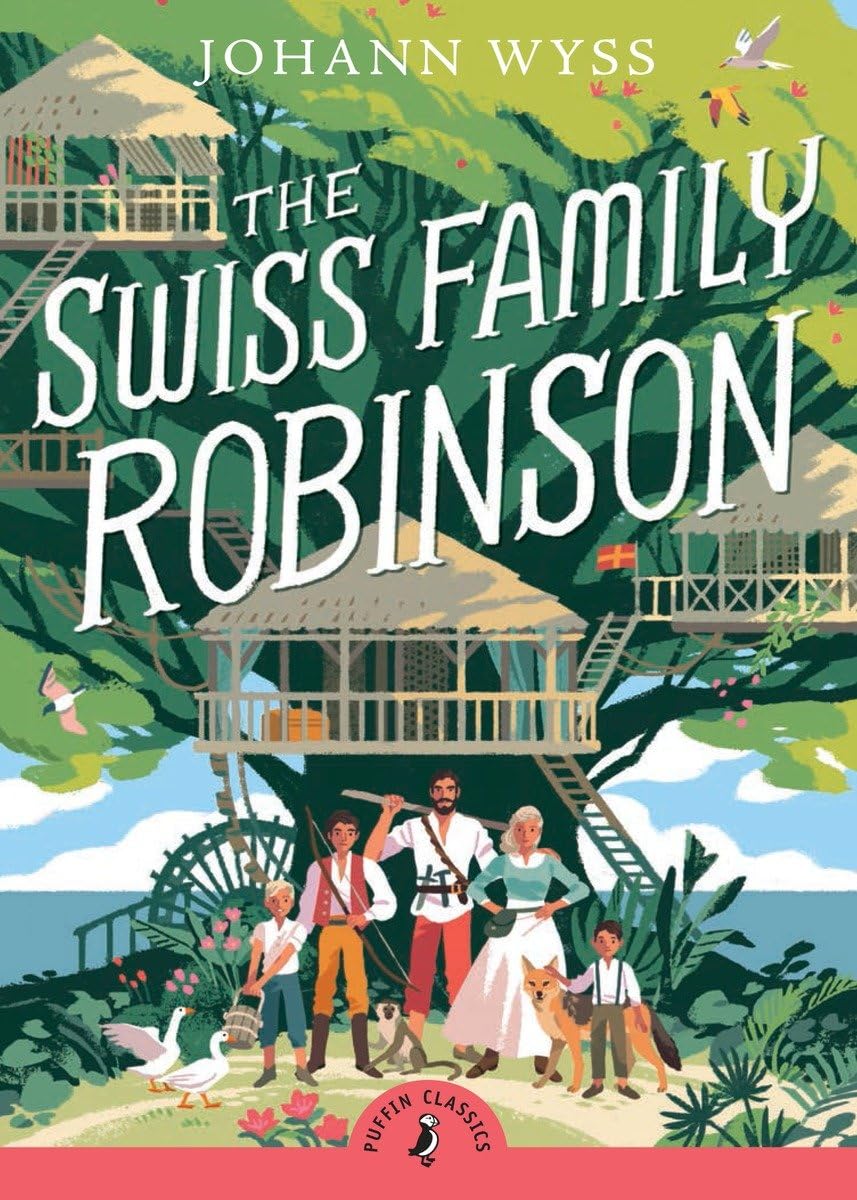
The Swiss Family Robinson, written by Johann David Wyss and first published in German in 1812, is a survival adventure novel about a Swiss family — a father, mother, and four sons — whose ship is wrecked in a storm off a deserted island in the East Indies. The sailors have abandoned ship; the family is alone. What follows is a story of survival, ingenuity, and island life as the family salvages what they can from the wreck, builds shelters, domesticates animals, and gradually transforms their island into something very like a prosperous home. Wyss, a Swiss pastor and father of four sons, wrote the book explicitly to teach his children lessons about natural history, self-reliance, family cooperation, and Christian values — and the novel’s didactic frame is part of its character: the father-character explains the properties of plants and animals at considerable length as the family encounters them. First translated into English in 1814, adapted by multiple editors across multiple translations, and most famously adapted by Disney as a 1960 film, it is one of the most successful novels of the 19th century and a foundational text of the survival adventure genre. This guide covers reading level, the edition question, age appropriateness, content, themes, and similar books.
For Parents
A 19th-century island survival adventure about a family shipwrecked in the East Indies, building a home and life from what they find around them. Ages 8–14, grades 4–7. Content note: the colonialist framing and treatment of the island and its resources reflect 19th-century assumptions. The didactic tone — the father lectures the boys on natural history extensively — is part of the book’s historical character. Multiple abridged editions available for younger readers.
For Teachers
A grades 4–7 classic — frequently used for survival adventure units, for historical fiction, and for comparing the Robinsonade tradition (Robinson Crusoe, Swiss Family Robinson, and their descendants). The colonialist framing of the island deserves classroom discussion. Public domain; available in multiple free editions online and in many abridged classroom editions.
The Swiss Family Robinson at a Glance
Find on Amazon →| Author | Johann David Wyss (1743–1818) |
| Original Publication | 1812 (German); 1814 (English translation) |
| Grade Level | 4–7 (our assessment; edition-dependent) |
| Recommended Age | 8–14 |
| Lexile | 540L–610L (varies by edition; see below) |
| ATOS Level | Not confirmed; varies by edition |
| Pages | Varies significantly by edition (abridged: ~150–250; unabridged: 300–400+) |
| Genre | Adventure fiction / Robinsonade / classic |
| Setting | Deserted island, East Indies; early 19th century |
| Status | Public domain; multiple translations and editions available |
For official Lexile and AR levels, visit Lexile.com or AR BookFinder. ReadingVine provides independent editorial assessments.
Which Edition? The Most Important Practical Question
The Swiss Family Robinson is a public domain text that has been translated, adapted, abridged, and repackaged dozens of times since 1814. The reading level, length, and even the content of the book vary significantly depending on which edition a reader encounters. Key things to know:
Translation and editorial history: The original text was written in German by Wyss in 1812. The first accurate English translation was completed by William Godwin in 1816 and is the closest available version to Wyss’s original; the 2007 Penguin Classics edition (edited by John Seelye) uses the Godwin translation. However, before long the book entered an unusually complicated editorial history with no parallel in most classic children’s texts. A French translator, Isabelle de Montolieu, substantially expanded and altered the story in a 1824 adaptation — adding episodes, new characters, and a different ending — and it is Montolieu’s expanded French version, rather than the Wyss German original, that forms the basis of most widely circulated English editions. William Henry Giles Kingston’s 1879 English edition, which is probably the most commonly encountered unabridged English version, is a translation of Montolieu’s French adaptation rather than of Wyss’s original German. The result is that there is no single “correct” text, and editions vary significantly in content, length, and even character details.
Abridged vs. unabridged: Unabridged editions run 300–400+ pages with extensive natural history commentary from the father-character. Many children’s editions are significantly abridged — sometimes to 150–200 pages — reducing or eliminating much of the didactic commentary while keeping the adventure narrative. The Lexile of 540L (TeachingBooks) is for a standard unabridged edition; the 610L (LightSail) appears to be for a different edition. Abridged editions for younger readers may have lower Lexile scores.
Our recommendation: For classroom use, a well-edited abridged edition that keeps the adventure and reduces the lecture is more readable and more engaging than the full unabridged text. For readers interested in what Wyss actually wrote, the Godwin 1816 translation (available in the 2007 Penguin Classics edition) is the more faithful option. The Kingston 1879 version is freely available at Project Gutenberg and is the version most readers will encounter, but it incorporates Montolieu’s additions rather than reflecting Wyss’s original text alone.
What Reading Level Is The Swiss Family Robinson?
Lexile scores for The Swiss Family Robinson range from approximately 540L to 610L depending on the edition. ATOS is not confirmed for standard editions. Our assessment: grades 4–7, ages 8–14, with the caveat that the appropriate age and grade will depend significantly on which edition is used. The prose of the Kingston translation is clear and somewhat formal — not difficult by modern standards of vocabulary, but paced differently from contemporary children’s fiction. The didactic commentary (the father explaining natural history at length) is the primary accessibility challenge, not the vocabulary. For official Lexile and AR scores for a specific edition, visit Lexile.com or AR BookFinder and search by ISBN.
What Is The Swiss Family Robinson About?
A Swiss family — father, mother, and sons Fritz, Ernest, Jack, and Franz — are shipwrecked in a storm in the East Indies after the ship’s crew abandons them. They make it ashore with some salvaged animals and provisions and begin the work of surviving on a deserted tropical island. The father, who knows a great deal about natural history, practical construction, and animal domestication, guides the family through building shelters, finding food, crafting tools, and making the island livable. Over time, the family constructs increasingly elaborate settlements — including the famous treehouse — domesticates ostriches, builds a boat, and explores the surrounding island and coastline.
The narrative is episodic rather than plot-driven: each chapter typically presents a new challenge (how to catch a turtle, how to build a bridge, what this strange plant is) that the father resolves through knowledge and ingenuity while teaching the boys something about the natural world. The adventure element builds as the island is explored further, wild animals are encountered, and the question of whether rescue will ever come is raised and deferred. The novel’s ending varies significantly by edition — some end with the family rescued and choosing to remain, others with a ship arriving and the family divided about whether to leave.
The Robinsonade Tradition
The Swiss Family Robinson belongs to the Robinsonade — a genre of fiction inspired by Daniel Defoe’s Robinson Crusoe (1719) that features a castaway or group of castaways surviving on a remote island through resourcefulness and ingenuity. The genre was enormously popular in the 18th and 19th centuries; Swiss Family Robinson is its most successful example. Jules Verne reportedly declared it one of his favorite books and was inspired to write a sequel, The Castaways of the Flag (1900). The Robinson Crusoe / Swiss Family Robinson lineage runs through Lord of the Flies, Island of the Blue Dolphins, and many contemporary survival novels; the genre conventions are visible across the catalog.
A Note on Colonialist Framing
The novel reflects the assumptions of its 19th-century European origin in ways that are worth naming for contemporary classroom use. The family treats the island and its resources as available for their use and cultivation without any consideration of whether the island might be inhabited or have prior claims. The perspective is entirely that of European Christian settlers building a civilization in “empty” territory — which was, of course, the ideological framework of European colonialism during the period in which the book was written. The novel does not present Indigenous presence in the East Indies; the island is depicted as uninhabited and available.
This framing does not prevent the book from being read productively, but it does mean that contemporary classroom use benefits from some explicit discussion of the assumptions built into the survival-on-an-empty-island premise — what it took for granted, and why.
The Swiss Family Robinson Themes and Lessons
The novel’s explicit educational purpose — Wyss wrote it to teach his sons — is visible in its structure. The father-character functions as both protagonist and teacher; his knowledge of natural history, animal behavior, and practical construction is the family’s primary survival resource. This gives the book its characteristic texture: adventure narrative interrupted by extended explanation. Readers who embrace the didactic passages as part of the book’s historical character tend to enjoy it more than readers who find the lectures intrusive.
Discussion questions: What knowledge does the father have that helps the family survive — where did he get it, and who in modern life would have equivalent knowledge? What would be different if the family were stranded on the island today? Is the island really “uninhabited” — what assumptions is the book making? How does this book compare to modern survival stories?
The Swiss Family Robinson Film (Disney, 1960)
The 1960 Disney film adaptation, directed by Ken Annakin, is probably the most widely seen version of the story in the 20th century. It is rated G, runs approximately 126 minutes, and diverges significantly from the novel in plot, tone, and characters — most notably by adding a pirate antagonist and a female character (Hannah) who does not appear in the original. The film emphasizes adventure and spectacle over the novel’s didactic natural history content. Many readers who encounter the novel after seeing the film note the significant differences; comparing the two is a productive exercise in adaptation study.
Books Similar to The Swiss Family Robinson
About Johann David Wyss
Johann David Wyss (1743–1818) was born and died in Bern, Switzerland. He was a pastor and a father of four sons, and he wrote Der Schweizerische Robinson as a teaching text for his children — intending it to convey lessons about natural history, practical skills, Christian values, and family cooperation through the medium of adventure narrative. The book was edited for publication by his son Johann Rudolf Wyss, a scholar who wrote the Swiss national anthem, and illustrated by another son, Johann Emmanuel Wyss. It was first published in German in 1812, translated into English in 1814, and has been continuously in print since. Jules Verne reportedly named it as one of his favorite books. It has generated numerous sequels, adaptations, and inspired works across two centuries.
The Swiss Family Robinson: Frequently Asked Questions
What reading level is The Swiss Family Robinson?
Lexile 540L–610L depending on edition; ATOS not confirmed. Our assessment: grades 4–7, ages 8–14, edition-dependent. The primary accessibility challenge is the didactic tone (extended natural history commentary) rather than vocabulary. For specific edition scores, visit Lexile.com or AR BookFinder and search by ISBN.
Which edition of The Swiss Family Robinson should I read?
For classroom use or readers ages 8–12, a well-edited abridged edition is the most readable entry point. For readers interested in what Wyss actually wrote, the 1816 Godwin translation — available in the 2007 Penguin Classics edition edited by John Seelye — is the most faithful to the original German. The Kingston 1879 edition, freely available at Project Gutenberg and the most commonly circulated unabridged English version, is actually an English translation of a French adaptation (Isabelle de Montolieu’s 1824 expansion) rather than of Wyss’s German original, and incorporates substantial additions not found in the source text.
What is The Swiss Family Robinson about?
A Swiss family — father, mother, and sons Fritz, Ernest, Jack, and Franz — shipwrecked in the East Indies after their ship’s crew abandons them. They survive and eventually thrive on a deserted island through the father’s knowledge of natural history and the family’s collective ingenuity, building shelters, domesticating animals, and exploring their new home over years.
Is there a Swiss Family Robinson movie?
Yes — the 1960 Disney film, directed by Ken Annakin, is the most widely seen adaptation. Rated G, approximately 126 minutes. It diverges significantly from the novel — adding a pirate antagonist and a female character — while retaining the island survival premise and the famous treehouse. Comparing the novel and film is a productive adaptation study exercise.
Is The Swiss Family Robinson in the public domain?
Yes — the original text has been in the public domain for well over a century. Free editions are available at Project Gutenberg and many other sources. Note that specific modern editions (with editorial introductions, illustrations, or abridged text) may still be under copyright; the underlying Wyss text is not.