
 = Partner Site
The Wild Robot Reading Level: A Complete Guide
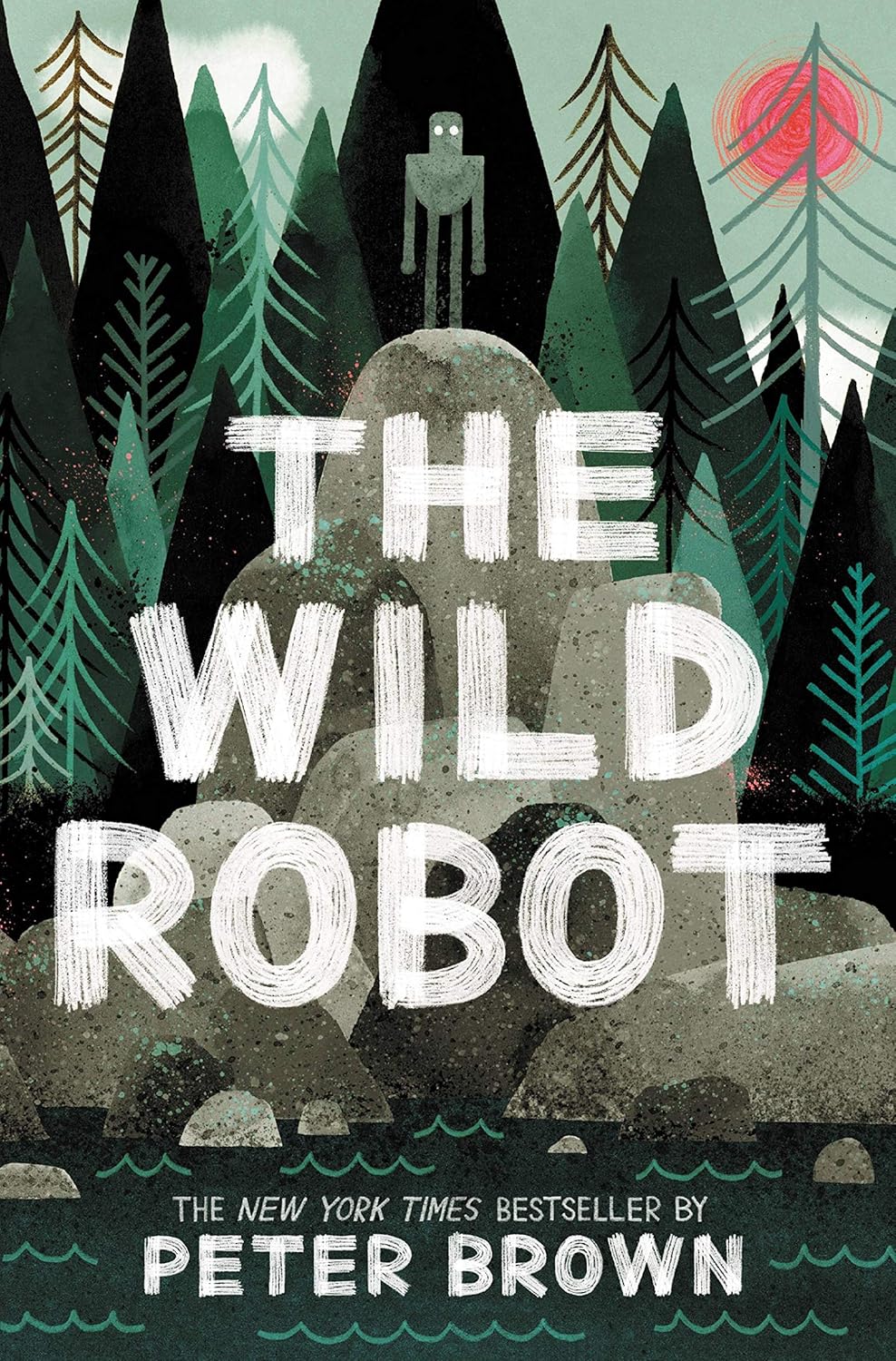
This complete guide to The Wild Robot by Peter Brown covers everything parents, teachers, and students want to know — from reading level and recommended age to a full character breakdown, key themes, and the best books to read next. Published in 2016 by Little, Brown Books for Young Readers, The Wild Robot is a #1 New York Times bestseller, an ALA Notable Book, and one of the most widely loved middle grade novels of the past decade — a book Booklist included on its “50 Best Middle-Grade Novels of the 21st Century” list. It follows ROZZUM unit 7134, nicknamed Roz, a robot who washes up alone on a wild island with no memory of how she got there, no instructions, and no one to help her. What happens next is a story about survival, adaptation, motherhood, and what it means to belong to a place and the creatures in it. The 2024 DreamWorks animated film earned three Academy Award nominations and grossed over $334 million worldwide. This guide gives parents, teachers, and students everything they need before, during, and after reading.
For Parents
The Wild Robot is one of the most beloved read-aloud novels of recent years, and for good reason: it is warm, funny, genuinely moving, and never condescending. The content is appropriate for most readers ages 8 and up. Animals hunt and eat each other, and several animals die — including during a harsh winter sequence — but this is handled honestly rather than graphically. Roz accidentally destroys a goose nest, an act that haunts the story. There is no sexual content, no profanity, and no human violence. The emotional core — a robot learning to love something and then letting it go — tends to hit adults harder than children. Common Sense Media rates it ages 8+. The book is a perennial read-aloud favorite precisely because it gets a room of every age quiet at the same time.
For Teachers
The Wild Robot is exceptionally classroom-friendly: the chapters average two to four pages, the third-person narration is clear and immediate, the illustrations punctuate key moments, and the themes — adaptation, community, technology and nature, parenthood, identity — generate rich discussion at every grade level. Brown deliberately structured each chapter to function almost like a picture book in miniature: a single idea, fully realized, no wasted words. This makes it ideal for close reading activities. The novel pairs naturally with science units on ecosystems, animal behavior, and technology; with social studies discussions about community and cooperation; and with ELA units on point of view and narrative structure. Lexile 740L, ATOS 5.1.
The Wild Robot at a Glance
Find on Amazon →| Author | Peter Brown |
| Published | 2016 (Little, Brown Books for Young Readers) |
| Grade Level | 4–6 (our assessment) |
| Recommended Age | 8–12 |
| Flesch-Kincaid Grade | ~5.1 |
| Word Count | ~35,000 |
| Pages | 320 (including illustrations) |
| Chapters | 80+ (very short chapters, 2–4 pages each) |
| Genre | Science fiction / Adventure / Middle grade novel |
| Setting | A remote, uninhabited island wilderness |
| Awards | #1 New York Times Bestseller; ALA Notable Book; Booklist “50 Best Middle-Grade Novels of the 21st Century”; starred reviews from Kirkus, SLJ, Publishers Weekly, Booklist; Kirkus, NYPL, PW, and Shelf Awareness Best Children’s Books of 2016 |
For official Lexile and AR levels, visit Lexile.com or AR BookFinder. ReadingVine provides independent editorial assessments.
What Reading Level Is The Wild Robot?
The Wild Robot has a Lexile score of 740L and an ATOS level of 5.1. Our editorial assessment is grades 4–6, with a recommended age of 8–12. The publisher’s recommended age is 8–11. These numbers are well-aligned: 740L places the book comfortably within the typical range for grades 4–5, and the ATOS 5.1 corresponds roughly to the reading level of a student entering fifth grade. Both scores reflect the clarity and precision of Brown’s prose style — he writes short, purposeful sentences, keeps vocabulary accessible, and structures each chapter for maximum impact within minimal space.
One thing worth noting: the reading level metrics don’t fully capture the book’s unusual accessibility. Brown spent ten years writing picture books before The Wild Robot, and it shows. He treats each short chapter almost like a picture book in miniature — a single idea, fully developed, no excess — which means the book reads faster and more confidently than its ATOS score might suggest. Strong readers in grade 3 regularly enjoy it independently; grade 2 readers do well with it as a read-aloud. The themes deepen with age, which is why it also appears on middle school reading lists: what a 3rd grader reads as an adventure story about a robot and a goose, an 8th grader can discuss in terms of consciousness, belonging, and what makes something alive.
For official Lexile and AR scores, visit Lexile.com or AR BookFinder.
What Age Is The Wild Robot Appropriate For?
We recommend The Wild Robot for readers ages 8–12. Common Sense Media rates it ages 8+. It is one of the more confidently age-appropriate books in this guide: there is no sexual content, no profanity, and no human violence. What the book does contain, handled honestly and without exploitation, is nature’s own violence — which turns out to be one of its most valuable qualities as a classroom and family text.
Animals hunt and eat each other throughout the novel — this is presented as a factual part of island life, not as horror, but it is not glossed over. A goose family is accidentally killed by Roz early in the story (she falls on their nest), and this act of unintentional harm drives much of the emotional tension that follows. Several animals die during a brutal winter sequence, including some that readers will have come to care about. A fox named Fink is introduced as a predator who regularly tries to eat Brightbill and must be persuaded otherwise. A bear named Thorn is aggressive and frightening early in the story. The ending is genuinely bittersweet and does not resolve in the way children expect a happy story to resolve — Roz is taken away from the island by her makers, and she and Brightbill must say goodbye. This farewell moves many readers of all ages to tears and is worth knowing about in advance. No human violence, no sexual content, no profanity.
For younger readers (ages 6–8): the book works beautifully as a read-aloud, where an adult can contextualize the more intense scenes. Many kindergarten and first grade teachers use it as a class read-aloud, lingering on the illustrations and pausing to discuss what Roz is feeling and why. For independent readers, age 8 is a natural entry point. The film adaptation (rated PG) is a gentler entry for very young children who want to meet Roz before tackling the book.
What Is The Wild Robot About?
A cargo ship sinks in a storm. Five ROZZUM utility robots wash up on a remote, uninhabited island. Only one survives intact. Curious otters accidentally activate her, and ROZZUM unit 7134 — who will come to be called Roz — opens her eyes for the first time on an island full of animals who have never seen a machine before, who are terrified of her, and who want nothing to do with her. She has no memory of where she came from. No mission. No instructions. Just a body full of capabilities she doesn’t yet know how to use, and a world that has no place for her.
What follows is a story of radical adaptation. Roz watches. She learns. She studies the animals’ languages, their patterns, their relationships. She camouflages herself and becomes, slowly, less a monster and more a strange but tolerable presence. Then she stumbles — literally — onto a goose nest, killing the family inside. One egg survives. When it hatches, the gosling imprints on her, and suddenly Roz has a purpose she never expected and is completely unprepared for: she is a mother. With help from an unlikely advisor — Fink, a red fox who starts as an enemy and becomes something closer to a friend — Roz raises the gosling she names Brightbill. She learns what he needs to eat, how to keep him warm, how to build a home. She teaches him to swim. She finds a peregrine falcon named Thunderbolt to teach him to fly. She enlists the leader of the geese to allow Brightbill to join the migration. She makes this wild island — a place where nothing about her makes sense — into something that feels like home.
Then the robots come to take her back. The book’s ending is open and bittersweet: Roz leaves the island she loves and the son she raised, carried away by the machine world she came from. Whether she will return — whether she can — is the question the sequel answers. But the first book ends here: with a robot who started as a tool and became something no one programmed her to be.
The Wild Robot Characters
Is The Wild Robot Banned?
The Wild Robot has not been banned or formally challenged anywhere. It does not appear on the American Library Association’s lists of challenged or banned books. It is an ALA Notable Book, a #1 New York Times bestseller, and one of the most broadly institutionally supported middle grade novels of the past decade — on Booklist’s “50 Best Middle-Grade Novels of the 21st Century” and consistently among the most assigned titles for grades 3–6. Its subject matter and warm tone generate support rather than controversy. If your child’s school has assigned it, it is well within the mainstream of middle grade classroom reading.
The Wild Robot Themes and Lessons
Peter Brown has said that the central idea that drew him to write the novel was the apparent contradiction between a robot and a wilderness — two things that seem to represent opposite values — and the question of what happens when you put them together. The Wild Robot turns out to be his answer: they are not opposites at all. Roz is a machine, but she learns. She observes. She adapts. She forms attachments that change her. She does things she was never programmed to do, and the novel asks readers to consider whether those things — love, grief, sacrifice — are any less real for having been unplanned. The question “is Roz alive?” hovers over every page, and Brown deliberately never answers it. Readers have to decide for themselves, which means they have to think about what they believe life and consciousness actually require.
The theme of belonging runs through every subplot. Brightbill is a goose who doesn’t fit with the other geese — smaller, differently raised, marked by his unusual origins. He faces the particular loneliness of being visibly different from his own kind, a feeling that many children will recognize immediately. Roz, similarly, has no category on this island. She isn’t an animal. She isn’t human. She isn’t the machine she was built to be. The novel suggests that the answer to “where do I belong?” is not found by finding people exactly like you, but by becoming genuinely useful and caring to the community you’re in. For family and classroom discussion: What does it mean to be “wild”? Is Roz a good mother? Can something be alive without being programmed to be? What does Brightbill learn from being raised by someone different from him?
How Many Pages and Chapters in The Wild Robot?
The Wild Robot is 320 pages, with approximately 35,000 words and more than 80 chapters. The chapters are very short — typically two to four pages each — which is deliberate: Brown structures each chapter the way he structures a picture book, as a single self-contained idea. This approach makes the novel extremely readable even for children who normally resist chapter books, and accounts for its popularity as both an independent reader and a classroom or family read-aloud. At a typical pace of a chapter or two per night, most readers finish it in two to three weeks. The novel also includes Brown’s signature grayscale illustrations throughout — not full-page spreads but embedded images that highlight key emotional and dramatic moments. These are not optional; they are part of the storytelling. Reading the illustrated edition is the intended experience. A picture book adaptation, The Wild Robot On The Island, is also available for younger readers who want to meet Roz in a more accessible format.
Books Similar to The Wild Robot
About Peter Brown
Peter Brown was born in 1979 in Hopewell, New Jersey, where he grew up telling stories through drawings before discovering, as a teenager, that he could also tell them with words. He studied illustration at the ArtCenter College of Design in Pasadena, California, and moved to New York City after graduating in 2001 to be closer to the publishing industry. He was working on animated television shows when he signed his first book deal, and he spent the next decade writing and illustrating picture books — including The Curious Garden, Children Make Terrible Pets, and Mr. Tiger Goes Wild — before attempting a novel. He has said that what finally pushed him to try was the story itself: in researching what would become The Wild Robot, he kept finding connections between nature and technology that were too big and too interesting for a picture book to hold. He made himself write one short chapter at a time, treating each chapter the way he treated a picture book — every word earning its place — and eventually arrived at a complete novel. He is the recipient of a Caldecott Honor (for illustrating Aaron Reynolds’ Creepy Carrots!), two E.B. White Read Aloud Awards, and a Children’s Choice Award for Illustrator of the Year, among other honors. The DreamWorks animated film based on The Wild Robot, released in September 2024, earned three Academy Award nominations. The Wild Robot series now includes three novels: The Wild Robot (2016), The Wild Robot Escapes (2018), and The Wild Robot Protects (2023). Peter Brown lives in Maine with his wife and their dog, Pam.
The Wild Robot: Frequently Asked Questions
What reading level is The Wild Robot?
The Wild Robot has a Lexile score of 740L and an ATOS level of 5.1. Our editorial assessment is grades 4–6, recommended ages 8–12. The publisher suggests ages 8–11. The book reads faster than its scores suggest because of the very short chapters and Brown’s picture-book-trained economy of language. Strong grade 3 readers often enjoy it independently; it works beautifully as a read-aloud for grades 1–3. The themes deepen with age, which is why it also appears on middle school reading lists. For official scores, visit Lexile.com or AR BookFinder.
Is The Wild Robot movie the same as the book?
The 2024 DreamWorks film (rated PG, streaming availability varies by region) follows the same core story as the novel — Roz washes up on a wild island, accidentally adopts a gosling named Brightbill, and must teach him to fly before migration. The first two-thirds of the film tracks the book closely. The major difference is the ending: the book concludes with Roz quietly boarding a retrieval ship after Brightbill migrates south — a bittersweet, open-ended farewell. The film adds a dramatic action sequence in which Universal Dynamics sends a fleet of robots led by Vontra to forcibly recapture Roz, the island animals unite to fight them off, and Brightbill has to rescue Roz before her memories can be wiped. The book’s ending is more meditative and restrained; the film’s is more conventionally cinematic. Both are satisfying, but they leave you with different feelings. Children who saw the movie will find the book feels quieter and more interior — which is not a criticism of either.
What happens at the end of The Wild Robot?
After Brightbill successfully joins the migration and flies south for the winter, Roz activates her long-range transmitter — and a Universal Dynamics retrieval ship arrives. The island animals gather to say goodbye. Roz boards the ship. The book ends on an open note: Roz is leaving the island she has come to love, the community she has built, and the son she raised — and the reader does not yet know whether she will return. The sequel, The Wild Robot Escapes, picks up immediately from this point.
Is The Wild Robot appropriate for 2nd and 3rd graders?
Yes, with some context. The publisher recommends ages 8–11 (roughly grades 3–5), but the book is widely used as a classroom read-aloud in grades 1–3 and is beloved by many 7- and 8-year-old readers. The content parents should know: animals hunt and eat each other, several animals die in a winter storm, and a goose family is accidentally killed early in the story. These are handled honestly rather than graphically, and most children in grades 2–3 handle them well. The ending — Roz leaving the island and saying goodbye to Brightbill — tends to be emotionally intense for younger readers. As a read-aloud, it gives adults the chance to pause, discuss, and comfort. As an independent read, it is age-appropriate for strong grade 3 readers and very comfortable for grade 4 and above.
Are there sequels to The Wild Robot?
Yes — the series currently has three books. The Wild Robot Escapes (2018) picks up immediately after the first book ends, following Roz as she navigates life as a farm robot on the mainland and tries to find her way back to Brightbill and the island. The Wild Robot Protects (2023) is the third installment, in which Roz works to protect the island and its creatures from an environmental catastrophe. All three are illustrated by Peter Brown in the same format as the first. A picture book adaptation, The Wild Robot On The Island, is also available for younger readers or fans who want a new visual version of Roz’s story.
Is Roz a girl robot?
Roz is referred to with she/her pronouns throughout the novel and by the film, though the novel never explicitly addresses whether a robot has or needs a gender. Brown has said that Roz’s voice and character feel feminine to him, and the novel’s central themes — motherhood, caregiving, adaptation — map naturally onto that framing. What is more important is that Roz gradually becomes whatever she needs to be to raise Brightbill and serve the island, which means her identity is defined by her relationships and her choices rather than by her programming or her designation. This is, arguably, the novel’s deepest point.
What is the Wild Robot movie rated?
The 2024 DreamWorks animated film is rated PG. Streaming availability varies by region. The rating is for mild action and thematic elements — the film includes animal predation (handled gently), a battle between island animals and Universal Dynamics robots, and an emotionally intense farewell sequence between Roz and Brightbill. The film is appropriate for most children ages 5 and up, though the action climax and the emotional weight of the ending may be intense for very young viewers. It has been praised for its animation, voice cast (Lupita Nyong’o as Roz, Pedro Pascal as Fink), and score.