
 = Partner Site
Pax Reading Level: A Complete Guide
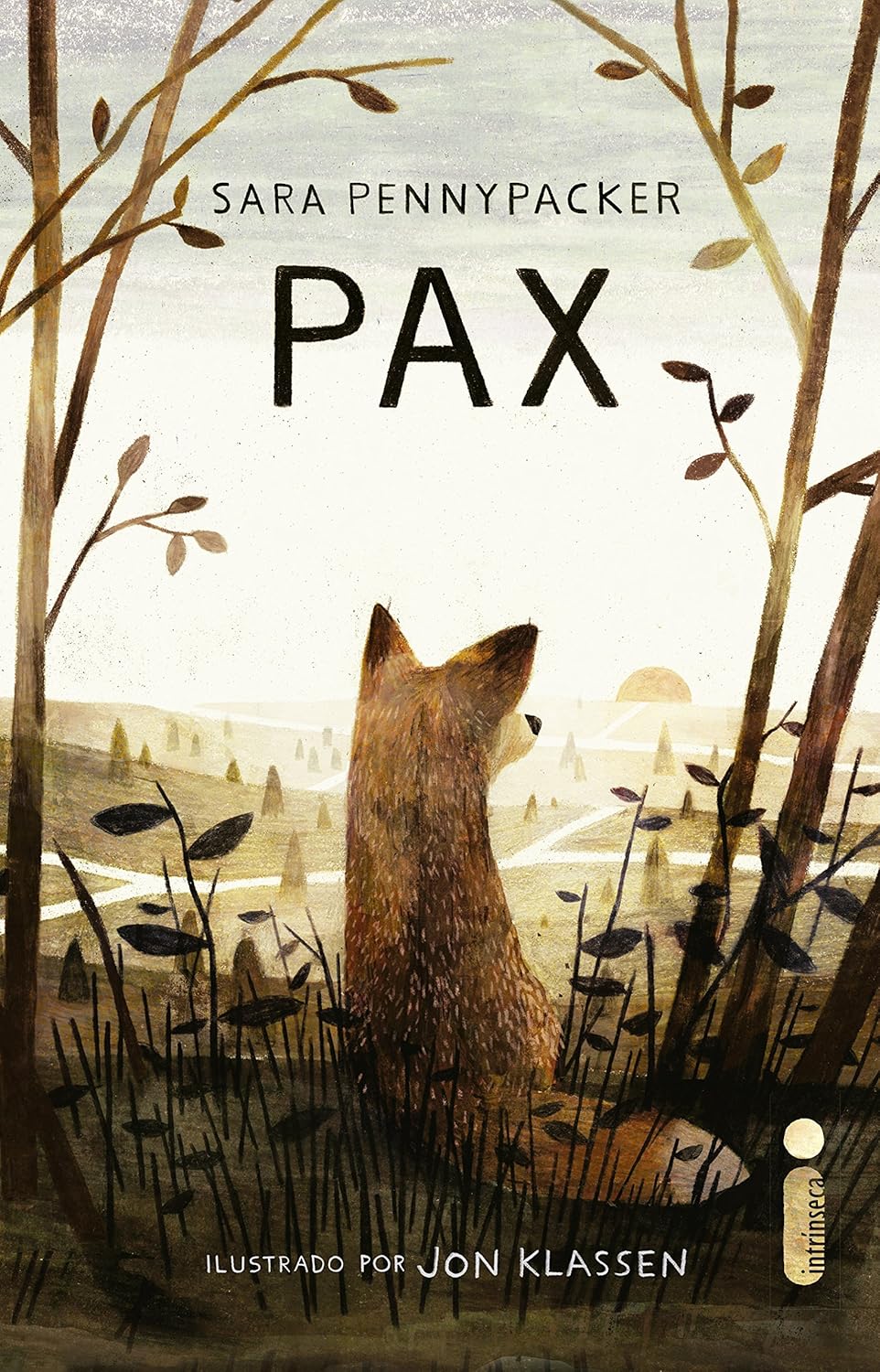
Pax by Sara Pennypacker is a novel about a boy named Peter who is forced to release his pet fox into the wild when his father goes to war, and about Pax himself — the fox — who must learn to survive in a world he was never prepared for. Told in alternating chapters from Peter’s and Pax’s perspectives, it is one of the most emotionally devastating and most beautifully written middle grade novels of the past decade: a war novel, a wilderness survival story, a meditation on wildness and belonging, and a love story between a boy and a fox that will break your heart and put it back together differently. This complete guide covers the reading level, age appropriateness, themes, characters, and everything parents and teachers need to know about this exceptional book.
For Parents
Pax is a quiet, devastating, and ultimately hopeful novel about what we owe to the animals we love and what war costs everyone it touches. It deals honestly with grief, loss, the damage fathers do, and the difficulty of letting go of something you love. Best suited for readers ages 9-12, it is one of those rare books that children and adults read together with equal depth of feeling — the story is accessible but the emotional and moral questions it raises have no age limit. Be prepared: this book will make you cry.
For Teachers
A widely acclaimed novel well suited to grades 4-6, Pax is an outstanding text for teaching alternating perspective narratives, the relationship between form and content, and how authors use animal perspectives to illuminate human experience. The novel’s treatment of war — never named, always present — opens discussions about the costs of armed conflict on civilians, children, and the natural world. Its themes of wildness, belonging, and the ethics of keeping wild animals connect naturally to science curricula on animal behavior and ecology. It pairs well with nonfiction on fox biology and with other war-adjacent novels like Number the Stars.
Pax at a Glance
Find on Amazon →| Author | Sara Pennypacker |
| Published | 2016 |
| Grade Level | 4-6 (our assessment) |
| Recommended Age | 9-12 |
| Flesch-Kincaid Grade | 5.3 |
| Word Count | ~57,000 |
| Pages | 274 (standard hardcover) |
| Chapters | 36 |
| Genre | Literary fiction / contemporary fiction |
| Setting | An unnamed country during an unnamed war, present day |
| Awards | E.B. White Read Aloud Award (2017); Amazon Best Book of the Year (2016) |
For official Lexile and AR levels, visit Lexile.com or AR BookFinder. ReadingVine provides independent editorial assessments.
What Reading Level Is Pax?
Pax reads at approximately a 4th-6th grade level by our editorial assessment, with a Flesch-Kincaid grade level of around 5.3. Pennypacker writes with remarkable precision — every sentence is considered, every word chosen carefully — and the prose has a quality of sustained attention that rewards readers who slow down and inhabit it fully. The alternating chapters in third-person perspective following Peter and Pax are handled with skill: readers need to stay oriented between the two threads and understand how they connect.
The novel’s primary demands are emotional and interpretive rather than linguistic. Pax is a book that requires readers to feel things — to hold Peter’s grief and Pax’s confusion simultaneously, to understand what the unnamed war means without being told directly what it is, to sit with ambiguity and moral complexity without easy resolution. Readers who are primarily plot-driven may find the novel’s pacing slow in its middle sections; readers who respond to language, character, and emotional depth will find it extraordinary.
The book is most commonly recommended for grades 4-6 and works beautifully as a family or classroom read-aloud — the E.B. White Read Aloud Award it received in 2017 reflects what the prose sounds like when spoken. For official Lexile and Accelerated Reader scores, visit Lexile.com or AR BookFinder.
What Age Is Pax Appropriate For?
We recommend Pax for readers ages 9-12. The novel deals with grief, abandonment, the damage an emotionally unavailable father does to a child, war and its civilian costs, and the ethical questions around keeping wild animals as pets. All of these are handled with honesty and care — but this is not a light or comfortable book, and parents should know that going in.
Peter’s mother died in a car accident before the novel begins, a loss that shapes him throughout. His father, consumed by grief and then by his decision to enlist, is emotionally absent and at times actively harmful to Peter — he is the reason Peter must give up Pax, and the relationship between them is one of the novel’s most painful threads. The unnamed war is a constant presence: soldiers move through the countryside, civilians are displaced, and there is violence and its aftermath, depicted without graphic detail but with clear moral weight. Several animal characters are injured or die. Pax faces genuine danger in the wild, and some of the novel’s most affecting passages involve animals suffering from the war’s incidental destruction. There is no sexual content and no strong language. Sensitive readers, particularly those who have experienced loss or have strong attachments to animals, should be prepared for a genuinely emotional reading experience.
Parents who are concerned about the emotional intensity should know that Pax handles its difficult content with extraordinary care. It is not a traumatic book — it is a sad and ultimately hopeful one — but the sadness is real, and readers who love animals deeply will feel Pax’s chapters in particular with an intensity that may surprise them. Many parents and teachers consider this precisely its value: it is a book that teaches children that some things are worth grieving, and that grief, survived, is not the end of the story.
What Is Pax About?
When Peter was five years old, he found a newborn fox kit beside the body of its mother on the road, and he brought it home and raised it. He named the fox Pax. For six years, Pax and Peter have been inseparable — sleeping together, playing together, understanding each other with the wordless intimacy of creatures who have grown up as family. Pax has never learned to fear humans, never learned to hunt, never learned the wild world he came from. He is, in every practical sense, a pet.
Now Peter is twelve, and his father is going to war. His father cannot take Peter to war, and he cannot leave him home alone, so Peter is going to his grandfather’s house — and Pax cannot come. In the opening pages of the novel, Peter and his father drive to the edge of a forest, and Peter throws Pax’s toy mouse into the trees, and when Pax runs to retrieve it, they drive away. Peter knows, as soon as they leave, that he has made a terrible mistake. He knows Pax cannot survive in the wild. He knows he has to go back.
The novel follows two parallel journeys: Peter traveling on foot back to where he left Pax, accompanied eventually by a woman named Vola who lives alone in the forest and who teaches him things he needs to know; and Pax himself, learning alongside a wild fox named Bristle and her brother Gray what it means to be a fox in the world, how to hunt and how to hide and how to be afraid of the right things. The war moves through the landscape of both journeys — in destroyed villages, in the trauma carried by the people Peter and Vola encounter, in the devastated terrain that separates a boy from his fox.
Sara Pennypacker has spoken about spending years researching fox behavior and biology before writing the novel, wanting Pax’s experience and perspective to be as accurate as possible. She has also spoken about the decision to leave the war unnamed — it could be any war, anywhere, at any time — because the novel is not about a particular conflict but about what war does to the people and creatures caught in its wake, regardless of the cause or the combatants.
Pax Characters
Is Pax Banned?
Pax has not been banned or challenged and does not appear on lists of frequently challenged books. It is widely embraced by educators, librarians, parents, and readers as an exceptional work of children’s literary fiction and is consistently recommended for classroom use. Its emotional intensity and its honest treatment of war and loss have not generated formal challenges — if anything, these qualities are cited as reasons for its value in the classroom.
Pax Themes and Lessons
The central theme of Pax is what it means to love something enough to let it go. Peter’s love for Pax is absolute and completely genuine, and the novel never questions it. But Pax is a fox — a wild animal who was removed from the wild and shaped into something he was not meant to be, and who must, at enormous cost, find his way back to what he is. The novel asks whether love that holds on is always love, or whether some love requires the hardest thing: releasing what you love into a life it needs but that does not include you.
War is the novel’s persistent backdrop and moral context. Pennypacker never names it or explains it; it is simply present, the way war is always simply present in the lives of the people and creatures it displaces. The novel is not a war story in the conventional sense — there are no battle scenes, no politics, no sides — but it is profoundly about what war does: to the land, to the animals, to the children left behind, to the adults who carry it home in their bodies and their silences. Vola is the novel’s most direct embodiment of this cost, but Peter’s father is too, and the ruined landscape is too.
The ethics of keeping wild animals as pets runs quietly through the novel as a third theme, never becoming didactic but always present. Pax’s situation — loving a human world he was imprinted on, unable to fully inhabit the wild world he came from — is the direct result of a human choice made with love but without full consideration of its costs. Pennypacker is not condemning Peter’s father for bringing Pax home, but she is asking readers to think carefully about what we do when we take wild things and make them domestic.
Discussion starters for classrooms: What does Pax’s experience tell us about keeping wild animals as pets? How does the unnamed war affect the characters who never fight in it? What does Vola teach Peter that his father couldn’t? What does the novel say about the difference between the love that holds on and the love that lets go? Why do you think Pennypacker chose not to name the war or the country?
How Many Pages and Chapters Are in Pax?
The standard hardcover edition of Pax is 274 pages, divided into 36 chapters that alternate between Peter’s perspective and Pax’s. Chapters average around seven to eight pages each. The word count is approximately 57,000 words. The alternating chapter structure creates a specific reading rhythm: each switch of perspective is a small cliffhanger, and the novel’s momentum is built from the reader’s need to know how both threads are progressing simultaneously.
For readers in the target age range of 9-12, expect a reading time of roughly 5-8 hours, or about a week and a half of steady reading at 30 minutes per session. Many readers finish it in two or three extended sittings once the story has them. As a classroom read-aloud, the novel is exceptional — the E.B. White Read Aloud Award recognized the quality of Pennypacker’s prose as spoken, and the alternating perspectives can be handled by assigning different voices to different readers. It works well in a two-to-three week classroom unit, with the fox biology and war themes providing strong cross-curricular connections.
Books Similar to Pax
About Sara Pennypacker
Sara Pennypacker is an American author best known for two very different kinds of books: the enormously popular comic chapter book series about Clementine, a funny and irrepressible elementary school girl, and Pax, which is as far from comic chapter books as a children’s novel can get. The range speaks to her versatility. Pennypacker has spoken extensively about the years of research that went into Pax — studying fox behavior and biology, working with wildlife rehabilitators, reading accounts of war’s effects on civilians and the natural world — and about her conviction that books for children should not protect young readers from genuine emotional difficulty but should equip them to face it. The illustrations throughout the novel were created by Jon Klassen, whose distinctive style and whose gift for rendering animal interiority complement Pennypacker’s prose throughout. A companion novel, Sparrow, was published in 2023 and follows a different character through the same landscape years later. Pennypacker lives in Florida.
Pax: Frequently Asked Questions
What reading level is Pax?
Pax has a Flesch-Kincaid grade level of approximately 5.3. Our editorial assessment places it at grades 4-6 (ages 9-12). The prose is precise and lyrical, and the novel’s primary demands are emotional and interpretive rather than linguistic. It works exceptionally well as a read-aloud. For official Lexile and AR scores, visit Lexile.com or AR BookFinder.
Does Pax die at the end?
This is the question every parent and every animal-loving reader asks before picking up this book, and it deserves a direct answer: no, Pax does not die. The ending of Pax is not a happy ending in the conventional sense — it is more complicated and more honest than that — but Pax survives. What the ending asks of both characters, and of readers, is something more difficult than death: it asks what real love requires when two creatures belong to different worlds. The ending is earned, true, and genuinely moving, but it is not a tragedy.
Why is the war in Pax never named?
Pennypacker has spoken directly about this choice: she wanted the war to be universal rather than specific, because the novel is not about a particular conflict but about what war does — to the land, to the animals, to the children left behind, to the adults damaged by it. Naming a war would have located the story in a specific political context and invited readers to evaluate that context. Leaving it unnamed keeps the focus on the human and animal experience of war’s effects, which is the same regardless of the cause or the combatants. The unnamed war could be any war, in any country, at any time in the last hundred years. This is intentional and it is the right choice for what the novel is trying to do.
Is Pax appropriate for a child who is grieving or has experienced loss?
This requires careful judgment, and the answer depends on the child and the nature of their loss. Pax deals directly with grief — Peter’s grief for his mother, his grief at losing Pax, Vola’s grief for what war cost her — and it takes grief seriously rather than rushing past it or resolving it neatly. For children who have experienced loss and are ready to encounter it in fiction, the novel can be deeply validating: it renders grief with honesty and says, implicitly, that what you are feeling is real and worth feeling. For children who are in the acute phase of grief, it may be too much too soon. Parents who are unsure should consider reading it first themselves or reading it alongside their child.
How accurate is Pax’s fox perspective?
Quite accurate — and deliberately so. Pennypacker spent years researching fox behavior and biology before writing the novel, working with wildlife rehabilitators and studying fox cognition. Pax’s chapters reflect real fox perception: the primacy of scent over sight, the specific social structures of fox families, the way foxes communicate and navigate their territories. The novel does anthropomorphize Pax to the extent necessary for a narrative — he has thoughts and feelings that are rendered in human-readable language — but Pennypacker was careful to root those thoughts and feelings in what is actually known about fox cognition and behavior. Teachers who want to extend the novel into science curricula will find the fox biology accurate and teachable.
What grade is Pax typically assigned in?
Pax is most commonly assigned in grades 4, 5, and 6, both as independent reading and as a class text. It is particularly well suited to units on human-animal relationships, war and its costs, perspective-taking and empathy, and the craft of alternating-perspective narrative. Its cross-curricular connections to fox biology, ecology, and the effects of war on civilian populations make it a strong choice for interdisciplinary units.
What is the E.B. White Read Aloud Award?
The E.B. White Read Aloud Award is given annually by the Association of Booksellers for Children to books that exemplify the finest tradition of read-aloud literature — books whose prose is so carefully crafted that reading them aloud becomes a distinct and pleasurable experience. The award is named for E.B. White, author of Charlotte’s Web, Stuart Little, and The Trumpet of the Swan, whose prose is a standard for clarity, precision, and beauty in children’s writing. Pax won the award in 2017 in the middle reader category, a recognition of the quality of Pennypacker’s prose and its suitability for the read-aloud experience.
Is there a sequel to Pax?
Yes. Sparrow, published in 2023, is a companion novel set in the same world — the same unnamed country, the aftermath of the same war — but following a different protagonist: a girl named Sparrow navigating the war’s aftermath. It is not a direct sequel following Peter and Pax but a companion that expands the world and continues the exploration of war’s costs on children and the natural world. The first novel stands completely on its own and tells a complete story.