
 = Partner Site
A Midsummer Night’s Dream Reading Level: A Complete Guide
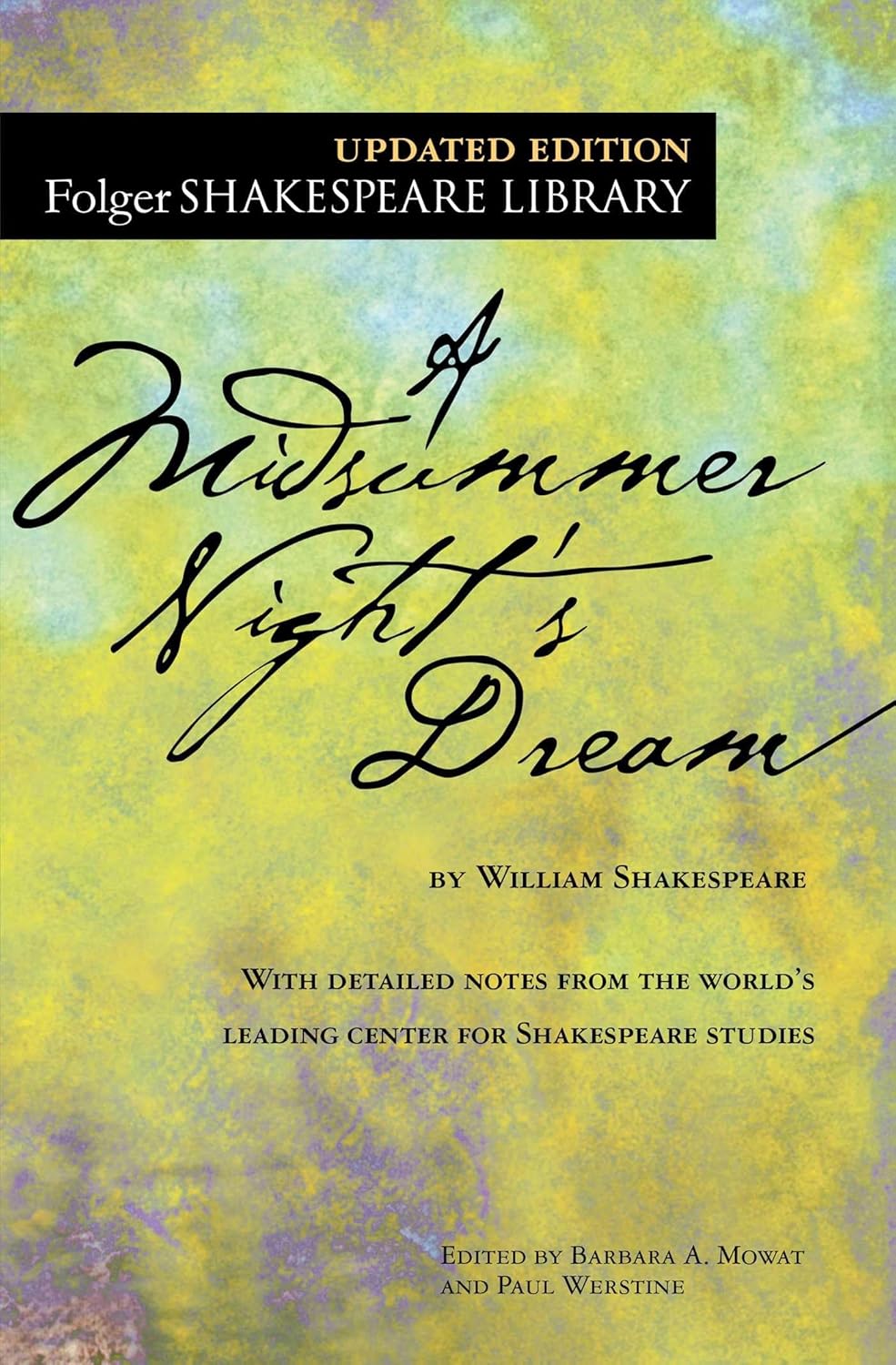
A Midsummer Night’s Dream by William Shakespeare is a comedy about what happens to four young Athenian lovers and a troupe of amateur actors when they wander into an enchanted forest on midsummer’s eve and become entangled with the quarreling king and queen of the fairies. Written around 1595–1596 — during the same period as Romeo and Juliet — it is Shakespeare’s most purely playful work and his most formally inventive: a play about dreams and enchantment that is itself dreamed, structured so that its logic dissolves and reforms the way dreams do. It is frequently taught as the first Shakespeare text in American secondary schools, and the one most often used to introduce the pleasures of Shakespeare’s language before the weight of the tragedies. This complete guide covers A Midsummer Night’s Dream‘s reading level, recommended age, content considerations, characters, themes, and plays and books similar to A Midsummer Night’s Dream, designed for parents, teachers, and students.
For Parents
Shakespeare’s most accessible comedy — a fantasy of lovers lost in an enchanted wood, fairies, magic, and a man temporarily given a donkey’s head. Sexual innuendo is present but mild by Shakespeare’s standards. Appropriate for ages 12 and up; widely assigned in grades 8–10 as an introduction to Shakespeare.
For Teachers
The standard introductory Shakespeare comedy for American secondary schools, with exceptional curriculum support from the Folger Shakespeare Library. The play’s three interwoven plots — the fairy court, the lovers, the mechanicals — make it ideal for teaching how subplot and main plot interact. Bottom and the mechanicals give reluctant readers an accessible entry point before the more demanding language of the lovers and fairies.
A Midsummer Night’s Dream at a Glance
Find on Amazon →| Author | William Shakespeare |
| First Performed | c. 1595–1596 |
| First Published | 1600 (First Quarto) |
| Grade Level | 8–10 (our assessment) |
| Recommended Age | 12+ |
| Lexile | ~600L (varies by edition; see reading level note) |
| Word Count | ~16,500 (varies by edition) |
| Structure | 5 acts, 13 scenes |
| Genre | Comedy / fantasy |
| Setting | Athens and an enchanted forest; mythological past |
For official Lexile and AR levels, visit Lexile.com or AR BookFinder. ReadingVine provides independent editorial assessments.
What Reading Level Is A Midsummer Night’s Dream?
As with all Shakespeare plays, Lexile scores for A Midsummer Night’s Dream vary by edition and are unreliable as guides to actual reading demand — the Lexile algorithm does not work well on verse, and different editorial treatments of the same text can produce scores hundreds of points apart. The Folger edition shows approximately 600L; other editions differ. ATOS data is not available for the original text. For this play in particular, the formula scores are less useful than the honest description: it is the most linguistically accessible of Shakespeare’s major plays, but it is still Early Modern English verse, and it still requires the patience and annotation that Shakespeare always requires.
What makes A Midsummer Night’s Dream the most practical introductory Shakespeare text is not that its language is simple — it isn’t — but that it is forgiving. Where Hamlet‘s soliloquies require careful philosophical unpacking and Macbeth‘s imagery is relentlessly dark, A Midsummer Night’s Dream‘s language is musical and playful, full of rhyme and rhythm that carry a reader along even when individual words are opaque. The mechanicals — Bottom the weaver and his friends rehearsing their terrible play — speak in accessible prose, giving students a toehold before the more demanding verse of the lovers and the fairy court.
At approximately 16,500 words, it is the shortest of Shakespeare’s major plays — shorter even than Macbeth. Most classrooms complete it in two to three weeks. It is a Common Core ELA Text Exemplar for grades 6–8, and is widely assigned in grades 8–10. For official Lexile and AR scores, visit Lexile.com or AR BookFinder. ReadingVine’s assessments are independent editorial judgments.
What Age Is A Midsummer Night’s Dream Appropriate For?
We recommend A Midsummer Night’s Dream for readers ages 12 and up. The play contains sexual jokes and innuendo — primarily in the exchanges between Oberon and Titania and in some of Puck’s commentary — but it is mild by Shakespeare’s standards and considerably less explicit than Romeo and Juliet. Titania’s enchanted infatuation with Bottom (a man with a donkey’s head) has an erotic dimension that the play treats as comic rather than graphic. The play contains no deaths, no violence, and no serious harm to any character. It is, by the standards of the tragedies, entirely benign.
Parents occasionally raise concerns about the fairy magic and the manipulation of the lovers by Oberon — Titania is given a love potion against her will, and the four lovers are enchanted into different pairings without their consent. The play treats these as comic rather than troubling; Oberon’s actions are presented as ultimately benevolent. Whether the consent issues in the play warrant discussion with younger students is a productive classroom question, and one the play itself supports.
What Is A Midsummer Night’s Dream About?
The play has three interwoven plots that collide in the enchanted forest outside Athens. The first: Theseus, Duke of Athens, is to marry Hippolyta in four days. Egeus, an Athenian nobleman, demands that his daughter Hermia marry Demetrius, the man he has chosen for her. Hermia loves Lysander. Egeus invokes Athenian law: marry Demetrius, enter a convent, or die. Hermia and Lysander plan to elope through the forest. Helena, Hermia’s best friend, loves Demetrius and betrays the plan to him — hoping he will follow Hermia into the forest and notice her instead. All four lovers end up in the woods on the same night.
The second plot: Oberon, King of the Fairies, is quarreling with his wife Titania over custody of a changeling boy she has adopted. Oberon sends his servant Puck to fetch a magical flower whose juice, applied to sleeping eyes, makes the sleeper fall in love with the first creature they see on waking. He intends to use it on Titania to distract and humiliate her. He also notices Demetrius and Helena and tells Puck to anoint Demetrius’s eyes so that he will love Helena — attempting, in his kingly way, to fix the situation he has observed. Puck anoints the wrong man: Lysander instead of Demetrius.
The third plot: Bottom the weaver and a group of Athenian craftsmen — the “mechanicals” — are rehearsing a play they intend to perform at Theseus’s wedding: the tragedy of Pyramus and Thisbe. Puck, finding them rehearsing in the forest, transforms Bottom’s head into that of a donkey as a prank. When Titania wakes under the influence of the flower juice, she sees Bottom and falls instantly in love. Bottom accepts the adoration of the Fairy Queen with cheerful bewilderment and complete dignity.
The night in the forest is a sustained comedy of magical error: Puck eventually anoints Demetrius’s eyes as well, so both men now love Helena instead of Hermia, and the two women spend the night accusing each other of conspiracy while the two men compete absurdly for Helena’s attention. Oberon, having obtained the changeling boy from the enchanted Titania, removes the spell from her and from Lysander. The morning finds all four lovers asleep on the forest floor, the mismatched pairings corrected: Lysander loves Hermia again, Demetrius — whose enchantment Oberon leaves in place — loves Helena. Theseus discovers them at dawn and overrides Egeus’s objections; the lovers are married alongside Theseus and Hippolyta. Bottom and his company perform their terrible, heartfelt play at the wedding. The fairies bless the house. Puck addresses the audience directly.
A Midsummer Night’s Dream Characters
Is A Midsummer Night’s Dream Banned?
A Midsummer Night’s Dream has not been a significant target of formal challenge or banning. It is among the most widely taught of Shakespeare’s plays in American secondary schools and does not appear prominently on any challenged books lists. The general Shakespeare challenges related to adult language, sexual content, and occult references apply in a mild way — the fairy magic and the sexual innuendo have occasionally been cited in district-level reviews — but no documented formal challenge of the play has produced significant removal activity.
It was among the Shakespeare plays affected by the 2023 Hillsborough County, Florida, restrictions discussed in the Romeo and Juliet and Hamlet guides, where the district moved to excerpt-only instruction across Shakespeare pending review of full texts. As with those plays, the Florida Department of Education stated publicly that Shakespeare should not be removed from classrooms.
A Midsummer Night’s Dream Themes and Lessons
The play’s argument about love is embedded in its comic structure: the lover’s preferences are established, reversed by enchantment, restored, and in one case permanently replaced with a different enchantment that is indistinguishable from genuine feeling — and everyone ends the play satisfied. Shakespeare is not arguing that love is meaningless. He is arguing that it is not as rational as people assume, and that the conviction that you know your own desires is more fragile than it feels. Demetrius’s love for Helena at the end is magically induced; it is also exactly what everyone, including Helena, wanted. The question of whether that matters — and why — is what the play leaves the audience with.
The mechanicals’ play-within-the-play is the comedy’s most self-aware element. Bottom and his companions are putting on a tragedy — Pyramus and Thisbe, the same story of star-crossed lovers that Shakespeare turned into Romeo and Juliet — and performing it so badly, with such cheerful ineptitude, that it becomes comedy. The aristocratic audience at the wedding laughs; Theseus’s defense of the performance against his courtiers’ mockery (“The best in this kind are but shadows; and the worst are no worse, if imagination amend them”) is the play’s statement of its own poetics: theater works because audiences bring imagination to it, and a bad performance willingly attended is not a failure.
The forest is the play’s world turned upside down: Athens is the world of law, hierarchy, and Egeus’s paternal authority; the forest is the world of desire, enchantment, and comedy’s disruptive freedom. Shakespeare’s comedies typically move from an ordered world into disruption and back to restored order, and A Midsummer Night’s Dream follows this structure with unusual clarity. The four lovers go into the forest constrained; they emerge paired as they wished to be. Bottom goes in a weaver; he comes back a weaver who has experienced something he cannot fully describe but that has enlarged him. The forest gives everyone what they needed, though not always what they expected.
Discussion questions for classrooms and families: Is Demetrius’s love for Helena at the end real — and does it matter whether it is? What does Theseus’s speech about imagination and lunatics and lovers and poets argue about the nature of theater? Why does Shakespeare make the four lovers so difficult to tell apart — what does the interchangeability say about the nature of romantic love? What does Bottom’s waking speech tell us about the limits of language? How is the mechanicals’ performance of Pyramus and Thisbe a comment on the play we’ve just watched?
How Long Is A Midsummer Night’s Dream?
A Midsummer Night’s Dream is a play in five acts and thirteen scenes. At approximately 16,500 words, it is the shortest of Shakespeare’s major plays — shorter than Macbeth (~17,121 words) and considerably shorter than Romeo and Juliet (~25,599 words). Standard annotated paperback editions run 100–140 pages depending on the edition and annotations. The Folger Shakespeare Library edition is 298 pages including its extensive scholarly apparatus; the play text itself is considerably shorter. In performance, the play runs approximately two to two and a half hours. A classroom typically takes two to three weeks.
The play’s brevity suits its subject: a dream compresses and juxtaposes without transition, and so does A Midsummer Night’s Dream. The three plots alternate with a speed that would feel chaotic in a longer play but here feels like the natural logic of a midsummer night. Act 4 Scene 1 — in which Oberon lifts the enchantments, Titania and Oberon are reconciled, and the four lovers wake to find themselves properly paired — resolves the night’s chaos in a few dozen lines, because that is how dawn resolves dreams.
Plays and Books Similar to A Midsummer Night’s Dream
About William Shakespeare
William Shakespeare wrote A Midsummer Night’s Dream around 1595–1596, in the same extraordinarily productive period that produced Romeo and Juliet, Richard II, and The Merchant of Venice. He was thirty-one or thirty-two years old. The play was probably written for a specific aristocratic wedding entertainment — several candidates have been proposed, none conclusively — and its celebration of marriage and fertility, and the blessing of the bridal house by the fairies at the end, fits the occasion perfectly. Whether or not it was written for a wedding, it has been associated with weddings and celebrations in performance ever since.
The play draws on several sources: Ovid’s Metamorphoses for the Pyramus and Thisbe story and for some of the transformation imagery; Chaucer’s The Knight’s Tale for Theseus and Hippolyta; various folk traditions about fairy magic and midsummer. The character of Puck draws on popular English folklore about Robin Goodfellow — a spirit associated with domestic mischief and rural pranks — rather than on any literary source. The mechanicals have no specific source and are among the most original characters Shakespeare ever created. The play was first published in a quarto edition in 1600 and has been continuously performed in every era since, from Restoration adaptations to Victorian spectacle to the bare-stage productions of the twentieth century. Benjamin Britten wrote an opera based on it in 1960; Felix Mendelssohn’s incidental music (1842) is still the most recognizable musical accompaniment to any Shakespeare play.
A Midsummer Night’s Dream: Frequently Asked Questions
What reading level is A Midsummer Night’s Dream?
Lexile scores vary by edition and are unreliable for verse — one widely used edition shows approximately 600L, but this does not reflect the actual demands of Early Modern English. ATOS data is not available for the original text. Our editorial assessment places it at grades 8–10, ages 12 and up. It is a Common Core ELA Text Exemplar for grades 6–8 and is the most accessible of Shakespeare’s major plays for new readers. For official Lexile and AR scores, visit Lexile.com or AR BookFinder.
What grade is A Midsummer Night’s Dream appropriate for?
We recommend grades 8–10, ages 12 and up. The play contains mild sexual innuendo but no violence, no deaths, and no serious harm to any character. It is the least content-challenging of Shakespeare’s widely taught plays and is widely used as the first Shakespeare text in grades 8 and 9.
How long is A Midsummer Night’s Dream?
Five acts and thirteen scenes; approximately 16,500 words — the shortest of Shakespeare’s major plays. Standard paperback editions run 100–140 pages of play text (annotated editions are longer). Performance runs two to two and a half hours. Most classrooms complete it in two to three weeks.
What is A Midsummer Night’s Dream about?
Four young Athenian lovers flee into an enchanted forest and get entangled with the quarreling fairy king and queen, whose servant Puck accidentally enchants the wrong people — causing both men to love the wrong woman. Meanwhile a group of amateur actors rehearsing a terrible play in the same forest get transformed and enchanted. By morning everyone is sorted out, properly paired, and married. The fairy king’s servant addresses the audience and suggests the whole thing may have been a dream.
Who is Puck in A Midsummer Night’s Dream?
Puck, also called Robin Goodfellow, is Oberon’s servant — a mischievous spirit who carries out Oberon’s instructions, causes much of the night’s chaos through error and playfulness, and ultimately addresses the audience directly in the epilogue. He is drawn from English folk tradition about a domestic spirit associated with pranks and mischief. His line “Lord, what fools these mortals be” is the play’s most quoted summary of its comic argument.
Why does Bottom have a donkey’s head?
Puck transforms Bottom’s head into a donkey’s head as a prank while Bottom and his companions are rehearsing in the forest. His fellow actors flee in terror; Bottom, unaware of the transformation, is puzzled by their reaction. He then encounters the enchanted Titania — who immediately falls in love with him — and spends the night as the honored guest of the Fairy Queen, accepting her devotion with cheerful equanimity. The transformation is reversed by morning, leaving Bottom with a dreamlike memory he cannot quite articulate.
What is the play-within-the-play in A Midsummer Night’s Dream?
Bottom and his friends — the “mechanicals” — perform an adaptation of the Pyramus and Thisbe story at Theseus and Hippolyta’s wedding in Act 5. The same story underlies Romeo and Juliet: two lovers separated by their families, communicating through a crack in a wall, meeting secretly and dying tragically. The mechanicals’ performance is spectacularly bad and genuinely heartfelt, played for maximum comedy. Theseus’s defense of it — that theater works through the audience’s imagination rather than the performers’ skill — is the play’s statement of its own poetics.
Is there an A Midsummer Night’s Dream movie?
Several notable film adaptations exist. The 1935 Hollywood version starring James Cagney as Bottom and Mickey Rooney as Puck is a lavish early sound-era spectacle. The 1999 version directed by Michael Hoffman, starring Kevin Kline as Bottom and Michelle Pfeiffer as Titania, is the most accessible modern adaptation and is rated PG-13. The 1968 Royal Shakespeare Company film directed by Peter Hall is the most critically respected. All three are appropriate for the same age range as the play.