
 = Partner Site
Hamlet Reading Level: A Complete Guide
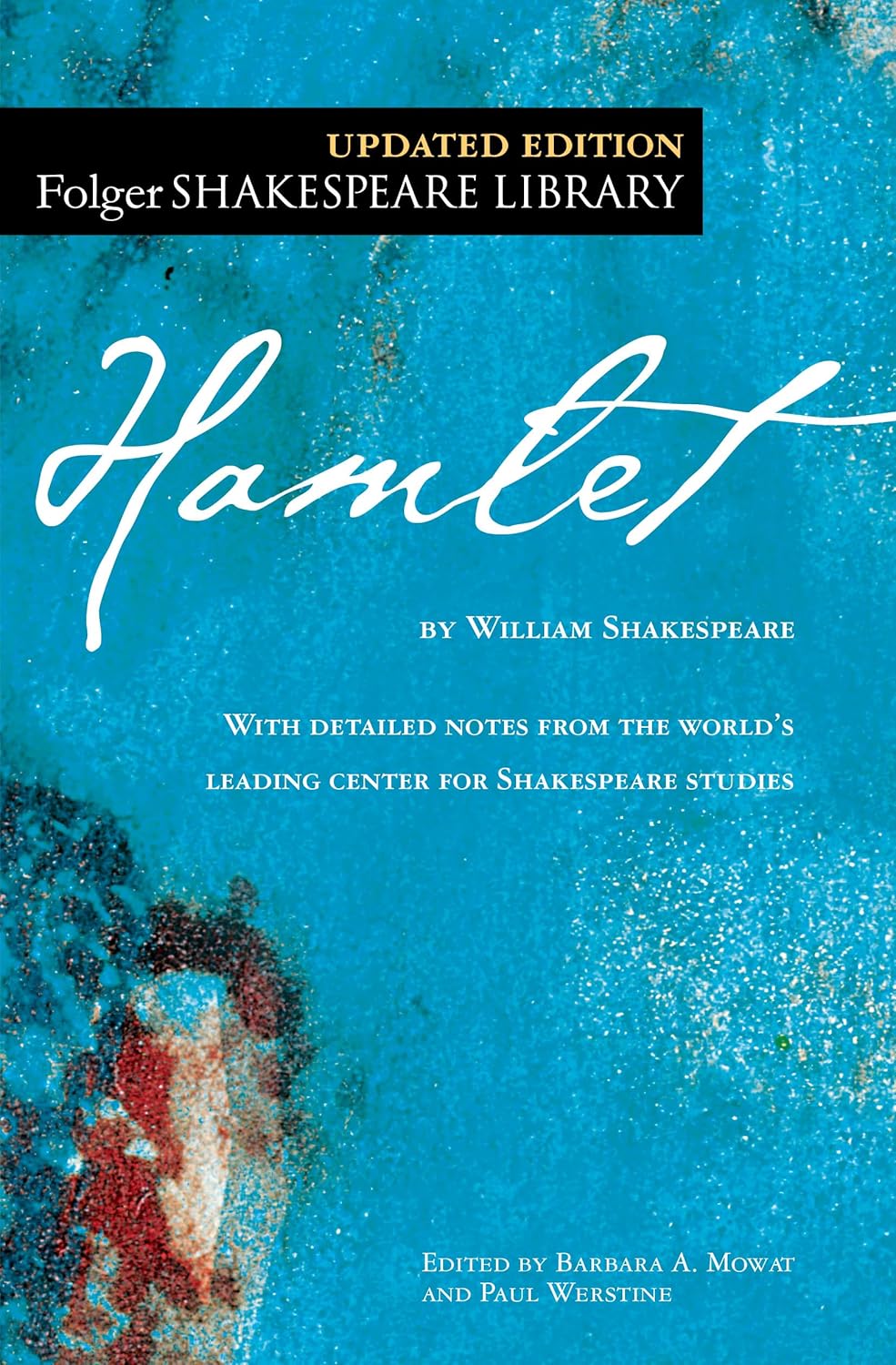
Hamlet by William Shakespeare is a tragedy about a Danish prince who is commanded by his father’s ghost to avenge a murder, and who spends the rest of the play unable — or unwilling, or both — to act. Written around 1599–1601 and first published in 1603, it is the longest of Shakespeare’s plays, the most frequently performed, and the one that has generated more critical commentary than any other work in the English language. Its protagonist is a man thinking at full capacity about a situation that thinking cannot resolve, and the play’s central fascination — four centuries and counting — is that readers and audiences keep finding new answers to the question of why Hamlet cannot simply do what he has been asked to do. This complete guide covers Hamlet‘s reading level, recommended age, content considerations, characters, themes, and plays and books similar to Hamlet, designed for parents, teachers, and students.
For Parents
Shakespeare’s most intellectually demanding play — longer, more philosophically complex, and linguistically denser than Romeo and Juliet. Contains a ghost, murder, madness (feigned and possibly real), multiple deaths including Ophelia’s drowning, and a final scene that kills most of the cast. Appropriate for ages 13 and up; assigned primarily in grades 10–12.
For Teachers
A Common Core ELA Text Exemplar for grades 11–12 and the standard capstone Shakespeare text in American secondary schools. The soliloquies — especially “To be or not to be” — are the richest material in the curriculum for teaching close reading of argument in verse. The question of Hamlet’s delay is one of the most generative discussion topics in all of literary study; no two students, and no two productions, give the same answer.
Hamlet at a Glance
Find on Amazon →| Author | William Shakespeare |
| First Performed | c. 1600–1601 |
| First Published | 1603 (First Quarto) |
| Grade Level | 9–12 (our assessment; Common Core Exemplar: 11–12) |
| Recommended Age | 13+ |
| Lexile | Varies significantly by edition (see reading level note) |
| Word Count | ~30,271 |
| Structure | 5 acts, ~20 scenes |
| Genre | Tragedy / revenge drama |
| Setting | Elsinore, Denmark; unspecified Renaissance period |
For official Lexile and AR levels, visit Lexile.com or AR BookFinder. ReadingVine provides independent editorial assessments.
What Reading Level Is Hamlet?
Lexile scores for Hamlet vary wildly depending on which edition and text source is measured — ranging from scores comparable to Romeo and Juliet (around 560L) to 1390L for other editions. This range reflects the same fundamental problem noted in the Romeo and Juliet guide: the Lexile algorithm was designed for prose and produces unreliable results for verse, and for Shakespeare specifically, differences in spelling modernization, line formatting, and editorial treatment of the text can swing scores by hundreds of points. AR does not have a rating for the original text. The scores are not useful here in the way they are for prose fiction.
What can be said confidently is that Hamlet is significantly more demanding than Romeo and Juliet on every axis that matters. It is longer — about 30,271 words to Romeo and Juliet‘s 25,599. The language is denser and more varied, moving between straightforward dialogue and the compressed philosophical argument of the great soliloquies. The emotional situation is more complex: where Romeo and Juliet‘s tragedy is externally driven (the feud, the timing), Hamlet‘s tragedy is primarily internal — it is about a man who cannot act, and understanding why requires tracking Hamlet’s thinking across five acts of sustained and sometimes contradictory self-examination. Common Core places it as a grades 11–12 exemplar text; most American schools assign it in grade 11 or 12.
At approximately 30,271 words, it runs about twenty percent longer than Romeo and Juliet, but in a classroom it typically takes four to five weeks because the soliloquies require close work and the political situation needs careful tracking. Students who have read Romeo and Juliet first have a significant advantage in following the verse; students encountering Shakespeare for the first time in Hamlet face a steeper initial climb. For official Lexile and AR scores, visit Lexile.com or AR BookFinder. ReadingVine’s assessments are independent editorial judgments.
What Age Is Hamlet Appropriate For?
We recommend Hamlet for readers ages 13 and up. The play contains a ghost demanding murder, political assassination, Hamlet’s treatment of Ophelia (which some productions and readings treat as a form of psychological cruelty), Ophelia’s madness and drowning death, the accidental killing of Polonius, and a final scene in which Gertrude, Laertes, Claudius, and Hamlet all die within minutes of each other. The violence is theatrical and staged; none of it is graphic in the contemporary sense. The play’s sexual content is modest compared to Romeo and Juliet, though Hamlet’s treatment of Ophelia in the “nunnery scene” has a sexual edge that rewards discussion.
The play’s central theme is murder and the demand for revenge; the Ghost instructs Hamlet to kill Claudius and the play ends with four deaths including Hamlet’s own. Ophelia’s mental deterioration and drowning — ruled possibly suicide by the Gravedigger’s scene — is the play’s most disturbing strand for many readers. Hamlet’s behavior toward Ophelia, particularly in the nunnery scene (“Get thee to a nunnery”), reads in most modern interpretations as deliberate psychological cruelty and has generated significant scholarly discussion about what Hamlet is actually doing and why. The play also includes multiple discussions of suicide, most centrally in “To be or not to be” — which is a philosophical meditation on the subject rather than an expression of personal intent, but which requires classroom framing. The overall darkness is substantial and purposeful; Hamlet is not a comfortable play and is not meant to be.
What Is Hamlet About?
The King of Denmark has died suddenly. His brother Claudius has married the widowed Queen Gertrude and taken the throne. Prince Hamlet, the dead king’s son, is in deep mourning — for his father’s death and for what he regards as his mother’s obscenely hasty remarriage. Then a ghost appears on the ramparts of Elsinore castle: the spirit of Hamlet’s father, who tells him that he was murdered by Claudius, who poured poison into his ear while he slept. The Ghost demands revenge. Hamlet vows to act.
He does not act — not immediately, and not cleanly, and not without enormous cost. Instead he assumes an “antic disposition” — performs madness — as cover for his investigation and planning. He arranges for a traveling theater company to perform a play that mirrors the Ghost’s account of the murder, to see whether Claudius reacts with guilt. Claudius does. Hamlet has his confirmation. He still does not act. He finds Claudius alone and at prayer and decides not to kill him at that moment — killing a man at prayer would send him to heaven, not hell, which Hamlet finds unsatisfactory as revenge. Immediately after, he accidentally kills Polonius, Ophelia’s father, mistaking him for Claudius behind a curtain. This is the turning point: the one killing Hamlet commits in the play is the wrong one, the unintended one.
Polonius’s death unravels everything. Ophelia, already destabilized by Hamlet’s behavior toward her, breaks under the weight of her father’s death and drowns — possibly by accident, possibly by choice, the play declines to say. Her brother Laertes returns from France furious and ready to kill Hamlet for his father’s murder. Claudius manipulates Laertes into an assassination scheme: a fencing match with poisoned blade and poisoned wine as backup. In the final scene, Gertrude drinks the poisoned wine. Laertes wounds Hamlet with the poisoned blade. Hamlet wounds Laertes in turn. Both Laertes and Hamlet are dying. Hamlet finally kills Claudius — stabbing him with the poisoned sword and forcing the poisoned wine into his mouth. Horatio, Hamlet’s only true friend, is the sole survivor of the court. Hamlet asks him to tell his story.
Hamlet Characters
Is Hamlet Banned?
Hamlet was banned in Ethiopia in 1978. It has been challenged in American schools for adult language, references to the occult (the Ghost), violence, and sexual content. The challenges are less frequent and less prominent than those against Romeo and Juliet, partly because Hamlet is assigned at a higher grade level where parental challenges to content are somewhat less common, and partly because its sexual content is less overt.
Hamlet — along with other Shakespeare plays — was caught in the 2023 Florida restrictions that affected Romeo and Juliet in Hillsborough County, where the district restricted classroom instruction to excerpts from Shakespeare plays pending review. As with Romeo and Juliet, the Florida Department of Education stated publicly that Shakespeare should not be removed from classrooms.
The play’s treatment of suicide — the question of whether Ophelia’s death was intentional, and the extended philosophical meditation on suicide in “To be or not to be” — has generated some of its specific classroom challenges. The “To be or not to be” soliloquy is a philosophical argument about why people do not kill themselves despite the apparent rationality of escape from suffering, not an encouragement; teaching it as such is the appropriate response to this concern.
Hamlet Themes and Lessons
The play’s most durable question — why Hamlet delays — has generated more critical argument than perhaps any other question in literary history, and the reason it remains open is that Shakespeare wrote Hamlet to be unanswerable. Every explanation is supported by some of the text and contradicted by another part of it. Hamlet says he needs more proof of Claudius’s guilt; then he gets it and still doesn’t act. He says he won’t kill Claudius at prayer because it would send him to heaven; this reasoning is either morally sophisticated or a rationalization. He says he is too cowardly to act; then he acts with considerable courage in other situations. The most honest thing to say about Hamlet’s delay is that it is overdetermined: the play gives you enough reasons to choose from that your choice of explanation reveals something about what you think action requires and whether thinking ever gets in the way of it.
“To be or not to be” is the most analyzed speech in the English language, and the most misread. It is not, as popular culture sometimes treats it, a contemplation of suicide from a man who wants to die. It is a philosophical argument about why human beings generally do not kill themselves despite the apparent rationality of escape from suffering — why “the dread of something after death, / The undiscovered country from whose bourn / No traveler returns, puzzles the will / And makes us rather bear those ills we have / Than fly to others that we know not of.” The speech is Hamlet thinking about why he himself cannot act, and arriving at the conclusion that conscience — in its original sense of consciousness, of thinking and knowing — “makes cowards of us all.” The speech is about action and its obstacles, not about wanting to die.
The play’s political dimension — the “something rotten in the state of Denmark” — is often underweighted in classroom discussions that focus on Hamlet’s psychology. Claudius is a murderer on the throne of a kingdom, and the corruption radiates outward: Polonius is a spy, Rosencrantz and Guildenstern are traitors-by-complicity, Osric is a courtier whose entire existence is performance. Hamlet returns from the sea voyage in Act 5 with a clarity he has been missing — “The readiness is all” — that is partly the resolution of his personal moral crisis and partly the recognition that the state cannot remain in its current condition. The political and the personal problems arrive at the same conclusion at the same moment.
Discussion questions for classrooms and families: Why does Hamlet delay — and does Shakespeare give you a single answer? What is “To be or not to be” actually about? Is Hamlet’s madness real or performed, and does the play let you tell the difference? What does Hamlet’s treatment of Ophelia tell us about him? Who is responsible for Ophelia’s death? What does Hamlet mean by “The readiness is all,” and how does it resolve the problem of action he has been unable to solve for four acts?
How Long Is Hamlet?
Hamlet is a play in five acts and approximately twenty scenes (scene numbering varies by edition). Word count is approximately 30,271 — making it the longest of Shakespeare’s plays and about twenty percent longer than Romeo and Juliet. Standard annotated paperback editions run 180–220 pages depending on the edition and apparatus. In performance, the full text runs approximately three and a half hours; most productions cut substantially and run closer to two and a half to three hours.
A classroom typically takes four to five weeks with the play, longer than Romeo and Juliet because the soliloquies require extended close reading. Act 3 — which contains “To be or not to be,” the nunnery scene, the play-within-the-play, the prayer scene, and the killing of Polonius — is the play’s densest and most important act and often takes as long as the other four combined in a careful classroom. The Gravediggers scene in Act 5 is one of Shakespeare’s finest pieces of comic relief and should not be skimmed.
Plays and Books Similar to Hamlet
About William Shakespeare
William Shakespeare was born in 1564 in Stratford-upon-Avon, England. He wrote Hamlet around 1599–1601, in the middle of his most productive period — the years that also produced Julius Caesar, Othello, King Lear, and Macbeth. The immediate dramatic context was the theatrical competition of Elizabethan London; the political context was the aging of Queen Elizabeth I, with no heir, and the anxiety about succession that runs through all of Shakespeare’s major plays from this period.
Shakespeare drew the Hamlet story from earlier sources: primarily Saxo Grammaticus’s twelfth-century Gesta Danorum, which contains a Danish prince named Amleth who avenges his father’s murder through feigned madness, and a 1570 French adaptation by François de Belleforest. There was also apparently an earlier English play on the same subject — scholars call it the “Ur-Hamlet” — which Shakespeare may have known and reworked. What he added to these sources was Hamlet’s interiority: the soliloquies have no equivalent in any prior version of the story, and the question of why Hamlet delays — which does not exist as a question in the earlier versions, where the prince is feigning madness as a tactical device — is entirely Shakespeare’s invention. The play was first performed around 1600–1601, first published in a pirated quarto edition in 1603, and has been performed continuously worldwide ever since. The role of Hamlet is widely considered the most demanding in Western dramatic literature.
Hamlet: Frequently Asked Questions
What reading level is Hamlet?
Lexile scores for Hamlet vary enormously by edition and are not reliable for verse in any case — the same formatting and measurement problems affect all Shakespeare plays. ATOS data is not available for the original text. Our editorial assessment places it at grades 9–12, ages 13 and up; Common Core designates it as a grades 11–12 exemplar text. Most American schools assign it in grade 11 or 12. For official Lexile and AR scores, visit Lexile.com or AR BookFinder.
What grade is Hamlet appropriate for?
We recommend grades 9–12, ages 13 and up, with most assignments in grades 10–12. The play contains a ghost demanding murder, multiple deaths including Ophelia’s drowning (possibly suicide), and extended discussion of suicide in “To be or not to be.” It is a Common Core Text Exemplar for grades 11–12.
How long is Hamlet?
Five acts, approximately twenty scenes, and about 30,271 words — the longest of Shakespeare’s plays. Standard annotated paperback editions run 180–220 pages. In full performance, approximately three and a half hours; most productions cut to two and a half to three hours. Classroom reading with close discussion typically takes four to five weeks.
What is Hamlet about?
The King of Denmark has been murdered by his brother Claudius, who has married the widowed queen and taken the throne. The dead king’s ghost instructs his son Hamlet to avenge the murder. Hamlet spends the play unable to commit the act cleanly — thinking, testing, feigning madness, performing a play to confirm Claudius’s guilt — while everyone around him is destroyed and his own situation deteriorates. In the final scene he kills Claudius, and is himself killed by a poisoned sword.
Why does Hamlet delay killing Claudius?
This is the play’s central question, and Shakespeare wrote it to have no single answer. Hamlet cites: needing more proof of Claudius’s guilt; not wanting to send Claudius to heaven by killing him at prayer; his own cowardice. Each explanation is contradicted by other parts of the play. The most honest answer is that Shakespeare gives Hamlet enough reasons that choosing between them reveals something about your own assumptions about action, thinking, and moral responsibility — which is why the question has been argued for four centuries and will continue to be.
What does “To be or not to be” mean?
The soliloquy is a philosophical argument about why human beings do not generally kill themselves despite the apparent rationality of escape from suffering — the answer being that “the dread of something after death,” the unknown of what comes after, makes us “rather bear those ills we have / Than fly to others that we know not of.” Hamlet is not expressing a personal desire to die; he is thinking through why action — including the specific action of revenge — is so difficult for beings who think about consequences. The speech is about the obstacles thinking places in the way of doing.
Does Hamlet love Ophelia?
The play gives evidence for both yes and no. Hamlet’s letters to Ophelia, read aloud by Polonius in Act 2, express genuine feeling; his behavior at her grave in Act 5 suggests grief as real as anything he expresses in the play. His treatment of her in the nunnery scene — denying that he ever loved her, using her as an instrument to perform his madness for Polonius and Claudius — is the hardest evidence against. Most readings conclude that Hamlet’s feelings for Ophelia are real and that he damages her anyway, deliberately, as part of the tactical performance of his “antic disposition.” Whether this makes him culpable for her deterioration is a question the play wants students to argue about.
What are the most famous lines in Hamlet?
“To be or not to be, that is the question” opens the most analyzed speech in English literature. “The lady doth protest too much, methinks” — Gertrude’s comment on the play-within-the-play — is routinely misquoted and misapplied. “Something is rotten in the state of Denmark” names the play’s central political condition. “The readiness is all” is Hamlet’s final philosophical statement, arriving at the acceptance of mortality he could not manage in Act 3. “Good night, sweet prince, / And flights of angels sing thee to thy rest” is Horatio’s farewell — the play’s last word on who Hamlet was.