
 = Partner Site
The Old Man and the Sea Reading Level: A Complete Guide
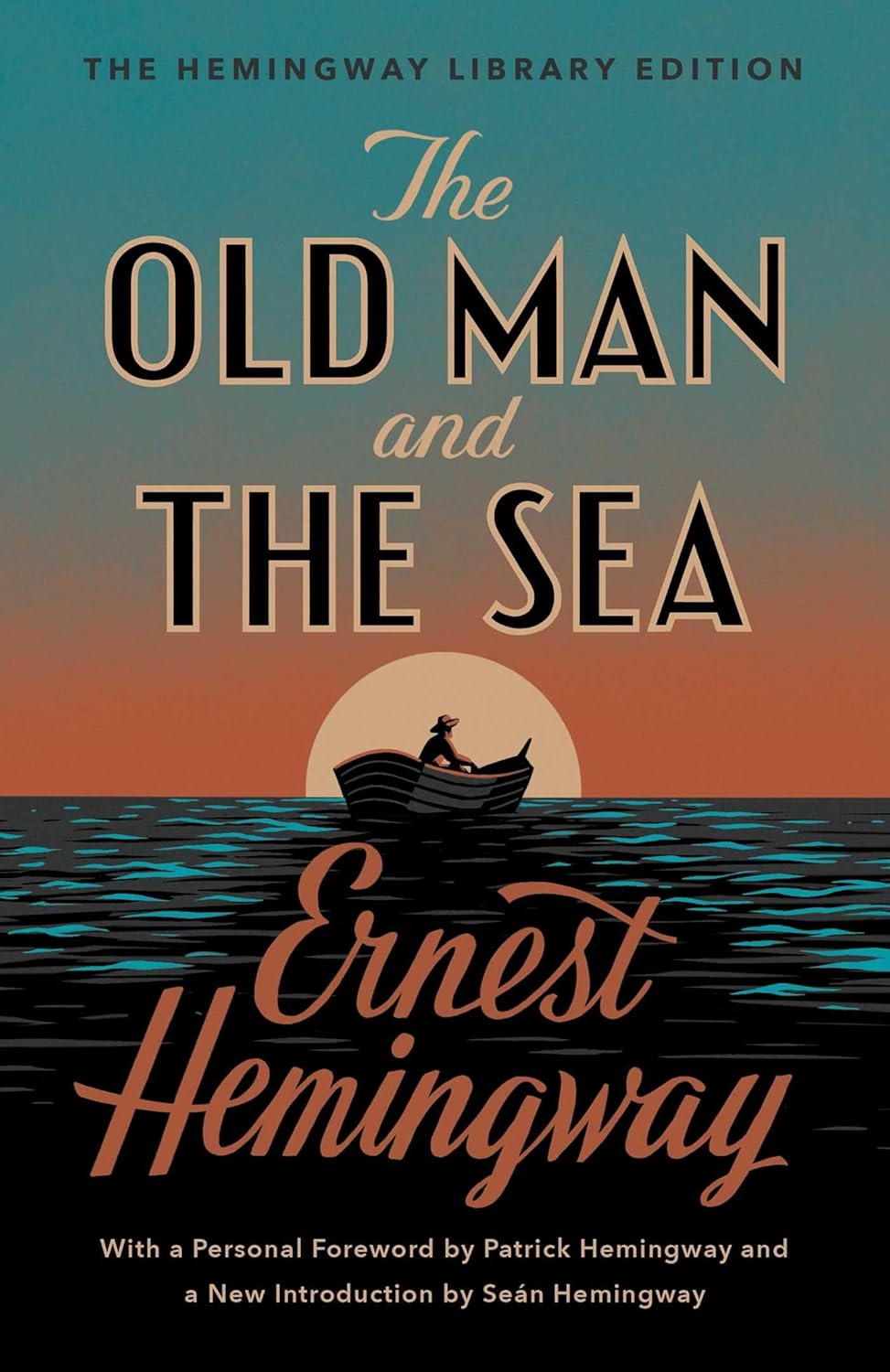
The Old Man and the Sea by Ernest Hemingway is a novella about Santiago, an aging Cuban fisherman who has gone eighty-four days without catching a fish, and the enormous marlin he finally hooks far out in the Gulf Stream — a battle that lasts three days and tests everything he has. Published in 1952 and cited by the Nobel Committee when Hemingway received the Nobel Prize for Literature in 1954, it is the last novel he saw published in his lifetime. Deceptively short and written in Hemingway’s most stripped-down prose, it is a work whose surface simplicity contains more than most novels three times its length. This complete guide covers The Old Man and the Sea‘s reading level, recommended age, content considerations, characters, themes, and books similar to The Old Man and the Sea, designed for parents, teachers, and students.
For Parents
A short, spare, and deeply serious novella about endurance, defeat, and what a person keeps when they have lost everything else. At 127 pages with no chapters, most readers finish it in a single sitting — but what Hemingway is doing beneath the surface requires maturity to appreciate. Appropriate for readers ages 12 and up; widely assigned in grades 8–12.
For Teachers
A rich grades 7–12 text for teaching Hemingway’s “iceberg theory” of prose style, extended symbolism, and the relationship between physical and spiritual ordeal. The novella’s apparent simplicity makes it an excellent text for demonstrating that difficulty in literature is not always a matter of vocabulary or sentence complexity. Pairs naturally with Hemingway’s essay “The Art of the Short Story” and with biographical context about his own experience with aging, failure, and the pressure of legacy.
The Old Man and the Sea at a Glance
Find on Amazon →| Author | Ernest Hemingway |
| Published | 1952 (Scribner) |
| Grade Level | 7–12 (our assessment) |
| Recommended Age | 12+ |
| ATOS Reading Level | 5.1 |
| Lexile | 940L |
| Word Count | 26,560 |
| Pages | 127 (Scribner paperback) |
| Chapters | None — continuous prose |
| Genre | Novella / literary fiction |
| Setting | Havana; the Gulf Stream; early 1950s |
| Awards | Pulitzer Prize for Fiction (1953); cited in Nobel Prize for Literature (1954) |
For official Lexile and AR levels, visit Lexile.com or AR BookFinder. ReadingVine provides independent editorial assessments.
What Reading Level Is The Old Man and the Sea?
The Old Man and the Sea has an ATOS reading level of 5.1 and a Lexile of 940L — scores that place it at roughly 5th grade by the formula metrics, while the book is most commonly assigned in grades 8–12. This is the Hemingway gap, and it is significant: Hemingway’s prose is deliberately plain. Short sentences. Anglo-Saxon vocabulary. Minimal adjectives. The surface is accessible enough that a strong 5th-grade reader can follow the story without stumbling over words. What they will not yet have is the experience necessary to understand what the story is actually about.
Hemingway described his compositional method as the iceberg theory: the dignity of movement of an iceberg is due to only one-eighth of it being above water. The writer omits what they know thoroughly, and the reader feels its presence. In The Old Man and the Sea, the text is about an old man and a fish. What moves beneath the surface — the meditation on aging and failure and grace under pressure, the Christ imagery embedded in Santiago’s ordeal, the question of what constitutes genuine victory when the prize has been stripped away — requires a reader who has enough experience of defeat to recognize what Hemingway is not saying.
At 26,560 words and 127 pages with no chapter breaks, the novella reads in a single sitting of two to three hours. Most high school classes work through it in one week. The brevity is deceptive: the pace is slow, the physical detail is sustained and specific, and the interior monologue that makes up much of the text rewards careful attention rather than rapid consumption. For official Lexile and AR scores, visit Lexile.com or AR BookFinder. ReadingVine’s assessments are independent editorial judgments.
What Age Is The Old Man and the Sea Appropriate For?
We recommend The Old Man and the Sea for readers ages 12 and up. The book contains no sexual content, no profanity, and no violence beyond the physical ordeal of the fishing contest and the sharks. There is nothing in it that requires a content warning. The age recommendation is based entirely on what readers bring to it rather than what might harm them: the novella’s deepest meanings are available to readers who have some experience of loss, failure, or the particular exhaustion of pushing beyond what seemed possible.
Many teachers assign it in grades 8–9 as an introduction to Hemingway’s style and to the concept that literary depth does not require linguistic complexity. Others assign it in grades 11–12 where its themes of aging, legacy, and defeat resonate with students who have lived more. Both assignments work, because the novella operates on multiple levels simultaneously — Santiago’s story is complete and moving at the level of pure narrative, and also at the level of extended allegory, and the reader does not need to access both levels to be affected.
What Is The Old Man and the Sea About?
Santiago is an old Cuban fisherman. He has not caught a fish in eighty-four days. The other fishermen pity him; some mock him. His only companion is a boy named Manolin, who loves him and used to fish with him but whose parents have moved him to a more successful boat. On the eighty-fifth day, Santiago sails far out into the Gulf Stream, further than the other fishermen go, and hooks the largest marlin he has ever seen.
The marlin is too large and too strong to be pulled in. For two days and two nights, it pulls Santiago’s skiff through the open ocean while he holds the line, the cord cutting into his hands, his back cramping, his body exhausted beyond what seems survivable. He talks to the fish, addresses it as a brother, acknowledges its greatness, and refuses to let go. On the third day, Santiago kills the marlin with his harpoon. It is enormous — longer than his skiff. He lashes it to the side and begins the long sail home.
The sharks come. First one, then more. They strip the marlin to its skeleton before Santiago reaches the harbor. He arrives in the night with nothing but the great bare skeleton lashed to his boat. He carries his mast — which he has lugged across the beach in a posture that echoes the carrying of the cross — up to his shack and falls into sleep. Manolin finds him in the morning and sits with him while he sleeps. Tourists photograph the skeleton without understanding what they are looking at. Santiago dreams of lions on the beach in Africa, as he has dreamed throughout the novella — the lions he saw as a young man, which represent something in him that neither exhaustion nor defeat can reach.
The Old Man and the Sea Characters
Is The Old Man and the Sea Banned?
The Old Man and the Sea has not been banned or formally challenged in American schools or libraries and does not appear on any significant challenged books lists. It is widely considered a central text of American literary modernism and has been in continuous assignment in American secondary schools since its publication. No documented challenge activity exists at any significant scale.
The Old Man and the Sea Themes and Lessons
Hemingway’s central argument in this novella is about what a person keeps when they have lost everything measurable. Santiago returns from sea with nothing — the marlin is stripped to bone, the boat is damaged, his body has been through three days of physical ordeal that would have ended most people. By any external measure, he has failed. And yet the novella clearly does not treat him as a failure. What Santiago keeps is harder to name than a fish: the knowledge of what he endured, the experience of having been equal to a genuinely great thing, and a kind of interior dignity that the sharks cannot strip away because they cannot reach it. Hemingway is arguing — as he argued throughout his career — that what matters is not winning but how you conduct yourself when losing, which he called “grace under pressure.”
The Christian symbolism runs throughout the novella and is among the most discussed elements in classrooms. Santiago’s wounds — the line cuts his hands, his back bears the weight of the mast — echo the wounds of crucifixion. He carries the mast up the hill to his shack in the posture of the cross. He cries out in pain twice in ways the text renders in Spanish — a detail Hemingway was specific about. Whether Santiago is a Christ figure in any precise theological sense, or whether Hemingway is using the imagery more loosely to suggest a kind of sacrificial ordeal that purifies rather than destroys, is a question the text deliberately leaves open. What is clear is that Santiago’s suffering is framed as meaningful rather than futile — that there is something beyond the measurable in what he has undergone.
The lions Santiago dreams of throughout the novella — the lions he saw on the beaches of Africa as a young man — are the novella’s most private symbol. They appear at the beginning and the end: before Santiago goes to sea and after he returns. They are associated with youth, vitality, and beauty. Critics have interpreted them variously as representing Santiago’s lost youth, his connection to the primal world beyond human meaning-making, or simply the dreams of a man who has lived fully enough to have something genuinely good to return to in sleep. Hemingway does not explain them. Their presence is the novella’s final word on what Santiago is: a man who, despite everything, still dreams of lions.
Discussion questions for classrooms and families: Is Santiago’s fishing trip a success or a failure — and what does your answer depend on? What does Hemingway mean by “grace under pressure” — can you identify it in Santiago’s behavior during the three-day contest? What do the lions in Santiago’s dreams represent, and why does the novella begin and end with them? How does Hemingway use the marlin as Santiago’s adversary — what does Santiago’s respect for the fish add to the story’s meaning? What does Manolin’s presence at the beginning and end of the novella do that the fishing contest itself cannot?
How Long Is The Old Man and the Sea?
The Scribner paperback is 127 pages with no chapter divisions — the novella is a single continuous piece of prose. Word count is 26,560, making it shorter than many picture books in terms of reading time when measured by standard reading pace, but the pacing is slow and contemplative rather than propulsive. Most readers take two to three hours on a first reading; careful classroom readers working with annotation may take longer.
The absence of chapter breaks is a deliberate formal choice. The three days at sea are a single continuous experience for Santiago, and the text’s unbroken form enacts this: there is no natural stopping place, no moment of relief that would allow the reader to put the book down and return later without losing the accumulation of physical exhaustion and emotional pressure that Hemingway is building. This is the novella’s most important structural decision, and students who notice it are already inside Hemingway’s argument about what the form of a work should do.
Books Similar to The Old Man and the Sea
About Ernest Hemingway
Ernest Hemingway was born in 1899 in Oak Park, Illinois, and spent his early career as a journalist before publishing his first major novels in the 1920s — The Sun Also Rises (1926) and A Farewell to Arms (1929) — establishing his reputation and his prose style. He lived a life of conspicuous adventure: ambulance driver in World War I, war correspondent in the Spanish Civil War and World War II, deep-sea fisherman in Cuba and the Caribbean, big-game hunter in Africa. He was also, by the late 1940s, a man whose public image had outgrown his recent output and who was widely considered to be past his prime.
The Old Man and the Sea was written in Cuba in eight weeks in 1951 and published in full in a single issue of Life magazine in September 1952 — an issue that sold five million copies in two days. The novella’s reception was immediate and enormous; it was understood at once as both a return to form and a kind of summation. The Nobel Committee, awarding Hemingway the prize in 1954, cited it specifically. He was 54 years old and in declining health; the plane crashes he survived in Africa in 1954 during his Nobel trip accelerated a physical deterioration he spent his final years fighting. He died by suicide in 1961 in Ketchum, Idaho, having destroyed most of his working capacity and leaving behind a body of work that includes, alongside the novels, some of the most important short stories in the American tradition. The fishing village and the harbor in Cojímar, Cuba — where he kept his boat — is where he wrote the novella’s world into existence.
The Old Man and the Sea: Frequently Asked Questions
What reading level is The Old Man and the Sea?
The Old Man and the Sea has an ATOS reading level of 5.1 and a Lexile of 940L. These scores underrepresent the novella’s actual literary demands — Hemingway’s deliberately plain prose keeps the formula metrics low, but the depth of what he is doing beneath the surface requires maturity and experience to appreciate. Our editorial assessment places it at grades 7–12 (ages 12+), with most classroom assignments in grades 8–12. For official Lexile and AR scores, visit Lexile.com or AR BookFinder.
What grade is The Old Man and the Sea appropriate for?
We recommend grades 7–12, ages 12 and up. There are no content concerns — no violence, profanity, or sexual content beyond what is inherent in a fishing contest. The age recommendation is about what readers bring to the text: the novella’s meditation on aging, defeat, and what endures rewards readers who have some experience of those things.
How long is The Old Man and the Sea?
The Scribner paperback is 127 pages with no chapter divisions — the novella is a single continuous piece of prose. Word count is 26,560. Most readers finish it in two to three hours. Classroom discussions of Hemingway’s style and symbolism typically fill one week.
What is The Old Man and the Sea about?
An aging Cuban fisherman named Santiago, who has caught nothing in eighty-four days, hooks an enormous marlin far out in the Gulf Stream and spends three days and two nights in a physical contest with it before killing it and beginning the long sail home — where sharks strip his prize to the skeleton before he reaches the harbor. He returns with nothing. He dreams of lions.
What does The Old Man and the Sea symbolize?
The novella operates on several symbolic levels simultaneously. Santiago’s ordeal echoes the passion narrative — his wounds, the carrying of the mast, his cries of pain — suggesting a kind of sacrificial endurance that is purifying rather than merely defeating. The marlin represents worthy adversity, natural dignity, the thing worth pursuing even at total cost. The sharks represent the forces that strip away everything measurable, leaving only what cannot be taken. The lions in Santiago’s dreams represent something in him — youth, vitality, beauty — that neither age nor defeat can reach. Hemingway does not assign these meanings explicitly; they operate beneath the surface of the fishing story, which is why the text is a demonstration of his iceberg theory.
What is Hemingway’s iceberg theory?
Hemingway described his compositional method as the iceberg theory: the dignity of movement of an iceberg is due to only one-eighth of it being above water. The writer omits what they know thoroughly, and the reader feels its presence without being told what it is. In practice, this means Hemingway’s prose says very little about what characters feel, does not explain the significance of events, and trusts the reader to register what is happening beneath the surface. The Old Man and the Sea is the clearest demonstration of this method in his work: the text is about an old man and a fish, and it is also about everything else.
Does Santiago succeed or fail in The Old Man and the Sea?
Both, and the distinction is the novella’s central argument. By external measure, Santiago fails: he returns with a stripped skeleton and an exhausted body, having spent three days at sea to produce nothing. By the measure the novella actually applies — which is the quality of his endurance, the dignity of his conduct, and what he carries inside him when the measurable is gone — he has done something complete and true. Hemingway’s answer to the question is implicit in the last line: Santiago dreams of lions. Whatever the sharks took, they did not take that.
Is there an Old Man and the Sea movie?
Yes — a 1958 film starring Spencer Tracy as Santiago, with a screenplay written in part by Peter Viertel based on the novella. Tracy won an Academy Award nomination for the role. A second adaptation was made in 1990 as a television film starring Anthony Quinn. The 1958 version is the more frequently cited, though its extensive use of studio tanks has been noted as a visual limitation. Watching either alongside the text is useful for seeing how the sustained interior monologue — which is most of the novella — translates into performance.