
 = Partner Site
Amelia Bedelia Reading Level: A Complete Guide
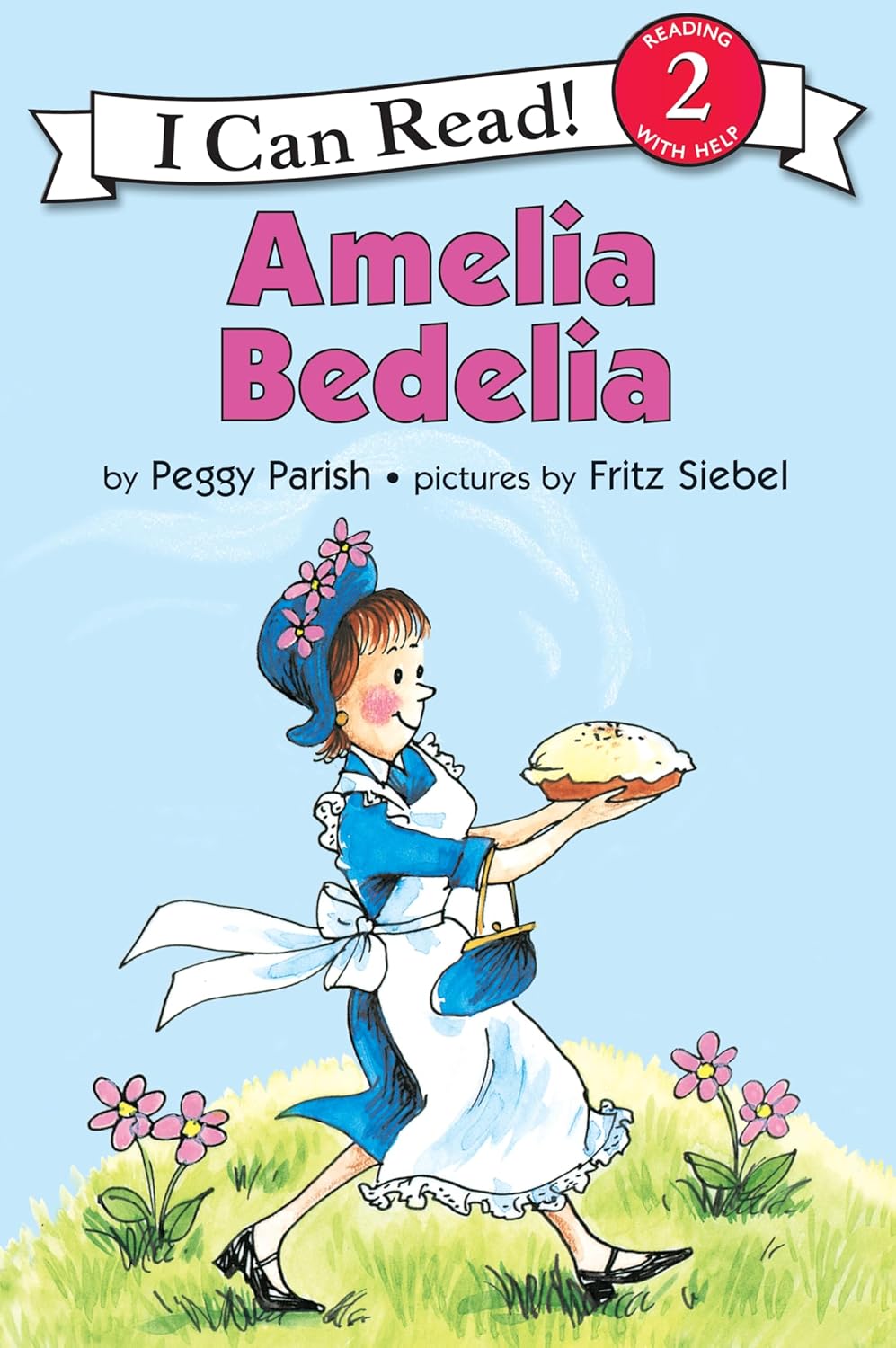
Amelia Bedelia by Peggy Parish, illustrated by Fritz Siebel, is one of the funniest and most enduring early readers in American children’s publishing — a story about a new housekeeper who follows every instruction exactly as written, with spectacularly literal results. First published in 1963 as an I Can Read Level 2 book, Amelia Bedelia has sold over 35 million copies and launched a series that has been making children laugh at the gap between what words say and what words mean for more than sixty years. This guide covers the reading level, recommended age, read-aloud vs. independent reading guidance, themes, and everything parents and teachers need to know about sharing this classic with young readers.
For Parents
Find out whether Amelia Bedelia works best as a read-aloud or independent read for your child, what age range it suits, and why this early reader classic — which teaches figurative language through pure comedy — remains a widely recommended book for children making the transition from beginning readers to longer early chapter books.
For Teachers
Grade-level data, read-aloud timing, key themes, and discussion questions for one of the most widely used early readers for teaching idioms, figurative language, and reading comprehension. Amelia Bedelia has been used in language arts lessons for over sixty years for good reason: no child forgets what “draw the drapes” means after Amelia Bedelia has literally drawn them.
Amelia Bedelia at a Glance
Find on Amazon →| Author | Peggy Parish |
| Illustrator | Fritz Siebel |
| Published | 1963 |
| Grade Level | K–2 (our assessment) |
| Recommended Age | 5–8 |
| Best For | Read-aloud ages 4–7; independent reading ages 5–8 |
| Flesch-Kincaid Grade | 2.7 |
| Word Count | ~1,400 |
| Pages | 64 |
| Chapters | None (continuous early reader) |
| Genre | Early reader / humor |
| Setting | The Rogers household |
For official Lexile and AR levels, visit Lexile.com or AR BookFinder. ReadingVine provides independent editorial assessments.
What Reading Level Is Amelia Bedelia?
Amelia Bedelia is a K–2 reading level by our editorial assessment, with a Flesch-Kincaid grade level of approximately 2.7. At around 1,400 words it is one of the longer books at this level — comparable to Curious George or The Lorax — and it reads as a continuous narrative early reader rather than a picture book. Published as an I Can Read Level 2 book, it is designed for children who can read on their own but still benefit from some support: the sentences are longer than in Frog and Toad or Biscuit, the vocabulary includes occasional unfamiliar words, and the humor requires understanding both the literal meaning and the figurative meaning of a series of idioms simultaneously.
That last requirement is what makes Amelia Bedelia a somewhat unusual early reader. Most books at this level ask children to decode words and follow a plot. Amelia Bedelia asks children to hold two meanings of the same phrase in mind at once — what “dust the furniture” literally means (to apply dust) and what it actually means (to remove dust), and why the gap between those two meanings is funny. Children who get the joke have demonstrated a sophisticated metalinguistic awareness that goes well beyond basic decoding, and the book rewards that awareness with some of the most dependably funny moments in early reader literature. For parents who use specific reading level systems: we recommend checking your child’s level on Lexile.com or AR BookFinder for official scores.
Is Amelia Bedelia a Read-Aloud or Independent Read?
Amelia Bedelia works well as both a read-aloud for ages 4–7 and an independent read for ages 5–8, and it is particularly strong as a bridge book — one of those early readers that a child can read independently but that becomes significantly more satisfying when an adult is present to pause at each new misunderstanding and appreciate the comedy together. Most adults can read it aloud in about 15–20 minutes.
As a read-aloud, the comedy of Amelia Bedelia depends entirely on timing. Each of Amelia’s misinterpretations follows a pattern: she reads the instruction, takes it literally, performs the literal action in complete good faith, and moves on to the next task. The humor comes from the gap between what she thinks she’s accomplished and what Mr. and Mrs. Rogers will find when they return. Reading this aloud means sustaining Amelia’s cheerful obliviousness through each task — she never realizes she’s done anything wrong — while letting the audience accumulate the disaster alongside her. Pausing after each misinterpretation to ask “What do you think she actually should have done?” turns the book into a language lesson without anyone noticing it’s a language lesson.
For independent reading, a confident first or second grader can handle the text. The sentences are longer than in simpler early readers, but the vocabulary is accessible and the illustrations — Fritz Siebel’s cartoonish, expressive drawings of Amelia’s cheerful literal-minded work — support comprehension at every step. Children who read Amelia Bedelia independently often want to tell someone about it immediately afterward, which is both a sign of genuine engagement and an excellent literacy activity.
There is nothing in this book that requires parental preparation. The worst thing Amelia Bedelia does is accidentally ruin a chicken and scatter dirt on clean furniture. The resolution — a lemon meringue pie so good that Mrs. Rogers forgives everything — is one of the most satisfying happy endings in early reader literature.
Before you read each instruction from the list, ask your child: “What do you think Amelia Bedelia will do with this one?” Children who have been introduced to the concept of literal vs. figurative meaning — even informally — will often predict the misunderstanding correctly and find it twice as funny when they’re right. After the book, collect the idioms: “dust the furniture,” “draw the drapes,” “dress the chicken,” “trim the fat.” Ask what each one really means. Amelia Bedelia is the most enjoyable idiom lesson in print.
What Is Amelia Bedelia About?
Amelia Bedelia is a new housekeeper, arriving for her first day of work at the Rogers household. Mrs. Rogers has left a detailed list of chores. Amelia Bedelia, eager to do a good job, works through the list faithfully — but she takes every instruction completely literally. “Dust the furniture” means applying dusting powder from the bathroom cabinet. “Draw the drapes” means getting out pencil and paper. “Dress the chicken” means putting a little outfit on it. “Put the lights out” means hanging the lightbulbs outside on the clothesline. Each task is completed with complete sincerity and cheerful incomprehension.
When Mr. and Mrs. Rogers return home to find the wreckage of Amelia Bedelia’s literal interpretation of their household instructions, Mrs. Rogers is on the verge of firing her — until she tastes Amelia Bedelia’s lemon meringue pie, which is so magnificently delicious that all is forgiven. Mrs. Rogers vows to write more explicit instructions in future, and Amelia Bedelia keeps her job. The book ends exactly as it began, with Amelia Bedelia ready to follow instructions to the letter.
Amelia Bedelia Characters
Amelia Bedelia Themes and Lessons
The central theme of Amelia Bedelia is the gap between what language says and what it means — specifically, the way that idiomatic English is riddled with instructions that, interpreted literally, would produce entirely different results than intended. “Dust the furniture” means remove the dust; “draw the drapes” means pull them closed; “dress the chicken” means prepare it for cooking. Native English speakers navigate these idioms automatically, without thinking. Amelia Bedelia does not — and her literal compliance reveals just how strange the instructions actually are when you look at them honestly. The New York Times Book Review noted that she “is usually right when she’s wrong,” which is the most precise description of the book’s comedy: Amelia Bedelia’s interpretations are linguistically correct, just not conventionally correct, and the gap between those two things is where all the humor lives.
For teachers, Amelia Bedelia is one of the most effective and most widely used tools available for teaching idioms and figurative language to elementary-age children. The book presents a self-contained lesson: each idiom appears, Amelia Bedelia demonstrates what it would mean if taken literally, and the contrast makes the figurative meaning vivid and memorable in a way that a definition never quite achieves. Studies on children’s metalinguistic development have used Amelia Bedelia as a research instrument, and lesson plans built around the book have appeared in reading education literature for decades. It is, in the most practical possible sense, the idiom lesson that actually works.
The book also models something useful about good intentions and forgiveness. Amelia Bedelia is never malicious, never careless, never lazy. She is simply working within a different interpretive framework than the people who employ her. Mrs. Rogers’s eventual forgiveness — and her vow to write more explicit instructions — is an acknowledgment that the failure of communication was partly hers: the instructions were ambiguous, and Amelia Bedelia honored them as written. The lemon meringue pie is the proof that she brings genuine value. Children who notice this lesson are getting more from the book than the idiom lesson alone.
Discussion starters for families: What should “dust the furniture” really mean? Can you think of other phrases that could be misunderstood if taken literally? Was Amelia Bedelia wrong, or was she just following a different set of rules? Why did Mrs. Rogers forgive her? Can you think of a time when you did what someone asked but got it wrong because they weren’t clear?
How Long Is Amelia Bedelia?
Amelia Bedelia has 64 pages and approximately 1,400 words — one of the longer books at the K–2 level, comparable to a short early chapter book in word count though formatted without chapters. Most adults can read it aloud in about 15–20 minutes. The book’s structure — a series of discrete misunderstandings, each complete in itself — means it reads quickly despite its length, because each new task is its own small setup and payoff.
A child reading independently at a first- or second-grade level will typically finish in about 20–25 minutes. Children who are reading it for the first time often pause after each misunderstanding to appreciate it before moving on, which adds time in the best possible way. Children who have read it before often race through it, anticipating each punchline with the particular pleasure of knowing exactly what is coming.
Books Similar to Amelia Bedelia
If your child loves Amelia Bedelia, these titles share its humor, its early reader format, or its particular pleasure in the comedy of language:
About the Author and Illustrator
Peggy Parish (1927–1988) was an American author and elementary school teacher who created Amelia Bedelia from two sources that were equally important. The first was her own classroom: Parish taught third grade at the progressive Dalton School in Manhattan for fifteen years, and she regularly observed her students misinterpreting figurative language — confusing idioms, taking instructions too literally, producing results that were linguistically correct but practically wrong in exactly the way Amelia Bedelia’s results are. The second source was a real housekeeper incident Parish learned of from family: a young woman asked to “sweep around the room” who swept only the edges and left the center untouched — following the instruction precisely, in her own understanding of it. Parish recognized the comedy of that literal compliance, understood why children would find it hilarious, and built a character around it. She wrote twelve Amelia Bedelia books between 1963 and her death in 1988, a rate of about one every two years, and the character’s essential nature never changed: Amelia Bedelia always follows instructions exactly as given, always means well, always makes a magnificent pie.
Fritz Siebel (1913–1991) was an Austrian-born American illustrator and graphic designer who illustrated the original Amelia Bedelia in 1963 and the next two books in the series before returning to advertising work full time. His illustrations gave Amelia Bedelia her distinctive look — the white uniform, the cap, the slightly formal bearing, the cheerfully oblivious expression — and established the visual vocabulary that subsequent illustrators of the series built upon. Siebel was primarily a commercial designer and advertising illustrator; his work on Amelia Bedelia, while relatively brief, produced one of the most recognizable characters in early reader literature. After Siebel returned to advertising, Wallace Tripp and then Lynn Sweat illustrated the later Peggy Parish titles, and Lynne Avril has illustrated the Herman Parish books featuring a young Amelia Bedelia.
Amelia Bedelia: Frequently Asked Questions
What reading level is Amelia Bedelia?
Amelia Bedelia is a K–2 reading level by our editorial assessment, with a Flesch-Kincaid grade level of approximately 2.7. Published as an I Can Read Level 2 book, it has longer sentences and more complex vocabulary than beginner early readers, and its humor requires understanding both literal and figurative language simultaneously. It works best as a read-aloud for ages 4–7 and as an independent read for ages 5–8. For official Lexile and AR levels, visit Lexile.com or AR BookFinder.
What age is Amelia Bedelia for?
Amelia Bedelia is appropriate for ages 4–8. As a read-aloud it works from age 4, though children who understand idioms — typically from age 5 or 6 — get significantly more of the humor. As an independent read it suits first and second graders ages 5–8. It is a particularly strong bridge book: longer and more demanding than simple early readers, but accessible enough for confident kindergartners and genuinely funny for older readers who appreciate the language play.
What idioms appear in Amelia Bedelia?
The original Amelia Bedelia includes these idioms, each misinterpreted literally: “dust the furniture” (Amelia Bedelia applies dusting powder), “draw the drapes” (she sketches them), “dress the chicken” (she makes it an outfit), “put the lights out” (she hangs them outdoors on the line), “change the towels” (she cuts them into new shapes), and “trim the fat on the steak” (she decorates it with ribbon). Each one is both funnier and more linguistically precise than it first appears — Parish chose her idioms carefully, selecting phrases where the literal interpretation is genuinely plausible and the result is visually funny.
How long does it take to read Amelia Bedelia aloud?
Most adults can read Amelia Bedelia aloud in about 15–20 minutes — one of the longer read-alouds on the K–2 list. The book’s structure as a series of discrete misunderstandings makes natural stopping points available if a shorter session is needed, though most families find the cumulative comedy builds well enough that they want to finish in one sitting.
What is Amelia Bedelia about?
Amelia Bedelia is about a new housekeeper who follows her employer’s list of instructions with complete sincerity and complete literalness — dusting the furniture by applying powder, drawing the drapes by sketching them, dressing the chicken by making it an outfit. The results are spectacular. When Mrs. Rogers returns home, she is furious — until she tastes Amelia Bedelia’s lemon meringue pie, which is so delicious that all is forgiven. It is a story about the gap between what language says and what it means, told through the funniest possible demonstration of that gap.
Are there other Amelia Bedelia books?
Yes — Peggy Parish wrote twelve Amelia Bedelia books between 1963 and her death in 1988, each built on the same premise of Amelia Bedelia’s literal interpretations generating new comic disasters in new settings. After Parish’s death, her nephew Herman Parish continued the series from 1995 onward and also wrote a separate series of books about Amelia Bedelia as a child. The series has sold over 35 million copies in total. The original twelve Peggy Parish books are the source; the Herman Parish books are generally considered good extensions that maintain the spirit of the original.