
 = Partner Site
Alexander and the Terrible, Horrible, No Good, Very Bad Day Reading Level: A Complete Guide
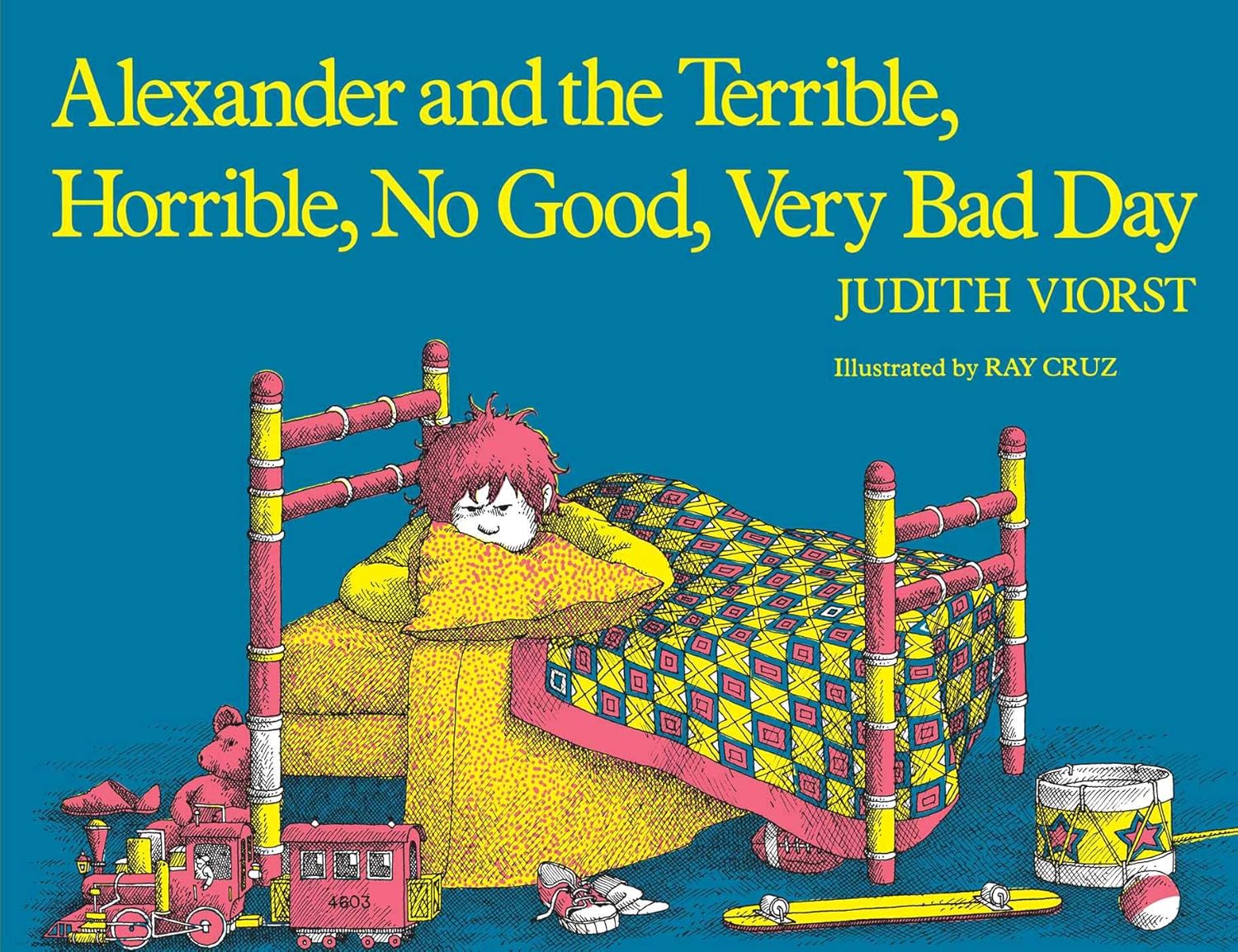
Alexander and the Terrible, Horrible, No Good, Very Bad Day by Judith Viorst, illustrated by Ray Cruz, is one of the most beloved picture books ever written about a very ordinary kind of misery. From gum in his hair to lima beans for dinner, Alexander’s day goes wrong in ways every child — and every adult — recognizes immediately. Published in 1972, it has remained in print ever since and sold more than four million copies on the strength of a single, universally useful truth: some days are just like that. This guide covers the reading level, recommended age, read-aloud vs. independent reading guidance, themes, and everything parents and teachers need to know about sharing this classic with young readers.
For Parents
Find out whether Alexander works best as a read-aloud or independent read for your child, what age range it suits, and why this funny, honest, completely relatable book is one of the most effective tools available for helping children feel understood on a hard day.
For Teachers
Grade-level data, read-aloud timing, key themes, and discussion questions for a K–2 SEL staple. Essential for lessons on emotions, coping, fairness, and the simple but powerful idea that bad days happen to everyone — and do eventually end.
Alexander and the Terrible, Horrible, No Good, Very Bad Day at a Glance
Find on Amazon →| Author | Judith Viorst |
| Illustrator | Ray Cruz |
| Published | 1972 |
| Grade Level | K–2 (our assessment) |
| Recommended Age | 4–8 |
| Best For | Read-aloud ages 4–7; independent reading ages 5–8 |
| Flesch-Kincaid Grade | 3.2 |
| Word Count | ~1,000 |
| Pages | 32 |
| Genre | Picture book / fiction |
| Setting | Home, school, a dentist’s office, a shoe store — one very bad day |
| Awards | ALA Notable Children’s Book (1972); Georgia Children’s Book Award; George G. Stone Center Recognition of Merit; Reading Rainbow selection |
For official Lexile and AR levels, visit Lexile.com or AR BookFinder. ReadingVine provides independent editorial assessments.
What Reading Level Is Alexander and the Terrible, Horrible, No Good, Very Bad Day?
Alexander and the Terrible, Horrible, No Good, Very Bad Day is a K–2 reading level by our editorial assessment, with a Flesch-Kincaid grade level of approximately 3.2. At around 1,000 words it is a mid-length picture book, and the text is written in Alexander’s own first-person voice — conversational, slightly breathless, full of specific details. The vocabulary is entirely ordinary, the kind children already know; what raises the FK score is sentence complexity. Viorst strings events together the way children actually talk when recounting a terrible day — “and then this happened and then that happened and then” — which means confident readers find it familiar and early readers find it a useful model for how narrative voice works.
For parents who use specific reading level systems: we recommend checking your child’s level on Lexile.com or AR BookFinder for official scores, or asking your child’s teacher for their Guided Reading or DRA level.
Is Alexander a Read-Aloud or Independent Read?
Alexander works excellently as both a read-aloud for ages 4–7 and an independent read for ages 5–8. As a read-aloud, it is one of the most participatory picture books at this level — children who have had bad days recognize each new indignity and often supply their own examples before Alexander can finish his. The cumulative rhythm of the complaints, and the recurring refrain of moving to Australia, invite call-and-response participation naturally. Most adults can read it aloud in about 7–10 minutes.
As a read-aloud, the book’s comedy comes almost entirely from specificity. It’s not just that Alexander has a bad day — it’s the particular terrible combination of the gum in the hair, the no-prize cereal box, the being scrunched in the middle, the invisible castle that the teacher doesn’t appreciate, the no-dessert lunch bag, the cavity, the elevator door on the foot, the white shoes with no stripes, the lima beans, the kissing on TV, the railroad-train pajamas. The escalating catalog of misfortune is funny because every item is so recognizably, precisely the kind of thing that makes a day terrible. Ray Cruz’s illustrations amplify this perfectly — Alexander’s expression throughout is a study in aggrieved resignation that children find both funny and deeply validating.
For independent reading, a confident first or second grader will find Alexander’s first-person voice natural and his grievances immediately comprehensible. The text does not need illustration support to be understood — a child who can decode it can follow it — though the pictures add considerably to the comedy. Many children who read this book independently read it again to an adult, stopping at each new misfortune to make sure the adult appreciates how bad it truly was.
There is nothing in this book that requires parental preparation. The “bad” things that happen to Alexander are entirely, deliberately ordinary. The book is appropriate for all children, including those going through genuinely hard times, because it gently locates the smaller frustrations of a bad day as real and worthy of acknowledgment without competing with larger difficulties.
After each new misfortune, pause and ask: “Has that ever happened to you?” Most children will have a version of at least half the things on Alexander’s list, and the recognition is itself part of the book’s gift. At the end, when Alexander’s mother tells him that some days are just like that, ask: “Do you think that makes Alexander feel better?” It’s a genuinely interesting question — and it opens the conversation about what actually helps when a day goes wrong.
What Is Alexander and the Terrible, Horrible, No Good, Very Bad Day About?
Alexander wakes up with gum in his hair and immediately knows it is going to be a terrible, horrible, no good, very bad day. He is right. At breakfast, his brothers find prizes in their cereal boxes; his box has only cereal. In the carpool, he doesn’t get a window seat. At school, his teacher criticizes his drawing of an invisible castle, he gets in trouble for singing too loudly, and at lunch he finds his best friend has a new best friend and there is no dessert in his bag. After school, the dentist finds a cavity. The elevator door closes on his foot. At the shoe store, every shoe he likes is sold out and he has to buy plain white sneakers while both brothers get ones with stripes. At dinner: lima beans. On television: kissing. At bedtime: railroad-train pajamas he hates.
Throughout the day, Alexander’s refrain is that he is going to move to Australia. At the end, his mother tells him, gently, that some days are just like that — even in Australia. The book ends there, with no resolution beyond the acknowledgment itself. It is enough. Children find it enormously satisfying.
Alexander Characters
Alexander Themes and Lessons
The central theme of Alexander is the value of being seen and heard when things go wrong. The book does not teach Alexander — or the reader — a strategy for making bad days better. It does not instruct him to count his blessings or find the silver lining. It simply catalogs his terrible day with such thoroughness and such deadpan accuracy that children who hear it feel, perhaps for the first time, that someone understands exactly what a bad day is like. That recognition is the book’s primary gift, and it is more valuable for SEL purposes than most books that explicitly teach coping strategies, because it meets children in their actual emotional experience before offering any perspective at all.
The perspective, when it comes, is quiet and real: some days are just like that. Viorst delivers it through the mother without fanfare or moralizing, which is exactly the right tone. The book does not promise that tomorrow will be better. It promises that what happened today makes sense, that it happens to everyone, and that Australia will not help. Children find this honest and, somehow, comforting.
For teachers, Alexander is among the most useful books in the K–2 SEL library precisely because it validates negative emotion without escalating it. Alexander is frustrated and aggrieved — all normal feelings for young children — and the book takes these feelings seriously while treating the day itself with gentle comedy. This combination of emotional validation and tonal lightness makes it easier for children to sit with their own frustrations than books that either dismiss those feelings or amplify them.
Discussion starters for families: Which of Alexander’s bad things has happened to you? What is the worst thing that happened to Alexander? What do you do when you have a terrible, horrible, no good, very bad day? Do you think Alexander felt better after his mom talked to him? Would moving to Australia actually help?
How Long Is Alexander?
Alexander and the Terrible, Horrible, No Good, Very Bad Day has 32 pages and approximately 1,000 words. Most adults can read it aloud in about 7–10 minutes. The cumulative structure — each new misfortune added to the catalog — means the book picks up momentum as it progresses, and many read-alouds run faster in the second half as the rhythm of the complaints becomes familiar.
A child reading independently at a first- or second-grade level will typically finish in about 10–15 minutes. Many children stop to supply their own examples of similar misfortunes as they read, which extends the reading pleasurably. The book works well as a shared reading experience precisely because its content invites conversation.
Books Similar to Alexander
If your child loves Alexander and the Terrible, Horrible, No Good, Very Bad Day, these titles share its emotional honesty, its SEL connections, or its portrait of a child navigating a difficult day with humor intact:
About the Author and Illustrator
Judith Viorst (born 1931) is an American author, poet, and journalist who has written books for children and adults across a career spanning more than sixty years. Alexander and the Terrible, Horrible, No Good, Very Bad Day was drawn directly from her family life: Alexander, Anthony, and Nick are her three actual sons, and the specific miseries catalogued in the book reflect the kind of day her son Alexander genuinely had. This autobiographical basis gives the book its particular authenticity — Viorst was not inventing a generic bad day but documenting a real child’s real complaints with a poet’s ear for the perfect specific detail. She followed the original with three Alexander sequels: Alexander, Who Used to Be Rich Last Sunday (1977), Alexander, Who’s Not (Do You Hear Me? I Mean It!) Going to Move (1995), and Alexander, Who’s Trying His Best to Be the Best Boy Ever (2014). The book has sold more than four million copies and been adapted into a Kennedy Center musical (1998) and a Disney film (2014). Viorst is also the author of the widely read adult nonfiction book Necessary Losses and several poetry collections for children and adults, including the beloved If I Were in Charge of the World and Other Worries. She lives in Washington, D.C.
Ray Cruz is an American illustrator best known for his work on the two original Alexander books — this one and Alexander, Who Used to Be Rich Last Sunday. His pen-and-ink drawings give Alexander a scowling, tousle-haired expressiveness that perfectly matches Viorst’s voice: the illustrations are funny precisely because Alexander looks exactly as put-upon as he claims to be, and the accumulating dishevelment of his appearance across the book mirrors the accumulating misfortune of his day.
Alexander and the Terrible, Horrible, No Good, Very Bad Day: Frequently Asked Questions
What reading level is Alexander and the Terrible, Horrible, No Good, Very Bad Day?
Alexander and the Terrible, Horrible, No Good, Very Bad Day is a K–2 reading level by our editorial assessment, with a Flesch-Kincaid grade level of approximately 3.2. At around 1,000 words in Alexander’s conversational first-person voice, it works best as a read-aloud for ages 4–7 and as an independent read for ages 5–8. For official Lexile and AR levels, visit Lexile.com or AR BookFinder.
What age is Alexander and the Terrible, Horrible, No Good, Very Bad Day for?
Alexander is appropriate for ages 4–8. As a read-aloud it works from age 4 — young children recognize Alexander’s frustrations immediately and find the catalog of misfortunes both funny and validating. As an independent read it suits first and second graders ages 5–8. Adults consistently find it funnier than expected on rereading, particularly parents who recognize Alexander’s specific complaints from their own children’s bad days.
Is Alexander and the Terrible, Horrible, No Good, Very Bad Day based on a true story?
Yes, substantially. Judith Viorst’s three sons are actually named Alexander, Anthony, and Nick, and the book draws on a genuinely bad day her son Alexander once had. The specific miseries — the gum in the hair, the no-prize cereal box, the no-dessert lunch bag — were culled from real childhood complaints, which is why the book reads with the particular accuracy it has. This is not an invented generic bad day; it is a real child’s real bad day, shaped into a picture book.
How long does it take to read Alexander aloud?
Most adults can read Alexander aloud in about 7–10 minutes. The cumulative structure accelerates naturally as the catalog of misfortunes grows, and many read-alouds run faster in the second half as children begin anticipating each new disaster. Pausing for children to contribute their own comparable misfortunes adds time but adds considerably to the enjoyment.
What is Alexander and the Terrible, Horrible, No Good, Very Bad Day about?
Alexander follows a boy through a single day in which everything goes wrong — gum in his hair, no window seat in the carpool, trouble at school, a cavity, the wrong shoes, lima beans for dinner, kissing on TV, and railroad-train pajamas at bedtime. Throughout the day, Alexander threatens to move to Australia. At the end, his mother tells him gently that some days are just like that, even in Australia. It is a story about a bad day, told with enough humor and specificity that children feel seen by it.
Are there other Alexander books?
Yes — Judith Viorst wrote three sequels: Alexander, Who Used to Be Rich Last Sunday (1977), about Alexander’s discovery that money is easier to spend than to save; Alexander, Who’s Not (Do You Hear Me? I Mean It!) Going to Move (1995), about Alexander’s fury at his family’s relocation plans; and Alexander, Who’s Trying His Best to Be the Best Boy Ever (2014). All three feature the same brothers and the same first-person voice, and are appropriate for the same age range as the original.