
 = Partner Site
Enemy Pie Reading Level: A Complete Guide
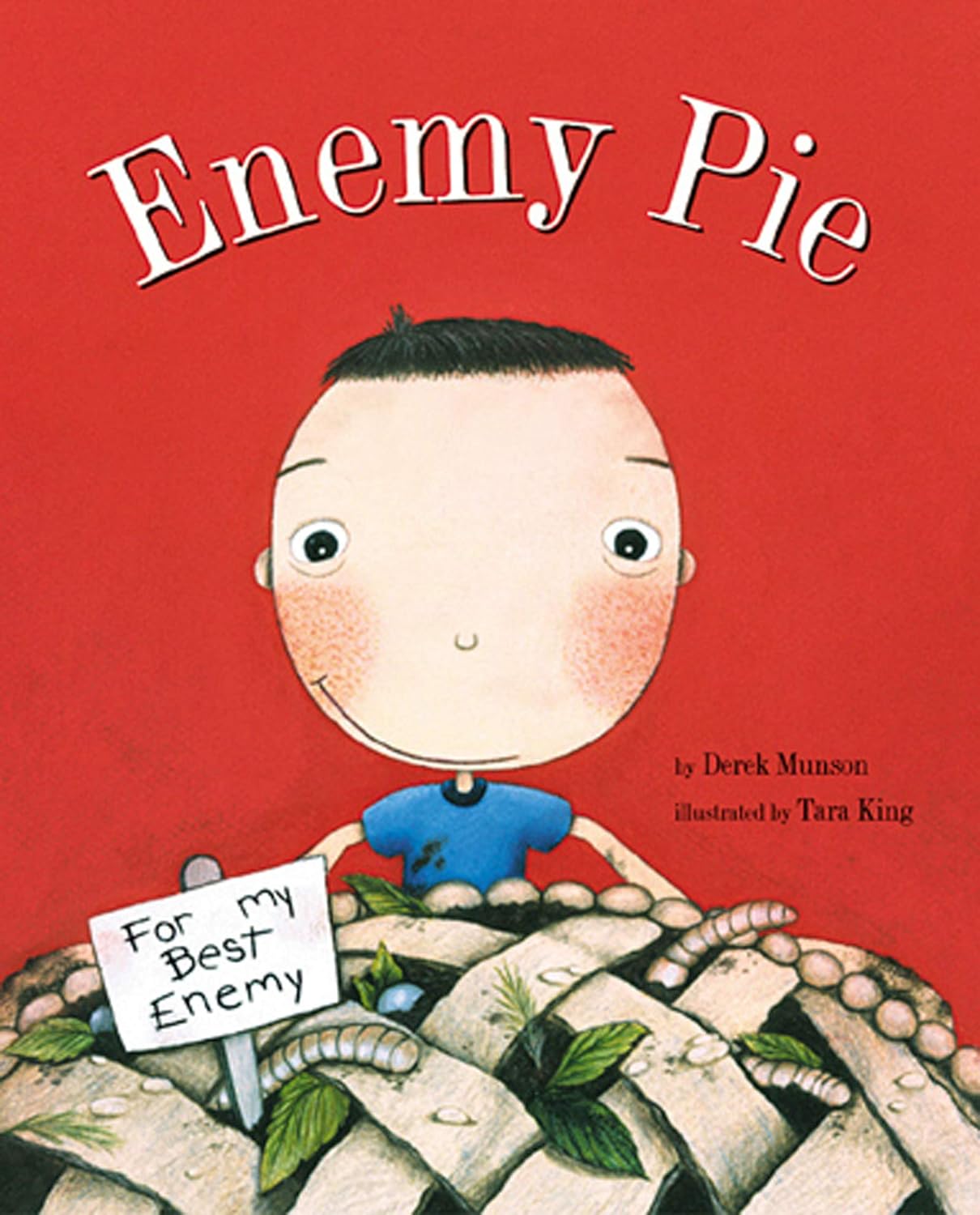
Enemy Pie by Derek Munson, illustrated by Tara Calahan King, is a classroom staple for friendship and conflict resolution — a funny, warm story about a boy who sets out to get rid of his enemy and ends up making a best friend instead. This guide covers the reading level, recommended age, read-aloud vs. independent reading guidance, themes, and everything parents and teachers need to know about sharing this beloved book with young readers.
For Parents
Find out whether Enemy Pie works best as a read-aloud or independent read for your child, what age range it suits, and how to use its themes of friendship, assumptions, and conflict resolution in conversation with young readers.
For Teachers
Grade-level data, read-aloud timing, key themes, and discussion questions for one of the most widely used SEL picture books in K–2 classrooms. Central to friendship units, conflict resolution lessons, and discussions about assumptions and empathy.
Enemy Pie at a Glance
Find on Amazon →| Author | Derek Munson |
| Illustrator | Tara Calahan King |
| Published | 2000 |
| Grade Level | K–2 (our assessment) |
| Recommended Age | 5–8 |
| Best For | Read-aloud ages 4–8; independent reading ages 6–8 |
| Flesch-Kincaid Grade | 3.6 |
| Word Count | ~1,100 |
| Pages | 40 |
| Genre | Picture book / realistic fiction |
| Setting | A suburban neighborhood in summer |
For official Lexile and AR levels, visit Lexile.com or AR BookFinder. ReadingVine provides independent editorial assessments.
What Reading Level Is Enemy Pie?
Enemy Pie is a K–2 reading level by our editorial assessment, with a Flesch-Kincaid grade level of approximately 3.6. At around 1,100 words it is one of the longer picture books on the K–2 list — closer in length to a short early chapter book than to a typical 32-page picture book. The text is written in first person, in the natural, slightly rambling voice of a child narrator, which gives it an accessible, conversational quality despite the higher word count. Vocabulary is mostly familiar, with a few words — “ingredients,” “suspicious,” “guaranteed” — that may need support for younger independent readers.
The first-person narration is one of the book’s great strengths as a read-aloud and literacy tool. Because the narrator is clearly a child telling us his own story, readers hear a voice they recognize immediately — not a grown-up explaining something, but a kid working something out. Children who are developing as writers often find this voice easier to imitate than third-person narration, which is one reason teachers return to this book as a writing mentor text as well as an SEL resource.
For parents who use specific reading level systems: we recommend checking your child’s level on Lexile.com or AR BookFinder for official scores, or asking your child’s teacher for their Guided Reading or DRA level.
Is Enemy Pie a Read-Aloud or Independent Read?
Enemy Pie works well as both a read-aloud for ages 4–8 and an independent read for ages 6–8. As a read-aloud, the first-person narrator voice is easy and fun to perform — the boy’s logic is funny, his grievances are relatable, and his growing confusion about whether Jeremy Ross is actually his enemy is one of the more quietly comic arcs in K–2 picture books. Most adults can read it aloud in about 10–14 minutes.
As a read-aloud, the book has genuine suspense. Children want to know what is actually in the enemy pie, whether it will work, and what will happen when Jeremy shows up to eat it. Tara Calahan King’s warm, sunny illustrations — the neighborhood looks like the best possible version of a summer day — keep the tone light even as the narrator’s plan grows more elaborate. The moment the boy realizes he has spent the whole day having fun with his enemy is one of the most satisfying reversals in picture book literature, and children who have been invested in the story feel it land.
For independent reading, a confident first or second grader can handle the text. The first-person voice and the conversational sentence structures make it one of the more accessible longer picture books at this level — despite the higher word count, the reading never feels labored because the narrator keeps things moving. A few vocabulary words may need support, but the story’s momentum carries readers through unfamiliar words better than most books at this length.
There is nothing in this book that requires parental preparation. The “enemy pie” plan is mild mischief, the father’s role in it is warm and conspiratorial, and the resolution is entirely positive. It is one of the most reliably feel-good picture books in the K–2 classroom.
Pause just before the boy and Jeremy sit down to eat the pie and ask your child: “Do you think Jeremy is really an enemy? What changed?” Most children have been tracking the shift without being able to name it, and the question helps them articulate something they already understand. The conversation that follows — about what makes someone an enemy versus a friend — is often the best one the book generates.
What Is Enemy Pie About?
It was supposed to be the perfect summer — until Jeremy Ross moved in down the street and ruined everything. Jeremy laughed at the narrator at a birthday party, didn’t invite him to his trampoline, and generally made himself the boy’s number one enemy. When the narrator tells his dad about the enemy problem, his dad has a solution: enemy pie. The recipe is a secret, but his dad guarantees it will get rid of any enemy — with one condition. The boy has to spend the whole day being nice to Jeremy first, so the pie will work properly.
The boy spends the day with Jeremy under protest — and discovers, against his will, that Jeremy is actually pretty fun. They play on the trampoline, eat lunch together, and have the kind of afternoon that’s hard to distinguish from a day spent with a best friend. By the time the pie is ready, the boy has a new problem: he doesn’t want Jeremy to eat it anymore. He tries to warn him. His dad, watching from the window, laughs. The “enemy pie,” it turns out, was never meant to harm Jeremy at all — it was meant to give the boy the chance to find out who Jeremy really was. The book ends with the narrator wondering if there’s a recipe for enemy pie for his other enemy, and his dad going back inside to check.
Enemy Pie Characters
Enemy Pie Themes and Lessons
The central theme of Enemy Pie is the gap between assumption and experience — the difference between who we decide someone is before we know them and who they turn out to be when we actually spend time with them. The narrator has a detailed case against Jeremy built entirely from surface observations and a few specific incidents, none of which hold up once the boys actually play together. The book never says this explicitly. It simply shows the boy’s assumptions dissolving, one trampoline jump at a time, until he arrives at the end of the day holding a new friendship and a problem he didn’t expect.
The book is also, quietly, about the wisdom of doing before understanding. The dad doesn’t explain the lesson of enemy pie to his son. He gives him a task — be nice to Jeremy for one day — and lets the experience do the teaching. Children respond to this structure instinctively: they know, even without being told, that the dad knows something the boy doesn’t, and watching the boy figure it out is one of the great pleasures of the story. It is also a model of good parenting that many adults find quietly instructive.
For teachers, Enemy Pie is one of the most discussion-rich books in the K–2 SEL library. It generates genuine conversation about how we decide who our enemies are, whether first impressions are reliable, and what we might be missing when we decide we don’t like someone. These are questions children have real experience with, and the book’s humor and lightness make it safe to explore them without anyone feeling accused.
Discussion starters for families: Was Jeremy really an enemy? What did the boy think Jeremy was like before they spent the day together? What changed his mind? Have you ever decided you didn’t like someone and then found out you were wrong? What do you think is actually in enemy pie?
How Long Is Enemy Pie?
Enemy Pie has 40 pages and approximately 1,100 words — one of the longer picture books on the K–2 list, and closer in length to a short early reader than to a typical picture book. Most adults can read it aloud in about 10–14 minutes.
A child reading independently at a first- or second-grade level will typically finish in about 15–20 minutes. The conversational first-person narration keeps the reading moving — despite the higher word count, children who are invested in the story rarely feel the length.
Books Similar to Enemy Pie
If your child loves Enemy Pie, these titles share its themes of friendship, assumptions, and what happens when you give someone a real chance:
About the Author and Illustrator
Derek Munson is an American author whose debut picture book, Enemy Pie, was published in 2000 and has become one of the most widely used SEL picture books in American K–2 classrooms. Munson has said the book grew out of his own childhood experiences with enemies — the particular, intense way children can decide they dislike someone, and the equally particular way those enmities can dissolve. Enemy Pie is his best-known work, and it has remained continuously in print for more than two decades, selling millions of copies and appearing on recommended reading lists from school counselors, teachers, and child psychologists across the country. Its staying power comes from something simple: it takes the experience of having an enemy seriously, which children notice immediately, and then shows that the experience can be transformed by something as uncomplicated as spending an afternoon together.
Tara Calahan King is an American illustrator whose warm, sun-drenched illustrations for Enemy Pie give the book its particular summertime atmosphere. Her style — loose, friendly, rendered in soft colors that make the neighborhood feel like the best possible place to spend a day — is perfectly calibrated to Munson’s text. The illustrations never oversell the emotional beats; they let the story breathe, which is exactly right for a book about something as delicate as a friendship forming against the narrator’s will. King has illustrated a number of other children’s books, though Enemy Pie remains her most recognized work.
Enemy Pie: Frequently Asked Questions
What reading level is Enemy Pie?
Enemy Pie is a K–2 reading level by our editorial assessment, with a Flesch-Kincaid grade level of approximately 3.6. At around 1,100 words it is one of the longer picture books on the K–2 list, but the first-person conversational narration keeps the reading accessible. It works best as a read-aloud for ages 4–8 and as an independent read for ages 6–8. For official Lexile and AR levels, visit Lexile.com or AR BookFinder.
What age is Enemy Pie for?
Enemy Pie is appropriate for ages 4–8 as a read-aloud. The humor and the friendship theme land well from preschool onward, and the book’s length makes it a good choice for children who are ready for something with more story than a typical short picture book. As an independent read, it suits first and second graders ages 6–8. It skews slightly older than some books on this list — the themes resonate most strongly with children who have had their own experience of enemies and friendships.
Can a kindergartner read Enemy Pie alone?
Most kindergartners will need support reading Enemy Pie independently — the word count is higher than most K–1 picture books, and a few vocabulary words may need help. By mid-to-late first grade, most children can read it independently. The first-person narrator voice is one of the most accessible in picture book literature for early readers, and children who are invested in finding out what happens with Jeremy rarely notice the length.
How long does it take to read Enemy Pie aloud?
Most adults can read Enemy Pie aloud in about 10–14 minutes. It is one of the longer picture book read-alouds on the K–2 list, but the story’s momentum keeps children engaged from beginning to end. Many families pause to talk about what’s happening — particularly around the moment when the boy starts enjoying Jeremy’s company — which naturally extends the reading.
What is Enemy Pie about?
Enemy Pie is about a boy whose perfect summer is ruined when Jeremy Ross moves in down the street and becomes his enemy. His dad offers to make enemy pie — a guaranteed remedy — but the boy has to spend the whole day being nice to Jeremy first so it will work. The boy spends the day with Jeremy under protest and discovers, against his will, that Jeremy is actually a lot of fun. By the time the pie is ready, he doesn’t want Jeremy to eat it anymore. It is a story about assumptions, friendship, and what happens when you give someone a real chance.
What is the lesson of Enemy Pie?
The central lesson of Enemy Pie is that the best way to get rid of an enemy is to get to know them — because the enemy you imagined and the person you actually spend time with are often two very different things. The book makes this point without ever stating it directly, which is part of why it works so well: children arrive at the conclusion themselves, the same way the narrator does. It is also a quiet lesson in the value of doing before understanding — the dad doesn’t explain the plan, he simply gives his son a task and lets experience do the teaching.