
 = Partner Site
Those Shoes Reading Level: A Complete Guide
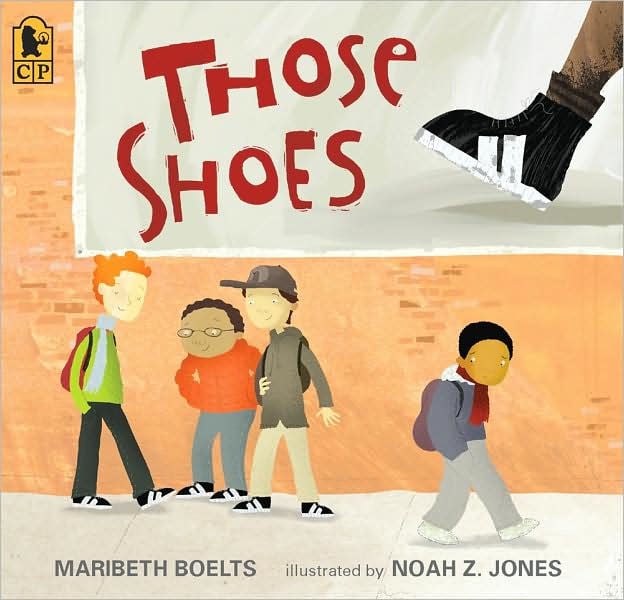
Those Shoes by Maribeth Boelts, illustrated by Noah Z. Jones, is one of the most emotionally intelligent picture books in the K–2 library — a story about a boy who wants a pair of shoes more than anything, can’t have them, and makes the most generous choice of his life anyway. This guide covers the reading level, recommended age, read-aloud vs. independent reading guidance, themes, and everything parents and teachers need to know about sharing this book with young readers.
For Parents
Find out whether Those Shoes works best as a read-aloud or independent read for your child, what age range it suits, and how to talk about its themes of wants vs. needs, generosity, and the quiet dignity of making do with what you have.
For Teachers
Grade-level data, read-aloud timing, key themes, and discussion questions for one of the most widely used SEL and social studies picture books in K–2 classrooms. Strong connections to units on needs vs. wants, economic diversity, empathy, and generosity.
Those Shoes at a Glance
Find on Amazon →| Author | Maribeth Boelts |
| Illustrator | Noah Z. Jones |
| Published | 2007 |
| Grade Level | K–2 (our assessment) |
| Recommended Age | 5–8 |
| Best For | Read-aloud ages 5–8; independent reading ages 6–8 |
| Flesch-Kincaid Grade | 3.1 |
| Word Count | ~850 |
| Pages | 40 |
| Genre | Picture book / realistic fiction |
| Setting | An urban neighborhood; a school; a thrift store |
For official Lexile and AR levels, visit Lexile.com or AR BookFinder. ReadingVine provides independent editorial assessments.
What Reading Level Is Those Shoes?
Those Shoes is a K–2 reading level by our editorial assessment, with a Flesch-Kincaid grade level of approximately 3.1. At around 850 words it is one of the longer picture books on this list, written in first person in the authentic, slightly ragged voice of a child narrator who wants something badly and is working hard to want it less. The vocabulary is accessible and largely conversational, with a few words — “secondhand,” “practically,” “counselor” — that may need support for younger independent readers.
What makes the text work is the voice. Boelts writes Jeremy’s narration with the kind of specificity and emotional honesty that makes children trust it immediately — he notices the right things, feels the right complicated feelings, and makes the right choice at the end in a way that costs him something real. That emotional cost is what makes the book’s generosity meaningful rather than merely instructive, and it’s why the book holds up to rereading in a way that more didactic treatments of the same subject do not.
For parents who use specific reading level systems: we recommend checking your child’s level on Lexile.com or AR BookFinder for official scores, or asking your child’s teacher for their Guided Reading or DRA level.
Is Those Shoes a Read-Aloud or Independent Read?
Those Shoes works best as a read-aloud for ages 5–8 and as an independent read for ages 6–8. As a read-aloud, the first-person narrator voice draws children in immediately — Jeremy’s wanting is so specific and so recognizable that children who have ever wanted something they couldn’t have are with him from the first page. Most adults can read it aloud in about 8–12 minutes.
As a read-aloud, Boelts earns the book’s emotional resolution honestly. The thrift store scene — where Jeremy finds the shoes in a too-small size and buys them anyway, wearing them despite the pain because they are finally his — is one of the most quietly heartbreaking moments in K–2 picture books. The scene that follows, in which Jeremy gives the shoes to Antonio, the one classmate in his school who seems to want them even less and need them even more, is one of the most quietly heroic. Reading these moments aloud, without rush and without comment, gives children space to feel both of them fully. Noah Z. Jones’ illustrations — warm, urban, rendered in a palette of blues and browns and the electric white of those shoes — give every emotional beat a visual anchor.
For independent reading, a confident first or second grader can handle the text. The first-person voice is accessible and the emotional logic is clear even when the vocabulary requires some support. Children who read it independently often come back to their parents or teachers with something to say about it, which is usually the sign of a book that has done its work.
A note for parents: Those Shoes deals directly with economic difference — Jeremy’s family cannot afford the shoes that everyone at school seems to have, and his grandmother’s practicality about this is part of the book’s emotional texture. The book handles this with complete dignity and without condescension, but parents whose children have experienced or are experiencing similar circumstances may want to read it together and be available for the conversation that follows.
After Jeremy gives the shoes to Antonio, pause and ask your child: “How do you think Jeremy felt after he gave the shoes away?” Most children expect the answer to be sad, but the book’s final image suggests something more complicated — relief, warmth, and a kind of freedom. Let your child sit with that complexity for a moment before turning the last page. The books that stay with us longest are the ones that let us feel something we didn’t expect to feel.
What Is Those Shoes About?
Jeremy wants the shoes — the black high-tops with the two white stripes that everyone at his school seems to have. His grandmother says there is no room for “want” in their budget, only “need.” His old sneakers fall apart at school and the guidance counselor gives him a pair of shoes from the lost-and-found — cartoon character shoes, the kind that make the whole cafeteria notice. Jeremy is mortified. Then, at a thrift store, he finds the shoes. They are too small. He buys them anyway, wears them home in pain, and sleeps with them on the floor beside him.
At school, Jeremy notices Antonio — a quieter, shyer boy whose shoes are worn completely through. Antonio has been looking at Jeremy’s shoes. Jeremy’s feet still hurt. That night he wraps the shoes in a bag and leaves them at Antonio’s door. In the morning he wakes up and his grandmother has found him new boots — warm, sturdy, exactly what he needs. The book ends with Jeremy running through the snow in his boots, watching Antonio at a distance in the shoes. He doesn’t feel the need to make Antonio know who left them. The giving is enough.
Those Shoes Characters
Those Shoes Themes and Lessons
The central theme of Those Shoes is the difference between wanting and needing — and the harder, more mature idea that recognizing someone else’s need can make your own want feel smaller. Grandma articulates this clearly and early: there is no room for “want” in their budget, only “need.” Jeremy understands this intellectually from the beginning. The emotional journey of the book is the process of understanding it in his body — wearing the too-small shoes until his feet ache, and then noticing Antonio’s feet and feeling something shift.
The book is also an uncommonly honest portrait of economic difference in childhood. Jeremy’s want is not frivolous — the shoes are a social currency at his school, a marker of belonging — and Boelts never pretends otherwise. The guidance counselor’s cartoon-character shoes from the lost-and-found are well-intentioned and genuinely humiliating. Grandma’s practicality is loving and genuinely limiting. The book holds all of this without resolving it falsely, which is one of the reasons it is so widely used in classrooms where children come from a range of economic backgrounds: it gives children on both sides of the divide language for something real.
Jeremy’s final act of generosity is not presented as a lesson learned or a virtue demonstrated — it is presented as a choice that costs him something, that he makes quietly, and that gives him something back he didn’t expect. This is generosity as it actually works rather than generosity as it is usually taught, and children sense the difference. The book trusts them to feel it without explaining it, which is why it lasts.
Discussion starters for families: Why did Jeremy buy the shoes even though they were too small? What is the difference between wanting something and needing something? Why did Jeremy give the shoes to Antonio without telling him? How do you think Jeremy felt after he gave them away? Have you ever given something away that you really wanted to keep?
How Long Is Those Shoes?
Those Shoes has 40 pages and approximately 850 words. Most adults can read it aloud in about 8–12 minutes. The book’s emotional pacing benefits from a slow, unhurried reading — particularly the thrift store scene and the scene in which Jeremy leaves the shoes at Antonio’s door, both of which deserve time to land.
A child reading independently at a first- or second-grade level will typically finish in about 10–15 minutes. Children who read it independently often come back with something to say about it, which is the sign of a book that has done its work.
Books Similar to Those Shoes
If your child loves Those Shoes, these titles share its emotional honesty, its themes of generosity and economic dignity, or its portrait of a child navigating a world where wanting and having are not the same thing:
About the Author and Illustrator
Maribeth Boelts is an American author who has written more than twenty picture books for children, many of them focused on the emotional lives of children navigating difficult circumstances with grace and complexity. Those Shoes, published in 2007, is her most recognized and widely used work — it appears on recommended reading lists from school counselors, teachers, and social workers across the country and has become a classroom standard for SEL units on empathy, economic diversity, and generosity. Boelts has said that Those Shoes grew from her own observations of children and the specific, intense way they experience the social meaning of objects — shoes, backpacks, clothes — as markers of belonging or exclusion. Her other picture books include Happy Like Soccer, which deals with a child in foster care, and A Bike Like Sergio’s, a companion book to Those Shoes featuring Jeremy in a new situation that tests the same qualities of empathy and integrity the first book established.
Noah Z. Jones is an American illustrator and animator whose warm, expressive illustrations for Those Shoes received the Ezra Jack Keats New Illustrator Award — an honor that specifically recognizes illustrators who bring a fresh, humanistic perspective to children’s books about the lives of urban and underserved children. His visual style — loose, warm linework in a palette of muted blues and browns with carefully placed accents of white and color — gives the book its particular visual atmosphere: urban, real, and never without warmth. The shoes themselves are rendered with an almost photographic clarity that makes their desirability completely legible on the page, which is essential to the book’s emotional logic.
Those Shoes: Frequently Asked Questions
What reading level is Those Shoes?
Those Shoes is a K–2 reading level by our editorial assessment, with a Flesch-Kincaid grade level of approximately 3.1. The text is written in an authentic first-person child narrator voice with mostly accessible vocabulary. It works best as a read-aloud for ages 5–8 and as an independent read for ages 6–8. For official Lexile and AR levels, visit Lexile.com or AR BookFinder.
What age is Those Shoes for?
Those Shoes is appropriate for ages 5–8. It skews slightly older than some books on this list — the themes of economic difference and social belonging resonate most with children who are already navigating the social dynamics of school. As a read-aloud it works from age 5, and as an independent read it suits first and second graders ages 6–8. It is one of those books that adults often find as moving as children do.
Can a kindergartner read Those Shoes alone?
Most kindergartners will need support reading Those Shoes independently — the word count is higher than most K–1 picture books and a few vocabulary words may need help. By mid-to-late first grade, most children can read it independently. The first-person narrator voice is one of the most accessible in picture book literature for early readers, and the story’s momentum carries children through the text effectively.
How long does it take to read Those Shoes aloud?
Most adults can read Those Shoes aloud in about 8–12 minutes. The book’s emotional pacing benefits from a slow, unhurried reading — the thrift store scene and the scene where Jeremy leaves the shoes at Antonio’s door both deserve time to land without being rushed past.
What is Those Shoes about?
Those Shoes is about a boy named Jeremy who desperately wants a pair of shoes that everyone at his school seems to have. His grandmother says there is only room in their budget for need, not want. Jeremy finds the shoes at a thrift store in a too-small size and buys them anyway, wearing them home in pain. Then he notices a classmate whose shoes are in far worse shape than his own. He leaves the shoes at his classmate’s door without telling him. It is a story about wants vs. needs, about generosity that costs something real, and about the quiet dignity of giving without expecting recognition.
What is the lesson of Those Shoes?
The lesson of Those Shoes is not stated directly, which is part of what makes the book so effective. Jeremy does not arrive at a tidy moral. He simply notices someone else’s need, recognizes it as greater than his own want, and acts on that recognition quietly and without fanfare. The book trusts children to feel the difference between generosity as performance and generosity as a private choice made at real cost — and most children do feel it, which is why the book stays with them.