
 = Partner Site
Each Kindness Reading Level: A Complete Guide
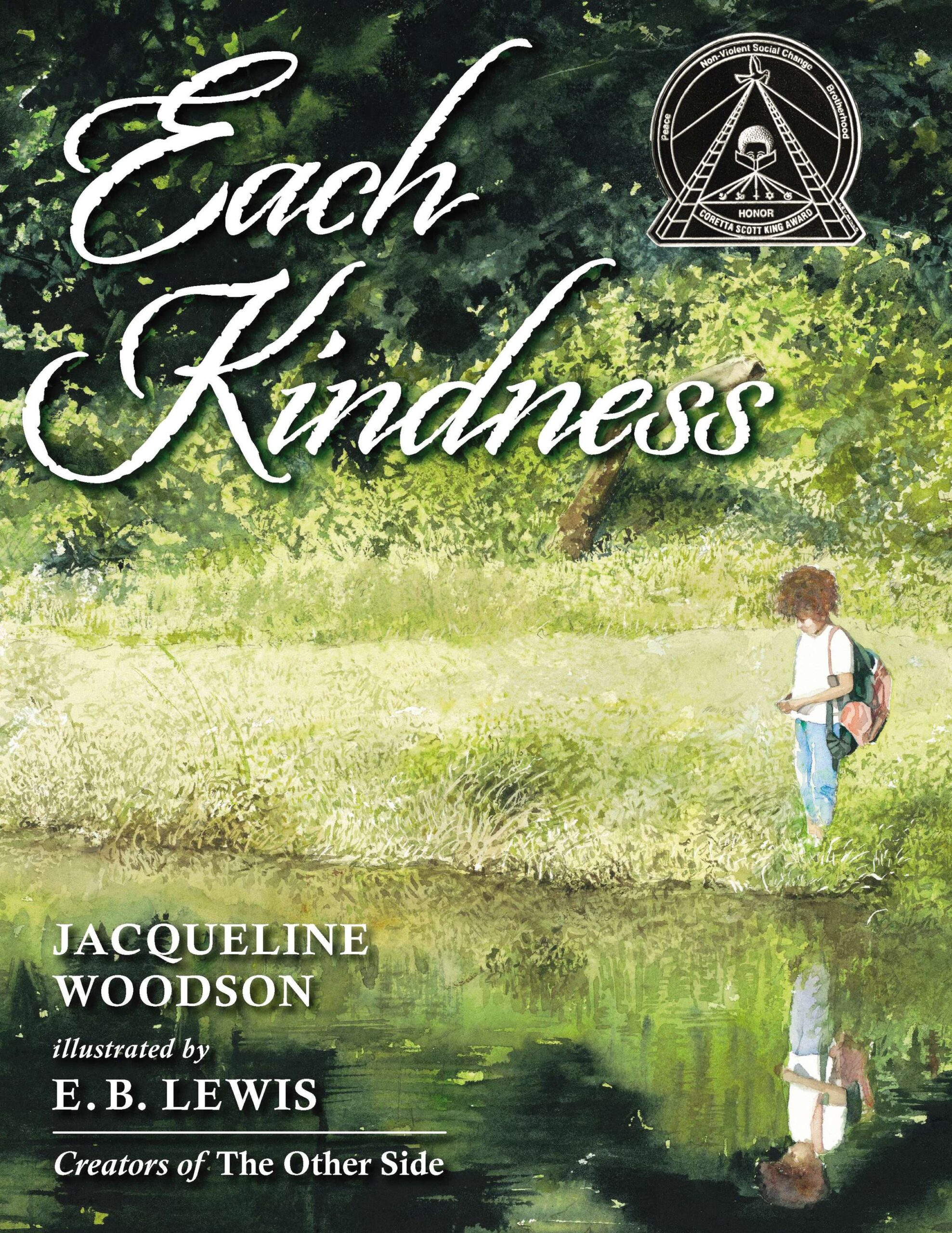
Each Kindness by Jacqueline Woodson, illustrated by E.B. Lewis, is one of the most powerful picture books ever written about regret — a story that ends not with resolution but with the weight of a missed chance, still felt. Winner of a Coretta Scott King Honor, it is among the most discussed and most carefully taught picture books in K–2 classrooms precisely because it refuses to make things easy. This guide covers the reading level, recommended age, read-aloud vs. independent reading guidance, themes, and everything parents and teachers need to know about sharing this extraordinary book with young readers.
For Parents
Find out whether Each Kindness works best as a read-aloud or independent read for your child, what age range it suits, and how to talk about its themes of regret, missed kindness, and the irreversibility of time with young readers.
For Teachers
Grade-level data, read-aloud timing, key themes, and discussion questions for one of the most carefully taught picture books in K–2 classrooms. Strong connections to SEL units on kindness, exclusion, regret, and the impact of small actions on others.
Each Kindness at a Glance
Find on Amazon →| Author | Jacqueline Woodson |
| Illustrator | E.B. Lewis |
| Published | 2012 |
| Grade Level | K–2 (our assessment) |
| Recommended Age | 5–8 |
| Best For | Read-aloud ages 5–8; independent reading ages 7–8 |
| Flesch-Kincaid Grade | 3.9 |
| Word Count | ~700 |
| Pages | 32 |
| Genre | Picture book / realistic fiction |
| Setting | An elementary school classroom; a park |
| Awards | Coretta Scott King Illustrator Honor (2013); Jane Addams Children’s Book Award |
For official Lexile and AR levels, visit Lexile.com or AR BookFinder. ReadingVine provides independent editorial assessments.
What Reading Level Is Each Kindness?
Each Kindness is a K–2 reading level by our editorial assessment, with a Flesch-Kincaid grade level of approximately 3.9. At around 700 words it is not the longest picture book on this list, but Woodson’s prose is dense with feeling — each sentence carries more emotional weight than its length suggests, and the book’s cumulative effect is considerably larger than its word count. The vocabulary is largely accessible, though words like “ripples,” “skipped,” and the weight of what the teacher says about kindness may need unpacking for younger readers.
The gap between decoding level and emotional complexity is wider here than almost anywhere else on the K–2 list. A first grader can read the words; very few first graders will fully grasp the experience of regret that the book describes — the specific, irreversible kind that comes from knowing you had a chance to be kind, chose not to be, and can’t go back. That complexity is not a reason to withhold the book from younger readers; it is a reason to read it aloud, to talk about it carefully, and to trust that it will mean more to the same child at different ages.
For parents who use specific reading level systems: we recommend checking your child’s level on Lexile.com or AR BookFinder for official scores, or asking your child’s teacher for their Guided Reading or DRA level.
Is Each Kindness a Read-Aloud or Independent Read?
Each Kindness is primarily a read-aloud for ages 5–8 and an independent read for ages 7–8. As a read-aloud it is one of the most carefully handled books in the K–2 classroom — the ending is genuinely sad in a way that requires preparation, conversation, and teacher presence. Most adults can read it aloud in about 7–10 minutes. The book is short. What it leaves behind is not.
As a read-aloud, Woodson’s prose has a quiet, rhythmic quality that rewards a slow delivery. She is one of the finest prose stylists writing for children, and her sentences in Each Kindness have the economy and the weight of poetry — none of them is doing only one thing. E.B. Lewis’s watercolor illustrations are luminous and emotionally precise: the cold, gray palette of the classroom scenes; the warmth of Maya’s offered friendship, always slightly off to one side; and the final spread — Chloe alone at the water’s edge, the ripples moving outward from the stone she has just thrown, the light going — is one of the most beautiful and heartbreaking images in picture book illustration.
For independent reading, the higher Flesch-Kincaid score and the emotional density of the text make this a better fit for confident second graders than for younger independent readers. Children who read it independently should have an adult available for the conversation it will almost certainly generate. The book is not cruel — it is honest — but honesty of this kind deserves company.
A clear note for parents and teachers: Each Kindness does not have a happy ending. Maya, the new girl who is excluded, moves away before Chloe can make amends. The book ends with Chloe at a pond, throwing stones, watching the ripples spread — and knowing that there is no stone she can throw that will reach Maya now. This is not a mistake or a flaw. It is the book’s entire point, and it is what makes it unlike almost every other picture book about kindness in the K–2 library. But adults who share it should know this going in and be prepared for the feelings it generates.
After you finish, don’t rush to make it better. Sit with the ending for a moment before you say anything. Then ask: “How does Chloe feel at the end? Can she fix it?” Let children sit with the no before moving to the next question: “Is there someone you could be kind to tomorrow, while there’s still time?” The book’s lesson is only available if you don’t skip past the feeling that makes it real.
What Is Each Kindness About?
A new girl named Maya joins Chloe’s class in winter. She is poor — her clothes are worn, her shoes don’t quite fit — and she comes in each day smiling, offering friendship, bringing a small worn doll to show anyone who might be interested. Chloe and her friends turn away from Maya every time. They don’t let her sit with them. They don’t play with her at recess. They say nothing cruel, exactly — they simply exclude her, quietly and consistently, and it is enough.
One day the teacher drops a stone into a bowl of water and talks about ripples — how every act of kindness moves outward in ways we can’t see or predict. Chloe thinks about Maya. She decides that tomorrow she will be kind. But the next day, Maya’s seat is empty. She has moved away. And Chloe goes to the pond after school and throws stone after stone into the water, watching the ripples spread, and knows that there is no ripple that will reach Maya now. The book ends there. No resolution. Only the weight of what was not done, still felt.
Each Kindness Characters
Each Kindness Themes and Lessons
The central theme of Each Kindness is the irreversibility of missed kindness — the specific, unresolvable regret of having had a chance to be kind and choosing not to be, and then finding that the chance is gone. This is a harder and more honest theme than most kindness books offer, which tend to reassure children that they can always make things right. Woodson does not offer that reassurance. The book’s lesson is not “be kind so you feel good” but “be kind now, while you still can, because time moves in one direction.”
The ripples metaphor — which the teacher introduces and which Chloe returns to at the end, alone at the pond — gives children a concrete image for an abstract idea: that actions have consequences that spread outward in ways we cannot see or control, and that inaction has consequences too. The stone Chloe throws at the end is not the stone of kindness the teacher described. It is the stone of everything she didn’t do, thrown too late, into water that will not carry it to Maya.
The book is also an unusually accurate portrait of passive exclusion — the kind of unkindness that consists not of cruelty but of turning away. Chloe never says anything mean to Maya. She simply doesn’t include her. This is the most common form of childhood unkindness and the hardest to address in a classroom because it is technically invisible — no rules are broken, no words are harsh. Each Kindness names it and shows its cost, which is why it is so widely used in SEL programs and why it generates such honest and sometimes uncomfortable classroom conversation.
Discussion starters for families: Why didn’t Chloe include Maya from the beginning? Was what Chloe did wrong, even though she never said anything mean? How did Chloe feel at the end of the book? Can she fix it? Is there someone you have been leaving out, even without meaning to? What could you do tomorrow that you haven’t done yet?
How Long Is Each Kindness?
Each Kindness has 32 pages and approximately 700 words. Most adults can read it aloud in about 7–10 minutes. The book is short. The conversation it generates is not — most classrooms and families need at least as much time after the reading as the reading itself takes, and teachers typically plan for a full session around it rather than treating it as a quick read.
A child reading independently at a second-grade level will typically finish in about 10–12 minutes. The brevity is part of the book’s particular power: it accomplishes something enormous in very few words, which is Woodson’s gift, and the lightness of the reading time contrasts memorably with the weight of what it leaves.
Books Similar to Each Kindness
If your child connects with Each Kindness, these titles share its emotional honesty, its themes of kindness and exclusion, or its willingness to trust children with difficult feelings:
About the Author and Illustrator
Jacqueline Woodson is one of the most celebrated American authors writing for children and young adults today. She is the author of more than thirty books across picture books, middle grade fiction, and young adult novels, including Brown Girl Dreaming (2014), a verse memoir that won the National Book Award for Young People’s Literature, a Newbery Honor, a Coretta Scott King Award, and the Sibert Honor — a collection of major awards that places it among the most decorated children’s books of the past two decades. Her picture books include The Other Side, Coming On Home Soon, Show Way, and Each Kindness, all of which address themes of race, community, loss, and connection with the same precision and warmth that characterize her longer work. Each Kindness, published in 2012 with illustrations by E.B. Lewis, received a Coretta Scott King Illustrator Honor and the Jane Addams Children’s Book Award. Woodson has said that she writes about the things children actually experience — including exclusion, loss, and the irreversibility of time — because she believes children deserve books that take their emotional lives seriously. She served as the National Ambassador for Young People’s Literature from 2018 to 2019. Her willingness to write picture books without happy endings is rare and deliberate, and it is what makes books like Each Kindness last in a way that more reassuring stories do not.
E.B. Lewis is an American illustrator who has illustrated more than sixty picture books and received the Caldecott Honor twice. His watercolor technique — luminous, atmospheric, with a mastery of light and shadow that is among the finest in contemporary picture book illustration — gives Each Kindness its visual power. The final spread of the book, in which Chloe stands alone at the water’s edge as the light fails and the ripples spread outward from her stone, is one of the most technically accomplished and emotionally precise illustrations in recent picture book history. Lewis has said that he approaches each book as a filmmaker would approach a scene — choosing angle, light, and composition to serve the emotional truth of the moment — and that approach is fully evident in every spread of Each Kindness.
Each Kindness: Frequently Asked Questions
What reading level is Each Kindness?
Each Kindness is a K–2 reading level by our editorial assessment, with a Flesch-Kincaid grade level of approximately 3.9. The text is emotionally dense and poetic, carrying more feeling per sentence than most picture books at this level. It works best as a read-aloud for ages 5–8 and as an independent read for confident second graders ages 7–8. For official Lexile and AR levels, visit Lexile.com or AR BookFinder.
What age is Each Kindness for?
Each Kindness is appropriate for ages 5–8. It skews toward the older end of the K–2 range — the concept of irreversible regret is accessible to younger children but lands most fully with children who have had their own experience of having missed a chance. As a read-aloud it works from age 5, and as an independent read it is best suited to confident second graders. Many teachers read it aloud at multiple grade levels throughout the year.
Does Each Kindness have a happy ending?
No — Each Kindness does not have a happy ending, and this is deliberate. Maya moves away before Chloe can make amends, and the book ends with Chloe alone at a pond, knowing she cannot reach Maya with any stone she throws. Woodson has been clear that this was an intentional choice: the lesson of the book is only available if the missed chance is genuinely irreversible, and softening the ending would soften the truth. Adults sharing the book should know this going in and be prepared for the feelings it generates.
How long does it take to read Each Kindness aloud?
Most adults can read Each Kindness aloud in about 7–10 minutes. The book is short — what it leaves behind is not. Most teachers plan for a full session around it, with as much or more time for discussion afterward as the reading itself takes. Rushing past the ending or moving immediately to the next activity significantly reduces the book’s impact.
What is Each Kindness about?
Each Kindness is about a girl named Chloe who excludes a new classmate named Maya — not through cruelty, but through the consistent, quiet refusal to include her. When the teacher gives a lesson about kindness using ripples in water, Chloe decides she will be kind to Maya tomorrow. But the next day, Maya’s seat is empty. She has moved away. The book ends with Chloe at a pond, watching ripples spread from a stone, knowing she cannot reach Maya now. It is a story about the irreversibility of missed kindness and the specific regret that follows.
Why is Each Kindness used in classrooms if it doesn’t have a happy ending?
Each Kindness is used in classrooms precisely because it doesn’t have a happy ending. Most kindness books reassure children that they can always make things right. Each Kindness tells the truth: sometimes the chance passes. That truth is what makes the book’s invitation — be kind now, while you still can — carry real weight rather than being a routine instruction. Teachers find that children who have felt the book’s ending are more genuinely motivated to act on kindness than children who have only been told to be kind. The discomfort is the lesson.