
 = Partner Site
Thank You, Mr. Falker Reading Level: A Complete Guide
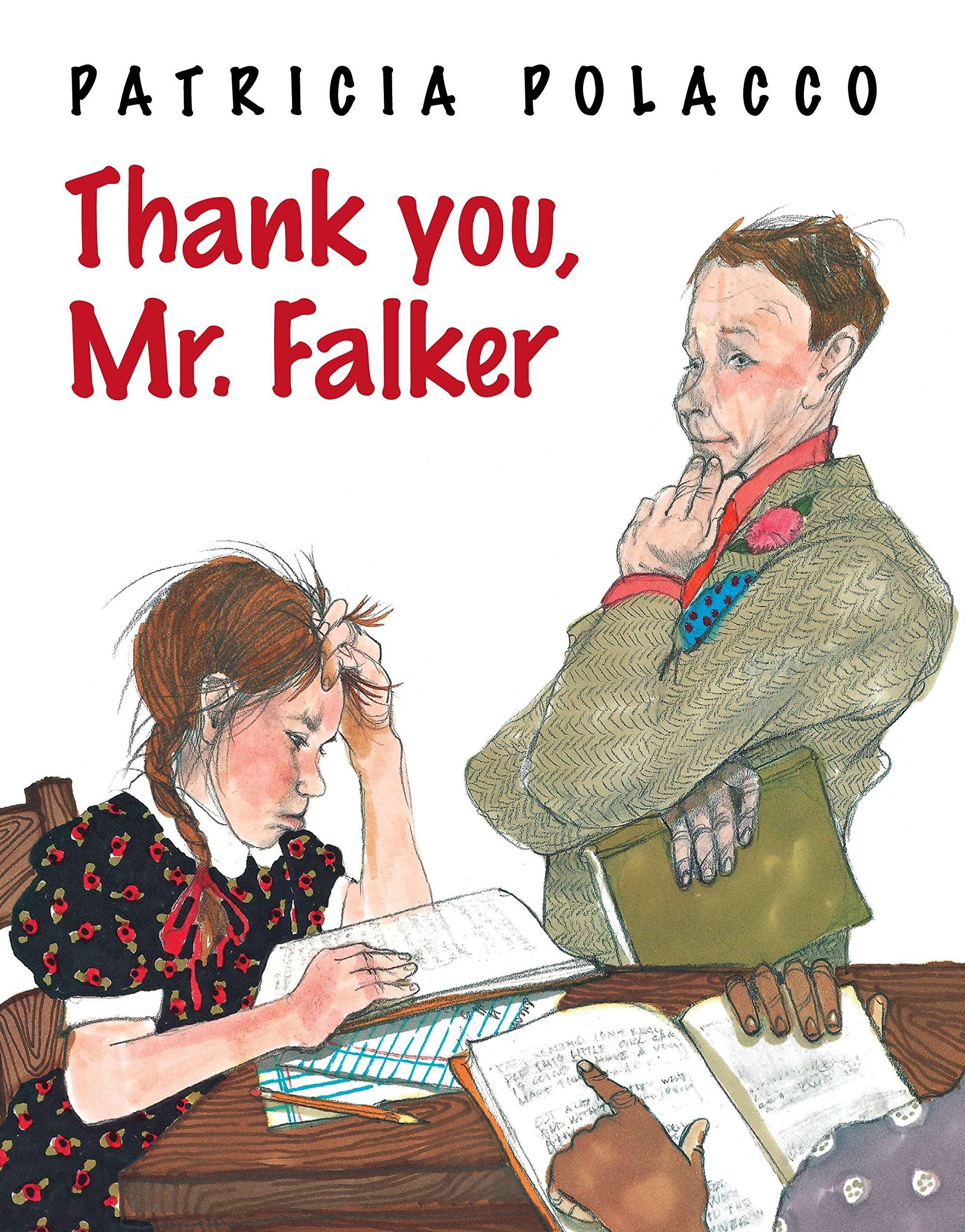
Thank You, Mr. Falker by Patricia Polacco is a deeply personal picture book about a girl who cannot read — and the fifth-grade teacher who finally shows her that she can. Based on the author’s own experience with dyslexia, it is one of the most emotionally powerful books about learning and teaching in the K–2 library, and one that resonates with equal force for children who struggle to read and for the adults who help them. This guide covers the reading level, recommended age, read-aloud vs. independent reading guidance, themes, and everything parents and teachers need to know about sharing this book with young readers.
For Parents
Find out whether Thank You, Mr. Falker works best as a read-aloud or independent read for your child, what age range it suits, and why this book is particularly valuable for children who are struggling with reading or feeling behind their peers.
For Teachers
Grade-level data, read-aloud timing, key themes, and discussion questions for one of the most meaningful picture books a teacher can share with their class. Strong connections to literacy, learning differences, the impact of a caring teacher, and the courage it takes to ask for help.
Thank You, Mr. Falker at a Glance
Find on Amazon →| Author & Illustrator | Patricia Polacco |
| Published | 1998 |
| Grade Level | K–2 (our assessment) |
| Recommended Age | 5–8 |
| Best For | Read-aloud ages 5–8; independent reading ages 7–8 |
| Flesch-Kincaid Grade | 4.2 |
| Word Count | ~1,400 |
| Pages | 48 |
| Genre | Picture book / autobiographical fiction |
| Setting | A family home in Michigan; an elementary school |
For official Lexile and AR levels, visit Lexile.com or AR BookFinder. ReadingVine provides independent editorial assessments.
What Reading Level Is Thank You, Mr. Falker?
Thank You, Mr. Falker is a K–2 reading level by our editorial assessment, with a Flesch-Kincaid grade level of approximately 4.2 — the highest of any book on this list. At around 1,400 words it is also one of the longest picture books here, and Polacco’s prose is rich, descriptive, and emotionally layered in ways that place this book at the upper end of the picture book range in both text complexity and thematic depth. It spans several years of Trisha’s childhood, which is unusual for a picture book, and the emotional arc — from the pure joy of a child anticipating learning to read, to the humiliation of struggling to learn, to the transformation of finally breaking through — is sustained and substantial.
This gap between decoding level and literary content is worth noting for parents: Thank You, Mr. Falker is one of the most valuable read-alouds at this level precisely because children who are struggling with reading — the audience who needs it most — are often well below the independent reading level of the text. As a read-aloud it reaches every child in a classroom simultaneously. As an independent read it is best suited to second graders reading confidently at or above grade level.
For parents who use specific reading level systems: we recommend checking your child’s level on Lexile.com or AR BookFinder for official scores, or asking your child’s teacher for their Guided Reading or DRA level.
Is Thank You, Mr. Falker a Read-Aloud or Independent Read?
Thank You, Mr. Falker is primarily a read-aloud for ages 5–8 and an independent read for ages 7–8. As a read-aloud it is one of the most emotionally powerful picture books a teacher or parent can share — the book builds from joy to humiliation to transformation across nearly fifty pages, and reading it aloud gives every child in the room the experience of Trisha’s struggle and breakthrough simultaneously. Many teachers cry when reading it aloud. This is not a problem. Most adults can read it aloud in about 15–20 minutes.
As a read-aloud, Polacco’s illustrations are deeply personal and highly detailed — she uses pencil and paint in a style that feels immediate and handmade, with warm domestic interiors giving way to the cold, isolating spaces of a school where Trisha cannot do what the other children can. The contrast between the richness of Trisha’s inner life and artistic ability and the blankness that letters and words represent to her is visible in the illustrations as well as the text. Reading aloud gives children time to look at each spread, to see Trisha’s world as Polacco remembers it.
For independent reading, the higher word count and more complex sentence structures make this a better fit for confident second graders than for younger independent readers. The emotional content is appropriate for any age from five onward, but the decoding demand means children who are still building reading fluency will find it easier to receive as a read-aloud than to tackle independently.
A note for parents and teachers: Thank You, Mr. Falker includes sustained depictions of classroom bullying — children who mock Trisha for her inability to read, calling her stupid, laughing at her. The bullying is not softened or glossed over, because Polacco is writing from her own experience of it and she knows how real it was. For children who are themselves struggling with reading or learning differences, this honesty is the book’s gift — but parents of children in that situation may want to be present for the first reading and available for the conversation that follows.
After Trisha reads her first sentence aloud to Mr. Falker, close the book for a moment before reading the last pages. Ask your child: “Is there something you found really hard to do at first, and then suddenly you could?” Let them answer before you finish the book. The ending — Trisha at her book signing, finally writing “Thank you, Mr. Falker” in her own hand — lands harder when children have just connected it to something in their own lives.
What Is Thank You, Mr. Falker About?
Trisha grows up in a family that loves books and learning above all things — her grandfather dips his finger in honey and touches it to the first page of a book at her birth, calling learning “the greatest gift.” She cannot wait to learn to read. But when she starts school, the letters won’t stay still. Other children learn to read and Trisha cannot. The years pass. The teasing gets worse. By fifth grade, Trisha has learned to hide her inability so well that most of her teachers don’t see it — and the children who do see it are merciless.
Then a new teacher, Mr. Falker, arrives. He sees Trisha’s drawings. He sees her. And slowly, working with her after school with a reading specialist, he helps her understand that her brain works differently and that she is not stupid — she is, as he tells her, brilliant. The day Trisha reads her first sentence aloud to Mr. Falker is the emotional climax of the book. The final pages reveal that the book is autobiographical: the girl is Patricia Polacco herself, who did not learn to read until she was nearly an adult, and who tracked down her fifth-grade teacher to thank him decades later.
Thank You, Mr. Falker Characters
Thank You, Mr. Falker Themes and Lessons
The central theme of Thank You, Mr. Falker is the transformative power of being truly seen by another person. Trisha’s struggle is not resolved by a technique or a program or even by her own determination — it is resolved when a teacher sees past the label that has accumulated around her and recognizes who she actually is. Mr. Falker’s belief in Trisha is not generic encouragement; it is specific and informed and unconditional, and it is what makes the breakthrough possible. The book is, among other things, one of the most accurate portraits of what good teaching actually looks like that exists in the picture book form.
The book is also one of the most honest treatments of learning differences available for K–2 readers. Polacco never uses the word dyslexia in the text, but she depicts its experience with complete accuracy — the letters that swim and reverse, the gap between comprehension and decoding, the specific humiliation of watching others do easily what you cannot do at all — and she does so from the inside, because she lived it. For children who are struggling with reading or other learning differences, the book is validating in a way that more explicitly instructional treatments often are not: it says your struggle is real, it is not your fault, and someone is coming who will see you.
The autobiographical revelation at the end — that Trisha is Patricia Polacco herself — carries its own lesson about gratitude and the long reach of kindness. Polacco tracked down her fifth-grade teacher as an adult to thank him. The book is that thank-you, made public and permanent. For teachers who read it aloud to their classes, the implication is unmistakable: what you do for a struggling child may matter more than you will ever know, and longer than you can imagine.
Discussion starters for families: Why was Trisha so excited to learn to read at the beginning of the book? What made learning to read so hard for her? What did Mr. Falker do that other teachers hadn’t done? Have you ever worked really hard at something and finally broken through? Is there a teacher who has helped you in a way you want to remember?
How Long Is Thank You, Mr. Falker?
Thank You, Mr. Falker has 48 pages and approximately 1,400 words — one of the longest picture books on the K–2 list. Most adults can read it aloud in about 15–20 minutes. The book covers several years of Trisha’s life, which is unusual for a picture book, and the emotional arc benefits from a reading that doesn’t rush — particularly the scenes of Trisha’s daily humiliation at school and the breakthrough moment when she reads to Mr. Falker.
A child reading independently at a second-grade level will typically finish in about 20–25 minutes. As a read-aloud for younger children, the length is appropriate for a full classroom session with time for discussion afterward — most teachers treat it as a complete read-aloud event rather than a between-activity book.
Books Similar to Thank You, Mr. Falker
If your child loves Thank You, Mr. Falker, these titles share its themes of perseverance, the power of being seen, and the courage it takes to struggle toward something hard:
About the Author and Illustrator
Patricia Polacco is an American author and illustrator who has written and illustrated more than one hundred picture books over a career spanning four decades. She did not learn to read until she was nearly an adult — her dyslexia went undiagnosed through most of her childhood — and this experience of struggling with literacy while excelling in every other way is the direct source of Thank You, Mr. Falker, published in 1998. The book is autobiographical: Trisha is Patricia Polacco, Mr. Falker is a real teacher named Mr. Falker who taught her in fifth grade, and the breakthrough described in the book actually happened. Polacco has said that she tracked down her teacher as an adult and thanked him in person before writing the book, and that his response — that he remembered her as one of his best students — was one of the most meaningful things anyone had ever said to her. Her illustration style — pencil-and-paint with rich color, detailed domestic interiors, and expressive faces — is recognizable across all her work and gives the book its particular warmth and intimacy. Her other well-known picture books include Thunder Cake, The Keeping Quilt, Pink and Say, and Babushka’s Doll, many of which draw from her own family history and personal experience. Polacco is widely regarded as one of the most important voices in American picture book literature for her willingness to address difficult subjects — war, racism, loss, disability — with directness and emotional honesty.
Thank You, Mr. Falker: Frequently Asked Questions
What reading level is Thank You, Mr. Falker?
Thank You, Mr. Falker is a K–2 reading level by our editorial assessment, with a Flesch-Kincaid grade level of approximately 4.2 — the highest on the K–2 list. At around 1,400 words it is also one of the longest picture books here. It works best as a read-aloud for ages 5–8 and as an independent read for confident second graders ages 7–8. For official Lexile and AR levels, visit Lexile.com or AR BookFinder.
What age is Thank You, Mr. Falker for?
Thank You, Mr. Falker is appropriate for ages 5–8. As a read-aloud it works from age 5 — the emotional content is accessible to kindergartners, and the book is particularly powerful for children who are themselves struggling with reading or learning differences. As an independent read it is best suited to confident second graders ages 7–8. Many teachers read it aloud at the beginning of the school year as a classroom community-building text.
Is Thank You, Mr. Falker a true story?
Yes — Thank You, Mr. Falker is autobiographical. The girl in the story is Patricia Polacco herself, who had undiagnosed dyslexia through most of her childhood and did not learn to read until she was nearly an adult. Mr. Falker is a real teacher who helped her in fifth grade. Polacco tracked him down as an adult to thank him before writing the book. The final pages of the book reveal this directly, transforming what could be read as a fictional story into something more personal and more powerful.
How long does it take to read Thank You, Mr. Falker aloud?
Most adults can read Thank You, Mr. Falker aloud in about 15–20 minutes — one of the longer read-alouds on the K–2 list. Teachers typically treat it as a full classroom read-aloud event rather than a quick between-activity book, allowing time for the emotional arc to build and for discussion afterward.
What is Thank You, Mr. Falker about?
Thank You, Mr. Falker is about a girl named Trisha who grows up in a family that loves books and learning, but who cannot make letters into words no matter how hard she tries. The years pass, the teasing gets worse, and by fifth grade she has learned to hide her struggle — until a new teacher named Mr. Falker sees her drawings, sees her, and works with her until she finally breaks through. The final pages reveal the book is autobiographical: Trisha is Patricia Polacco, who did not learn to read until she was nearly an adult, and who wrote this book as a thank-you to the teacher who changed her life.
Why do teachers love Thank You, Mr. Falker?
Thank You, Mr. Falker is one of the most widely read-aloud books in American classrooms because it does something almost no other picture book does: it makes the work of teaching visible, specific, and moving. Mr. Falker is not a generic encouraging figure — he sees Trisha as a whole person, understands her struggle accurately, and responds to it with patience and belief. Many teachers read this book and recognize what they are trying to do, and many cry reading it aloud to their classes, which is its own kind of testimony. For students, it offers the reassurance that struggling is not the same as failing, and that the right person, at the right time, can change everything.