
 = Partner Site
The Name Jar Reading Level: A Complete Guide
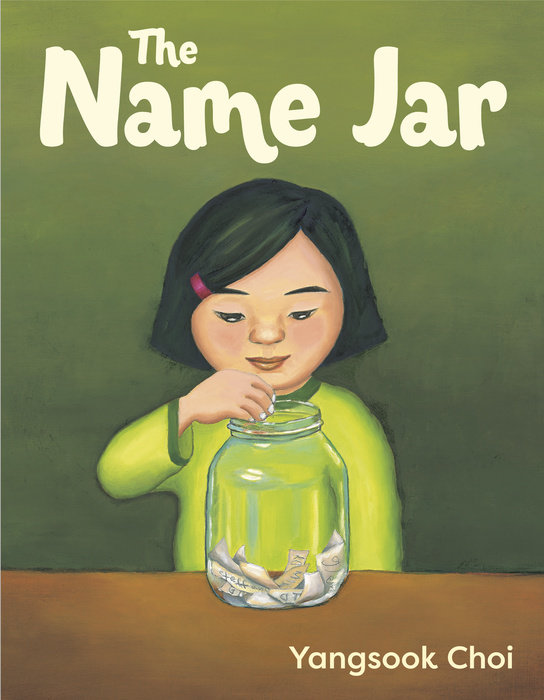
The Name Jar by Yangsook Choi is a warm, quietly brave picture book about a Korean girl who moves to America and considers changing her name to fit in — before discovering that her own name is worth keeping. This guide covers the reading level, recommended age, read-aloud vs. independent reading guidance, themes, and everything parents and teachers need to know about sharing this beloved book with young readers.
For Parents
Find out whether The Name Jar works best as a read-aloud or independent read for your child, what age range it suits, and how to talk about its themes of identity, immigration, belonging, and the courage it takes to be exactly who you are.
For Teachers
Grade-level data, read-aloud timing, key themes, and discussion questions for one of the most widely used picture books in K–2 classrooms with diverse student populations. Strong connections to units on identity, immigration, community, names, and cross-cultural friendship.
The Name Jar at a Glance
Find on Amazon →| Author & Illustrator | Yangsook Choi |
| Published | 2001 |
| Grade Level | K–2 (our assessment) |
| Recommended Age | 5–8 |
| Best For | Read-aloud ages 5–8; independent reading ages 6–8 |
| Flesch-Kincaid Grade | 3.3 |
| Word Count | ~900 |
| Pages | 32 |
| Genre | Picture book / realistic fiction |
| Setting | A new American school and neighborhood; memories of Korea |
For official Lexile and AR levels, visit Lexile.com or AR BookFinder. ReadingVine provides independent editorial assessments.
What Reading Level Is The Name Jar?
The Name Jar is a K–2 reading level by our editorial assessment, with a Flesch-Kincaid grade level of approximately 3.3. At around 900 words it is one of the longer picture books on the K–2 list, written in close third person that follows Unhei’s thoughts and feelings with warmth and precision. The vocabulary is mostly accessible, though a few words — “homeroom,” “practically,” “embarrassed” — may need support for younger independent readers. The name “Unhei” (pronounced “YOO-nay”) appears throughout and will require a quick introduction for readers unfamiliar with Korean names.
Choi’s prose is clear and emotionally direct without being simple — she trusts young readers with the full complexity of Unhei’s experience, including the loneliness of being new, the specific discomfort of having a name that others struggle with, and the difficult internal negotiation between wanting to belong and wanting to stay yourself. That emotional complexity is what makes the book valuable as a read-aloud at multiple grade levels simultaneously, and what makes it rereadable for children who encounter it more than once across their school years.
For parents who use specific reading level systems: we recommend checking your child’s level on Lexile.com or AR BookFinder for official scores, or asking your child’s teacher for their Guided Reading or DRA level.
Is The Name Jar a Read-Aloud or Independent Read?
The Name Jar works best as a read-aloud for ages 5–8 and as an independent read for ages 6–8. As a read-aloud, the book’s emotional immediacy draws children in from the opening scene on the school bus, where children struggle with Unhei’s name in a way she finds both mortifying and familiar. The story builds steadily toward Unhei’s decision — to keep her name, to teach it, to let her classmates learn to say it right — and that resolution feels genuinely earned rather than imposed. Most adults can read it aloud in about 8–12 minutes.
As a read-aloud, Choi’s illustrations are a full partner to the text. She uses a warm palette with the Korean lettering of Unhei’s name rendered beautifully on the page — the name that looks strange to American children in its pronunciation is shown to be visually striking and meaningful in its original form. The name jar itself, filling up with paper slips as Unhei’s classmates contribute American name suggestions, is a visual device that children follow with investment across the middle of the book.
For independent reading, a confident first or second grader can handle the text. The close-third-person narration is clear, the emotional logic is consistent, and children who read it independently often notice details — the grandmother’s stamp on the jar lid, the meaning of Unhei’s name — that reward careful reading. Before reading, it is worth telling children how to pronounce “Unhei” — YOO-nay — so the name lands properly from the first page rather than becoming a stumbling block.
A note for parents: The Name Jar depicts the experience of a child who is new to a country and navigating cultural difference at school. For children who have had this experience — whether through immigration, moving, or being different from their classmates in any way — the book may resonate very personally. Reading it together and being available for conversation afterward is worth the extra time.
Before you begin, tell your child how to pronounce Unhei: YOO-nay. Then, after you finish, ask: “What does Unhei’s name mean? Why do you think her grandmother chose it?” The answer is in the book — “grace” — and the grandmother’s explanation of it is the emotional heart of the resolution. Children who have heard the meaning before the reveal will feel it land differently than children who encounter it for the first time, in a good way.
What Is The Name Jar About?
Unhei has just moved from Korea to America. On the bus to her first day at her new school, children try to say her name and stumble over it, and Unhei decides that she will choose an American name before she introduces herself to her new class. Her teacher gives her a week to decide. One of her new classmates, Joey, brings in a glass jar and encourages everyone to write name suggestions on slips of paper for Unhei to choose from. The jar fills up with American names — Amanda, Laura, Stephanie.
But Unhei keeps coming back to her own name. Her grandmother, still in Korea, sends her a wooden name stamp — a hanji, the traditional Korean name chop — carved with her name’s characters. Joey steals the jar and hides it, later explaining that he didn’t want Unhei to choose a name from it. When Unhei finally introduces herself to the class, she tells them her name: Unhei, which means “grace.” She teaches them to say it. They learn. The jar disappears from the classroom, its purpose finished. Unhei keeps her name.
The Name Jar Characters
The Name Jar Themes and Lessons
The central theme of The Name Jar is the cost and courage of keeping your identity when the world around you finds it difficult or unfamiliar. Unhei’s name is not wrong — it is beautiful, it has meaning, it was chosen with love — but it is hard for her new classmates to say, and that difficulty registers on Unhei as a reason to abandon it. The book is about the process of recovering what she almost gave away: not through a sudden burst of confidence, but through the accumulation of small things — her grandmother’s call, the wooden stamp, Joey’s friendship, the question of what “Unhei” means.
The book is also one of the most honest picture book treatments of the immigrant experience in childhood available for K–2 readers. Unhei’s discomfort is specific and accurate — the bus scene, the classroom introduction, the week of deliberation — without being generalizing or reductive. Children who have had this experience recognize it; children who haven’t get an accurate and empathetic window into it. This makes the book unusually valuable in diverse classrooms, where it can open conversation across different kinds of experience without asking any child to represent their whole community.
The resolution is built on something the book has been quietly arguing from the beginning: that a name is a gift, not just a label, and that the story behind it — who gave it, what it means, why they chose it — is worth knowing and worth sharing. Unhei doesn’t just keep her name; she teaches it, offers it, invites her classmates into its meaning. That generosity — sharing what was almost lost — is the book’s fullest expression of its theme.
Discussion starters for families: Why did Unhei want to choose an American name? What changed her mind? What does Unhei’s name mean, and why did her grandmother choose it? Do you know what your own name means or why your parents chose it? Have you ever wanted to change something about yourself to fit in?
How Long Is The Name Jar?
The Name Jar has 32 pages and approximately 900 words. Most adults can read it aloud in about 8–12 minutes. The book’s emotional pacing rewards a reading that doesn’t rush — particularly the scene where Unhei receives the name stamp from her grandmother and the final classroom scene where she teaches her classmates to say her name.
A child reading independently at a first- or second-grade level will typically finish in about 12–15 minutes. The Korean name characters and the name stamp illustration are details that reward close looking and often prompt questions worth exploring.
Books Similar to The Name Jar
If your child loves The Name Jar, these titles share its themes of identity, belonging, cultural pride, and the courage to be exactly who you are:
About the Author and Illustrator
Yangsook Choi is a Korean-American author and illustrator who was born and raised in Korea and moved to the United States as an adult. The Name Jar, published in 2001, draws directly from her own experience of having a name that Americans found difficult to pronounce and her own negotiations between cultural identity and belonging in a new country. The book has become one of the most widely used picture books in American classrooms for its handling of immigration and identity, appearing regularly on recommended reading lists for diverse classrooms, ESL programs, and social-emotional learning curricula. Choi is also the author-illustrator of The Sun Girl and the Moon Boy, New Cat, and Behind the Mask, and has illustrated books by other authors including Good Luck Gold by Janet S. Wong. Her illustration style — warm, detailed, rendered in rich color with careful attention to cultural specificity — gives The Name Jar its particular visual warmth and its accuracy in depicting both the Korean and American contexts of Unhei’s experience. Choi has said that she wrote the book in part to give children like her — children navigating two cultures simultaneously — a story that reflected their experience without reducing it, and in part to give American-born children a window into that experience that was genuine rather than simplified.
The Name Jar: Frequently Asked Questions
What reading level is The Name Jar?
The Name Jar is a K–2 reading level by our editorial assessment, with a Flesch-Kincaid grade level of approximately 3.3. The text is emotionally rich and written in close third person with mostly accessible vocabulary. It works best as a read-aloud for ages 5–8 and as an independent read for ages 6–8. For official Lexile and AR levels, visit Lexile.com or AR BookFinder.
What age is The Name Jar for?
The Name Jar is appropriate for ages 5–8. It resonates most deeply with children who are at or near school age and have begun navigating social dynamics around identity and belonging. As a read-aloud it works from age 5, and as an independent read it suits first and second graders ages 6–8. It is particularly powerful in diverse classrooms where children bring different experiences of cultural identity to the conversation.
How do you pronounce Unhei?
Unhei is pronounced YOO-nay. The book explains this, and telling children how to say the name before reading aloud helps it land naturally from the first page. The name means “grace” in Korean — a meaning that becomes central to the book’s resolution when Unhei’s grandmother explains why she chose it.
How long does it take to read The Name Jar aloud?
Most adults can read The Name Jar aloud in about 8–12 minutes. The book rewards a reading that doesn’t rush — particularly the scene with the grandmother’s name stamp and the final classroom scene where Unhei teaches her classmates to say her name. Both scenes deserve time to land without being hurried past.
What is The Name Jar about?
The Name Jar is about a Korean girl named Unhei who moves to America and, after children on her first school bus struggle to say her name, decides to choose an American name instead. Her class fills a jar with American name suggestions. But Unhei keeps coming back to her own name — especially after her grandmother sends her a wooden stamp carved with her name’s Korean characters and tells her it means “grace.” When Unhei finally introduces herself to the class by her real name and teaches them to say it, the jar is no longer needed. It is a story about identity, belonging, and the courage to keep what is truly yours.
What does Unhei’s name mean and why does it matter?
Unhei means “grace” in Korean. Unhei’s grandmother chose the name carefully and explains its meaning to Unhei during a phone call near the end of the book — a moment that gives Unhei the anchor she needs to reclaim her name rather than replace it. The book’s argument, made quietly throughout and stated only in this one moment, is that a name is not just a label but a gift — that knowing what your name means and why it was chosen connects you to the people who love you. That connection is what Unhei nearly gave away, and what she recovers at the end.