
 = Partner Site
Stellaluna Reading Level: A Complete Guide
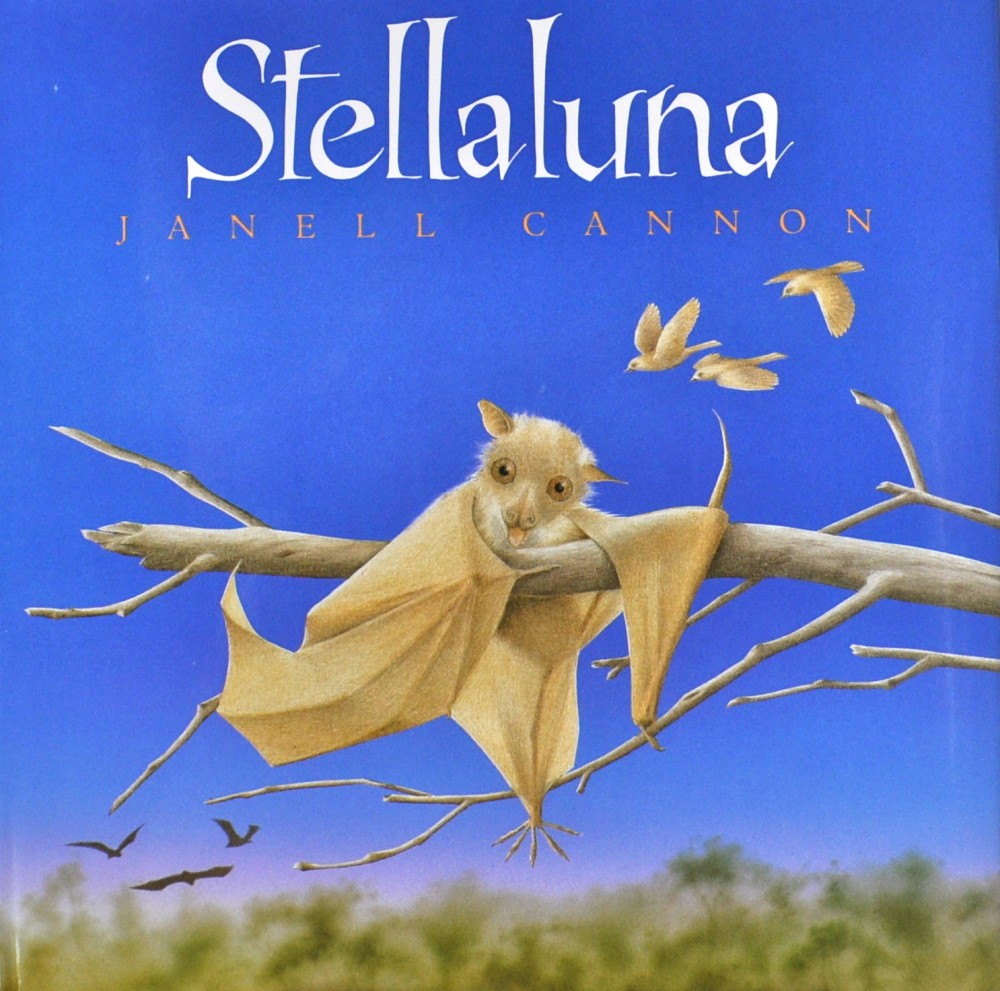
Stellaluna by Janell Cannon is a picture book about a baby bat who falls into a bird’s nest and has to learn to live like something she’s not — until she finds her way back to who she really is. This guide covers the reading level, recommended age, read-aloud vs. independent reading guidance, themes, and everything parents and teachers need to know about sharing this book with young readers.
For Parents
Find out whether Stellaluna works best as a read-aloud or independent read for your child, what age range it suits, and how to talk about its themes of identity, belonging, and friendship with young readers.
For Teachers
Grade-level data, read-aloud timing, key themes, and discussion questions for a K–2 classroom favorite. Strong connections to science units on bats and birds, and to SEL units on identity and belonging.
Stellaluna at a Glance
Find on Amazon →| Author & Illustrator | Janell Cannon |
| Published | 1993 |
| Grade Level | K–2 (our assessment) |
| Recommended Age | 4–8 |
| Best For | Read-aloud ages 4–7; independent reading ages 6–8 |
| Flesch-Kincaid Grade | 3.8 |
| Word Count | ~1,000 |
| Pages | 48 |
| Genre | Picture book / fiction |
| Setting | A tropical forest |
For official Lexile and AR levels, visit Lexile.com or AR BookFinder. ReadingVine provides independent editorial assessments.
What Reading Level Is Stellaluna?
Stellaluna is a K–2 reading level by our editorial assessment, with a Flesch-Kincaid grade level of approximately 3.8. It sits at the upper end of the picture book range — longer than most at around 1,000 words, with richer sentence structures and vocabulary than books like Corduroy or The Very Hungry Caterpillar. Words like “instinctively,” “humiliated,” and “clumsy” appear in the text, which makes it a stronger fit for confident kindergartners and first and second graders than for younger picture book readers.
That said, the story itself is fully accessible to younger listeners when read aloud. A four-year-old won’t know the word “instinctively” but will understand completely what it means when Stellaluna reaches for a bug and stops herself. Cannon’s detailed, luminous illustrations carry a great deal of the emotional and narrative content, making the book work at a read-aloud level well below its independent reading level.
For parents who use specific reading level systems: we recommend checking your child’s level on Lexile.com or AR BookFinder for official scores, or asking your child’s teacher for their Guided Reading or DRA level.
Is Stellaluna a Read-Aloud or Independent Read?
Stellaluna works best as a read-aloud for ages 4–7 and is a strong independent read for ages 6–8. It is one of the longer and more narratively complex picture books on this list, which makes it a particularly good read-aloud for children who are ready for something with more story than a simple 32-page picture book but aren’t yet reading chapter books independently.
As a read-aloud, the book rewards investment. Cannon’s illustrations are extraordinarily detailed — the tropical forest setting is rendered in deep, rich colors with close-up views of bat and bird anatomy that children find fascinating — and many families slow down to study them. The story has genuine emotional stakes: Stellaluna is separated from her mother, forced to suppress her instincts, and slowly loses confidence in who she is. The reunion with her mother and the book’s final reflection on friendship land with real warmth. Most adults can read it aloud in about 10–14 minutes.
For independent reading, a confident first or second grader can handle the text, though some vocabulary will need to be worked out from context. The longer sentence structures make it a step up from most K–1 picture books, and it’s a good bridge read for children approaching early chapter books.
A note for parents: the book opens with Stellaluna being separated from her mother after an owl attack — it’s briefly dramatic but not graphic. Cannon handles it quickly and sensitively. The rest of the book is warm and the ending is fully resolved. The backmatter includes several pages of bat facts that children and teachers both find genuinely useful.
Pause after Stellaluna has been living with the birds for a while and ask: “Do you think Stellaluna is happy? Do you think she’s being herself?” This question — about the difference between fitting in and belonging — is the heart of the book, and children have remarkably perceptive things to say about it.
What Is Stellaluna About?
Stellaluna is a baby fruit bat who is separated from her mother when an owl attacks them in the night. She falls into a bird’s nest, where a mother bird agrees to let her stay — on the condition that she behave like a bird. Stellaluna tries. She sleeps in the nest at night instead of hanging upside down to sleep. She eats bugs instead of fruit. She stops using her feet to hang and starts using them to grip like the birds do. She tries so hard to fit in that she begins to lose track of what comes naturally to her.
Then one night she discovers other bats hanging in a tree, and realizes she has found her own kind. She is reunited with her mother. At the end of the book, Stellaluna and the bird siblings she grew up with reflect on how different they are and yet how deep their friendship runs — a conclusion that is simple on the surface and genuinely rich underneath.
Stellaluna Characters
Stellaluna Themes and Lessons
The central theme of Stellaluna is the tension between fitting in and being yourself. Stellaluna works hard to conform to the birds’ way of life — she suppresses her instincts, eats food she doesn’t like, and sleeps in ways that are uncomfortable — because belonging to the nest feels safer than being alone. Children understand this experience viscerally. The moment Stellaluna hangs upside down in the dark and feels, for the first time in a long time, like herself, is one of the most emotionally precise moments in K–2 picture books.
The book also has a strong science thread: Cannon’s backmatter includes detailed notes on bat biology, behavior, and the differences between fruit bats and insect-eating bats. Many teachers use Stellaluna as an entry point into bat and bird comparison units, and the book supports that use without feeling educational in a heavy-handed way. The science is woven into a story that works on its own terms.
The friendship between Stellaluna and the birds is the book’s warmest element. The final pages, in which the bird siblings and Stellaluna puzzle together over how they can be so different and yet so close, give children language for a real and important idea: that friendship does not require sameness.
Discussion starters for families: Why did Stellaluna stop eating fruit and sleeping upside down? Have you ever tried to act like someone else to fit in? What made Stellaluna feel like herself again? Can you be real friends with someone who is very different from you?
How Long Is Stellaluna?
Stellaluna has 48 pages and approximately 1,000 words — making it one of the longer picture books at the K–2 level. Most adults can read it aloud in about 10–14 minutes, and many families spend longer given the richness of Cannon’s illustrations.
A child reading independently at a first- or second-grade level will typically finish in about 15–20 minutes. The book also includes several pages of bat facts at the back, which curious readers — and most children who love this book are curious readers — often spend additional time with.
Books Similar to Stellaluna
If your child loves Stellaluna, these titles share similar themes of identity, belonging, and finding where you truly fit:
About the Author and Illustrator
Janell Cannon is an American author and illustrator based in California. Stellaluna, published in 1993, was her debut picture book and became an immediate bestseller — it has sold over three million copies and remains one of the most widely used picture books in K–2 classrooms nationwide. Cannon’s illustration style is distinctive and unusual for the picture book format: she works in colored pencil and acrylic paint to create richly detailed, almost scientific illustrations that have the warmth of story art and the precision of natural history drawings. She has said that she researched bat behavior and anatomy extensively before illustrating Stellaluna, and the backmatter bat facts reflect that research. Her subsequent books include Verdi (1997), about a young python resisting the changes that come with growing up, and Crickwing (2000), about an outcast cockroach who finds belonging in an unlikely community — themes that will feel familiar to readers who loved Stellaluna. She has noted that she is drawn to animal protagonists that people tend to fear or overlook, and to stories about finding your place in the world.
Stellaluna: Frequently Asked Questions
What reading level is Stellaluna?
Stellaluna is a K–2 reading level by our editorial assessment, with a Flesch-Kincaid grade level of approximately 3.8. It is one of the longer, more vocabulary-rich picture books at this level. It works best as a read-aloud for ages 4–7 and as an independent read for ages 6–8. For official Lexile and AR levels, visit Lexile.com or AR BookFinder.
What age is Stellaluna for?
Stellaluna is appropriate for ages 4–8 as a read-aloud, and as an independent read for ages 6–8. It skews slightly older than most picture books at this level — its vocabulary and narrative complexity make it a better fit for confident kindergartners and first and second graders than for very young listeners, though the illustrations and story are fully accessible from age 4 when read aloud.
Can a kindergartner read Stellaluna alone?
A confident kindergartner at the upper end of the reading level range may be able to read Stellaluna independently, but most kindergartners will benefit from adult support. Words like “instinctively,” “humiliated,” and “clumsy” are above typical kindergarten independent reading level. By mid-first grade, most children can handle the text independently. It is a strong read for first and second graders ready for more narrative complexity than a standard 32-page picture book.
How long does it take to read Stellaluna aloud?
Most adults can read Stellaluna aloud in about 10–14 minutes. Many families spend longer — Cannon’s detailed illustrations reward a slow look, and the story generates conversation naturally at several points. It is one of the longer picture book read-alouds at the K–2 level.
What is Stellaluna about?
Stellaluna is about a baby fruit bat who is separated from her mother and lands in a bird’s nest. To stay, she must act like a bird — eating bugs, sleeping at night, gripping branches with her feet. She tries so hard to conform that she begins to lose herself. Eventually she finds her own kind, is reunited with her mother, and returns to the birds as a friend rather than an imitation. It is a story about identity, belonging, and the friendships that survive difference.
What does Stellaluna teach?
Stellaluna teaches that fitting in and belonging are not the same thing — and that suppressing who you are in order to be accepted comes at a real cost. It also models a vision of friendship that doesn’t require sameness: Stellaluna and the birds are genuinely different, and their friendship is genuine because of that honesty, not despite it. The book’s backmatter also teaches real bat biology, which many children find as engaging as the story itself.