
 = Partner Site
Where the Wild Things Are Reading Level: A Complete Guide
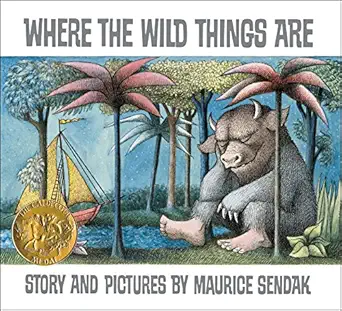
Where the Wild Things Are by Maurice Sendak is one of the most celebrated picture books ever published. This guide covers the reading level, recommended age, read-aloud tips, and everything parents and teachers need to know about sharing this classic with young readers.
For Parents
Find out if Where the Wild Things Are is right for your child’s reading level and emotional readiness. We cover whether it works best as a read-aloud or independent read, plus what to talk about together afterward.
For Teachers
Grade-level data, read-aloud timing, key themes, and discussion questions to support your Where the Wild Things Are lesson. A staple of K–1 classrooms for good reason.
Where the Wild Things Are at a Glance
Find on Amazon →| Author & Illustrator | Maurice Sendak |
| Published | 1963 |
| Grade Level | K–1 (our assessment) |
| Recommended Age | 4–8 |
| Best For | Read-aloud ages 3–6; independent reading ages 6–8 |
| Flesch-Kincaid Grade | 3.4 |
| Word Count | ~338 |
| Pages | 48 |
| Genre | Picture book / fantasy |
| Setting | Max’s bedroom and an imaginary island |
| Awards | Caldecott Medal (1964) |
For official Lexile and AR levels, visit Lexile.com or AR BookFinder. ReadingVine provides independent editorial assessments.
What Reading Level Is Where the Wild Things Are?
Where the Wild Things Are reads at approximately a K–1 level, with a Flesch-Kincaid grade level of 3.4. That grade level is somewhat misleading — the book has only 338 words total, but some of the vocabulary (“mischief,” “gnashed,” “rumpus”) is more advanced than what you’d find in a typical kindergarten reader. Sendak chose precise, vivid words rather than simple ones, which is part of what makes the book so memorable.
An important note for parents: young children can understand and enjoy books read aloud to them well above their independent reading level. A three-year-old who can’t read a single word will still follow every beat of this story when an adult reads it, because the illustrations carry most of the narrative. The pictures grow larger as Max’s imagination expands and shrink back down as he returns home — a visual storytelling technique that children absorb intuitively.
For parents who use specific reading level systems: we recommend checking your child’s level on Lexile.com or AR BookFinder for official scores, or asking your child’s teacher for their Guided Reading or DRA level.
Is Where the Wild Things Are a Read-Aloud or Independent Read?
This is primarily a read-aloud for ages 3–6 and an independent read for ages 6–8. Most children encounter it first as a read-aloud, and that’s where it shines — the rhythmic language, dramatic pauses, and page-turn reveals were designed to be performed.
As a read-aloud, the book rewards an expressive voice. The wild rumpus scene — three wordless double-page spreads — invites children to fill in the action themselves, which is part of what makes it so engaging for even the youngest listeners. The story’s arc (anger → adventure → comfort) is something children as young as two or three can follow emotionally even before they understand every word.
For independent reading, the short text and large illustrations make it accessible to most first graders who are reading simple sentences. A few words (“terrible,” “gnashed,” “rumpus”) may need help, but context and the pictures make meaning clear. Children who read it independently often notice details in the illustrations they missed when it was read to them.
The book does include a mildly scary element — the Wild Things have “terrible roars” and “terrible teeth” and “terrible eyes.” Sendak draws them as large, horned, fanged creatures. Most children find them more silly than frightening, especially because Max is clearly in control the entire time. But a small number of very sensitive children under age four may find the Wild Things unsettling. You know your child best.
When you reach the wild rumpus (the three wordless pages), let your child tell you what’s happening in the pictures. Ask “What are Max and the Wild Things doing?” You’ll get a different answer every time — and your child is practicing narrative skills without even knowing it.
What Is Where the Wild Things Are About?
Max, a young boy in a wolf costume, is making mischief at home — chasing the dog, hammering nails into the wall. His mother calls him “WILD THING!” and sends him to bed without supper. Alone in his room, Max’s imagination takes over: a forest grows, an ocean appears, and he sails to the land of the Wild Things, where huge creatures with horns and claws roar at him. Instead of being afraid, Max tames them by staring into their eyes without blinking, and they make him king of all Wild Things.
Max and the Wild Things have a great “rumpus” — howling, swinging from trees, marching through the forest. But eventually Max feels lonely and wants to be “where someone loved him best of all.” He sails back home, where his supper is waiting for him in his room — still hot. The story is about anger, imagination, and the unconditional love that’s waiting for you when you come back.
Where the Wild Things Are Characters
Where the Wild Things Are Themes and Lessons
The central theme is how children process big emotions. Max is angry — genuinely, wildly angry — and instead of being told his feelings are wrong, the book lets him live inside that anger, experience it fully through imagination, and then choose to come home when he’s ready. The supper waiting “still hot” tells children that love doesn’t disappear when you’re angry, and home is always there when you need it.
This is one of the first children’s books that treated a child’s anger as valid rather than something to be corrected. When it was published in 1963, many adults were uncomfortable with Max being defiant and not punished for it. But children understood immediately — sometimes you need to roar before you can feel calm again.
Discussion starters for families: What do you think made Max so angry? Why did Max want to go home even though he was king? What do you do when you feel wild inside? Why do you think Max’s supper was still hot?
How Long Is Where the Wild Things Are?
Where the Wild Things Are has 48 pages and approximately 338 words. Most adults can read it aloud in 4–6 minutes, though many families stretch it longer by talking about the illustrations on each page.
A child reading independently at a first-grade level will finish in about 8–12 minutes, spending extra time on the detailed illustrations. The three wordless “wild rumpus” spreads add time as children study what Max and the Wild Things are doing.
Books Similar to Where the Wild Things Are
If your child loves Where the Wild Things Are, these books share similar themes, energy, or emotional depth:
About the Author and Illustrator
Maurice Sendak (1928–2012) was an American author and illustrator whose work transformed children’s literature. Where the Wild Things Are, published in 1963, won the Caldecott Medal in 1964 and went on to become one of the best-selling picture books of all time. Sendak wrote and illustrated the book himself, creating both the spare, rhythmic text and the richly detailed crosshatched illustrations. He was among the first children’s book creators to acknowledge that children experience real, powerful emotions — anger, fear, jealousy — and that books should honor those feelings rather than teach them away. His other notable works include In the Night Kitchen and Outside Over There. Sendak received virtually every major award in children’s literature, including the Hans Christian Andersen Award for illustration and a National Medal of Arts.
Where the Wild Things Are: Frequently Asked Questions
What reading level is Where the Wild Things Are?
Where the Wild Things Are is approximately a K–1 reading level, with a Flesch-Kincaid grade level of 3.4. The book has only 338 words, but some vocabulary like “gnashed” and “rumpus” is advanced. It works best as a read-aloud for ages 3–6 and as an independent read for ages 6–8. For official Lexile and AR levels, visit Lexile.com or AR BookFinder.
Is Where the Wild Things Are scary for kids?
Most children find the Wild Things more silly than scary, especially because Max is clearly in charge the entire time — he tames them just by staring at them. The creatures have horns, claws, and fangs, but they’re drawn with a playful, rounded quality rather than a genuinely threatening one. A small number of very sensitive children under four may be unsettled by the images. If your child is easily frightened by monsters, preview the illustrations first.
Can a kindergartner read Where the Wild Things Are alone?
Most kindergartners will need help with this book as an independent read. Although it has very few words, some of the vocabulary is above kindergarten level. By mid-to-late first grade, most children can read it independently. That said, the book is designed as a read-aloud — the rhythm, pacing, and wordless pages work best when shared between an adult and a child.
How long does it take to read Where the Wild Things Are aloud?
Most adults can read Where the Wild Things Are aloud in about 4–6 minutes. Many families spend longer — 8–10 minutes — by pausing to look at the illustrations and talk about what’s happening on each page, especially during the three wordless “wild rumpus” spreads.
What is Where the Wild Things Are about?
Where the Wild Things Are is about a boy named Max who is sent to bed without supper after making mischief. In his imagination, he sails to an island where wild creatures live. He tames them, becomes their king, and leads a wild rumpus — but eventually misses home and sails back to find his supper waiting. It’s a story about anger, imagination, and the comfort of unconditional love.
Why is Where the Wild Things Are considered a classic?
Published in 1963, it was one of the first picture books to treat a child’s anger as valid rather than something to correct. Max is defiant, he’s not punished for his feelings, and the book lets him work through his emotions on his own terms. The spare text, innovative use of expanding illustrations, and emotional honesty changed what children’s books could be. It won the Caldecott Medal in 1964 and has sold over 20 million copies worldwide.