
 = Partner Site
The Very Hungry Caterpillar Reading Level: A Complete Guide
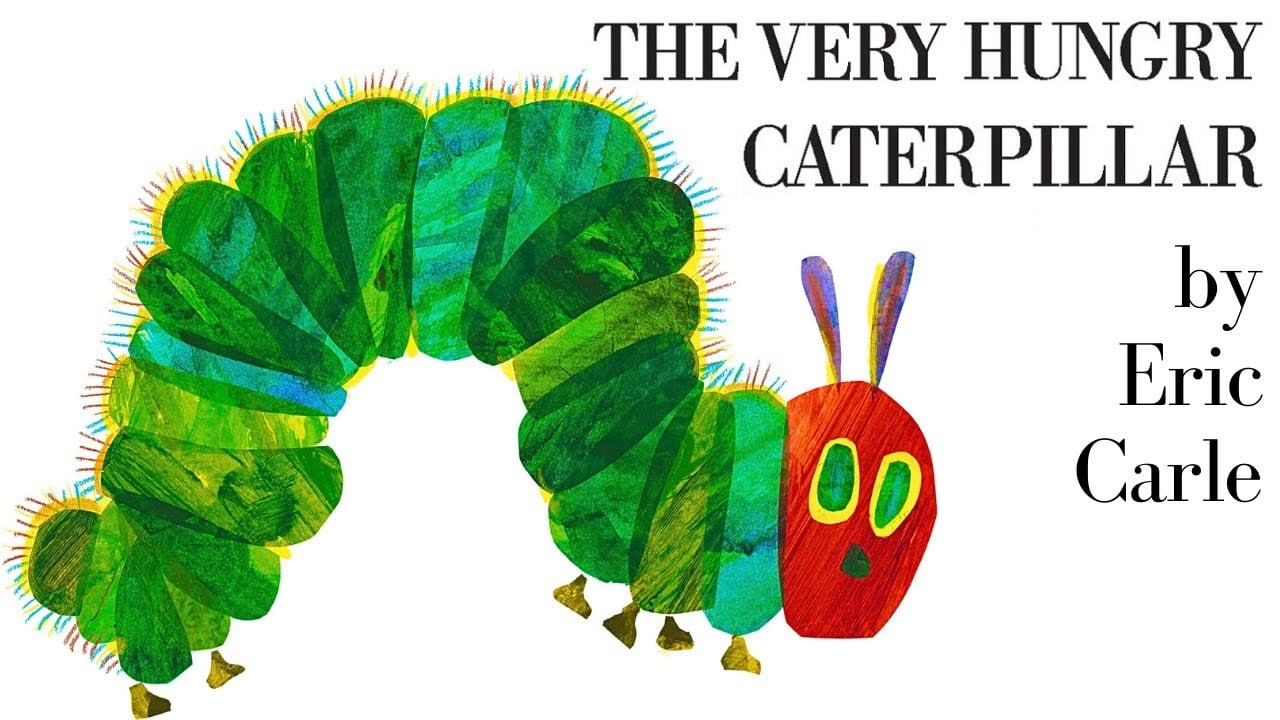
The Very Hungry Caterpillar by Eric Carle is one of the best-selling children’s books of all time — and one of the most searched for reading level guidance. This guide covers the grade level, recommended age, read-aloud vs. independent reading guidance, and tips for sharing this classic with your child.
For Parents
Find out whether The Very Hungry Caterpillar works best as a read-aloud or an independent read for your child, what age range it suits, and what to talk about together along the way.
For Teachers
Grade-level data, read-aloud timing, key themes, and discussion questions to support your Very Hungry Caterpillar lesson. A cornerstone of PreK–K classrooms for counting, days of the week, and life cycles.
The Very Hungry Caterpillar at a Glance
Find on Amazon →| Author & Illustrator | Eric Carle |
| Published | 1969 |
| Grade Level | K–1 (our assessment) |
| Recommended Age | 3–6 |
| Best For | Read-aloud ages 2–5; independent reading ages 5–7 |
| Flesch-Kincaid Grade | 2.1 |
| Word Count | ~225 |
| Pages | 32 |
| Genre | Picture book / fiction |
| Setting | A garden and natural world |
For official Lexile and AR levels, visit Lexile.com or AR BookFinder. ReadingVine provides independent editorial assessments.
What Reading Level Is The Very Hungry Caterpillar?
The Very Hungry Caterpillar is a K–1 reading level by our editorial assessment, with a Flesch-Kincaid grade level of approximately 2.1. At only around 225 words, it’s one of the shortest picture books on any K–2 shelf — but the low word count doesn’t tell the whole story. The book teaches counting, days of the week, food vocabulary, and the concept of metamorphosis, all of which are richer concepts than the grade level suggests.
One important note for parents: young children can understand books read aloud to them well above what they can read independently. A two-year-old who can’t yet decode a single word will still delight in following the caterpillar through his week of eating. The repetitive, cumulative structure — “On Monday he ate through one apple. But he was still hungry.” — is exactly the kind of pattern that helps young children follow along and even anticipate what comes next.
For parents who use specific reading level systems: we recommend checking your child’s level on Lexile.com or AR BookFinder for official scores, or asking your child’s teacher for their Guided Reading or DRA level.
Is The Very Hungry Caterpillar a Read-Aloud or Independent Read?
This is primarily a read-aloud for ages 2–5 and an independent read for ages 5–7. Most children first encounter it as a lap book — a parent or teacher reading it aloud while the child turns the distinctive die-cut pages and pokes a finger through the holes left by the caterpillar.
As a read-aloud, the book has built-in participation moments. The repetitive sentence structure (“On Tuesday he ate through two pears, but he was still hungry”) invites children to fill in the pattern once they’ve heard it a few times. The escalating list of Saturday foods is always a crowd-pleaser — children enjoy the absurdity of a caterpillar eating through ice cream, pie, sausage, and a slice of watermelon in a single day. Most adults can read it aloud in about 3–5 minutes.
For independent reading, a kindergartner or early first grader with solid sight word recognition can handle most of the text. The repetitive structure means that once a child can read “he ate through one apple,” the rest of the week follows the same pattern. The die-cut pages and Carle’s bold collage illustrations also make it an appealing book for early readers to return to on their own.
There is nothing in this book that requires parental preparation. It is one of the gentlest, most universally beloved picture books in print.
After you’ve read the book once, try reading it again and pausing before “but he was still hungry” — let your child supply the phrase. By the third or fourth reading, most children can recite the whole pattern. This is early literacy in action: they’re internalizing sentence structure, sequence, and prediction without any formal instruction.
What Is The Very Hungry Caterpillar About?
A tiny caterpillar hatches from an egg on a Sunday and immediately begins to eat. Over the course of the following week he eats his way through one apple on Monday, two pears on Tuesday, three plums on Wednesday, four strawberries on Thursday, and five oranges on Friday. On Saturday he eats through an extravagant spread of junk food — ten items in all — and ends up with a stomachache. On Sunday he eats one green leaf and feels much better. He builds a cocoon around himself and, after more than two weeks, emerges as a beautiful butterfly.
The story is simple, but it carries a remarkable amount of early learning content: counting from one to five, the days of the week, the names of various foods, and the life cycle of a butterfly. Eric Carle’s signature collage illustrations — tissue paper painted with acrylics, cut and layered into bright, textured images — are as much the story as the words. The die-cut holes in the pages, one per fruit growing to five, make the book a tactile as well as visual experience for young children.
The Very Hungry Caterpillar Characters
The Very Hungry Caterpillar Themes and Lessons
The surface themes are educational: counting from one to five, the days of the week, and the life cycle of a butterfly. But the deeper through-line is transformation — the caterpillar begins as a tiny egg and ends as a beautiful butterfly, and everything he eats along the way is fuel for that change. For young children, this is a powerful and reassuring idea: that growth takes time, that you need to take in a lot before you become what you’re going to be.
The Saturday eating binge and subsequent stomachache also offers a gentle, non-preachy lesson about moderation — the caterpillar overeats, feels the consequence, and corrects course with a single green leaf. It never feels didactic because Carle clearly enjoys the absurdity of the Saturday menu as much as any child does.
Discussion starters for families: Can you count how many things he ate each day? What do you think he’ll look like when he comes out of the cocoon? What’s your favorite food the caterpillar ate? What foods give you energy to grow?
How Long Is The Very Hungry Caterpillar?
The Very Hungry Caterpillar has 32 pages and approximately 225 words. Most adults can read it aloud in about 3–5 minutes, making it one of the shortest read-alouds at any level. The die-cut pages and illustrations invite lingering, so many families spend 7–8 minutes on a single reading.
A child reading independently at a kindergarten or early first-grade level will typically finish in about 5–10 minutes, often going back through the pages to look at the illustrations and poke through the die-cut holes again.
Books Similar to The Very Hungry Caterpillar
If your child loves The Very Hungry Caterpillar, these titles share the same spirit of simple text, bold illustration, and early learning wrapped in story:
About the Author and Illustrator
Eric Carle (1929–2021) was an American author and illustrator born in Syracuse, New York, who spent part of his childhood in Germany before returning to the United States as a young adult. He developed his distinctive collage technique — painting tissue paper with acrylics and layering the pieces into bright, textured illustrations — over decades of commercial art work before applying it to children’s books. The Very Hungry Caterpillar, published in 1969, became one of the best-selling children’s books ever printed, with over 55 million copies sold worldwide and translations into more than 70 languages. Carle went on to create more than 70 books, many of them featuring the same vivid collage style, including Brown Bear, Brown Bear, What Do You See? (illustrated by Carle, written by Bill Martin Jr.) and The Very Quiet Cricket. He co-founded the Eric Carle Museum of Picture Book Art in Amherst, Massachusetts, which opened in 2002 and remains the only museum in the United States devoted to the art of picture books.
The Very Hungry Caterpillar: Frequently Asked Questions
What reading level is The Very Hungry Caterpillar?
The Very Hungry Caterpillar is a K–1 reading level by our editorial assessment, with a Flesch-Kincaid grade level of approximately 2.1. The book has only about 225 words, and its repetitive structure makes it accessible to early readers. It works best as a read-aloud for ages 2–5 and as an independent read for ages 5–7. For official Lexile and AR levels, visit Lexile.com or AR BookFinder.
What age is The Very Hungry Caterpillar for?
The Very Hungry Caterpillar is appropriate for ages 2–6 as a read-aloud, with most children encountering it first as a toddler or preschooler. As an independent read, it’s well suited to kindergartners and early first graders (ages 5–7) who are building sight word recognition and early phonics skills. Children often return to it long after they’ve technically outgrown it because of the tactile die-cut pages and Carle’s illustrations.
Can a kindergartner read The Very Hungry Caterpillar alone?
Many kindergartners can read The Very Hungry Caterpillar independently, especially by mid-to-late kindergarten. The repetitive sentence structure means that once a child learns the pattern, they can read most of the book with confidence. A few food names — “strawberries,” “watermelon” — may need support. The book is an excellent early independent reader precisely because the structure is so predictable.
How long does it take to read The Very Hungry Caterpillar aloud?
Most adults can read The Very Hungry Caterpillar aloud in about 3–5 minutes. Many families spend longer — 7–8 minutes — by pausing to count the foods, talk about the illustrations, and let children poke their fingers through the die-cut holes. It’s one of the shortest read-alouds at this level, which makes it a reliable choice when time is short.
What is The Very Hungry Caterpillar about?
The Very Hungry Caterpillar follows a small caterpillar who hatches from an egg and spends a week eating his way through a growing number of foods — one apple on Monday, two pears on Tuesday, and so on — before wrapping himself in a cocoon and emerging as a butterfly. Along the way the book teaches counting, days of the week, and the life cycle of a butterfly.
What does The Very Hungry Caterpillar teach?
The book teaches counting from one to five, the days of the week, and the life cycle of a butterfly — all embedded in a simple, satisfying story. It also introduces the concept of cause and effect (too much food leads to a stomachache) and transformation (the caterpillar becomes a butterfly). These concepts are presented so naturally that children absorb them without feeling like they’re being taught.