
 = Partner Site
Chicka Chicka Boom Boom Reading Level: A Complete Guide
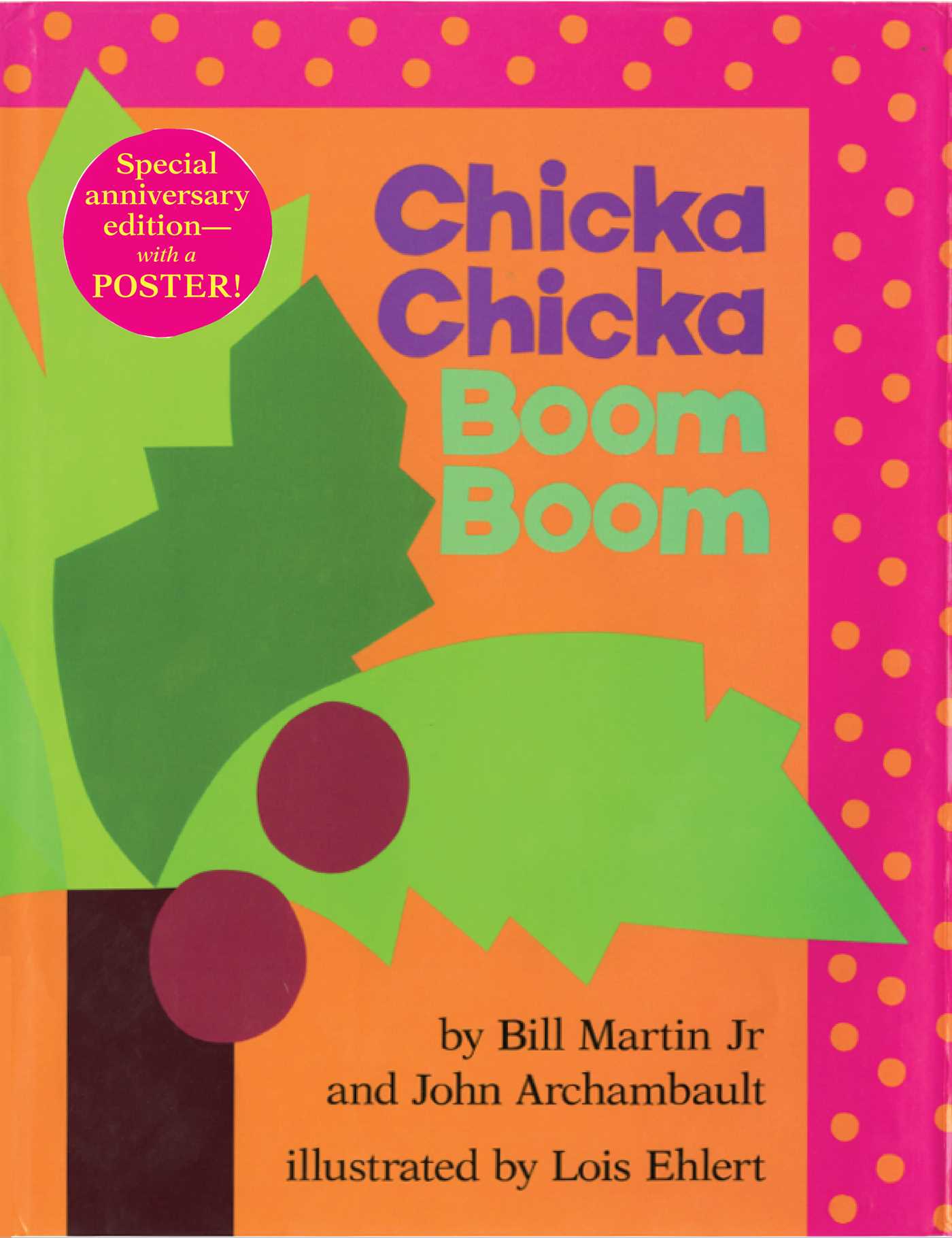
Chicka Chicka Boom Boom by Bill Martin Jr. and John Archambault, illustrated by Lois Ehlert, is the alphabet book — the one found in virtually every kindergarten classroom in America. This guide covers the reading level, recommended age, read-aloud vs. independent reading guidance, themes, and everything parents and teachers need to know about sharing this exuberant classic with young readers.
For Parents
Find out whether Chicka Chicka Boom Boom works best as a read-aloud or independent read for your child, what age range it suits, and how its rhythm and repetition make it one of the most effective early literacy tools in picture book form.
For Teachers
Grade-level data, read-aloud timing, key themes, and discussion questions for the cornerstone alphabet book of PreK and kindergarten classrooms. Essential for letter recognition, phonemic awareness, and read-aloud participation units.
Chicka Chicka Boom Boom at a Glance
Find on Amazon →| Authors | Bill Martin Jr. and John Archambault |
| Illustrator | Lois Ehlert |
| Published | 1989 |
| Grade Level | K (our assessment) |
| Recommended Age | 3–5 |
| Best For | Read-aloud ages 2–5; independent reading ages 5–6 |
| Flesch-Kincaid Grade | 1.4 |
| Word Count | ~265 |
| Pages | 36 |
| Genre | Picture book / alphabet book |
| Setting | A tropical scene with a coconut tree |
For official Lexile and AR levels, visit Lexile.com or AR BookFinder. ReadingVine provides independent editorial assessments.
What Reading Level Is Chicka Chicka Boom Boom?
Chicka Chicka Boom Boom is a kindergarten reading level by our editorial assessment, with a Flesch-Kincaid grade level of approximately 1.4 — among the lowest on the K–2 list. The text is built almost entirely from short, rhythmic phrases and the letters of the alphabet themselves, which keeps the vocabulary minimal and the sentence structures extremely simple. The refrain “Chicka chicka boom boom! Will there be enough room?” repeats throughout, giving early listeners and readers a phrase to hold onto and return to.
The Flesch-Kincaid score accurately reflects the decoding demand of this book, but it doesn’t capture what makes it so effective as an early literacy tool. The rhyme and rhythm do what years of phonics drilling can’t: they make the sound patterns of language feel pleasurable and memorable. Children who have heard this book dozens of times often begin to recognize letter names not because they studied them but because the book made them impossible to forget.
As with all picture books, young children can enjoy this book read aloud well before they can read it independently. For parents who use specific reading level systems: we recommend checking your child’s level on Lexile.com or AR BookFinder for official scores, or asking your child’s teacher for their Guided Reading or DRA level.
Is Chicka Chicka Boom Boom a Read-Aloud or Independent Read?
Chicka Chicka Boom Boom is first and foremost a read-aloud for ages 2–5, and can become an independent read for ages 5–6 once children have developed basic letter recognition and early phonics skills. It is one of the great read-aloud books — designed to be performed, chanted, and participated in rather than simply listened to.
As a read-aloud, the book is irresistible. The bouncing rhythm of Martin and Archambault’s text practically performs itself — “A told B, and B told C, I’ll meet you at the top of the coconut tree!” — and children who have heard it even once begin joining in on the refrain. Lois Ehlert’s bold, graphic illustrations in saturated tropical colors give the book a visual energy that matches the text’s exuberance perfectly. Most adults can read it aloud in about 4–6 minutes, though a participatory classroom reading almost always runs longer as children chant along.
For independent reading, the repetitive structure and the fact that the “words” are largely just letter names make this one of the most accessible early independent reads imaginable. A kindergartner who knows their letters and has heard the book a few times can follow along with the text surprisingly well. The challenge, if there is one, is the refrain — “Chicka chicka boom boom! Will there be enough room?” — which has a few multisyllabic words that beginning readers may need support with.
There is nothing in this book that requires parental preparation. It is pure, joyful, letter-by-letter celebration from first page to last.
After a few readings, try pointing to each letter as you say its name in the text, and let your child call out the next one before you do. Then, when all the letters have tumbled out of the tree, go back through and see how many your child can name from the illustrations alone. This is letter recognition practice disguised as a game — and it works.
What Is Chicka Chicka Boom Boom About?
The lowercase letters of the alphabet dare each other to climb a coconut tree. A races to the top, then B, then C — each one calling the next to join them. By the time all 26 letters have piled onto the tree, it bends and sways under their weight, and they all come tumbling down in a heap. The uppercase letters — the “grown-up” letters, rendered in Ehlert’s illustrations as parents and relatives — come rushing to help. By the end of the book, the letters have recovered, the moon is rising, and a stubborn little a is already eyeing the coconut tree again.
The genius of the book is that it uses narrative — a race, a fall, a rescue, a defiant restart — to make the alphabet memorable. The letters aren’t just symbols to be memorized; they’re characters with momentum and personality. Ehlert’s vivid collage illustrations, which won a Caldecott Honor in 1990, give every letter a bold, distinct visual presence that makes the page as engaging as the words.
Chicka Chicka Boom Boom Characters
The characters in Chicka Chicka Boom Boom are the letters of the alphabet themselves, rendered by Lois Ehlert as bold, colorful shapes with distinct personalities suggested through their placement and movement on the page. The lowercase letters are the adventurous young climbers; the uppercase letters appear later as the concerned adult figures who rush to help when everything falls apart. Rather than individual character cards, what matters here is the dynamic Ehlert creates between the two sets: the lowercase letters as children at play, the uppercase as the grown-up world watching over them. It’s a structure young children understand intuitively — and one that makes the alphabet feel like a community rather than a list.
Chicka Chicka Boom Boom Themes and Lessons
The primary purpose of Chicka Chicka Boom Boom is letter recognition and phonemic awareness, and it achieves both with unusual elegance. By embedding the alphabet in a story with narrative stakes — will there be enough room? — Martin and Archambault give children a reason to care about the letters beyond their instrumental value. The rhythm does the memorization work. Most children who have heard this book regularly can recite the alphabet in its particular bouncing cadence long before they can read.
The secondary theme is perseverance — specifically, the defiant little a at the end of the book, already looking up at the tree again after the whole alphabet has just tumbled out of it. For young children, this is a satisfying and slightly subversive ending: the lesson isn’t “don’t try to climb too high” but “get back up and try again.” The circle structure of the book reinforces this — it ends where it began, with a letter daring itself to go higher.
Discussion starters for families: Can you find the letter that starts your name? Why do you think all the letters wanted to climb the tree? What happened when too many letters climbed at once? Why do you think little a wants to climb again at the end?
How Long Is Chicka Chicka Boom Boom?
Chicka Chicka Boom Boom has 36 pages and approximately 265 words. Most adults can read it aloud in about 4–6 minutes, though a participatory classroom read-aloud with children chanting along typically runs 8–10 minutes.
A child reading independently at a kindergarten level will typically finish in about 6–10 minutes. The repetitive structure means early readers can build confidence page by page — by the time they reach the second half of the alphabet, they know exactly what the pattern requires of them.
Books Similar to Chicka Chicka Boom Boom
If your child loves Chicka Chicka Boom Boom, these titles share the same energy, rhythm, and early literacy power:
About the Authors and Illustrator
Bill Martin Jr. (1916–2004) was an American author and educator who wrote more than 300 books for children over a career spanning six decades. He had dyslexia and did not learn to read until college, which gave him a particular understanding of what makes language memorable and accessible to young learners — and shaped his commitment to rhythm, repetition, and the musicality of text. His best-known books include Brown Bear, Brown Bear, What Do You See? (1967, illustrated by Eric Carle) and Chicka Chicka Boom Boom (1989), both of which remain cornerstones of early childhood literacy. John Archambault is an American poet and storyteller who collaborated with Martin on several books, including Chicka Chicka Boom Boom, contributing to the text’s particular chanting energy. Lois Ehlert (1934–2021) was an American author and illustrator whose bold, graphic collage style — flat shapes in saturated colors assembled into vivid compositions — made her one of the most visually distinctive voices in picture book illustration. Her other well-known works include Color Zoo, Eating the Alphabet, and Planting a Rainbow. The collaboration between Martin and Archambault’s percussive text and Ehlert’s visual boldness is one of the most successful author-illustrator pairings in picture book history.
Chicka Chicka Boom Boom: Frequently Asked Questions
What reading level is Chicka Chicka Boom Boom?
Chicka Chicka Boom Boom is a kindergarten reading level by our editorial assessment, with a Flesch-Kincaid grade level of approximately 1.4. The text is built from short rhythmic phrases and letter names, making it one of the most accessible books at this level. It works best as a read-aloud for ages 2–5 and as an independent read for ages 5–6. For official Lexile and AR levels, visit Lexile.com or AR BookFinder.
What age is Chicka Chicka Boom Boom for?
Chicka Chicka Boom Boom is appropriate for ages 2–5 as a read-aloud, with most children first encountering it as toddlers or preschoolers. As an independent read, it suits kindergartners ages 5–6 who are developing letter recognition and early phonics skills. It is one of the few books that works as enthusiastically at age 2 as it does in a kindergarten classroom.
Can a kindergartner read Chicka Chicka Boom Boom alone?
Many kindergartners can read Chicka Chicka Boom Boom independently, particularly after a few read-aloud exposures. The text is largely composed of letter names and a repeating refrain, which means children who know their letters and have heard the book a few times can follow along with the text quite naturally. The refrain — “Chicka chicka boom boom! Will there be enough room?” — has a few longer words but is usually memorized before it’s decoded.
How long does it take to read Chicka Chicka Boom Boom aloud?
Most adults can read Chicka Chicka Boom Boom aloud in about 4–6 minutes. A participatory classroom read-aloud where children chant along typically runs 8–10 minutes. It is one of the more energetic and interactive read-alouds at this level — expect noise and enthusiasm.
What is Chicka Chicka Boom Boom about?
Chicka Chicka Boom Boom is about the lowercase letters of the alphabet racing each other to the top of a coconut tree — until they all pile on and come tumbling down together. The uppercase letters rush to help, the lowercase letters recover, and by the last page, a defiant little a is already eyeing the tree again. It is a joyful, rhythmic alphabet book that makes the letters feel like characters rather than symbols.
Who wrote and illustrated Chicka Chicka Boom Boom?
Chicka Chicka Boom Boom was written by Bill Martin Jr. and John Archambault and illustrated by Lois Ehlert. Martin and Archambault created the book’s distinctive chanting text, while Ehlert’s bold, graphic collage illustrations in tropical colors gave it its instantly recognizable visual identity. The book was published in 1989 and received a Caldecott Honor in 1990.