
 = Partner Site
The Snowy Day Reading Level: A Complete Guide
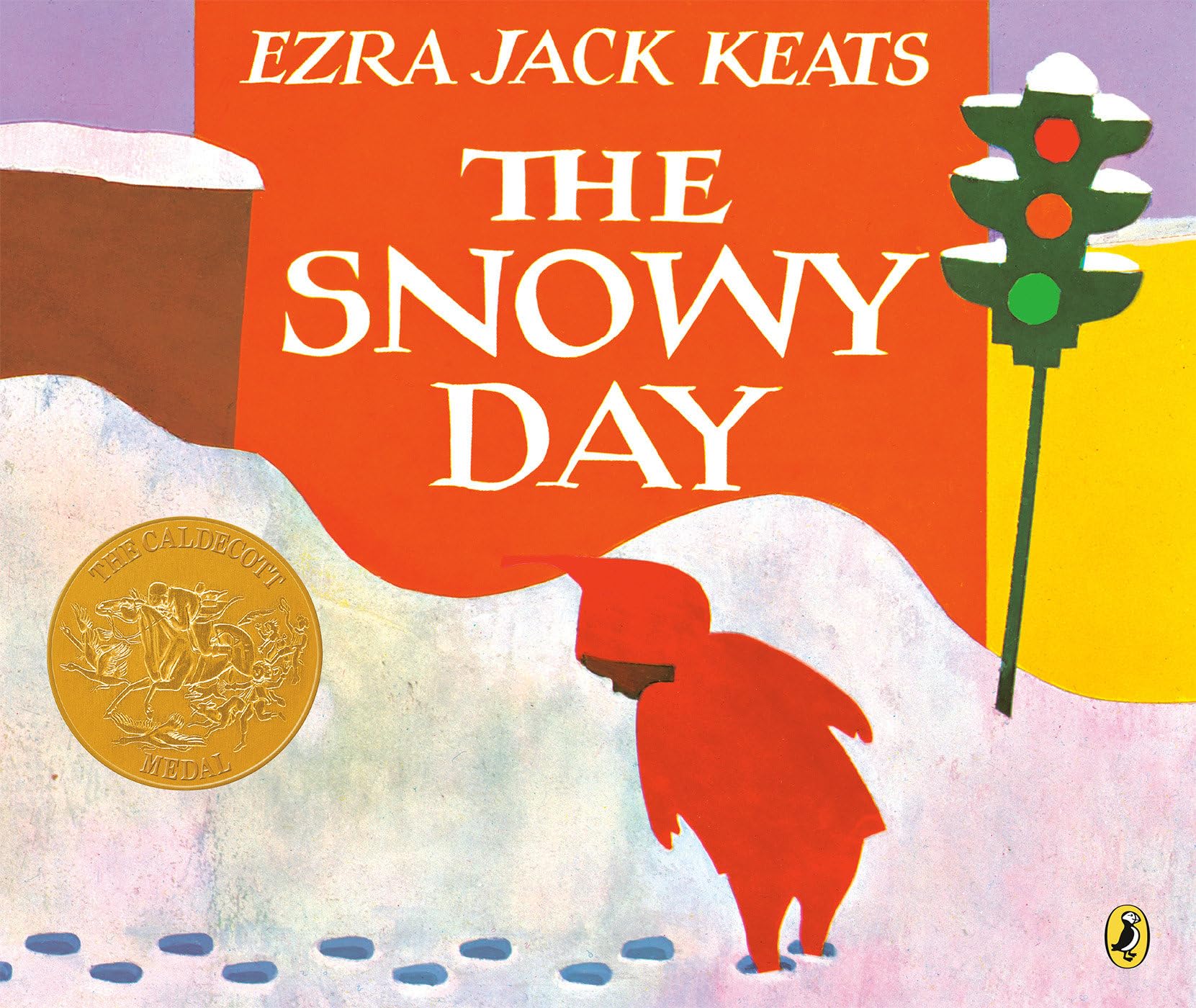
The Snowy Day by Ezra Jack Keats is a landmark picture book — the first mainstream American picture book to feature a Black child as the protagonist, and one of the most quietly perfect explorations of childhood wonder ever put on a page. This guide covers the reading level, recommended age, read-aloud vs. independent reading guidance, themes, and everything parents and teachers need to know about sharing this classic with young readers.
For Parents
Find out whether The Snowy Day works best as a read-aloud or independent read for your child, what age range it suits, and what to explore together about Peter’s joyful, unhurried day in the snow.
For Teachers
Grade-level data, read-aloud timing, key themes, and discussion questions for a Caldecott Medal winner that belongs in every K–1 classroom. Strong connections to winter science units and social studies conversations about representation in literature.
The Snowy Day at a Glance
Find on Amazon →| Author & Illustrator | Ezra Jack Keats |
| Published | 1962 |
| Grade Level | K–1 (our assessment) |
| Recommended Age | 3–6 |
| Best For | Read-aloud ages 2–5; independent reading ages 5–7 |
| Flesch-Kincaid Grade | 1.8 |
| Word Count | ~310 |
| Pages | 40 |
| Genre | Picture book / fiction |
| Setting | A city neighborhood after a snowstorm |
| Awards | Caldecott Medal (1963) |
For official Lexile and AR levels, visit Lexile.com or AR BookFinder. ReadingVine provides independent editorial assessments.
What Reading Level Is The Snowy Day?
The Snowy Day is a K–1 reading level by our editorial assessment, with a Flesch-Kincaid grade level of approximately 1.8 — one of the lowest on the K–2 list, reflecting Keats’s simple, direct sentences and everyday vocabulary. At around 310 words, it is close in length to Where the Wild Things Are and similarly spare in its text. The words themselves are almost entirely familiar to a kindergartner: snow, footprints, stick, mountain, angel, snowball.
What makes the book rich is not the vocabulary but the way Keats sees the world through Peter’s eyes. Each small discovery — the sound a stick makes dragging through snow, the satisfying crunch of a footprint, the disappointment of a melted snowball in a pocket — is rendered with complete attention. The Flesch-Kincaid score tells you this is an easy book to read. It doesn’t tell you that it’s a beautiful one.
As with all picture books, young children can understand and enjoy this book read aloud well above their independent reading level. A two-year-old will follow Peter through his day with full engagement even though they can’t yet read a single word. For parents who use specific reading level systems: we recommend checking your child’s level on Lexile.com or AR BookFinder for official scores, or asking your child’s teacher for their Guided Reading or DRA level.
Is The Snowy Day a Read-Aloud or Independent Read?
The Snowy Day is primarily a read-aloud for ages 2–5 and a natural independent read for ages 5–7. Its short text, simple vocabulary, and episodic structure make it one of the more accessible books on this list for early independent readers — a confident kindergartner in the second half of the year can often read most of it without support.
As a read-aloud, the book has a gentle, meditative quality that is unusual at this level. There is no conflict, no villain, no problem to be solved — just a small boy moving through a snowy city, paying attention to everything. Reading it aloud rewards a slow pace. Keats’s collage illustrations, built from painted papers and patterned textures cut and layered together, deserve time. The snow scenes in particular — whites and blues and the occasional burst of Peter’s red snowsuit — are among the most visually distinctive pages in picture book history. Most adults can read it aloud in about 4–6 minutes.
For independent reading, the episodic structure — Peter does one thing, then another, then another — means there is no complex plot to track. Early readers can focus on decoding without losing the thread of the story. The one moment that requires a little more comprehension is Peter’s dream, in which the sun melts all the snow — and his discovery the next morning that the snow is still there. Children who miss the dream framing sometimes find this transition confusing, so it’s worth checking in on that page.
There is nothing in this book that requires parental preparation. It is one of the gentlest, most universally joyful picture books ever published.
After Peter discovers his snowball has melted in his pocket, ask your child: “Have you ever tried to save something and had it disappear?” Then turn the page and let the next morning’s fresh snow be its own answer. The book’s quiet consolation — that the world replenishes what it takes — lands more gently when a child has had a moment to feel the loss first.
What Is The Snowy Day About?
Peter wakes up one morning to find that snow has fallen overnight and covered the whole city. He puts on his red snowsuit and goes outside to explore. He makes footprints in different patterns, knocks snow from a tree with a stick, slides down a snow mountain, makes a snow angel, and tries — unsuccessfully — to join the big kids’ snowball fight. Before going inside, he packs a snowball and puts it in his coat pocket to save for the next day. That night he dreams that the sun has melted all the snow away. In the morning he wakes to find the snow still there, and his friend waiting to explore it with him.
That is the whole story. Nothing goes wrong. No one is threatened or lost or in conflict. The book is an act of pure attention to a child’s experience — what it feels like to be small in a snow-covered world, to notice every texture and sound, to want to save a piece of something wonderful. Keats’s collage illustrations, which won the Caldecott Medal in 1963, give the city a warmth and texture that make it feel both universal and deeply specific.
The Snowy Day Characters
The Snowy Day Themes and Lessons
The dominant theme of The Snowy Day is the quality of a child’s attention — the way young children notice and invest in small, sensory details that adults walk past. Peter doesn’t summarize his day; he lives inside each moment of it. Keats understood that this kind of attention is not trivial but is, in fact, one of the most important things childhood offers. The book is a sustained argument for slowing down and paying attention, made entirely through story and image rather than instruction.
The snowball-in-the-pocket episode carries a quiet secondary theme about loss and renewal. Peter tries to hold onto something beautiful and finds it gone — a small grief children recognize immediately. The book’s answer is not a lesson but an image: Peter wakes up the next morning and the snow is still there. Some things you can’t hold onto, but that doesn’t mean they won’t come back.
The Snowy Day also holds a significant place in the history of children’s literature. Published in 1962, it was the first widely distributed American picture book to feature a Black child as the central protagonist in a story that had nothing to do with race — Peter simply lived in a city, played in the snow, and had a wonderful day. This was, and remains, a meaningful form of representation: the simple act of centering a Black child’s ordinary joy in a major mainstream picture book.
Discussion starters for families: What was your favorite thing Peter did in the snow? Why do you think his snowball melted? Have you ever tried to save something and had it disappear? What would you do on a perfect snowy day?
How Long Is The Snowy Day?
The Snowy Day has 40 pages and approximately 310 words. Most adults can read it aloud in about 4–6 minutes, though many families linger over Keats’s illustrations and stretch the reading to 8–10 minutes.
A child reading independently at a kindergarten or early first-grade level will typically finish in about 8–12 minutes. The episodic structure and simple vocabulary make it one of the more approachable early independent reads on the K–2 list.
Books Similar to The Snowy Day
If your child loves The Snowy Day, these titles share the same spirit of childhood wonder, beautiful illustration, and a child moving through the world on their own terms:
About the Author and Illustrator
Ezra Jack Keats (1916–1983) was an American author and illustrator born in Brooklyn, New York, to Polish-Jewish immigrant parents. He developed his distinctive collage technique — cutting and layering painted and patterned papers to build illustrations with unusual warmth and texture — largely on his own, without formal fine arts training. The Snowy Day, published in 1962, was his first book as both author and illustrator, and it won the Caldecott Medal in 1963. Its significance extended beyond its artistic achievement: at a time when nearly all major American picture books featured white protagonists, Keats centered a Black child in a story about ordinary childhood joy — a choice that drew both praise and, from some critics, scrutiny about whether a white author could or should tell that story. The conversation those critiques sparked is an important one in the history of children’s literature. Keats went on to write and illustrate more than a dozen books featuring Peter and his urban neighborhood, including Whistle for Willie, Peter’s Chair, and A Letter to Amy. The Ezra Jack Keats Foundation, established after his death, continues to support children’s literacy programs and awards grants to public schools and libraries in his name.
The Snowy Day: Frequently Asked Questions
What reading level is The Snowy Day?
The Snowy Day is a K–1 reading level by our editorial assessment, with a Flesch-Kincaid grade level of approximately 1.8. The text is simple and direct, with everyday vocabulary and short sentences. It works best as a read-aloud for ages 2–5 and as an independent read for ages 5–7. For official Lexile and AR levels, visit Lexile.com or AR BookFinder.
What age is The Snowy Day for?
The Snowy Day is appropriate for ages 2–6 as a read-aloud, with most children first encountering it as toddlers or preschoolers. As an independent read, it suits kindergartners and early first graders (ages 5–7). Its simple vocabulary and episodic structure make it one of the more accessible early independent reads at this level.
Can a kindergartner read The Snowy Day alone?
Many kindergartners can read The Snowy Day independently, particularly in the second half of kindergarten. The vocabulary is simple and familiar, and the episodic structure — Peter does one thing, then another — means there is no complex plot to track while decoding. It is one of the stronger early independent reads on the K–1 list. The one page to watch is Peter’s dream sequence, which young readers sometimes find momentarily confusing.
How long does it take to read The Snowy Day aloud?
Most adults can read The Snowy Day aloud in about 4–6 minutes. Many families spend 8–10 minutes by lingering over Keats’s collage illustrations, which reward a slow look. It is a reliable and unhurried bedtime book.
What is The Snowy Day about?
The Snowy Day follows a young boy named Peter who spends a perfect day exploring his city neighborhood after a snowstorm. He makes footprints, drags a stick through snow, slides down a hill, makes a snow angel, and tries to save a snowball in his pocket. That night he dreams the snow has melted. In the morning it is still there, and a friend is waiting. It is a story about childhood wonder, the small joys of a winter day, and the consolation of waking up to find the world still beautiful.
Why is The Snowy Day important?
Published in 1962, The Snowy Day was the first widely distributed American picture book to feature a Black child as the central protagonist in a story about ordinary childhood joy — not a story about race, but a story about snow and wonder that happened to center a Black child. It won the Caldecott Medal in 1963 and has sold millions of copies. Its significance as a work of representation in children’s literature, alongside its artistic achievement, makes it one of the most important picture books of the twentieth century.