
 = Partner Site
Owl Moon Reading Level: A Complete Guide
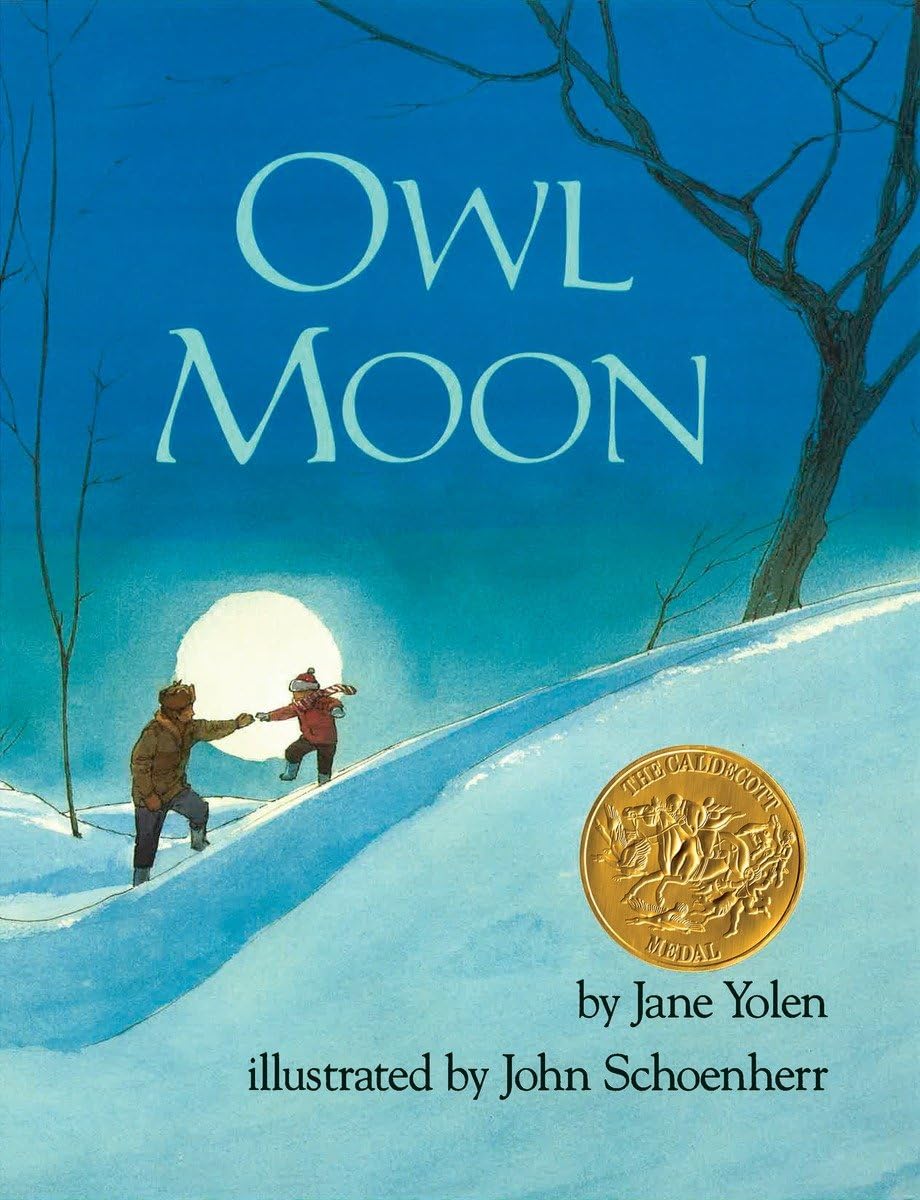
Owl Moon by Jane Yolen, illustrated by John Schoenherr, is one of the most beautiful picture books ever published — a quiet, luminous story about a child and her father going owling on a winter night. Winner of the Caldecott Medal in 1988, it is beloved by parents, teachers, and children who appreciate something slower and more atmospheric than most books at this level. This guide covers the reading level, recommended age, read-aloud vs. independent reading guidance, themes, and everything parents and teachers need to know about sharing this classic with young readers.
For Parents
Find out whether Owl Moon works best as a read-aloud or independent read for your child, what age range it suits, and why its quiet, atmospheric language makes it one of the most rewarding read-alouds at the K–2 level.
For Teachers
Grade-level data, read-aloud timing, key themes, and discussion questions for a Caldecott Medal winner that works beautifully in winter units, nature studies, and lessons on descriptive language and mood in writing.
Owl Moon at a Glance
Find on Amazon →| Author | Jane Yolen |
| Illustrator | John Schoenherr |
| Published | 1987 |
| Grade Level | K–2 (our assessment) |
| Recommended Age | 4–8 |
| Best For | Read-aloud ages 4–8; independent reading ages 6–8 |
| Flesch-Kincaid Grade | 3.5 |
| Word Count | ~740 |
| Pages | 32 |
| Genre | Picture book / realistic fiction |
| Setting | A snowy winter forest at night |
| Awards | Caldecott Medal (1988) |
For official Lexile and AR levels, visit Lexile.com or AR BookFinder. ReadingVine provides independent editorial assessments.
What Reading Level Is Owl Moon?
Owl Moon is a K–2 reading level by our editorial assessment, with a Flesch-Kincaid grade level of approximately 3.5. At around 740 words it is one of the longer picture books on this list, and Yolen’s prose is genuinely literary — she uses simile, metaphor, and carefully observed sensory detail in ways that place this book closer to poetry than to a typical early reader. Phrases like “the trees stood still as giant statues” and “somewhere behind us a train whistle blew, long and low, like a sad, sad song” are well beyond what most K–1 readers will encounter in their independent reading.
That gap between decoding level and literary richness is part of what makes Owl Moon such a valuable read-aloud. Children absorb figurative language through hearing it long before they can produce or analyze it, and Yolen’s prose gives young listeners some of the most precise and beautiful descriptive writing available in picture book form. A kindergartner being read Owl Moon is receiving a genuine literary education without knowing it.
For parents who use specific reading level systems: we recommend checking your child’s level on Lexile.com or AR BookFinder for official scores, or asking your child’s teacher for their Guided Reading or DRA level.
Is Owl Moon a Read-Aloud or Independent Read?
Owl Moon is primarily a read-aloud for ages 4–8 and an independent read for ages 6–8. It is one of the few picture books on this list that rewards an older read-aloud audience as much as a younger one — a second grader being read Owl Moon aloud will get as much from it as a preschooler, because the literary richness of the language offers something new at every age.
As a read-aloud, Owl Moon demands — and deserves — a slow, quiet voice. The story is built on silence: the child narrator repeatedly notes that when you go owling, you have to be quiet, you have to be patient, you have to make your own kind of hope. Reading this book at bedtime, in a hushed room, is one of the great picture book read-aloud experiences. Schoenherr’s watercolor illustrations — the dark winter forest lit by moonlight, the small figures of a father and child moving through the snow — are extraordinary, and deserve time on each spread. Most adults can read it aloud in about 8–12 minutes, though a slow, atmospheric reading often runs longer.
For independent reading, a confident first or second grader can handle the text, though some of Yolen’s figurative language will benefit from a brief conversation. The sensory details — cold air, crunching snow, the hoot of an owl — are vivid enough that children who read it independently tend to feel the atmosphere even when individual similes go over their heads.
There is nothing in this book that requires parental preparation. The night walk is slightly suspenseful in the best possible way, and the encounter with the owl resolves in quiet wonder rather than fear.
Read this one at bedtime, in a quiet room, as slowly as you can stand to. Then, when you finish, sit in the silence for a moment before you say anything. Yolen builds silences into the text — “the world was silent as a dream” — and honoring that silence after the last page is the best way to let the book land. Children who experience this once often ask for it again.
What Is Owl Moon About?
On a cold winter night, a young girl goes owling with her father for the first time. They walk through the snow-covered woods, past a farm and through the trees, calling out to the Great Horned Owl in the way her father has taught her. She has waited a long time for this night — her brothers have all gone before her. The woods are silent. They call again. And then, finally, the owl answers, and lands on a branch above them in a wash of moonlight. For one still moment, the girl and the owl look at each other. Then the owl lifts away and the night returns to silence.
Nothing dramatic happens in Owl Moon. No one is in danger, nothing is lost or found, no lesson is explicitly taught. What the book offers is something rarer: the feeling of a perfect moment between a parent and child, held still in language and image. Yolen dedicated the book to “all the fathers who take their kids owling,” and that dedication captures the book’s essential gift — it is a love letter to the kind of patient, attentive presence that makes childhood feel magical.
Owl Moon Characters
Owl Moon Themes and Lessons
The central theme of Owl Moon is patient hope — the willingness to go out into the cold and the dark and wait for something beautiful without any guarantee that it will come. Yolen states this theme directly through her narrator: “When you go owling you don’t need words or warm or anything but hope. That’s what Pa always says.” For young children, this is a meaningful and slightly countercultural message. Most picture books deliver their rewards quickly. Owl Moon asks children to wait, to be quiet, to hope — and then delivers something worth waiting for.
The book is also a portrait of a particular kind of parent-child relationship — one built on shared attention to the natural world rather than words or instruction. Pa doesn’t explain the owl or teach a lesson about it. He simply knows how to call it, and he brings his daughter along to experience it with him. The girl doesn’t need to understand the experience fully to feel its importance. This is a model of how adults can share wonder with children without managing or narrating it away.
For teachers, Owl Moon is one of the richest picture books available for lessons on descriptive language and mood. Yolen’s similes — the train whistle “like a sad, sad song,” the shadow moving “like something alive” — are precise, original, and completely accessible. The book is a masterclass in using specific sensory details to create atmosphere, and many teachers use it as a mentor text for descriptive writing at grades 1 through 3.
Discussion starters for families: Have you ever had to wait quietly for something you really wanted? What did it feel like when the owl finally appeared? Why do you think Pa didn’t talk much during their walk? What is something in nature you would love to see up close?
How Long Is Owl Moon?
Owl Moon has 32 pages and approximately 740 words. Most adults can read it aloud in about 8–12 minutes, though a slow, atmospheric reading — which the book strongly rewards — often runs closer to 12–15 minutes when time is taken with Schoenherr’s illustrations.
A child reading independently at a first- or second-grade level will typically finish in about 12–18 minutes. This is a book that rewards rereading — children who return to it often notice new details in both the language and the illustrations.
Books Similar to Owl Moon
If your child loves Owl Moon, these titles share its quiet beauty, winter atmosphere, or the feeling of a child and adult moving through a world worth paying attention to:
About the Author and Illustrator
Jane Yolen is an American author who has written more than 400 books across virtually every genre — picture books, poetry, fantasy novels, nonfiction, and more — over a career spanning six decades. She is sometimes called “the Hans Christian Andersen of America,” a comparison that reflects both the volume and the quality of her work. Owl Moon, published in 1987, is based on real owling trips she took with her husband in the woods of western Massachusetts, and it remains her most recognized picture book. The dedication — “For my husband David, who took all of our children owling” — places the book squarely in lived experience. Yolen has said she wrote the text in a single sitting, in a white heat of memory, and that it is the book she is most proud of. She is also the author of the Commander Toad series, the How Do Dinosaurs series, and dozens of other picture books, as well as fantasy novels including the Pit Dragon Chronicles.
John Schoenherr (1935–2010) was an American illustrator and painter whose career spanned science fiction magazine illustration, natural history painting, and children’s book illustration. His watercolors for Owl Moon — the dark winter forest, the moonlit snow, the owl’s sudden presence on a branch — are among the most technically accomplished and emotionally resonant illustrations in picture book history. They won him the Caldecott Medal in 1988. Schoenherr was also the illustrator of the original cover art for Frank Herbert’s Dune (1965), one of the most recognized works of science fiction illustration ever produced. His ability to render the natural world with both scientific accuracy and emotional depth made him uniquely suited to Yolen’s text.
Owl Moon: Frequently Asked Questions
What reading level is Owl Moon?
Owl Moon is a K–2 reading level by our editorial assessment, with a Flesch-Kincaid grade level of approximately 3.5. The text is genuinely literary — Yolen uses simile, metaphor, and detailed sensory description in ways that place it at the upper end of the picture book range. It works best as a read-aloud for ages 4–8 and as an independent read for ages 6–8. For official Lexile and AR levels, visit Lexile.com or AR BookFinder.
What age is Owl Moon for?
Owl Moon is appropriate for ages 4–8 as a read-aloud — it is one of the few picture books on this list that works as well for a second grader as for a preschooler, because Yolen’s language offers something new at every age. As an independent read, it suits confident first and second graders ages 6–8. It is particularly well suited to bedtime reading for children who love quiet, atmospheric stories.
Can a kindergartner read Owl Moon alone?
Most kindergartners will need support reading Owl Moon independently. Yolen’s figurative language — similes, descriptive phrases, poetic sentence structures — is above typical kindergarten independent reading level, even though the emotional content is completely accessible. By mid-to-late first grade, most children can read the text independently. As a read-aloud, it works beautifully from age 4 and up.
How long does it take to read Owl Moon aloud?
Most adults can read Owl Moon aloud in about 8–12 minutes. A slow, atmospheric reading that honors the silences in the text and pauses for Schoenherr’s illustrations often runs 12–15 minutes. It is one of the longer picture book read-alouds at this level, and every minute of it is worth taking.
What is Owl Moon about?
Owl Moon is about a young girl who goes owling with her father for the first time on a cold winter night. They walk through the snowy woods, calling out to the Great Horned Owl in silence and patience. When the owl finally answers and lands above them in the moonlight, the moment is brief and perfect — and then the owl is gone, and the night is quiet again. It is a story about hope, patience, and the particular magic of sharing the natural world with someone you love.
Why did Owl Moon win the Caldecott Medal?
Owl Moon won the Caldecott Medal in 1988 for John Schoenherr’s illustrations — his watercolor paintings of the winter forest at night, the small figures of a father and daughter moving through the snow, and the owl’s sudden luminous appearance on a branch are among the most technically accomplished and emotionally resonant illustrations in picture book history. The award recognizes the most distinguished American picture book illustration of the year, and Schoenherr’s work for Owl Moon is widely considered one of the most deserving winners in the award’s history.